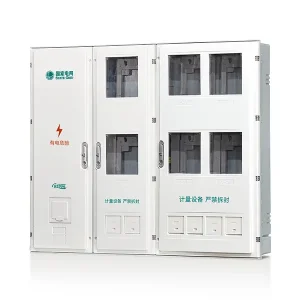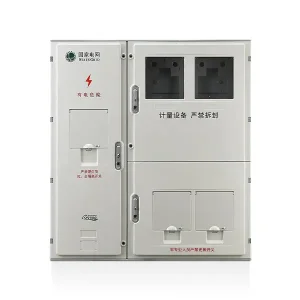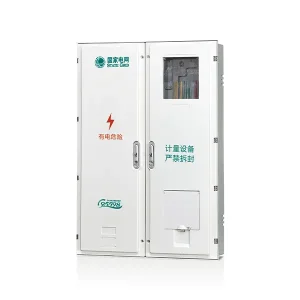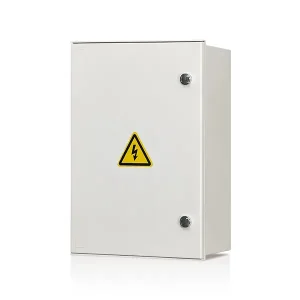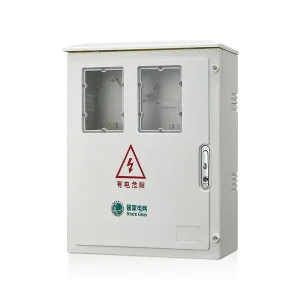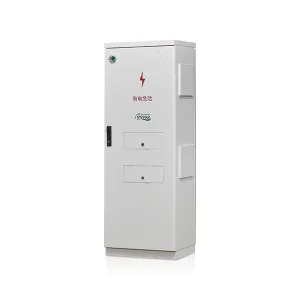
China Stainless Steel Single Phase Twelve-Position Meter Suppliers - Durable Floor-Standing Type Factory Solutions Supplier, Factory
View Details & Spec
Advanced engineering enclosures optimized for low-voltage power distribution, smart metering integration, and severe weather resistance.
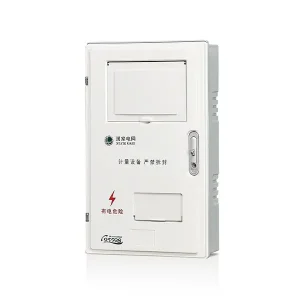
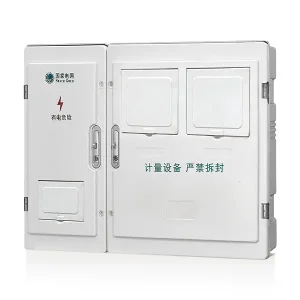
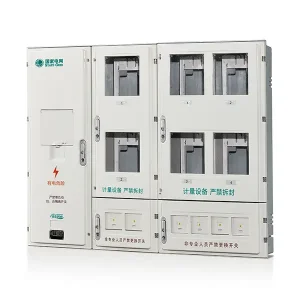
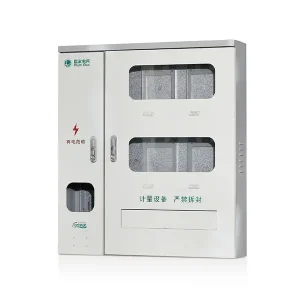
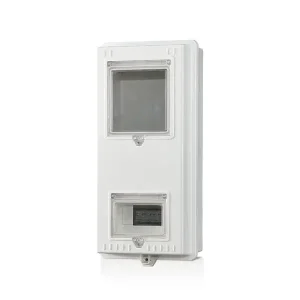
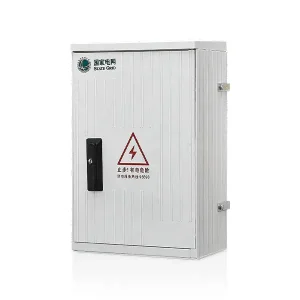
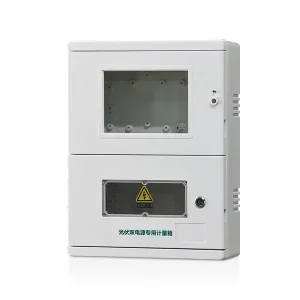
The convergence of Advanced Metering Infrastructure (AMI), renewable decentralization, and grid hardening mandates a paradigm shift in outdoor enclosure engineering.
Global utility networks in North America, Europe, the Middle East, and Latin America face accelerating climate degradation. Traditional metallic installations suffer from galvanic corrosion, coastal salt-fog decay, and high heat absorption that degrades delicate IoT sensors. Modern outdoor meter boxes, specifically engineered using Sheet Molding Compound (SMC) fiberglass, deliver complete chemical inertness and stable dielectric properties across extreme temperatures ranging from -25°C to +50°C continuous.
Revenue leakage through unauthorized tapping and meter tampering accounts for tens of billions of dollars in non-technical losses annually worldwide. Modern outdoor enclosure architectures prioritize integrated labyrinth sealings, multipoint mechanical deadlatches, dual-compartment isolation separating utility CT connections from consumer switchgear, and RF-transparent enclosures that empower AMI cellular and LoRaWAN long-range communications without requiring external exposed antennas.
With rooftop solar installations, battery energy storage systems (BESS), and bidirectional electric vehicle charging infrastructure rapidly expanding, outdoor meter boxes are no longer passive termination points. They operate as crucial distributed perceptual nodes requiring dedicated DIN rail mounting channels, circuit breakers with high breaking capacities, and specialized photovoltaic grid-connection provisions that safely dissipate heat under heavy solar yields.
Why Tier-1 global EPCs, grid concessionaires, and electrical wholesalers partner with specialized manufacturers in Yueqing, Wenzhou—China's Electrical Capital.
Operating inside the world's most concentrated electrical manufacturing cluster gives factories instantaneous access to precision toolmaking, certified raw SMC compounds, micro-switches, terminal lugs, and molded case circuit breakers. Component procurement bottlenecks that take months in other manufacturing regions are resolved within hours, accelerating initial sample generation and rapid multi-container deliveries.
Modern Chinese metering enclosure plants deploy hydraulic compression presses exceeding 1,200 to 2,500 metric tons. Precision multi-cavity hardened-steel dies guarantee exact wall thickness distributions, frictionless hinge actions, and consistent seal seating grooves. This engineering consistency prevents warping, ingress failures, and batch dimensional variations over large-scale rollouts.
Reliable Chinese suppliers maintain in-house test benches compliant with IEC 61439-1/-5, IEC 60529, and IEC 62262 standards. Quality assurance mandates automated glow wire ignition testing at 960°C, short-circuit peak withstand testing reaching 30 kA, sand-and-dust ingress verification, and mechanical IK10 shock testing before export dispatch.
A rigorous empirical comparison between SMC fiberglass composites, 304/316 stainless steel, and injection-molded commercial thermoplastics (ABS/PC).
| Performance Parameter | SMC Fiberglass (GRP) | Stainless Steel (304 / 316) | Polycarbonate / ABS Polymer |
|---|---|---|---|
| Dielectric Safety | Complete Inherent Insulation (Class II) | Conductive; Requires Dedicated Earthing | Good Insulation; Risk of Tracking |
| Outdoor Service Life | 30 to 40+ Years (No Maintenance) | 25 to 35 Years (Grade Dependent) | 8 to 15 Years (Surface Crazing Risk) |
| Corrosion Resistance | Immune to Salt Fog, Acids & Alkalis | High (Pitting possible in marine zones) | Moderate (Degrades under hydrocarbons) |
| Mechanical Impact (IK Code) | IK10 (High energy elastic dissipation) | IK10+ (Permanent denting under impact) | IK07 to IK08 (Brittle fracture at cold) |
| Thermal Stability Range | -40°C to +140°C Continuous | -80°C to +400°C | -20°C to +80°C (Heat deformation risk) |
| Radio Frequency Transmission | Transparent (Ideal for RF/LoRa/GSM) | Opaque (Shields signals; needs ext. antenna) | Transparent to RF Frequencies |
Engineered configuration matrices tailored to specific real-world operational environments across diverse utility and infrastructure sectors.
Custom-engineered SMC solar grid-tied enclosures accommodate bidirectional energy meters, DC/AC isolation breakers, type 2 surge protective devices (SPDs), and integrated thermal venting labyrinths that inhibit condensation without compromising IP54/IP65 ratings under blazing desert sun.
Corrosion-proof 304/316 grade stainless steel and chemical-resistant SMC enclosures protect current transformers (CT), potential transformers (PT), and three-phase meters against airborne acid fumes, explosive dust atmospheres, and high-pressure water washdown cycles.
Floor-standing and wall-mounted multi-position metering arrays (ranging from 2-meter to 12-meter architectures) with transparent UV-stabilized observation windows, concealed busbar trunking, and individual tenant branch isolation breakers maximize safety and spatial efficiency.
Compact, vibration-proof secondary distribution boxes integrated with cable branch terminals, ring main unit (RMU) auxiliary metering, and pole-mounted vacuum recloser interfaces engineered to endure cyclic electromagnetic transients and mechanical track vibrations.
How forward-thinking procurement directors, utility buyers, and EPC engineers streamline supply chains and meet evolving international compliance requirements.
One size never fits all in global power grids. International utilities require bespoke knockout hole geometries, pre-fitted DIN rails, customized neutral-earth copper links, and laser-etched barcodes or utility QR markers. Leading Chinese factories provide custom mold construction within 25 days, transitioning smoothly into high-volume stamping and molding.
International safety standards enforce strict UL94 V-0 flame-retardant performance and zero-halogen combustion requirements. Under arc flash scenarios or internal short circuits, enclosures must self-extinguish within 10 seconds without emitting toxic halogenated dioxins, preserving surrounding infrastructure and personnel safety.
Procurement strategies have matured from prioritizing lowest initial purchase price to evaluating Total Cost of Ownership over a 30-year operational span. The elimination of maintenance repainting, zero risk of shock-hazard liabilities, reduced field installation hours, and lowered scrap rates establish SMC fiberglass meter enclosures as the lowest TCO investment available.
In-depth technical answers addressing specifications, utility homologation, environmental compliance, and manufacturing logistics.
While Polycarbonate (PC) is a versatile thermoplastic suitable for small indoor boxes, Sheet Molding Compound (SMC) is a thermosetting composite reinforced with high-density chopped glass fibers (typically 25%-30% content). Under high ambient UV index and solar irradiance, polycarbonate can suffer from polymer chain degradation, leading to micro-cracking, yellowing, and embrittlement within 5 to 8 years. SMC thermoset material undergoes an irreversible cross-linking curing process under high pressure and temperature, guaranteeing zero deformation up to 140°C, zero thermal melting, superior impact resilience (IK10), and an authentic outdoor operational life exceeding 30 to 40 years.
Tier-1 manufacturers in Yueqing maintain specialized internal tooling divisions equipped with CNC machining centers, wire-EDM, and precision mold flow simulation software. When overseas EPCs provide tender requirements—such as proprietary triangular padlock designs, unique gland plate drilling patterns, segmented utility seal chambers, or specialized pole-mounting brackets—engineers generate 3D CAD models within 48 to 72 hours. Prototype sample molds and initial functional prototypes are typically completed within 20 to 25 business days, backed by comprehensive factory acceptance testing (FAT) reports.
Our metering enclosure series are rigorously tested and certified to IEC 60529 (IP Ratings) and IEC 62262 (IK Ratings). Standard outdoor single-position and multi-position enclosures are certified at IP54 and IP65 ratings using continuous robotic polyurethane (PU) foaming gaskets or EPDM sealing profiles, completely blocking water jets and wind-driven dust ingress. Mechanical impact resistance is certified to IK10 (resisting a 20-joule impact without wall breach or functional impairment), ensuring resilience against vandalism and accidental vehicular collisions.
Standard production capacity spans multiple 1,000-to-2,500 ton hydraulic presses, allowing an output of 1,500 to 3,000 meter box units daily depending on box size. Standard containerized orders (20GP or 40HQ) typically have a production cycle of 15 to 25 days. Goods are packed in heavy-duty export corrugated cartons, securely banded on fumigated wooden pallets or plastic pallets, and shrink-wrapped with waterproof foil to withstand ocean freight humidity across trans-oceanic shipping routes.
Yes. Chinese manufacturers routinely offer box-build integration services. Under OEM agreements, factories install specified copper busbars, DIN rails, current transformers (CTs), miniature circuit breakers (MCBs), neutral links, surge arresters, and terminal blocks. Enclosures can be shipped fully wired and harness-tested, allowing on-site utility contractors to simply pull service entrance cables and connect them directly, slashing field installation labor costs by up to 60%.
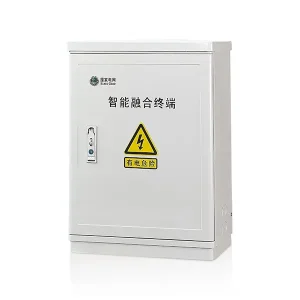
Heavy-duty solutions for industrial substations, large commercial power loads, transformer metering, and intelligent edge-fusion terminals.