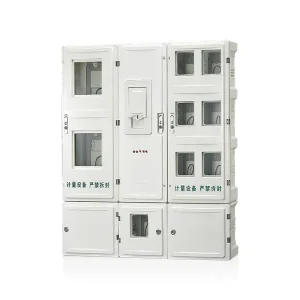
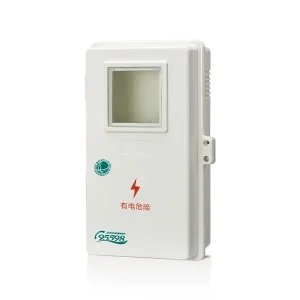
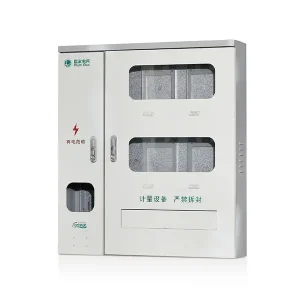
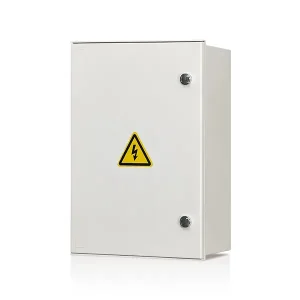
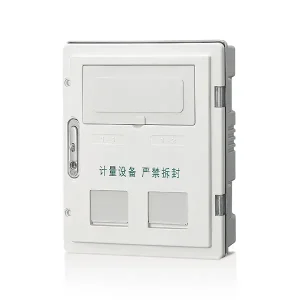
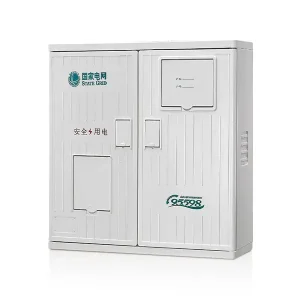
Featured Cable Branch Boxes & Enclosures
Engineered for utility sub-distribution, commercial electrification, and heavy industrial feeder branching with certified short-circuit stability.
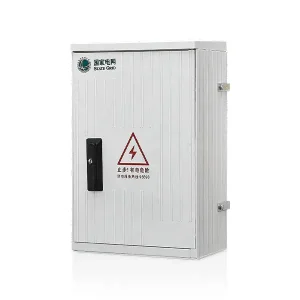
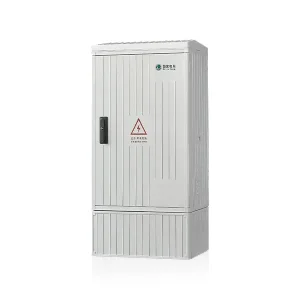
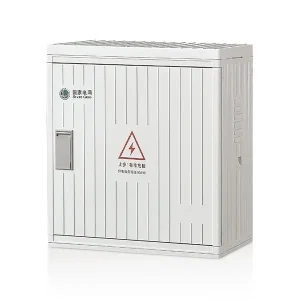
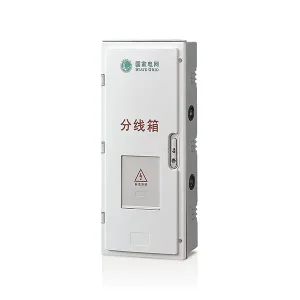
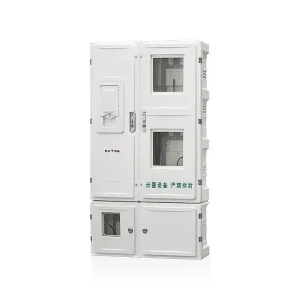
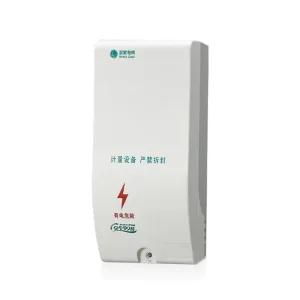
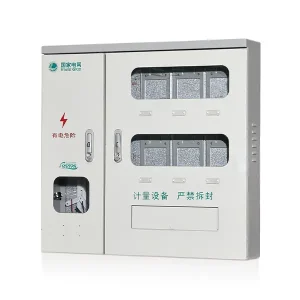
Global Energy Transition & Cable Branching Architecture
Modern distribution grids face compound stresses: rising penetration of renewable generation, urban density spikes, and extreme weather risks. Industrial-grade cable branch boxes act as structural nodes bridging secondary substations and decentralized end-users.
Undergrounding Grid Modernization
With urban networks transitioning overhead lines to underground cabling systems, cable branch boxes serve as indispensable modular splitters, optimizing feeder configurations and eliminating unplanned circuit interruptions.
Distributed Energy Integration
Decentralized photovoltaic (PV) generation and microgrids require multi-circuit tap boxes capable of bidirectional current routing, complete phase-balancing protection, and immediate disconnection capabilities under transient faults.
Asset Lifecycle & Total Cost (TCO)
Procurement authorities evaluate lifecycle durability over initial capital expenditure. Modern compression-molded SMC (Sheet Molding Compound) enclosures deliver 30+ year outdoor resilience, negating rust, repainting, and maintenance overheads.
Comparative Matrix: SMC Fiberglass vs. Metal & Thermoplastics
Selecting optimal materials for distribution infrastructure prevents electrical accidents, contact voltage hazards, and environmental casing degradation.
| Evaluation Parameter | SMC Fiberglass (GRP) Compound | 304 / 316 Stainless Steel | Cold-Rolled Carbon Steel | Standard Engineering Plastics (ABS/PC) |
|---|---|---|---|---|
| Electrical Safety | Inherent Dielectric Insulator (Zero Step Voltage) | Conductive; Mandatory Protective Earthing | Conductive; High Risk Upon Earthing Failure | Insulating; Decreases with Thermal Aging |
| Corrosion Resistance | Immune to Salt Fog, Acids, and Moisture | High Chemical Resistance; Vulnerable to Pitting | Requires Continuous Painting / Hot-Dip Zinc | Moderate; Prone to Surface Leaching |
| Thermal Range & Fire Rating | -40°C to +140°C, Self-Extinguishing UL94-V0 | High Thermal Resistance; Transfers Internal Heat | High Heat Tolerance; Structural Shift Under Flash | -20°C to +70°C; Structural Deform Risk |
| Vandal & Impact (IK Rating) | IK10+ High Modulus Elastic Recovery | IK10 Plastic Deformation under Impact | IK08/09 Permanent Denting & Paint Scratch | IK07/08 Low-Temperature Brittleness |
| Electromagnetic Screening | RF Transparent (Ideal for IoT & AMI Antennas) | RF Shielding (Requires External Antenna Nodes) | RF Shielding (Blocks Wireless Cellular Signals) | RF Transparent (Low Structural Rigidity) |
Localized Application Scenarios & Field Engineering
Configured specifically for installation realities across municipal districts, industrial zones, and harsh open-air environments.
High-Density Urban Developments
Wall-mounted and pedestal-style cable branch boxes facilitate compartmentalized low-voltage distribution into multi-tenant residential complexes and high-rise commercial structures.
Renewable Utility Parks
UV-stabilized, high-IP rating enclosures configured for string inverter consolidation and central tracking auxiliary power within utility-scale solar PV and wind farms.
Marine & Coastal Harbors
Salt spray-proof enclosures engineered to resist continuous coastal chloride ions without blistering or pitting, providing safe power delivery to shore-to-ship connection points.
Heavy Chemical & Extraction
Explosion-suppressive and acid-resistant stainless steel meter cabinets safeguarding process continuity across petrochemical refining, mining, and bulk processing operations.
Global Standards Compliance & OEM/ODM Governance
Zhejiang Teyi Electric backs international infrastructure contracts with rigorous third-party certifications, type tests, and tailored utility engineering adaptation.
IEC & National Standardization
Every product line meets or surpasses IEC 61439-1/2 (Low-voltage switchgear assemblies), IEC 60529 (Ingress Protection), and IEC 62262 (Impact Resistance), simplifying regional utility sign-offs.
Bespoke Utility Tender Adaptation
Through comprehensive ODM engineering, we calibrate internal busbar configurations, terminal arrangements, smart meter apertures, and padlocking mechanisms to match specific tender mandates.
Factory Verification & Traceability
Zero-defect manufacturing governance backed by raw SMC batch spectroscopy, closed-mold pressure data logging, heat-cycle aging, and routine factory dielectric breakdown validation.
Technology Roadmap: The Era of Intelligent Branching
Transforming passive connection junction points into intelligent, sensing network assets that feed telemetry directly into SCADA and Distribution Management Systems (DMS).
Edge Temperature & Busbar Monitoring
Integration of passive RFID and wireless surface acoustic wave (SAW) sensors on cable terminations to flag localized thermal anomalies prior to arc faults.
Electronic Anti-Tamper & Access Logic
Replacing standard key locks with NB-IoT / Bluetooth enabled smart locks that record utility access logs, detect unauthorized break-ins, and prevent power theft.
Eco-Formulation Bio-Resins
Pioneering recyclable thermoset SMC matrices using plant-based styrene alternatives, cutting embodied factory carbon emissions by up to 28% without sacrificing tensile strength.
Automated Fault Location (FLISR)
Incorporating directional fault passage indicators (FPI) and automated motorized load break switches to rapidly isolate faulty feeder sections within seconds.
Frequently Asked Engineering & Procurement Questions
Detailed technical guidance for electrical design engineers, project contractors, and utility procurement divisions.
What distinguishes a standard cable branch box from a Ring Main Unit (RMU)?
How does SMC composite resist solar UV degradation in desert and tropical climates?
Can cable branch boxes be ordered with custom internal switchgear and busbars?
What condensation control mechanisms are implemented in outdoor enclosures?
What are the lead times and minimum order quantities (MOQ) for custom tenders?
Energy Metering Cabinets & Distribution Assemblies
Browse our certified range of metering cabinets, multi-position distribution enclosures, and advanced stainless steel systems manufactured under ISO-standard quality controls.