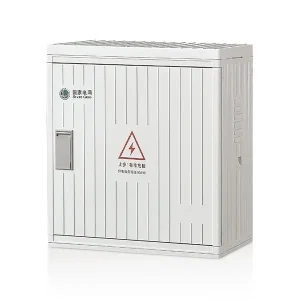
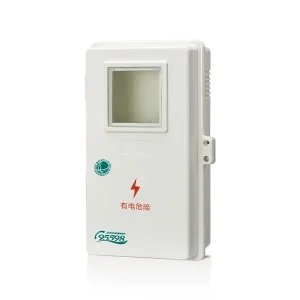
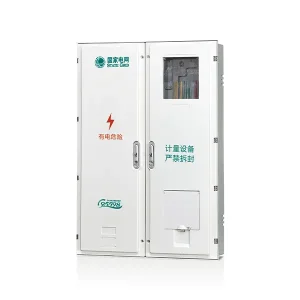
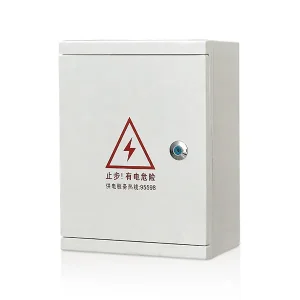
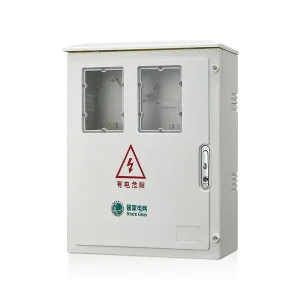
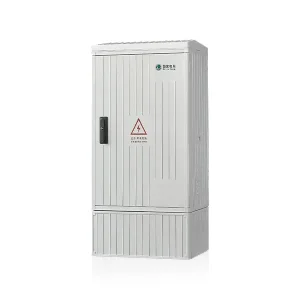
Featured Overhead Switching & Metering Assemblies
Precision engineered for 10kV–38kV distribution automation, intelligent reclosing, and end-to-end feeder isolation across worldwide grid architectures.
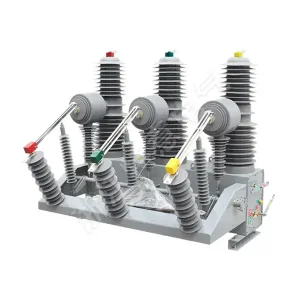
Technical Anatomy of Next-Generation Pole-Mounted Breakers
As a world-class pole-mounted circuit breaker manufacturer, our primary engineering focus centers on isolating medium-voltage grid disturbances, eliminating transient fault blackouts, and delivering military-grade structural reliability in harsh environments.
Vacuum Interrupter (VI) Metallurgy
Modern pole-mounted circuit breaker manufacturers utilize axial magnetic field (AMF) or transverse magnetic field (TMF) contact geometries embedded within high-alumina ceramic vacuum bottles. CuCr (Copper-Chromium) contact alloys prevent contact welding during short-circuit currents up to 25kA, minimizing contact erosion across severe duty cycles.
Solid Dielectric vs. SF6 Ecology
Global decarbonization initiatives have accelerated the shift away from Sulfur Hexafluoride (SF6 GWP = 23,500). Advanced manufacturers employ hydrophobic cycloaliphatic epoxy (HCEP) or high-grade silicone rubber solid encapsulation. This completely avoids gas leakage risks, pressure vessel testing protocols, and cryogenic liquefaction failures in sub-zero climates.
Primary & Secondary Deep Fusion
State-of-the-art intelligent reclosers discard external copper-wound CTs/PTs. Instead, manufacturers embed miniature electronic current sensors (Rogowski coils) and capacitive voltage dividers directly inside the epoxy poles. Combined with TTU/FTU controller pods, the system achieves 0.5S class measurement accuracy, transient directional fault detection, and zero-sequence ground fault clearing.
| Evaluation Parameter | Solid Dielectric Vacuum Breaker (Teyi Architecture) | Traditional SF6 Gas Insulated Recloser | Oil-Immersed Auto-Recloser |
|---|---|---|---|
| Greenhouse Warming Potential (GWP) | 0 (100% Eco-Friendly Clean Tech) | 23,500 (Heavily restricted under EU F-Gas regulations) | High soil contamination & combustible fire risk |
| Maintenance Interval | Maintenance-Free for 30+ Years / 10,000 Ops | Periodic gas density monitoring & top-up required | Frequent oil filtering, sludge cleaning, contact renewal |
| Low-Temperature Performance | -45°C without auxiliary tank heating | Liquefaction begins below -25°C; requires heaters | Viscosity increases; mechanism slows critically |
| Integrated Sensor Precision | Electronic Dual Rogowski + Voltage Division (±0.5%) | Bulky external electromagnetic CTs (±1.0% - ±3.0%) | Crude internal coil sensing (±3.0% - ±5.0%) |
| Fault Isolation Speed (FLISR) | < 45 ms trip + High-Speed Reclose cycle | 65 ms - 90 ms trip mechanics | 120 ms - 200 ms sluggish mechanical latching |
The Yueqing Edge: Why Global EPCs Partner with Chinese Manufacturers
Located in Yueqing, Zhejiang—widely celebrated as China's Electrical Capital—our manufacturing matrix integrates raw metallurgy, precision tooling, cleanroom VI synthesis, and high-voltage testing within a localized 15-kilometer radius.
Vertically Integrated Supply Cluster
Unlike Western brand assemblers who outsource subcomponents across multiple continents, our facility maintains end-to-end sovereignty. From CNC machined mechanism plates and silver-plated contact rivets to high-pressure SMC fiberglass compounding, every element is manufactured under one roof. This structural compression cuts lead times from standard 26 weeks to just 4 to 6 weeks.
Automated Permanent Magnet Actuation
We have engineered robust bistable magnetic actuators with only one moving part, directly substituting fragile traditional spring-charging mechanisms. Automated robotic winding lines and computerized magnetic flux calibration stations guarantee zero mechanical back-lash, yielding field failure rates under 0.02% over 10-year continuous deployments.
Type-Tested Rigor (IEC & IEEE)
China's state-backed grid projects (State Grid & China Southern Power Grid) demand the most uncompromising product validation on earth. Our pole-mounted switchgear carries comprehensive, certified type test reports from accredited high-power test laboratories (such as KEMA, Xi'an High Voltage Apparatus Research Institute - XIHARI, and CEPRI) validating IEC 62271-100, IEC 62271-111, and IEEE C37.60 compliance.
Smart Grid Evolution: From Passive Switches to Edge-Computing Nodes
Global grid operators are transitioning from manual overhead sectionalizers toward fully autonomous, self-healing loop schemes. Modern pole-mounted circuit breaker manufacturers operate as software-hardware integrated system providers.
FLISR Autonomous Self-Healing
By executing localized peer-to-peer GOOSE messaging via 5G or industrial mesh radios, our breakers detect fault locations, isolate defective overhead line segments, and back-feed sound sections in < 500 ms without dispatch intervention.
Microgrid Bi-Directional Power Flow
Distributed rooftop solar and utility-scale solar farms destabilize legacy radial feeder schemes. Our breaker controls incorporate four-quadrant directional power flow algorithms, adaptive multi-shot reclosing, and anti-islanding interlocks.
Encrypted SCADA Connectivity
Controllers feature native DNP3.0, IEC 60870-5-101/104, and IEC 61850 protocol compliance. Hardware cryptographic chips ensure complete operational cybersecurity, safeguarding primary distribution substations from unauthorized remote tapping.
Predictive Contact Health Telemetry
Embedded thermal sensors continually monitor primary vacuum disconnect terminals and busbar junctions. Real-time accumulated I2t contact burn calculations inform utility maintenance engineers years before contact degradation causes thermal runaway.
Engineered Resilience Across Challenging Operational Terrains
Pole-mounted circuit breakers face far more brutal environments than indoor switchgear. Our factory standardizes specialized hardening packages for regional utility challenges across Latin America, Southeast Asia, Africa, and the Middle East.
Coastal Marine & Heavy Saline Fog
In equatorial maritime belts, airborne chlorides destroy mild steel within 24 months. We engineer breaker outer enclosures using 316L Marine-Grade Stainless Steel or heavy compression-molded SMC (Sheet Molding Compound), paired with high-creepage (31mm/kV) silicone sheds to eliminate surface flashover under heavy fog.
High Altitude & Rarefied Atmospheres
Projects above 2,500 meters (such as the Andean mining corridor) suffer from reduced air insulation dielectric strength. Our vacuum interrupters and bushing spreads are up-rated with custom insulation barriers, maintaining full 125kV BIL ratings without external gas pressurization.
Wildfire Mitigation & High-Fire Zones
Traditional expulsion fuses and oil circuit reclosers present severe ignition liabilities during pole arc faults. Solid-dielectric vacuum reclosers guarantee arc containment within hermetic vacuum chambers, coupled with high-speed sensitive earth fault (SEF down to 0.5A) algorithms that trip lines before a fallen conductor ignites dry brush.
Global EPC & Utility Procurement Checklist
When issuing international tenders or auditing factory credentials, utility procurement directors must verify five indispensable technical criteria to prevent premature field failures.
1. Type Test Certification Heritage
Demand unedited, accredited third-party test reports covering Short-Time Withstand (STW), Peak Withstand Current, Mechanical Endurance (Class M2 - 10,000 operations), Temperature Rise at Rated Current, and Environmental Salt Spray (minimum 1,000 hours per ASTM B117).
2. Actuator Drive Mechanism Philosophy
Verify whether the drive relies on high-failure mechanical spring linkages (with dozens of latches and springs prone to fatigue) or magnetic actuation. Magnetic actuators should incorporate dual coils with long-life capacitors delivering a minimum MTBF exceeding 100,000 hours.
3. Control Pod Backup Autonomy
The secondary electronic control pod must guarantee autonomous trip capabilities during total station blackouts. Our systems integrate dual high-capacity, cold-resilient Lithium Iron Phosphate (LiFePO4) or Pure Lead batteries backed by onboard solar or auxiliary PT power supplies, ensuring 48+ hours of continuous standby.
Frequently Asked Questions for Utility Engineers
Direct technical clarifications on primary-secondary fusion, insulation systems, customization parameters, and factory auditing.
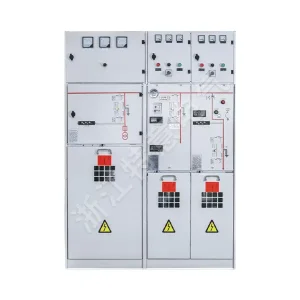
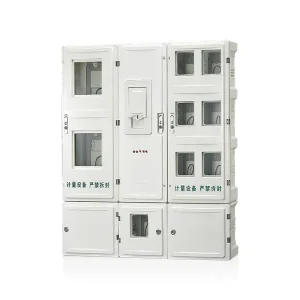
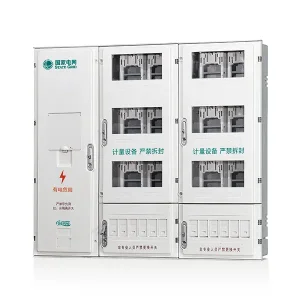
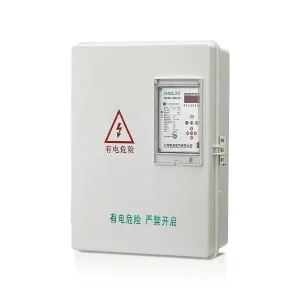
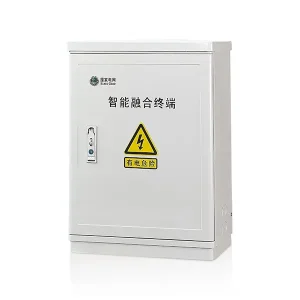
Integrated Substation, Branching & Metering Lineup
Complete your medium- and low-voltage distribution chain with our heavy-duty cable branching cabinets, wall-mounted control nodes, and certified metering enclosures.