
Primary Enclosure Modules for Mexico City Grid Modernization
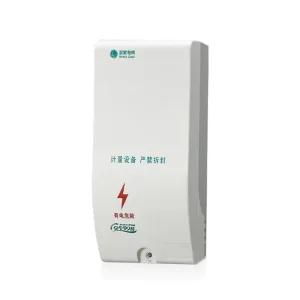
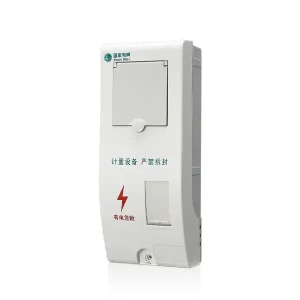
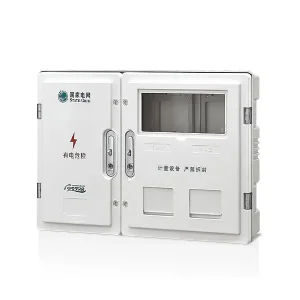
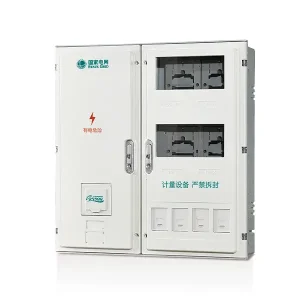
Pre-engineered single-phase SMC terminal enclosures optimized for CFE (Comisión Federal de Electricidad) compliance, dense multi-tenant housings, and perimeter meter monitoring.
Grid Transformation & Nearshoring Dynamics in the Mexico City Metropolitan Zone (ZMVM)
The Greater Mexico City Metropolitan Area represents one of the dense commercial and industrial energy epicenters in the Americas. With over 22 million residents and accelerating industrial demand driven by the North American "nearshoring" wave, municipal power distribution lines are experiencing historic throughput demands.
Key distribution vulnerabilities in this market stem from unique geographical and systemic parameters: high solar irradiation at an elevation exceeding 2,240 meters, seasonal torrential downpours causing humidity condensation, localized soil subsidence, and the strict technical oversight of Mexico's federal power agency, CFE (Comisión Federal de Electricidad).
- Elevation & UV Degradation Resistance: High-altitude UV levels severely embrittle standard thermoplastic (ABS/Polycarbonate) enclosures. SMC thermosetting resin maintains structural integrity under UV-A and UV-B extremes without chalking or warping.
- Anti-Tampering and Revenue Protection: Mitigating non-technical electrical losses (energy theft) is an essential priority for Mexican network operators and private industrial parks in areas like Vallejo and Naucalpan.
- Elimination of Stray Voltage: In high-density districts (Cuauhtémoc, Miguel Hidalgo), dense pedestrian interactions necessitate class-II double insulation without conductive surfaces, preventing touch-potential hazard accidents.
SMC Material Resilience Metrics
Laboratory validated against CFE Specification G0000-48 and international standards IEC 62208 & UL 94.
Engineering Justification: SMC vs. Traditional Meter Boxes
An empirical comparative review designed for EPC procurement directors, utility engineers, and system integrators operating in Central Mexico.
| Evaluation Parameter | Compression-Molded SMC (Teyi Electric) | Cold-Rolled Carbon / Galvanized Steel | Polycarbonate (PC) / Structural ABS |
|---|---|---|---|
| Galvanic & Acid Rain Corrosion | Zero oxidation; immune to airborne sulfur oxides & road salinity | Prone to zinc depletion and red rust at punch-outs and welds | Chemical stress-cracking under hydrocarbon vapor exposure |
| RF Transmission (AMI/AMR Smart Meters) | RF-Transparent; allows seamless 4G/NB-IoT and mesh network transmission | Faraday cage effect; blocks signal, requires exterior antenna mounts | Transparent, but suffers from solar aging deformation |
| Electrical Shock Hazard Mitigation | Class-II Insulation; eliminates need for enclosure earthing circuits | Requires structural ground bonding; fails upon ground-wire theft | Insulating; lower dielectric resistance across thermal cycles |
| Thermal Distortion (Heat Deflection) | HDT > 200°C; retains structural form under busbar thermal spikes | Retains form but radiates interior heat, cookouts interior electronics | HDT 85°C–120°C; susceptible to sagging and latch misalignment |
| Field Lifecycle Expectancy | 30+ Years Outdoor / 40+ Years Indoor | 7 to 12 Years before coating repainting/replacement | 5 to 8 Years under tropical high-UV solar radiation |
Macro-Industry Solutions for Mexico's Critical Segments
Tailored enclosure configurations engineered for utility grids, renewable energy fields, industrial complexes, and commercial microgrids.
Urban Residential & Mixed-Use Complexes
Custom multi-position centralized meter panels designed for dense apartment buildings in Santa Fe, Polanco, and Insurgentes Sur. Modular interior chassis support DIN-rail modular breakers, electronic revenue meters, and transparent reading ports.
Industrial Corridors & Manufacturing Parks
Heavy-duty three-phase CT-rated metering cabinets for automotive and logistics corridors in Estado de México, Tlalnepantla, and Cuautitlán Izcalli. Equipped to house test blocks, current transformers, and isolation bypass switches.
C&I Solar PV Grid-Tie Enclosures
Weatherproof junction and bidirectional meter enclosures for commercial rooftop and ground-mounted solar installations. UV-stabilized SMC resin resists prolonged photovoltaic exposure while holding IP65 seals during monsoon seasons.
High-Volume Manufacturing & Global Procurement Agility
Operating from Yueqing, China's premier electrical industrial cluster, Teyi Electric connects advanced compression molding machinery directly with North American and Latin American supply chains.
Technological Roadmap: The Evolution of Intelligent SMC Meter Enclosures
Distribution networks are transitioning from passive enclosures to active, sensor-enabled node boundaries. Teyi Electric's forward engineering roadmap responds directly to Latin America's evolving smart grid requirements:
- IoT Micro-Sensor Integration: Internal housing cavities designed to accommodate non-invasive temperature probes for early loose-terminal arc detection and RFID access management.
- Circular Economy & Bio-Based Resins: Ongoing material formulation research aimed at reducing lifecycle cradle-to-gate carbon footprints while exceeding standard flammability ratings.
- High-Security Magnetic & Mechanical Interlocks: Tamper-evident closure mechanisms preventing unauthorized wire-bridging, a critical metric for power concessions operating in the Valley of Mexico.
Compliant Support for Mexican EPC Contractors
Navigating cross-border logistics to the Port of Manzanillo or Veracruz, combined with inland transport into Mexico City's industrial customs clearance terminals, requires precision documentation.
Teyi Electric provides end-to-end technical submittal documentation, comprehensive type-test reports, customized tooling for regional mounting brackets, and strict packaging compliance to ensure zero transit damage across maritime corridors.
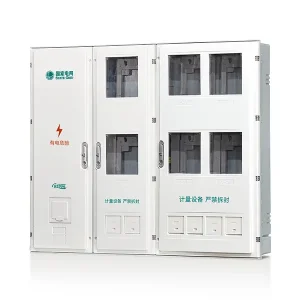
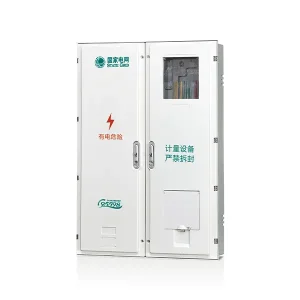
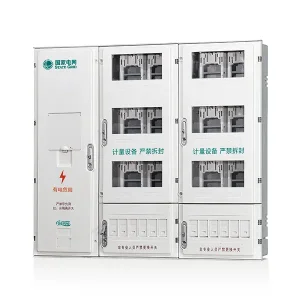
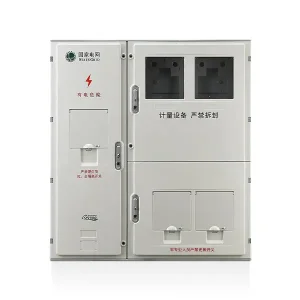
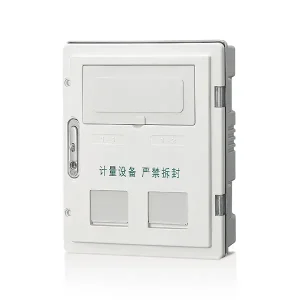
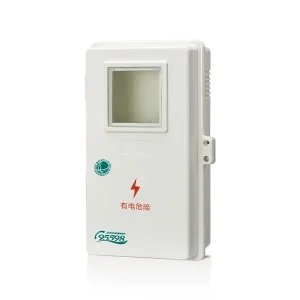
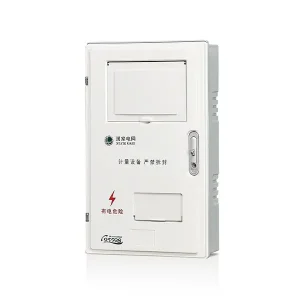
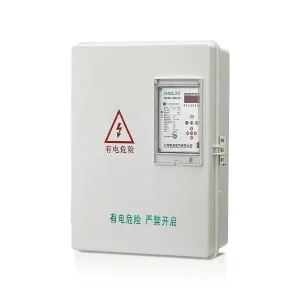
Commercial & Three-Phase SMC Metering Solutions Serving Mexico
Explore our heavy-duty three-phase, transformer-rated, and multi-tenant terminal boxes configured for severe ambient environments and certified grid interconnects.
Frequently Asked Engineering Questions
Critical procurement, compliance, and material performance inquiries addressed directly by our structural and electrical engineering department.
Are Teyi Electric's SMC enclosures compatible with Mexican CFE metering standards?
Yes. Our engineering division reviews specific tender mandates including CFE G0000-48 specifications, dimensional requirements for ANSI-form socket or modular DIN-rail meters, and anti-fraud sealing latch protocols. We provide fully tailored OEM/ODM internal mounting plates and cutouts to accommodate Mexico's utility requirements.
How does the high altitude of Mexico City (2,240 m) affect enclosure material selection?
At high altitudes, thinner atmosphere causes increased solar radiation intensity (UV index) and decreased air dielectric breakdown voltage. SMC (Sheet Molding Compound) contains high-volume unsaturated polyester resin cross-linked with glass fibers and UV stabilizers, which prevents the micro-fissuring and molecular breakdown that commonly destroys standard PVC and ABS boxes in high-altitude environments.
Can our engineering team receive pre-production test prototypes before batch shipping?
Yes. As part of our ODM engineering protocol, we supply structural prototypes and pre-configured internal mounting chassis for electrical fitment tests and customer approval. Rapid tooling turnaround allows engineering teams in Mexico City to validate mechanical tolerances, cable entry points, and latching mechanisms before full batch manufacturing commences.
What are the logistics lead times and maritime shipping arrangements to Mexico?
Standard containerized freight originates from Ningbo or Shanghai port, sailing directly to Manzanillo (Colima) or Lázaro Cárdenas (Michoacán), with typical ocean transit times of 18 to 26 days. Inland intermodal transport to Mexico City industrial customs terminals takes an additional 2 to 4 days. We provide complete commercial invoicing, Bill of Lading, Certificate of Origin, and packing lists tailored for Mexican customs clearance.
How do SMC fiberglass enclosures perform under extreme urban seismic shocks?
Unlike brittle cast-iron or welded metal boxes that suffer weld failures or permanent deformation during seismic shifts, SMC is a high-tensile composite that possesses high elastic modulus and flexural strength. The compression-molded construction absorbs mechanical vibration and building displacement stresses without losing IP-rated gasket seals.