
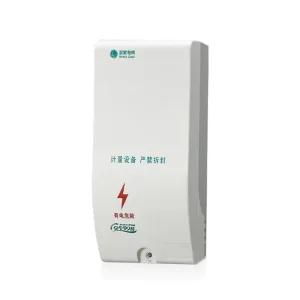
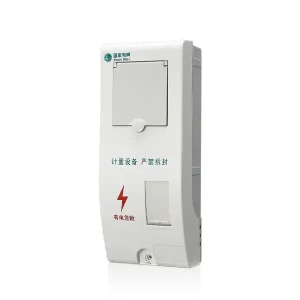
Thailand Utility Standard Single-Phase Metering Enclosures
Engineered to meet the stringent distribution infrastructure requirements of the Provincial Electricity Authority (PEA) and Metropolitan Electricity Authority (MEA), combining dielectric safety with impact resistance.
SMC Composite Technology in Thailand's Expanding Power Infrastructure
A critical engineering assessment of electrification challenges across Southeast Asia and the technical transition from galvanized steel to compression-molded Sheet Molding Compound.
Combatting Tropical Atmospheric Degradation
Thailand's climate presents one of the world's most aggressive operating environments for outdoor electrical distribution assets. With coastal areas like Rayong, Chonburi, and Phuket exhibiting persistent relative humidity above 85% and high airborne chloride concentrations, traditional galvanized steel enclosures suffer from severe galvanic corrosion, paint delamination, and subsequent short-circuit paths within 3 to 5 years. Compression-molded SMC (Sheet Molding Compound) utilizes an unsaturated polyester matrix reinforced with 25-30% multidirectional chopped glass fibers, creating a non-conductive, chemically inert structure that does not rust, degrade, or require ongoing surface refinishing even after decades of continuous monsoonal UV and saline moisture exposure.
EEC Corridor & Infrastructure Upgrades
Thailand's Eastern Economic Corridor (EEC) and Thailand 4.0 national initiatives have triggered unprecedented capital expenditure in utility upgrades, smart manufacturing complexes, and hyper-scale data center developments. The Provincial Electricity Authority (PEA) and Metropolitan Electricity Authority (MEA) are actively transitioning feeder architectures toward decentralized, smart-grid-compatible Advanced Metering Infrastructure (AMI). SMC enclosures are non-metallic and RF-transparent, allowing internal wireless modems (Cellular NB-IoT, 4G LTE, and LoRaWAN) to transmit telemetry without signal attenuation—eliminating the need for expensive, vandalism-prone external antennas.
Global Decarbonization & Circular Supply Chains
On a macro scale, utilities worldwide are shifting from metal to advanced composites to lower the total lifecycle carbon footprint. Sheet Molding Compound demonstrates significantly lower embodied carbon during compression manufacturing compared to cold-rolled stainless steel or cast aluminum enclosures. Furthermore, SMC enclosures act as Class II double-insulated safety barriers, eliminating stray voltage hazards for maintenance personnel and the public in flood-prone alluvial plains, such as the Chao Phraya River basin, making them the safest structural choice for developing municipal grids.
High-Value Deployment Scenarios Across Thailand's Industrial Verticals
Optimized enclosure geometries, chemical configurations, and physical protections designed specifically for local environmental stresses and utility regulations.
Floating Solar & Coastal Ground-Mounted PV
Thailand’s ambitious National Energy Plan mandates rapid expansion of hybrid floating solar systems on hydro dam reservoirs (such as Sirindhorn and Ubol Ratana) as well as utility-scale farms along coastal plains. Traditional metallic combiner and metering boxes corrode under high constant evaporation and chemical moisture. Teyi’s SMC enclosures deliver zero corrosion, complete insulation, and high UV stability under index UV-A/B exposures above 1000 W/m², guaranteeing uninterrupted photovoltaic output metering and low operating expenditures.
EV Charging Hubs & Urban Fleet Depots
Driven by the 30@30 electric vehicle roadmap, Thailand is transforming into Southeast Asia's electric mobility epicentre. Public and commercial DC Fast Charging plazas throughout Bangkok, Nonthaburi, and highway rest areas require reliable secondary distribution and metering points. Our single- and three-phase SMC boxes integrate compact modular circuit breakers (MCBs), shunt-trip mechanisms, and CT metering equipment inside a fire-retardant (UL94 V-0) envelope that prevents thermal runaway spread in congested environments.
Severe Monsoon Alluvial Flood Zones
Monsoonal floods frequently inundate municipal lowlands along central Thailand river basins. Teyi's pole-mounted and elevated-wall SMC boxes feature labyrinthine IP65 waterproof sealing profiles with continuous formed-in-place foamed silicone gaskets. Even when exposed to driving tropical downpours and horizontal water jets, interior busbars, smart digital meters, and terminal connections remain completely dry, preventing short circuits and preventing electrocution hazards for local populations.
Technical Specification & Material Performance Comparison
Comprehensive benchmarking of compression-molded SMC versus alternative outdoor enclosure materials under Southeast Asian operating parameters.
| Performance Metric | Teyi High-Performance SMC | 304 / 316 Stainless Steel | Galvanized / Coated Carbon Steel | Standard Polycarbonate / ABS |
|---|---|---|---|---|
| Dielectric Strength (Safety) | Inherently Insulating (>15 kV/mm) | Zero (Conductive; Earth bonding required) | Zero (Hazardous if earth fault occurs) | Insulating (Degrades over time) |
| Corrosion Resistance (Chloride/Saline) | Completely Immune (Zero rust or pitting) | High (Subject to crevice corrosion) | Very Low (Severe rust within 3-5 years) | High (Prone to environmental stress cracking) |
| Mechanical Strength & Impact | IK10+ (Compression molded fibers) | IK10 (High denting risk, heavy) | IK09 (Easily deformed under impact) | IK07 - IK08 (Becomes brittle with UV age) |
| UV & Heat Deflection (HDT) | >200°C (No warping or softening) | Unchanged, but radiates heat inside | Paint chalking, conducts high solar heat | <95°C (Severe discoloration & warping) |
| RF Transparency (AMI Smart Metering) | 100% Transparent (No attenuation) | Complete Faraday Cage (Blocks signal) | Complete Faraday Cage (Blocks signal) | Transparent |
| Projected Outdoor Service Life | 30 to 40+ Years | 15 to 25 Years (Requires weld care) | 5 to 8 Years maximum | 7 to 10 Years outdoors |
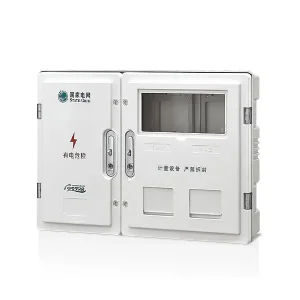
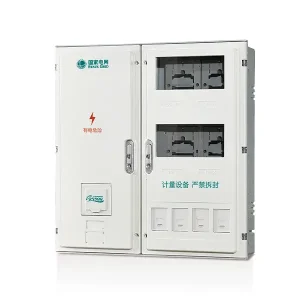
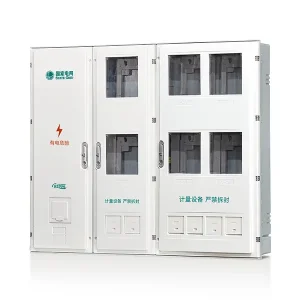
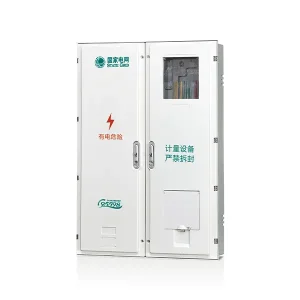
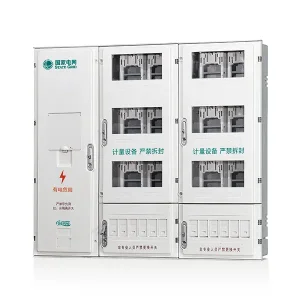
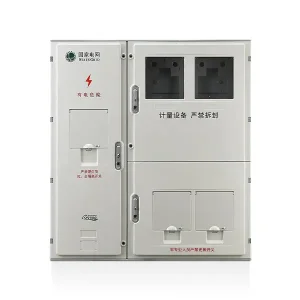
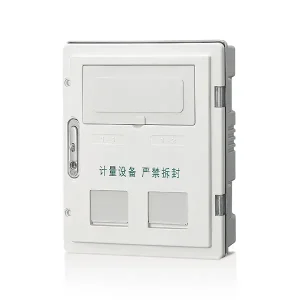
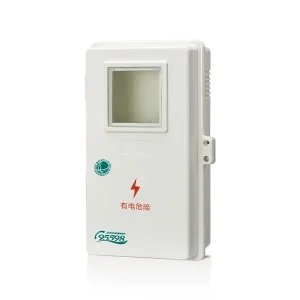
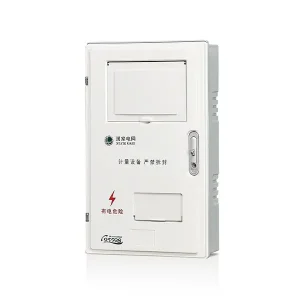
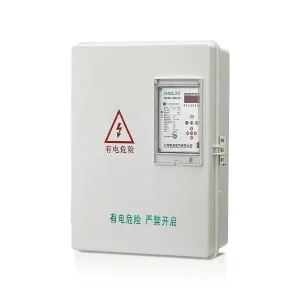
Thailand Commercial, Industrial & Multi-Phase Metering Catalog
Comprehensive portfolio of three-phase industrial transformer cabinets, multi-family smart collector boxes, and low-voltage distribution enclosures certified for global EPCs.
Engineering Roadmap: Advanced Enclosure Systems (2025–2030)
Anticipating next-generation utility challenges through materials science, IoT integration, and eco-sustainable manufacturing.
Edge-Telemetry & Thermal Sensor Integration
Next-generation Teyi SMC enclosures incorporate embedded micro-sensors within the composite frame, enabling non-invasive monitoring of internal ambient temperatures, busbar contact heat, and door tamper events. Data is communicated via zero-power wireless backhauls directly to utility SCADA systems, preventing unexpected terminal burnouts during peak cooling periods in tropical climates.
Bio-Based & Recyclable Composite Resins
Aligning with international Net-Zero carbon mandates and Thailand's Bio-Circular-Green (BCG) economic framework, our R&D pipeline is scaling unsaturated polyesters partially derived from bio-based feedstocks and closed-loop recyclability processes. This significantly curtails cradle-to-gate carbon emissions while maintaining mechanical rigidity and Class V-0 flammability ratings.
Anti-Condensation Breather Systems
Condensation caused by sharp day-to-night temperature variations is a primary cause of smart meter circuit degradation in tropical Southeast Asia. Our ongoing enclosure innovations deploy dual-stage, ePTFE hydrophobic membrane breathers that equalize internal air pressure while blocking liquid water, saline mist, and crawling pests.
Frequently Asked Questions on SMC Enclosures for Thailand
Clear, engineering-backed answers addressing the most common procurement, technical, and regulatory questions from EPC contractors and utility managers.
Why is SMC preferred over 304 Stainless Steel in coastal Thailand?
While 304 stainless steel offers general corrosion resistance, it remains susceptible to pitting and crevice corrosion when exposed to airborne chlorides combined with tropical temperatures above 30°C. Furthermore, metal enclosures require reliable earthing bonding to prevent fatal shock hazards. SMC is entirely non-conductive (eliminating grounding maintenance) and completely immune to salt spray corrosion, delivering lower total lifecycle costs over its 30+ year lifespan.
Do Teyi SMC meter boxes comply with PEA and MEA utility standards?
Yes. Our meter and distribution boxes are engineered to comply with Provincial Electricity Authority (PEA) and Metropolitan Electricity Authority (MEA) technical specifications, including IEC 62208 (general requirements for empty enclosures), IEC 60529 (IP65 ingress protection), and IEC 62262 (IK10 mechanical impact resistance). Custom gland plates, viewing windows, and anti-theft seal locking points can be tailored to exact tender documents.
How does SMC material handle prolonged solar UV exposure?
Untreated engineering plastics often experience chalking, embrittlement, and discoloration under continuous UV-A and UV-B radiation. Teyi’s SMC formulations incorporate specialized UV stabilizers and Hindered Amine Light Stabilizers (HALS) within the unsaturated polyester resin. Accelerated aging tests demonstrate tensile and impact retention rates exceeding 90% after 5,000 hours of xenon arc exposure, fully matching the requirements for outdoor pole and wall mounting across Southeast Asia.
What is the standard turnaround time for OEM/ODM tooling & delivery to Thailand?
For standard catalog sizes, sample evaluation batches can be dispatched within 7 working days. For custom utility tender designs requiring new hydraulic compression molds, mold fabrication and prototype sampling are completed in 35 to 45 days. Mass production shipments from our Yueqing deep-water port connections reach Bangkok port (PAT) or Laem Chabang within 7 to 12 days maritime transit.
Procure Industrial-Grade SMC Enclosures for Your Next Project in Thailand
Whether you require tender-ready customization, sample batches for PEA/MEA testing, or volume distribution across Southeast Asia, our precision engineering team is ready to assist.
Send Inquiry Now