
Berlin Smart Grid & Industrial Infrastructure Engineering
SMC Fiberglass Box Manufacturer & Suppliers Serving Berlin
Precision compression-molded GRP/SMC enclosures engineered for Berlin's utility transformation, distributed solar PV integration, EV charging corridors, and DIN EN 61439 compliant low-voltage distribution.
Single-Phase Distribution Architecture
Primary Enclosure Modules for Urban Berlin Substation & Metering Loops
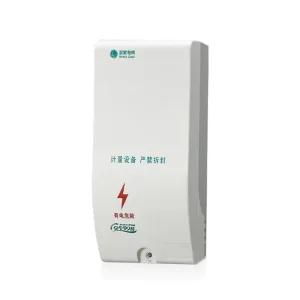
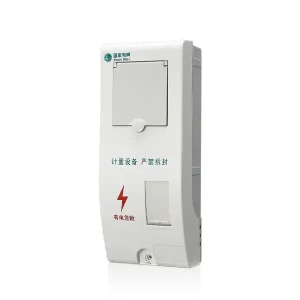
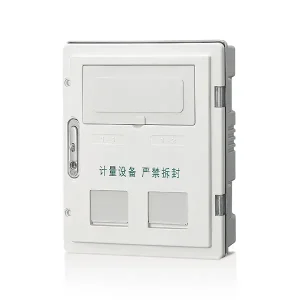
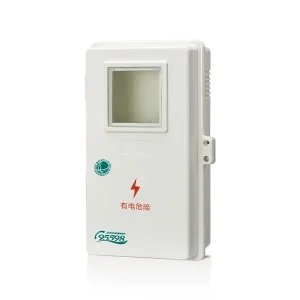
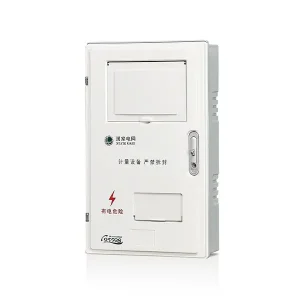
Pre-engineered SMC fiberglass single-phase metering and termination units optimized for tight Berlin residential basements, multi-tenant Altbau modernizations, and exterior municipal feeder pillars.
Regional Infrastructure Analysis
Berlin's Grid Modernization Landscape: The Shift to High-Performance Composites
As the Federal Republic accelerates its Energiewende mandates, the capital city of Berlin represents one of Europe's most complex electrical infrastructure environments.
The Berlin Smart Meter Rollout (MsbG Compliance)
Under the German Messstellenbetriebsgesetz (Metering Point Operation Act), Berlin's distribution system operators (DSOs) such as Stromnetz Berlin are replacing millions of mechanical Ferraris meters with intelligent measurement systems (iMSys) comprising digital modern electricity meters and certified Smart Meter Gateways (SMGW). Traditional metal enclosures present significant electromagnetic attenuation issues, degrading cellular LTE-M, NB-IoT, and 450 MHz radio telemetry signals necessary for dynamic grid balancing.
Our SMC (Sheet Molding Compound) fiberglass enclosures are dielectric and transparent to RF radiation. This permits seamless bi-directional data flow from localized microgrids and rooftop solar PV installations directly to central control rooms without expensive external antenna cabling or penetrations that compromise weatherproof seals.
Urban Space Constraints: Altbau Retrofits & EV Corridors
Berlin's dense historical architectural fabric features pre-war masonry residential buildings (Altbauten) alongside expansive new commercial quarters in Adlershof, Europacity, and Marzahn. Space within service connection rooms (Hausanschlussräume per DIN 18012) is severely restricted, and basement dampness frequently causes early rust in conventional sheet steel cabinets.
Teyi SMC fiberglass metering boxes deliver complete non-corrosive reliability against rising damp, saline cleaning agents, and high ambient moisture. Their Class II total insulation completely eliminates stray touch voltage hazards, allowing DSOs and EPC contractors to mount high-capacity branch cabinets safely without auxiliary grounding conductors in tight pedestrian thoroughfares and communal basement utility spaces.
Material Science & Global Grid Hardening
Global Grid Transformation: Why Utilities Are Replacing Metal with SMC Composite
Across the European Union, North America, and high-growth industrial hubs worldwide, electrical transmission and distribution engineers are systematically standardizing on Glass-Fiber Reinforced Polyester (GRP/SMC) over galvanized steel, aluminum, and commodity thermoplastics.
Electrochemical & UV Immunity
Unlike painted sheet metal, thermoset SMC does not blister, rust, or corrode when exposed to industrial airborne sulfides, de-icing salts, or marine atmospheres. Blended with specialized organic UV absorbers and Hindered Amine Light Stabilizers (HALS), our formulations resist surface chalking and polymer degradation under continuous outdoor solar exposure for decades.
Thermal Stability & Arc Flash Safety
Thermoplastics like ABS and polycarbonate soften and deflect at elevated internal operating temperatures. SMC compression-molded resin exhibits a heat deflection temperature exceeding 200°C. In the event of internal short-circuit faults or arc flashes, SMC maintains structural envelope integrity without liquefying, self-extinguishing according to UL94-V0 flammability standards.
IK10 Vandalism & Impact Defense
Civil infrastructure enclosures installed at ground level in metropolitan transit arteries face severe physical impacts and vandalism. Compression molding under 1,000-to-2,000-ton hydraulic presses weaves continuous chopped E-glass strands into an isotropic matrix, yielding 20-Joule impact resistance (IK10) while maintaining half the deadweight of comparable steel cabinets.
| Evaluation Parameter | Teyi Compression-Molded SMC Box | Cold-Rolled Powder Coated Steel | Extruded Polycarbonate / ABS |
|---|---|---|---|
| Dielectric Strength & Insulation | Class II Total Insulation (>15 kV/mm) | Conductive; Requires continuous earthing bridge | Insulating (Degrades under micro-cracks) |
| Atmospheric & Chemical Corrosion | 100% Rust-proof; Salt, acid & alkali resistant | Vulnerable to edge-rust, scratch oxidation | Susceptible to hydrocarbon solvent attack |
| Impact Resistance (EN 62262) | IK10 (20 Joules dynamic impact) | IK08–IK10 (Dents; leaves paint breach) | IK07–IK08 (Brittle fracture at sub-zero) |
| Fire Behavior & Flammability | UL94-V0; Halogen-free, self-extinguishing | Non-combustible (Transmits rapid internal heat) | V2–HB (Risk of burning drips & toxic smoke) |
| RF & Wireless Transmission | Transparent to LTE-M, 5G, 450MHz, LoRaWAN | Faraday Cage; Requires external antenna feed | Transparent (Subject to UV warping) |
| Design Service Life Expectancy | 40+ Years Indoor / 30+ Years Outdoor | 10–15 Years (Demands regular repainting) | 8–12 Years (Embrittles from photo-oxidation) |
Direct Factory Precision & Agility
The Yueqing Advanced Manufacturing Advantage: Precision, Scale, and Velocity
Headquartered in the Yueqing Economic Development Zone—the internationally acknowledged epicenter of power distribution engineering—Zhejiang Teyi Electric provides Berlin procurement directors with direct Tier-1 manufacturing velocity that bridge the gap between custom German specifications and cost-efficient volume delivery.
In-House High-Tonnage Tooling
We operate precision CNC mold processing centers and high-capacity hydraulic press lines ranging from 500 to 2,500 metric tons. High-pressure compression under vacuum de-airing creates uniform wall thickness, zero internal porosity, and flawless dimensional repeatability across 10,000-unit production runs.
Integrated Component Supply Chain
Operating inside Yueqing’s electrical equipment ecosystem enables instant sourcing of DIN rails, NH fuse-switch disconnectors, busbars, and terminal blocks. We supply complete turnkey enclosures fully pre-wired to German schematic requirements, drastically reducing final field assembly labor for Berlin EPC contractors.
Rapid Tooling & ODM Prototyping
Berlin tenders frequently stipulate unique door cutouts, inspection window placement, or proprietary double-locking cylinders. Our CAD/CAM engineering team turns around 3D DFM evaluations in 48 hours and completes custom compression mold tooling in 25–35 days, shaving months off traditional procurement cycles.
Practical Field Implementations
Targeted Enclosure Deployments Across Berlin's Urban Sectors
From metropolitan transit systems to industrial clusters and municipal microgrids, Teyi SMC fiberglass boxes are engineered to meet specific technical challenges across Berlin and Brandenburg.
Berlin-Brandenburg Solar PV Grid Ties
Rooftop solar expansion driven by Berlin’s Masterplan Solarcity demands outdoor-rated combiner and grid-connection boxes that resist heat and continuous ultraviolet exposure. Our SMC boxes house feed-in meters, surge arresters (SPD Type 1+2), and grid disconnection switches on exposed flat gravel roofs and industrial facades without warping or losing ingress protection.
Public EV Charging Infrastructure
Decentralized AC and DC fast-charging installations across Berlin’s ring roads require robust secondary distribution pillars. With IK10 impact protection, our SMC enclosures withstand accidental vehicle nudges, street sweepers, and salt splash while housing sub-distribution busbars, billing meters, and telemetry modems.
Smart District Heating & Utilities
Berlin operates one of Western Europe’s largest district heating networks (Fernwärme). Underground inspection vaults and substations experience persistent 95% relative humidity and elevated temperatures. Our non-corrosive SMC collector enclosures house flow-meter electronics and remote RTUs without rust or seal failure.
Quality Assurance & Compliance Architecture
Global Enterprise Procurement: Stringent European Norms & Testing
German utilities and global EPC conglomerates enforce strict zero-defect procurement protocols. Teyi Electric delivers comprehensive factory acceptance testing, full traceability, and third-party certifications.
DIN EN 61439-1 / DIN EN 62208 Compliance
Every SMC enclosure produced for European distribution complies with the design verification requirements of DIN EN 62208 (Empty enclosures for low-voltage switchgear assemblies) and DIN EN 61439-1/-2. Routine batch testing includes:
- Glow Wire Flammability Test (IEC 60695-2-11): Verified at 960°C for interior terminal areas and 850°C for general structural body panels.
- Degree of Ingress Protection (IEC 60529): Tested up to IP65 / IP66 using polyurethane continuous foaming gasket systems.
- Mechanical Impact Withstand (IEC 62262): Validated to IK10 standards under high-energy spring hammer impacts.
- Tracking Index (IEC 60112): CTI ≥ 600V ensuring maximum creepage resistance against tracking faults.
Dual-Sourcing, PPAP, & Supply Chain Resilience
Global utility contractors in Germany are actively derisking single-origin European supply chains plagued by protracted lead times and rising energy costs. Teyi acts as a high-capacity strategic production partner offering:
- Production Part Approval Process (PPAP Level 3): Complete material certifications, dimensional inspection reports, and control plans.
- Laser Serialization & Barcoding: Individual box traceability tied directly to resin lot numbers, catalyst batches, and press log stamps.
- Eco-Responsible Packaging: Heavy-duty export pallets certified ISPM-15 with modular sea-container packing configurations to minimize freight-volume carbon footprints.
Comprehensive Enclosure Catalog
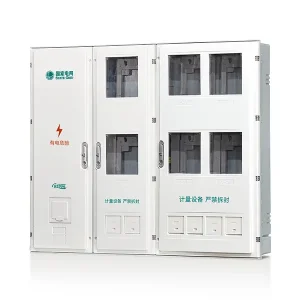
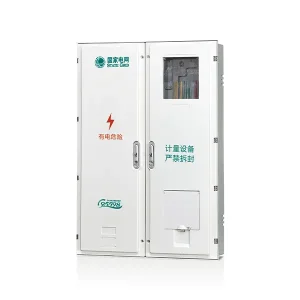
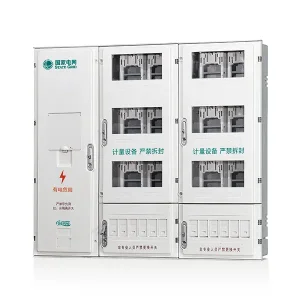
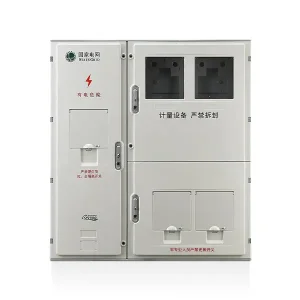
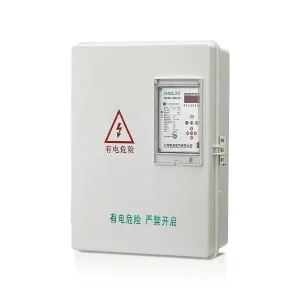
Industrial Three-Phase Metering & Intermediate Protection Systems
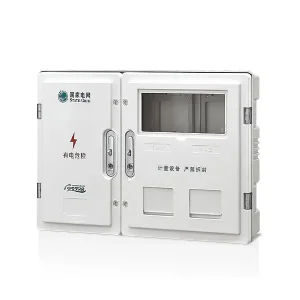
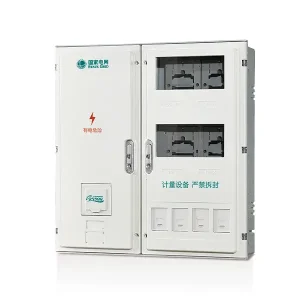
Heavy-duty, transformer-rated, and multi-user SMC fiberglass cabinets deployed across European low-voltage networks, distributed energy generation facilities, and commercial complexes.
Technical & Procurement FAQ
Engineering Questions for Berlin & European Grid Implementations
Direct technical answers regarding DIN standard compliance, TAB requirements, composite material behavior, and international OEM shipping.
How do Teyi SMC enclosures comply with German TAB (Technische Anschlussbedingungen) standards?
Our metering boxes are engineered to align with regional German Technische Anschlussbedingungen (TAB) guidelines enforced by DSOs like Stromnetz Berlin. This includes partitioned modular sections separating the unmetered utility intake area (Netzseitiger Anschlussraum - NAR) from the customer distribution field (Anlagenseitiger Anschlussraum - AAR). Enclosures provide dedicated sealable compartments for NH-fuse switch-disconnectors, DIN-rail mounting for certified Smart Meter Gateways (SMGW), and plumbable covers preventing unauthorized access.
What makes SMC composite superior to stainless steel for Berlin street feeder pillars?
While stainless steel provides physical strength, it is electrically conductive, costly, heavy, and creates a Faraday cage that attenuates smart metering cellular/mesh frequencies. SMC fiberglass delivers Class II total electrical insulation (eliminating step-and-touch voltage risks to pedestrians), naturally transmits wireless telemetry signals without external mast penetrations, resists winter road de-icing salts, and is completely immune to galvanic corrosion at ground level.
Can Teyi customize internal mounting plates, lock cylinders, and cable gland cutouts?
Yes. Through our rapid ODM/OEM program, we regularly machine custom CNC knockouts for PG and metric brass/polyamide cable glands, integrate European profile half-cylinder locks (compliant with DIN 18252 utility master key systems), and supply pre-assembled backplates in galvanized steel, bakelite, or SMC. We can configure busbar holders, DIN rails, and neutral/ground disconnect terminals according to your project's single-line diagrams.
What are the lead times and minimum order quantities (MOQ) for Berlin delivery?
For catalog products (such as the TY-SXD1 and TY-SXS series), standard production turnaround is 15–20 days. Full container loads (20GP / 40HQ) shipped from Ningbo or Shanghai port reach the ports of Hamburg or Bremerhaven in approximately 28–35 days, followed by direct rail/road freight to Berlin/Brandenburg logistics hubs. Standard catalog MOQs start at 50 to 100 units, while customized compression molds feature flexible pilot-run terms.
How does the material endure Berlin's freezing winter conditions and summer heat?
Our compression-molded SMC compound is tested and certified for continuous operation from -40°C to +120°C. The low thermal conductivity of glass-reinforced composite minimizes internal condensation during sharp nocturnal temperature drops. In conjunction with our labyrinth-style ventilation slots and silicone rubber IP65 perimeter gaskets, internal components remain dry and protected against thermal stress cycling across all seasons.