Featured Ring Main Units & Distribution Modules
The Medium-Voltage Landscape in France: Modernization, Decentralization & Normative Rigor
Navigating the complex technical requirements of Enedis, French regional distribution operators (ELDs), and private high-voltage delivery installations governed by standard NF C 13-100.
The medium-voltage (MV) power distribution architecture in France represents one of Europe's most technologically standardized yet rapidly evolving electrical infrastructures. Covering more than 95% of continental France, Enedis (a subsidiary of the EDF Group), alongside local distribution companies (Entreprises Locales de Distribution - ELDs such as Gaz Électricité de Grenoble and Strasbourg Électricité Réseaux), manages an extensive network operating primarily at 20,000 Volts (20 kV nominal, rated up to 24 kV) with three-phase 50 Hz configurations. As the French republic commits to aggressive climate neutrality goals under the Stratégie Nationale Bas-Carbone (SNBC) and the European Union's Fit for 55 framework, the demand for high-reliability, compact Ring Main Units (RMUs) has expanded far beyond traditional municipal substations.
Industrial and infrastructure buyers across France face three convergence pressures: the rapid integration of distributed renewable energy (photovoltaic solar parks in Occitanie and Nouvelle-Aquitaine, onshore wind farms in Hauts-de-France), the electrification of mass transportation (such as the Grand Paris Express and nationwide high-power EV charging hubs known as Stations de Recharge pour Véhicules Électriques - IRVE), and stringent safety standards for private medium-voltage delivery substations dictated by NF C 13-100 and NF C 13-200.
Understanding French Grid Standards: NF C 13-100 and NF C 13-200
For electrical engineering contractors, engineering, procurement, and construction (EPC) firms, and industrial site managers in France, the selection of Ring Main Units is heavily governed by the location and ownership boundary of the installation:
- NF C 13-100 Compliant Delivery Substations (Postes de Livraison HTA): Regulates private medium-voltage delivery stations connected directly to the public HTA network (up to 33 kV). These installations serve commercial facilities, hospitals, manufacturing centers, and municipal hubs. The RMU must provide strict disconnector interlocking, visible or positively indicated contact separation, earthing switches with full making capacity, and standardized capacitive voltage dividers for voltage presence indicating systems (VPIS).
- NF C 13-200 High-Voltage Private Installations: Applies to autonomous internal distribution networks within expansive industrial compounds, chemical refineries in Normandy, metallurgy complexes, and commercial logistics campuses. These sites demand flexible modular RMU architectures that accommodate vacuum circuit breaker functions (V-panel) paired with advanced numerical protection relays (overcurrent 50/51, earth fault 50N/51N, and directional earth fault 67N).
- EU F-Gas Regulation (Regulation (EU) 2024/573): The legislative timeline enacted by the European Parliament establishes a complete phase-out trajectory for sulfur hexafluoride (SF6) in medium-voltage switchgear. By 2026 for installations up to 24 kV, procurement frameworks prioritize SF6-free alternative technologies (such as solid dielectric insulation combined with vacuum interrupters, or synthetic dry-air solutions). Chinese manufacturers with forward-deployed R&D are providing French project developers with direct compliance pathways without the astronomical price premiums traditionally charged by domestic European conglomerates.
Why French EPCs, Panel Builders & Utilities Source RMUs from China
Overcoming protracted European delivery lead times, optimizing capital expenditure, and securing customized modular medium-voltage hardware without compromising safety or regulatory compliance.
The European electrical equipment supply chain has been severely stressed over recent cycles. French tier-1 engineering and installation contractors—including market leaders such as Bouygues Energies & Services, SPIE, VINCI Energies, and Eiffage Énergie Systèmes—have frequently encountered lead times exceeding 40 to 52 weeks for standard medium-voltage secondary switchgear from historical European manufacturers. In contrast, leading Chinese specialized manufacturers located in premier industrial clusters such as Yueqing, Zhejiang, maintain a high-precision, vertically integrated supply ecosystem.
Lead Time Compress: 8–12 Weeks
Direct factory scheduling, automated robotic laser welding of 3mm AISI 304/316L stainless steel tanks, and lean assembly allow factory-to-port dispatch in a fraction of traditional European turnaround times.
Full IEC 62271 Certification
Routine and type tests performed in accordance with IEC 62271-1, IEC 62271-100, IEC 62271-102, and IEC 62271-200. Verified by world-renowned test laboratories with mutual recognition under ILAC-MRA.
Custom Engineering & SCADA
Tailored engineering: pre-installed motorized spring mechanisms (24VDC/48VDC/110VDC/220VAC), integrated Remote Terminal Units (RTUs), and customized CT/VT ratios calibrated for Schneider or ABB relays.
The strategic imperative for French procurement directors centers on total life-cycle optimization. Procurement costs from Chinese primary manufacturers typically yield a 28% to 42% Capex reduction compared to Western European list prices, while delivering identical electrical endurance (Class E3/M2), hermetic sealing (IP67 for stainless steel enclosures), and mechanical robustness. This financial efficiency enables French EPC contractors to bid more competitively on large-scale renewable independent power producer (IPP) tenders launched by the Commission de Régulation de l'Énergie (CRE).
Macro Industry Engineering Solutions: RMU Topologies for French Infrastructure
Standard and custom functional module combinations (C, V, F, D, M) configured to meet specific utility ring topologies, private transformer protection, and solar park feed-in.
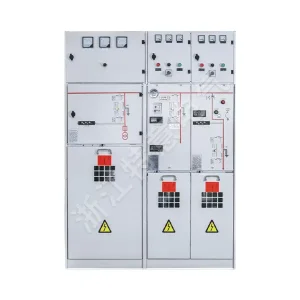
A Ring Main Unit functions as the strategic nerve center of secondary medium-voltage loops, enabling power continuity, sectionalization, and downstream fault isolation. In French distribution networks, these units are installed within compact outdoor prefabricated concrete substations (postes préfabriqués monoblocs), basement electrical rooms of Parisian towers, or specialized skids for renewable plants.
| Functional Module | IEC Code | Core Functionality | Primary French Application | Interlocking & Safety |
|---|---|---|---|---|
| Load Break Switch (LBS) | C Panel | Three-position disconnector (Closed, Open, Earthed) rated at 630A continuous current. | In/Out loop connection in Enedis 20kV open ring distribution networks. | ✓ Mechanical padlocking & door defeat interlocks |
| Vacuum Circuit Breaker | V Panel | Vacuum interrupter with independent manual/motorized operating mechanism up to 630A / 20kA. | Transformer protection (>1250 kVA), data centers, and NF C 13-100 delivery points. | ✓ Tripping via self-powered numerical relays |
| Switch-Fuse Combination | F Panel | LBS coupled with high-breaking capacity DIN-standard HTA fuses with striker pin tripping. | Distribution transformers (up to 1250 kVA) in residential and tertiary substations. | ✓ Three-pole opening on single fuse blow |
| Direct Cable Connection | D Panel | Direct connection of MV cables to the main busbar system without switching devices. | Substation expansion, tie-ins, and metering transformer connections. | ✓ VPIS capacitive voltage presence indication |
| Tariff / Billing Metering | M Panel | Air-insulated or gas-insulated enclosure housing precision CTs and VTs (Class 0.2S / 0.5). | Enedis revenue metering boundary for private industrial consumers and solar IPPs. | ✓ Utility sealable secondary terminal boxes |
Application-Specific Solution Architectures
1. NF C 13-100 Private Delivery Substations
Standard configuration: CCV (Two Cable loop switches + One Circuit Breaker) or CCF (Two Cable switches + One Fuse-switch). Equipped with capacitive dividers for voltage detection, motorized mechanisms for automated transfer switches (ATS / permutateur automatique), and key-interlocking (Castell, Ronis, or Profalux locks standard in French practice) ensuring safe transformer access.
2. Solar PV & BESS Grid Integration
Configurations engineered for centralized inverter stations and containerized Battery Energy Storage Systems (BESS). Incorporates high-end vacuum circuit breakers with low-frequency transient protection, directional protection relays (ANSI 67/67N), and power quality metering interfaces compatible with French transmission operator RTE and Enedis interconnection protocols.
3. Ultra-Compact Urban Kiosks (Grand Paris)
With space at a premium in urban centers like Paris, Lyon, and Marseille, our ultra-compact RMUs offer a reduced footprint—as narrow as 350mm to 375mm per panel width. Housed in ingress-protected IP67 stainless steel tanks with external IP4X/IK10 powder-coated outer enclosures, ensuring resilience against humidity, urban pollutants, and occasional flooding in subterranean vaults.
Technology Roadmap: The SF6-Free Evolution & Smart Grid Digitalization (2025–2035)
Strategic transition toward fluorine-free insulation, embedded IoT condition monitoring, and smart grid automation compatible with French DSO supervisory infrastructure.
The secondary medium-voltage switchgear industry stands at a transformative inflection point. The traditional dominance of SF6 gas insulation—which possesses a Global Warming Potential (GWP) 24,300 times greater than CO2—is closing under European decarbonization mandates. Concurrently, the growth of bidirectional power flows stemming from rooftop solar, EV fleet charging, and localized microgrids requires secondary switchgear to evolve from passive mechanical hardware into intelligent, digital edge nodes.
The Next-Gen Engineering Roadmap
Our factory's engineering roadmap incorporates three concrete development tracks specifically tailored to the European market:
- Track 1: Solid Insulated Switchgear (SIS) & Dry-Air Insulation: Replacing SF6 gas with high-dielectric epoxy resin encapsulation for each phase, paired with zero-gauge dry synthetic air (composed of 80% N2 and 20% O2). This eliminates gas handling certificates, end-of-life recovery fees, and leakage monitoring obligations required by European F-gas registries.
- Track 2: Digital Smart RMUs (Ready for SCADA Tele-Control): Integration of pre-wired low-voltage auxiliary compartments equipped with standardized RTUs supporting IEC 60870-5-104, Modbus TCP/IP, and DNP3 protocols. These systems feature integrated Low Power Voltage Transformers (LPVT) and Low Power Current Transformers (LPCT) according to IEC 61869-10/11, drastically reducing internal footprint while boosting dynamic measurement accuracy across harmonic frequencies.
- Track 3: Autonomous Loop Restoration (FLISR Integration): Deploying automated sectionalizing algorithms directly onto embedded micro-controllers. In the event of an underground cable fault in an urban circuit, the motorized RMU automatically locates the short-circuit condition, isolators trip open, and the unaffected healthy sections of the French municipal loop are re-energized within seconds, minimizing SAIDI (System Average Interruption Duration Index).
Localized Support, Factory Audits & French Compliance Assurance
Transparent manufacturing protocols, certified Factory Acceptance Testing (FAT), bilingual documentation, and optimized maritime logistics to French commercial ports.
Procuring medium-voltage distribution equipment from China requires rigorous compliance verification, comprehensive testing governance, and frictionless logistics. As a professional manufacturer serving the French and broader European Union market, we maintain an uncompromising quality management framework aligned with ISO 9001, ISO 14001, and ISO 45001 certifications.
Factory Acceptance Testing (FAT)
We facilitate full FAT protocols with French client engineering teams either in-person or via high-definition live digital witness inspection. Every unit undergoes power frequency withstand tests (50kV/1min), lightning impulse tests (125kV BIL), helium mass-spectrometer leak tests, and mechanical contact timing tests.
Third-Party Inspection Collaboration
We regularly host and collaborate with globally accredited third-party inspection agencies appointed by French buyers, including Bureau Veritas, SGS, DEKRA, and TÜV Rheinland, conducting full pre-shipment inspections (PSI) and material metallurgical validations.
Bilingual Engineering Documentation
Complete project documentation packages provided in French and English, including detailed single-line diagrams (schémas unifilaires), internal wiring schematics, foundation civil engineering guides, Ronis/Profalux key interlocking charts, and French-language operating instruction manuals.
Logistics & Customs Seamless Delivery into France
Our shipping division coordinates turnkey freight services directly from the deep-water ports of Ningbo-Zhoushan and Shanghai to prime French maritime gateways: Port of Le Havre (HAROPA Port) for northern France, Paris, and Normandy; Port of Marseille-Fos for southern regions, the Rhône Valley, and Mediterranean corridors; as well as Dunkerque. Shipments are packaged in fumigated sea-freight timber enclosures incorporating high-absorption desiccant matrices and vacuum barrier bags to prevent saline condensation during transit. Standard terms supported include FOB, CIF, and DDP (Delivered Duty Paid), with complete customs documentation (EUR.1 certificates, CE Declarations of Conformity, and HS Code 8537.20 / 8535.30 categorization).
Frequently Asked Technical & Commercial Questions
Straightforward answers to the primary technical, normative, and operational questions posed by French procurement managers and utility engineers.
Are your Ring Main Units compliant with French NF C 13-100 private delivery substations?
Yes. Our medium-voltage Ring Main Units are engineered in full alignment with both IEC 62271-200 and the specific operational requirements defined under French standard NF C 13-100. This includes strict mechanical interlocking between the disconnector, earthing switch, and cable compartment access door; provision for standardized capacitive VPIS (Voltage Presence Indicating System) units; compatibility with French-standard Ronis, Castell, or Profalux safety key locks; and earthing switches engineered with full short-circuit making capability (Class E2).
How do your products comply with the European Union's SF6 Phase-out (Regulation (EU) 2024/573)?
To support European buyers transitioning ahead of the EU F-gas regulatory deadlines, we offer two parallel product lines: our conventional ultra-low leakage sealed-for-life SF6 units (<0.1% annual leakage rate) for non-restricted or export applications, and our next-generation SF6-Free Solid Insulated Switchgear (SIS) and Dry-Air Vacuum RMUs. Our SF6-free solutions utilize vacuum interrupters for arc extinguishing and purified natural air or solid resin dielectric barriers for electrical insulation, achieving a Global Warming Potential (GWP) of less than 1.
What are the typical manufacturing and delivery lead times for orders to France?
Standard modular RMU configurations (such as CCV, CCF, CCC) generally require 6 to 8 weeks for manufacturing following final engineering approval of drawings and single-line diagrams. Custom projects involving specialized relay engineering or non-standard metering compartments take approximately 8 to 10 weeks. Maritime shipping from Ningbo/Shanghai to Le Havre or Marseille-Fos typically ranges from 28 to 35 days, providing an end-to-end delivery cycle of under 14 weeks—far shorter than the 40+ weeks typical among European manufacturers.
Can we specify European protection relays (e.g., Schneider Sepam/MiCOM, ABB Relion) in your units?
Absolutely. Our low-voltage auxiliary compartments are modularly engineered to integrate client-specified protection relays, energy meters, and RTUs. We routinely integrate Schneider Electric (Sepam series, Easergy P3/P5), ABB (Relion series 615/620), Siemens (Siprotec), or Woodward numerical relays. Alternatively, we can provide high-reliability self-powered relays (such as Woodward WIP1 or our proprietary micro-controller relays) which eliminate the need for an external auxiliary battery supply in compact rural substations.
What type-test certificates and documentation accompany each switchgear batch?
Every equipment delivery is accompanied by comprehensive documentation including full type-test certificates issued by accredited independent international high-voltage testing laboratories under the ILAC-MRA umbrella. Routine test reports (covering 50 Hz power frequency dielectric withstand, impulse tests, helium leak rate certification, contact resistance measurement, and mechanical operating times) are executed and certified for every individual serial number prior to packaging.
How do you handle Factory Acceptance Testing (FAT) for French engineering teams?
We accommodate three FAT pathways: (1) In-person client engineering delegation visits to our Yueqing manufacturing complex with dedicated testing bay facilities; (2) High-definition live video FAT sessions with interactive camera feeds, calibrated testing instrument readouts, and immediate digital sign-off protocols; or (3) Third-party testing agency representation through Bureau Veritas, SGS, or DEKRA offices located in Zhejiang province, executing your customized FAT inspection checklist.
Complete Secondary Distribution & Advanced Metering Systems
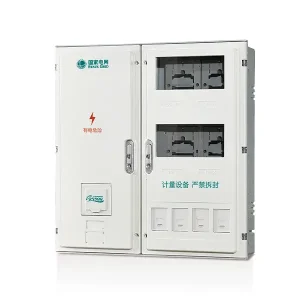
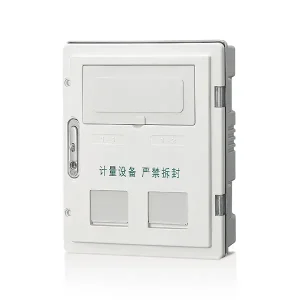
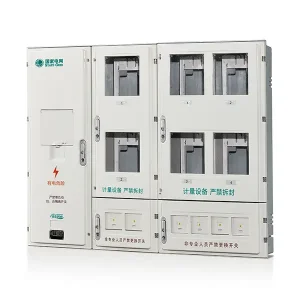
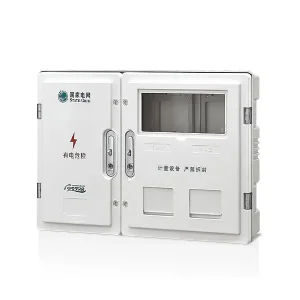
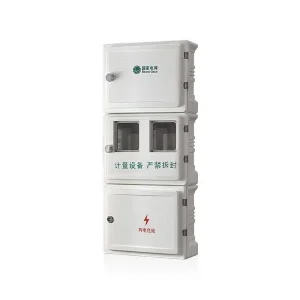
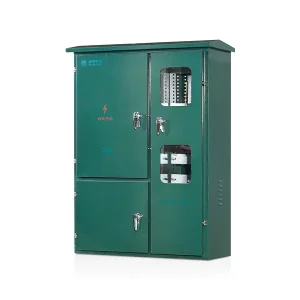
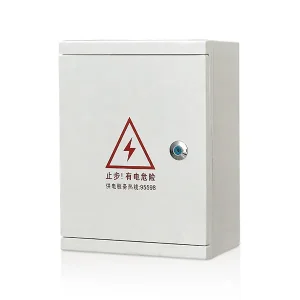
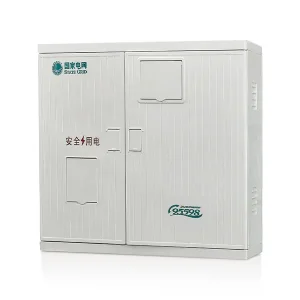
Engineered from SMC sheet molding composites and laser-welded stainless steel enclosures, serving utility meters, step-down substations, and industrial power loops across France.