
Primary Cable Branching & Distribution Assemblies
Engineered for underground-to-aboveground service transitions, suburban subdivision feedering, and industrial power reticulation across North and South Islands.
-
AS/NZS 61439
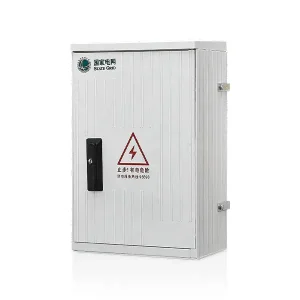
China TY-DFW Wall-mounted Cable Branch Box Suppliers, Factories
View Technical Specs -
IP55 / IK10
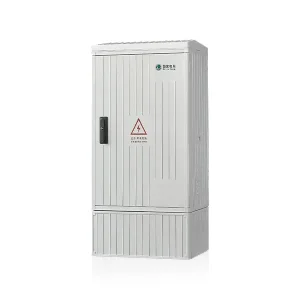
Wholesale TY-DFW Floor-standing Cable Branch Box Supplier, Factories
View Technical Specs -
High Breaking Capacity
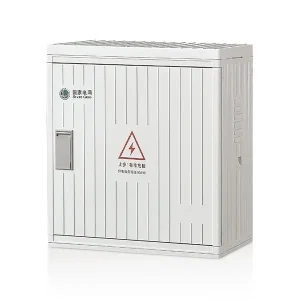
Wholesale TY-DFW-7A branch box Supplier, Factory
View Technical Specs -
SMC Composite
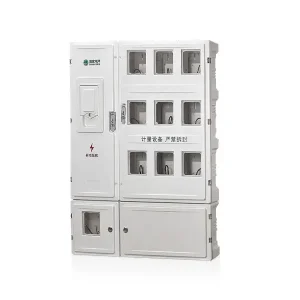
Wholesale TY-SXD2 single-phase electric energy metering box(9-18) Suppliers, Factories
View Technical Specs
New Zealand Distribution Network Landscape & Demands
Navigating decarbonisation, residential undergrounding mandates, and extreme maritime weathering across the 29 Electricity Distribution Businesses (EDBs).
New Zealand’s electricity network represents one of the world's most geographically fragmented and climate-demanding distribution environments. Operating across both the North and South Islands under the oversight of the Electricity Authority (EA) and Commerce Commission, 29 distinct Electricity Distribution Businesses (EDBs)—including Vector (Auckland), Powerco, Orion New Zealand (Christchurch), and Aurora Energy (Otago)—manage over 150,000 kilometres of lines and underground cables. The national commitment to achieve a 100% renewable electricity target, coupled with the rapid electrification of private transport and agricultural process heat, has triggered an unprecedented surge in low-voltage (LV) and medium-voltage (MV) network reinforcement.
In Auckland and Greater Christchurch, intensive urban infill and brownfield densification require compact underground distribution architectures. Traditional overhead distribution is systematically replaced with underground reticulation systems utilizing roadside cable branch boxes (service pillars), link boxes, and ring main units (RMUs). However, New Zealand's unique macro-environmental challenges impose severe operational constraints on outdoor electrical switchgear and enclosure engineering:
Aggressive C5-M Marine Salinity
With no inland location situated more than 130 km from the coastline, aerosolized sea-salt spray combined with persistent prevailing westerlies accelerates galvanic and atmospheric corrosion. Standard mild steel or low-grade sheet metals suffer premature degradation within 3 to 5 years.
Extreme Solar UV Index
Due to the Southern Hemisphere ozone dynamics and exceptionally clear maritime atmosphere, peak summer UV levels in New Zealand are up to 40% higher than at equivalent European latitudes, inducing photo-oxidation, micro-fissuring, and embrittlement in inferior plastic polymers.
Seismic Resilience (NZS 4219)
Straddling the Pacific-Australian tectonic plate boundary, New Zealand enclosures must withstand dynamic horizontal accelerations and earth shearing without structural latch failure, busbar misalignment, or loss of ingress integrity during seismic shaking.
Engineering Verification to AS/NZS & International Standards
How Zhejiang Teyi Electric guarantees design alignment with the strict safety frameworks mandated by WorkSafe New Zealand and EDB technical specifications.
| Regulatory Standard | Technical Criterion | Teyi Electric Engineering Solution | New Zealand Utility Compliance Impact |
|---|---|---|---|
| AS/NZS 61439.1 / .5 | Low-voltage switchgear & assemblies for public electricity distribution networks | Type-tested temperature rise limits, dielectric withstand, and short-circuit capability verification up to 30 kA/1s. Verified internal separation forms (Form 2b to Form 4b). | Mandatory EDB Acceptance Assures zero thermal runaway under high continuous load and fault currents. |
| AS 60529 / IEC 60529 | Ingress Protection against moisture, flood run-off, dust, and coastal sand blast | Precision labyrinth sealing channels with robotic continuous poured-in-place foamed polyurethane gaskets achieving certified IP54 to IP66 ratings. | Prevents internal condensation, salt deposition, flashovers, and insect infestation common in Northland and Taranaki environments. |
| AS/NZS 3000 | Wiring Rules: Earthing regimes, protective bonding, touch voltage limitations | Class II total insulation enclosure design (SMC thermoset) eliminating touch-voltage hazards without secondary earth stakes; optional heavy stainless copper earth bars. | Maximized public safety in suburban greenfield reserves, school walking paths, and commercial pedestrian streetscapes. |
| ISO 4892-2 / ASTM G154 | Accelerated UV weathering resistance and polymer matrix stability | SMC formulation compounded with hindered amine light stabilizers (HALS), UV-absorbing benzotriazoles, and specialized unsaturated polyester resins. Tested >3,000h Xenon Arc. | Guarantees 30+ year service life without surface chalking, micro-cracking, or impact resistance loss under intense South Island sunshine. |
| NZS 4219 / NZS 1170.5 | Seismic performance of engineering systems in buildings and civil infrastructure | Compression-molded high-modulus glass fibre matrix (30%+ content) reinforced with internally ribbed mounting plinths and vibration-proof locking mechanisms. | Zero structural failure, panel distortion, or internal breaker tripping during moderate to severe Alpine Fault or Wellington seismic events. |
SMC Composite vs. 316 Stainless Steel for NZ Infrastructure
When designing cable branch enclosures for New Zealand utility tenders, engineers frequently evaluate Sheet Moulding Compound (SMC) hot compression-molded composite against Grade 316 marine stainless steel. While 316 stainless provides exceptional vandal resistance, it remains conductive, heavy, susceptible to coastal crevice corrosion if maintenance polishing is neglected, and costly to scale across large housing developments.
Teyi Electric’s SMC fiberglass formulation incorporates 30% long-strand glass fibres impregnated with halogen-free, self-extinguishing thermosetting unsaturated polyester. This creates an isotropic structural matrix that is completely dielectric, impervious to coastal chemical attacking, and inherently maintenance-free throughout its 40-year outdoor operational lifecycle.
Why New Zealand Utilities & EPCs Source Direct from Yueqing
Mitigating domestic lead-time inflation, accessing vertically integrated molding scale, and bypassing intermediary trade markups.
New Zealand’s civil electrical infrastructure sector frequently faces acute supply-side bottlenecks. Domestic fabrication capacity for specialized composite enclosures and high-current junction pillars is constrained, leading to project lead times often stretching past 24 to 36 weeks. Sourcing through local third-party distributors adds multiple compounding layers of margins, leaving EPC contractors vulnerable to liquid damages on fast-track residential subdivisions and renewable grid-interconnection contracts.
Located in the Yueqing Economic Development Zone—globally recognized as the Capital of Electrical Equipment in China—Zhejiang Teyi Electric offers New Zealand buyers direct access to an unrivaled manufacturing ecosystem. By controlling the entire production sequence from precision tooling fabrication and sheet molding compounding to hydraulic hot pressing, internal busbar CNC machining, and automated laser testing, we eliminate supply friction:
Direct Factory Margin Savings
Bypassing multi-tier import brokers delivers 25% to 40% capital equipment savings, allowing contractors to submit significantly more competitive tender bids for EDB framework agreements.
Lead Time Compression (4-6 Wks)
With high-tonnage automated hydraulic presses and pre-stocked SMC compound coils, custom-configured cable branch box orders complete production in under 20-30 days, ready for direct shipping to Auckland, Tauranga, or Lyttelton ports.
Bespoke Utility Customization
Full OEM/ODM tooling flexibility allows incorporation of New Zealand-specific requirements: utility penta-head locking bolts, copper neutral/earth disconnect links, CT mounting studs, and tailored cable entry gland plates.
Technical Roadmap: The Smart Grid Ready Cable Branch Pillar
Transitioning from passive electrical enclosures into intelligent, monitored low-voltage distribution nodes supporting New Zealand's solar and EV expansion.
Nano-Coated Hydrophobic Resins
Deploying superhydrophobic nano-modified gel-coat layers to prevent airborne sea-salt crystal adhesion and eliminate leakage currents along coastal enclosure perimeters.
Integrated Fibre-Optic Busbar Probes
Embedding passive temperature and partial discharge sensors along main busbars to identify connection loosening before thermal failure under high-amp fast EV charging spikes.
Cellular / LoRaWAN Low-Power Gateways
Integrating compact low-voltage monitoring modules communicating directly with utility SCADA/ADMS platforms via 4G-LTE Cat-M1 or LoRaWAN across rugged rural terrain.
Distributed PV Micro-Circuit Interconnects
Optimizing busbar current paths and ventilation geometries to manage reverse power flow thermal profiles generated by high-density residential rooftop solar arrays.
Specialized Metering, Photovoltaic & Ring Main Systems
Explore our full catalog of utility-grade enclosures, stainless cabinets, solar combiner boxes, and modular switchgear for export to New Zealand and worldwide markets.
-
Solar Solar Farm Ready
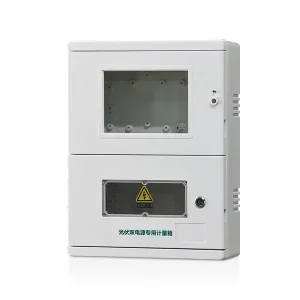
Wholesale China Suppliers Factory: SMC Fiberglass Photovoltaic Grid-connected Boxes for Efficient Solar Energy Management Suppliers, Factory
View Technical Specs -
11kV / 22kV Loop
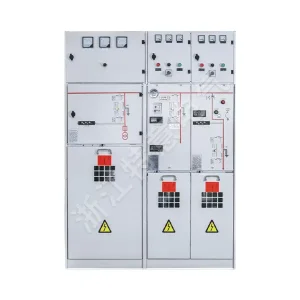
Wholesale High-Quality Ring Main Unit (RMU) from Trusted China Suppliers and Factory for Efficient Power Distribution Manufacturers, Suppliers
View Technical Specs -
CT Metering 400V
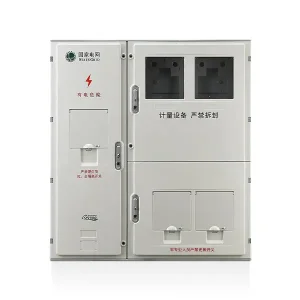
Wholesale China TY Three-Phase Electric Energy Metering Box - Transformer Type | Suppliers & Factory Direct Solutions Manufacturers, Factories
View Technical Specs -
Dual Voltage Ready
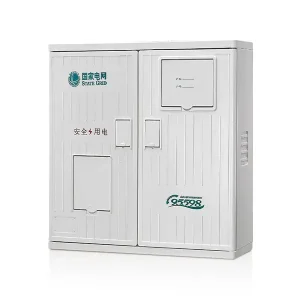
China China Suppliers Factory TY-SXS1 A-Type Box for Low and High Voltage Meter Protection and Durability Manufacturers, Factories
View Technical Specs -
Sealed Weatherproof
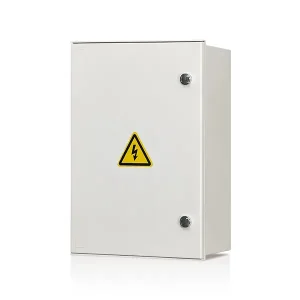
Wholesale TY-SXD1-FSH1 Waterproof Box: Durable IP44 Protection from China Suppliers and Factory for Power Metering Equipment Suppliers, Factory
View Technical Specs -
Compact Service Pit
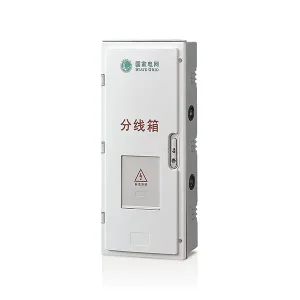
China TY-FXX junction box Manufacturer, Supplier
View Technical Specs -
SS304 / SS316 Marine
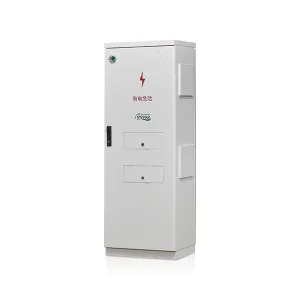
China China Factory Stainless Steel Single Phase Twelve-Position Meter - Durable Floor-Standing Solution from Reliable Suppliers Supplier, Suppliers
View Technical Specs -
Heavy Commercial 3-Phase
Wholesale China TY Three-Phase Electric Energy Metering Box (Transformer Type) - Suppliers and Factory Direct Solutions Factories, Factory
View Technical Specs
Frequently Asked Questions for New Zealand Buyers
Detailed answers covering compliance verification, batch delivery logistics, seismic testing, and OEM customization protocols.
Are Teyi Electric cable branch boxes certified for compliance with AS/NZS 61439 and AS/NZS 3000?
Yes. Our complete series of low-voltage cable branch boxes, service pillars, and metering cabinets are engineered and type-tested strictly in accordance with AS/NZS 61439.1, AS/NZS 61439.5 (Assemblies for public electricity distribution networks), and AS/NZS 3000 Wiring Rules. Our products have undergone third-party testing at accredited ILAC-MRA laboratories, including temperature rise verification at rated current, dielectric withstand (2.5 kV to 6 kV), short-circuit withstand up to 30 kA, and IP ratings (IP54, IP55, and IP66) to AS 60529. Full test reports and Declarations of Conformity (DoC) are provided with engineering submittals.
How does your SMC fiberglass formula withstand New Zealand’s high solar UV levels?
New Zealand experiences exceptionally high UV index peaks during summer months, causing rapid chalking and brittleness in generic grade plastics. Teyi Electric utilizes an export-grade SMC (Sheet Moulding Compound) recipe compounded with hindered amine light stabilizers (HALS) and nano-titanium dioxide UV blockers. Our composite formulation undergoes accelerated artificial weathering tests exceeding 3,000 hours under Xenon-Arc radiation (ISO 4892-2) without loss of flexural strength, colour shifts (Delta E < 2.0), or resin degradation, guaranteeing an outdoor operational life exceeding 30 years.
Can you accommodate specific utility locking requirements (e.g., Vector or Orion penta-head)?
Absolutely. Because we maintain our own in-house tool and mold engineering division, we regularly tailor our mechanical latching arrangements to match individual New Zealand EDB asset standards. This includes penta-head captive security screws, standard utility triangular key locks, padlockable 3-point espagnolette locking systems, and heavy-duty tamper-proof stainless steel hinges designed to prevent unauthorized public access while granting rapid emergency access to qualified linesmen.
What are the seismic testing ratings for floor-standing branch pillars under NZS 4219?
Our floor-standing assemblies and in-ground plinths are structurally evaluated against the seismic acceleration criteria established in NZS 4219 (Seismic Performance of Engineering Systems in Buildings) and NZS 1170.5. The high impact resistance (IK10) and flexural modulus of our SMC composite, combined with multi-point galvanized anchor fixings and internally stiffened ribs, prevent structural resonance, body warping, or electrical busbar displacement up to Peak Ground Accelerations (PGA) exceeding 0.8g, covering high-seismic zones such as Wellington and Canterbury.
What is the typical shipping lead time and customs clearance process to New Zealand ports?
Standard production lead times for customized cable branch box batches range from 20 to 30 days following engineering CAD sign-off. Ocean freight transit from Ningbo or Shanghai Port to the Port of Tauranga or Ports of Auckland takes approximately 14 to 18 days; South Island delivery to Lyttelton takes 18 to 22 days. Under the China-New Zealand Free Trade Agreement (NZ-China FTA), our products qualify for preferential Zero-Duty tariff treatment under HS Code 8537.10/8537.20 with our official Certificate of Origin (Form N-Z).
Do you provide pre-fitted busbars, fuse disconnect switches, and neutral links inside the box?
Yes. Teyi Electric delivers both empty enclosures and fully integrated, turn-key distribution assemblies. We can pre-install high-conductivity tin-plated copper busbars (rated up to 630 A or 1,250 A), DIN-type NH00/NH1/NH2 fuse-switch disconnectors, screw or shear-bolt mechanical cable connectors, neutral disconnect links, and internal transparent polycarbonate touch-protection shrouds conforming to IP2X finger-safe requirements.