
Engineered Power Metering Enclosures & Distribution Modules
Factory-direct high performance medium-voltage Ring Main Units, SMC composite and three-phase intelligent metering boxes verified under rigorous dielectric standards.
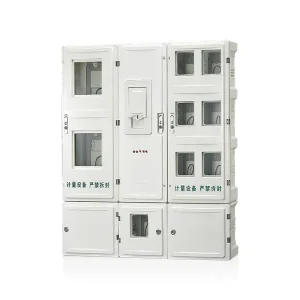
China TY-SXD2+SXS2-1B three-phase two-position + single-phase six-position electric energy metering box Suppliers, Factories
View Specifications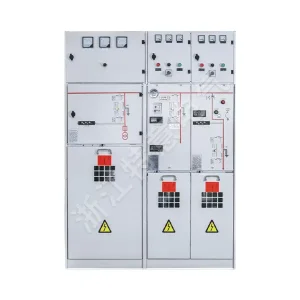
China China Ring Main Unit (RMU) Suppliers: Reliable Power Distribution Solutions from Factory Direct Factories, Factory
View Specifications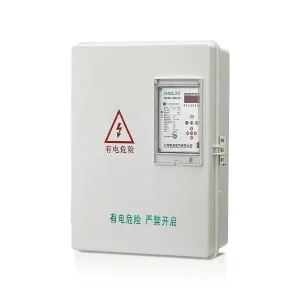
China China Suppliers Factory TY-Intermediate Protection Box for Single-Phase and Three-Phase Electrical Equipment Supplier, Factories
View Specifications
Wholesale TY-SXD1-FX single-phase one-position distribution box Manufacturer, Factory
View Specifications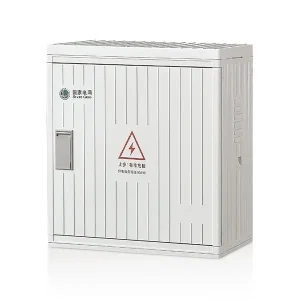
China High-Quality TY-DFW-7A Branch Box from China Suppliers | Reliable Factory Solution for Electrical Safety Manufacturers, Supplier
View Specifications
China China Factory Suppliers TY-SXD2+SXS2-1B Three-Phase Two-Position & Single-Phase Six-Position Energy Metering Box Suppliers, Factories
View Specifications
Wholesale China Ty-SXD2+SXS2-1B Three-Phase Two-Position & Single-Phase Six-Position Electric Metering Box Suppliers and Factory Manufacturer, Suppliers
View Specifications
China China TY-SXD2+SXS2-1B Three-Phase Two-Position & Single-Phase Six-Position Electric Metering Box Suppliers from Factory Manufacturer, Factories
View SpecificationsGlobal Medium-Voltage Grid Topology & The Commercial Mandate for SF6 RMUs
As power distribution architectures adapt to distributed generation, microgrids, and urban density, the Gas-Insulated Ring Main Unit (RMU) remains the cornerstone of resilient secondary networks worldwide.
In modern industrial and urban electrical engineering, continuity of supply is not merely an operational target—it is an economic necessity. The global Ring Main Unit (RMU) market, projected to expand beyond USD $4.2 billion by 2030, is driven by the rapid undergrounding of medium-voltage (MV) distribution feeders and the integration of renewable energy collection stations. Within this ecosystem, SF6 Gas-Insulated Ring Main Units occupy an indispensable position due to the exceptional electronegative physical properties of sulfur hexafluoride (SF6) gas. Providing a dielectric withstand strength approximately 2.5 to 3 times superior to dry atmospheric air at equivalent pressure, SF6 gas enables an ultra-compact equipment footprint that air-insulated switchgear (AIS) simply cannot match.
In mega-cities, underground transport hubs, and heavy offshore industrial clusters, spatial limitations demand maximum power density per cubic meter. A standard 3-way or 4-way SF6 RMU delivers full operational loop-switching (Load Break Switch, LBS) and feeder protection (Vacuum Circuit Breaker, VCB) inside a hermetically sealed stainless steel enclosure often measuring less than 1.5 meters in total length. This footprint compaction directly slashes land acquisition costs, reduces civil concrete construction investments in secondary compact substations, and ensures uninterrupted operation in harsh environmental conditions characterized by chemical corrosion, flooding risks, and salt spray.
"The systemic migration toward underground urban cable distribution networks across Europe, Southeast Asia, South America, and the Middle East has positioned compact SF6 RMU equipment as the single most critical asset for preventing cascading blackouts in ring-fed distribution loops."
Engineering Architecture & Dielectric Physics of Modern Gas-Insulated RMUs
Deconstructing the structural mechanics, contact metallurgy, and metallurgical welding techniques that prevent partial discharge and arc formation inside gas tanks.
Robotically Welded 304/316L Tank
Constructed from robotic CNC laser-cut 3.0mm stainless steel sheets. Welded in automatic argon-purged environments to prevent micro-fissures and guarantee an internal gas tightness compliant with IEC 62271-1 sealed pressure systems.
Arc-Quenching Dynamics
Rotary arc extinguishing and puffing mechanisms cool the electrical plasma plume within microseconds. SF6 gas recombination kinetics regenerate the dielectric boundary layer instantaneously after high-voltage current interruption.
Fail-Safe Mechanical Interlocks
Five-prevention interlocking geometry enforces physical lockouts between load break switches, earthing switches, and cable test compartments, eliminating catastrophic human error during secondary distribution switching operations.
The primary electrical circuit—comprising the busbars, three-position switch disconnectors, vacuum interrupters, and earthing switches—is situated completely inside the gas-insulated vessel. This design makes the primary live elements impervious to external atmospheric contamination, humidity condensation, dust ingress, and fauna intrusion. Bushings made of epoxy resin (cast via APG automatic pressure gelation processes) interface the gas enclosure with outer cable plugs, conforming to standard CENELEC EN 50181 Type C / Type B interfaces.
| Evaluation Parameter | SF6 Gas-Insulated RMU | Solid Insulated Switchgear (SIS) | Air-Insulated Switchgear (AIS) |
|---|---|---|---|
| Dielectric Footprint | Ultra-Compact (100%) | Compact (~120-140%) | Bulky (250% - 400%) |
| Environmental Resistance | Unaffected (IP67 Hermetic Tank) | High (Susceptible to surface tracking) | Low (Requires climate control) |
| Maintenance Interval | 30+ Years Maintenance-Free | Periodic surface cleaning | Routine contact maintenance (3-5 yrs) |
| Thermal Arc Performance | Superior (Instant SF6 gas recovery) | Moderate (Depends on solid resin) | Air flow dependent, lower quenching speed |
| Lifecycle Capital Cost | Lowest Total TCO over 30 years | Higher initial capital expenditure | High civil and maintenance overhead |
The Yueqing Ecosystem: How Chinese Factory Efficiency Shapes Global Wholesale Value
Unpacking the supply chain density, automated manufacturing clusters, and technical test labs located in China's electrical capital.
Procuring medium-voltage switchgear at wholesale volumes requires balancing cost-effectiveness with unwavering dielectric compliance. The undeniable dominance of Chinese factories—specifically centered in Yueqing, Wenzhou—stems from a dense industrial cluster known internationally as the "Electrical Capital of China." Within a 15-kilometer radius of our manufacturing facilities, every component required to manufacture an international-grade SF6 RMU is produced, refined, and tested:
1. Complete Vertical Integration
From pure electrolytic copper busbars and APG epoxy resin bushings to spring mechanisms, microswitches, and automated digital relays, the regional supply chain removes multi-tiered intermediary logistics margins.
2. Automated Robotic Fabrication
High-speed fiber-laser sheet cutting machines and multi-axis welding robots run continuous cycles, delivering consistent dimensional tolerances (±0.05mm) across thousands of RMU gas enclosures.
3. Advanced Vacuum & Helium Leakage Testing
Every gas tank undergoes dual-cycle helium mass spectrometry chamber leak detection. We reject any enclosure with leakage exceeding equivalent annual rates of 0.1%, ensuring stable 30-year gas containment.
4. Rapid Turnaround for OEM/ODM
Tailoring secondary electrical schemes (e.g., motor operating mechanisms, remote terminal units / FTU interfaces, CT/PT metering configurations) takes days instead of the months typical of Western OEM lines.
This industrial capability enables Teyi Electric to offer international engineering firms, utilities, and EPC contractors savings of 30% to 45% compared to European-manufactured units, while maintaining full compliance with IEC 62271-200, IEC 62271-100, and ANSI standards. Routine factory acceptance tests (FAT) include lightning impulse withstand voltage tests (up to 95kV/125kV BIL), power frequency dry tests (up to 42kV/50kV), mechanical endurance testing (M2 class - 2000 cycles minimum), and digital loop resistance measurements.
Localized Application Scenarios: Engineering RMUs for Real-World Environments
Medium-voltage power delivery changes across environments. Here is how our SF6 RMUs are deployed in diverse operating conditions.
Renewable PV & Wind Farms
Integrated directly into step-up containerized transformer kiosks. Protects against frequent switching surges, inverter harmonics, and severe ambient thermal cycles ranging from desert heat (+55°C) to alpine frost (-40°C).
Subterranean Urban Substations
Installed inside compact basement chambers prone to humidity, moisture, and seasonal water intrusion. The IP67 sealed stainless steel tank prevents moisture from entering, maintaining internal insulation integrity.
Heavy Industry & Petrochemicals
Used in petrochemical plants, coastal ports, and mining facilities where airborne H2S, salt fog, and chemical dust would quickly corrode open contacts in conventional air-insulated switchgear.
Rail Transit & Mission-Critical Data Centers
Equipped with motorized drives and intelligent Feeder Terminal Units (FTUs) to execute automated Self-Healing Fault Isolation and System Restoration (FLISR) sequences in less than 500ms.
Digitalization, Edge IoT & The Transition Toward Eco-Friendly Dielectric Alternatives
Navigating the dual challenges of smart grid automation and international F-gas environmental regulations.
The medium-voltage distribution industry is undergoing a generational transformation. While wholesale SF6 RMUs continue to be the primary standard globally due to their cost efficiency and reliability, two major technological trends are reshaping procurement specifications:
SF6-Free & Eco-Gas Readiness
To comply with the European Union's updated F-gas regulations and corporate net-zero greenhouse gas commitments, manufacturers are engineering drop-in alternative gas RMUs that use Dry Synthetic Air or fluoronitrile gas mixtures (C4-FN/CO2/O2), cutting Global Warming Potential (GWP) by 99% while preserving compact installation footprints.
Integrated Edge Sensing & Health Monitoring
Modern RMUs integrate continuous non-invasive thermal sensors at cable termination bushings, non-dispersive infrared (NDIR) SF6 density/moisture transmitters, and mechanical vibration analysis. These real-time data streams feed directly into substation SCADA via IEC 61850 or Modbus protocols.
Primary & Secondary Integrated Fusion
Transitioning away from external, bolt-on RTUs toward factory-integrated electronic transformers (LPIT - Low Power Instrument Transformers per IEC 61869) and smart feeder controllers directly encased inside the switchgear auxiliary housing, enabling fast, turn-key deployment.
Global Procurement Checklist: Technical Criteria for Utility & EPC Tenders
Key design factors that electrical procurement directors and lead engineers evaluate when qualifying an overseas RMU manufacturing partner.
A. Tank Metallurgy & Welding Rigor
Verify that the gas tank is formed from certified AISI 304 or 316L stainless steel with a wall thickness ≥3.0mm. Ensure welding seams are created by robotic plasma or laser processes and pass X-ray or mass-spectrometry checks to eliminate pinhole porosities.
B. Internal Arc Classification (IAC)
Confirm the unit has type-test certification for internal arc fault containment (IAC AFLR or AFL) according to IEC 62271-200 at 20kA or 25kA for a duration of 1.0 second, guaranteeing complete operator safety on all four sides of the switchgear housing.
C. Gas Monitoring & Low-Pressure Interlock
Specify temperature-compensated pressure gauges with two-stage electrical microswitches: Alarm level (Stage 1: ~0.02 MPa below normal) and Lockout level (Stage 2: mechanically locking trip mechanisms before dielectric withstand capability drops).
D. Full Type Test Portfolio
Tender validation requires test certificates issued by internationally accredited laboratories (such as KEMA, CESI, ASTA, or national high-voltage testing institutes) covering thermal rise, short-circuit making/breaking, and seismic withstand performance.
Smart Substation Accessories & Industrial Metering Solutions
Explore our factory-direct stainless steel metering cabinets, pole-mounted primary-secondary fusion breakers, and weatherproof modular enclosures.
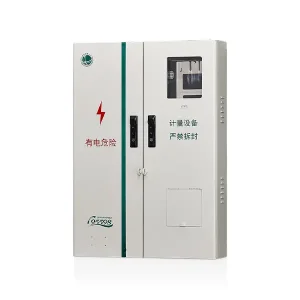
Wholesale China Stainless Steel Three-Phase Electric Energy Metering Box & Transformer - Trusted Suppliers and Factory Solutions Manufacturers, Factories
View Specifications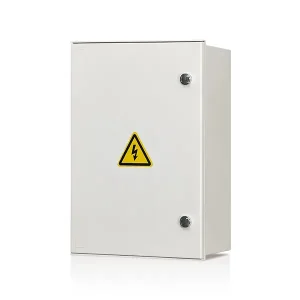
China TY-SXD1-FSH1 waterproof box Manufacturer, Factories
View Specifications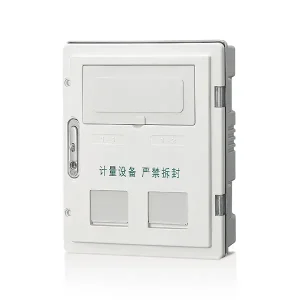
Wholesale China TY Single-Phase Electric Energy Metering Box - Factory Direct Suppliers for Modern Home and Commercial Use Supplier, Suppliers
View Specifications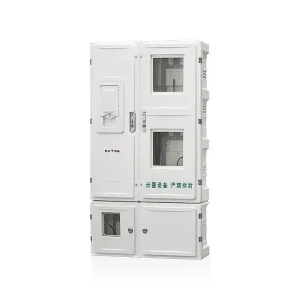
China Three-Phase Electric Energy Metering Box TY-SXS2 from China Suppliers and Factory for Efficient Power Management Manufacturers, Factory
View Specifications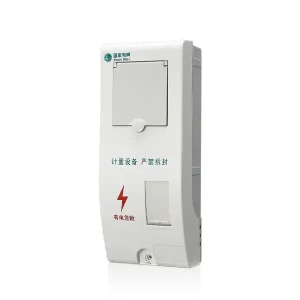
Wholesale China TY-SXD1 Single-Phase Electric Energy Metering Box - Reliable Suppliers & Factory Solutions Supplier, Factory
View Specifications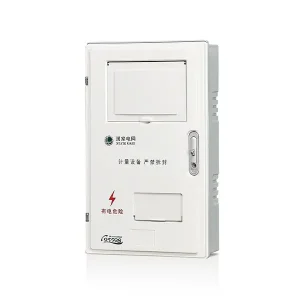
China Three-Phase TY-SXS1 Electric Energy Meter Box - Reliable China Suppliers & Factory Quality Assurance Supplier, Factory
View Specifications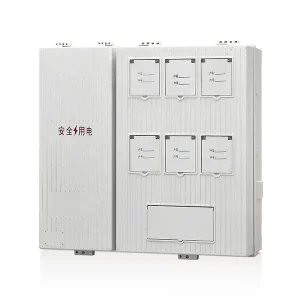
Wholesale TY Single-Phase Electric Energy Metering Box from China Suppliers and Factory - Safe & Reliable Outdoor Use Manufacturer, Suppliers
View Specifications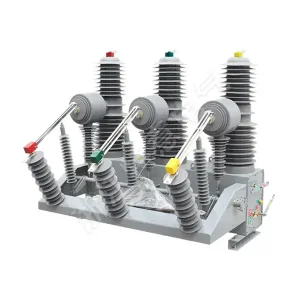
Wholesale China Suppliers Factory Integrated Primary and Secondary Fusion Pole Mounted Circuit Breaker for Power Distribution Manufacturer, Factories
View SpecificationsEngineering & Procurement FAQ: Wholesale SF6 RMU Distribution
Detailed answers to the technical questions asked most often by distribution system operators, EPC contractors, and international switchgear buyers.