
High-Performance Metering & Distribution Assemblies
Explore our flagship single-phase, three-phase, and branch distribution enclosures engineered from SMC composite and marine-grade stainless steel to prevent power theft and survive extreme weather.
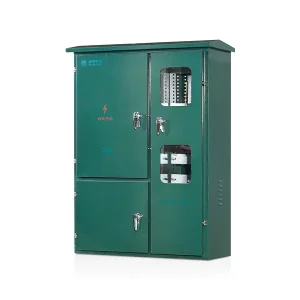
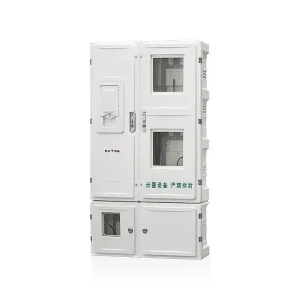
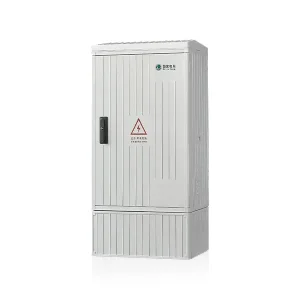
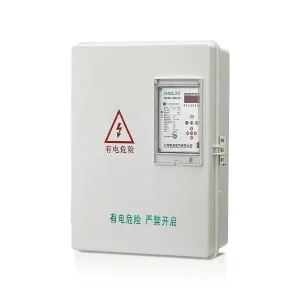
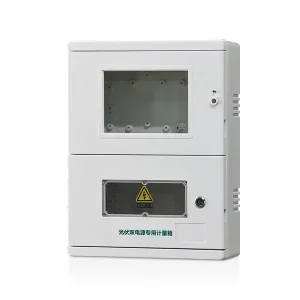
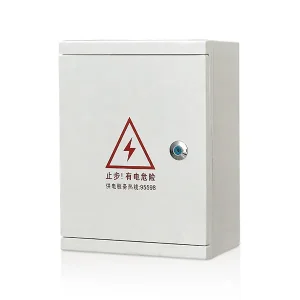
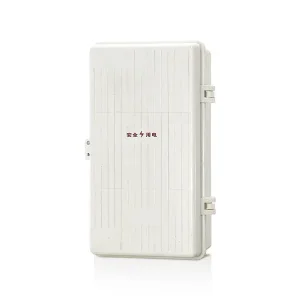
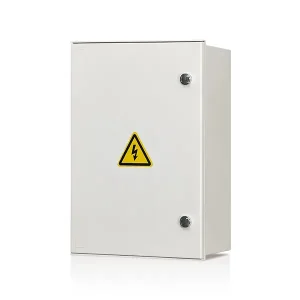
Evolutionary Trends in Residential Power Meter Enclosures
From passive galvanized sheet steel boxes to intelligent, non-conductive, composite smart meter terminal systems: How modernization drives safety, reduces non-technical losses, and guarantees 40+ year lifecycle reliability.
1. Material Shift to High-Grade SMC Composites
Traditional residential electrical meters historically relied upon folded carbon steel or basic ABS plastics. However, severe atmospheric corrosion, dangerous ground-fault chassis energization, and rapid UV breakdown forced utility providers toward Sheet Molding Compound (SMC) glass-fiber reinforced unsaturated polyester. SMC delivers an exceptional strength-to-weight ratio, zero corrosion in saline marine air, high dielectric insulation, and self-extinguishing flame resistance tested to UL94-V0 and IEC 60695-2-11 (960°C glow-wire verification).
2. Advanced Metering Infrastructure (AMI / AMR) Synergy
As state power corporations roll out bidirectional smart meters, cellular NB-IoT, LoRaWAN, Zigbee, and PLC telemetry modules, enclosure material transparency is paramount. Unlike metal boxes that create a Faraday cage and severely degrade wireless antenna performance, SMC fiberglass provides near-zero electromagnetic attenuation. This ensures seamless remote meter reading, real-time load profiling, and immediate tamper notification back to utility head-end software (HES).
3. Zero-Tolerance Anti-Tamper & Revenue Protection
Commercial and technical revenue loss through illicit power tapping represents billions of dollars annually for power distribution utilities. Contemporary metering enclosures integrate multi-layered physical defense mechanisms: labyrinthine rainproof ventilation paths that block probe wire insertion, customized triangular master-key cam locks, optical tamper sensor cutouts, ultrasonic-welded polycarbonate inspection windows, and independent utility/consumer segregation compartments.
Global Enterprise Procurement & Utility Tender Criteria
EPC contractors, international power utilities, and electrical wholesalers operate under stringent regulatory frameworks. Understanding the precise mechanical, thermal, and electrical benchmarks is vital for tender acceptance.
Electrical & Dielectric Integrity
International tenders across Europe, the Middle East, Southeast Asia, and South America mandate compliance with IEC 62208 (Empty enclosures for low-voltage switchgear and controlgear assemblies) and IEC 61439-1/-3. Boxes must demonstrate dielectric insulation resistance exceeding 5 MΩ under 500V DC and withstand power-frequency flashover voltages of 2.5 kV to 4 kV AC for 1 minute without arc puncture.
Ingress Protection (IP) & Mechanical Shock (IK)
Outdoor perimeter walls, utility poles, and residential corridors demand rigorous environmental defense. Standard specifications require IP44 to IP65 ratings according to IEC 60529, verified through automated continuous water jet and talcum dust vacuum chambers. Mechanical kinetic impact ratings must meet IK08 (5 Joules) to IK10 (20 Joules) per IEC 62262, preventing fracturing under blunt force impact.
Thermal Endurance & Accelerated UV Weathering
Enclosures deployed in desert environments (e.g., GCC region) or equatorial regions face ambient temperatures reaching +50°C and severe solar radiation. Materials must pass ASTM G154 / ISO 4892-2 xenon-arc accelerated UV aging for 1,000 to 3,000 hours without surface chalking, micro-cracking, or exceeding a color delta ΔE > 3.0, ensuring dimensional stability from -25°C up to +80°C.
| Evaluation Parameter | SMC Glass-Fiber Composite (Teyi TY Series) | Marine Stainless Steel (AISI 304 / 316) | Polycarbonate / Engineering ABS | Galvanized / Painted Carbon Steel |
|---|---|---|---|---|
| Dielectric Safety | Inherently non-conductive; double-insulated (Class II) | Conductive; mandatory protective chassis earthing | Good dielectric insulation | Conductive; failure of ground rod causes hazard |
| Atmospheric Corrosion | Impervious to saltwater, acid rain, chemical fumes | Exceptional (316); good in industrial zones | Susceptible to environmental stress cracking | Prone to rust at edges, weld lines, scratch sites |
| Mechanical Rigidity (IK) | IK10 (High yield structural compression fiber matrix) | IK10+ (Extremely tough, heavy structural weight) | IK07 - IK08 (Prone to brittle cold fracturing) | IK09 - IK10 (Deforms permanently upon impact) |
| AMI RF Antenna Transmission | 100% transparent; no signal loss for 4G/NB-IoT | 0% transmission (Faraday cage effect; needs external antenna) | Transparent to RF wireless signals | 0% transmission (Severe RF blocking) |
| Service Life Expectancy | 40+ years indoor / 30+ years extreme outdoor | 25–35 years depending on alloy grade and saline exposure | 10–15 years outdoor (UV photodegradation) | 8–12 years outdoor (Coating degradation and rust) |
China Industry 4.0: Yueqing Supply Chain Resilience & Efficiency
Why Zhejiang Teyi Electric Co., Ltd. and the Yueqing Electrical Cluster represent the world's most resilient, cost-effective, and technically integrated manufacturing ecosystem for energy infrastructure.
The World's Electrical Capital Advantage
Situated in the Yueqing Economic Development Zone (Wenzhou, Zhejiang), our production facility operates inside the epicentre of global electrical engineering. Yueqing produces over 60% of China's low- and medium-voltage electrical apparatus. This geographic density grants Teyi Electric instant, localized access to high-grade sheet molding compounds, precision tooling dies, miniature circuit breakers (MCBs), molded-case circuit breakers (MCCBs), copper busbars, and terminal lugs within a 15-kilometer radius, drastically compressing lead times.
Automated High-Tonnage Hydraulic Presses
Our workshop houses high-precision automated compression molding clusters ranging from 300 to 2,000 metric tons of clamping force. Utilizing oil-heated precision-ground chrome steel molds with multi-zone digital PID thermal management, we eliminate internal void entrapment, anisotropic warping, and uneven resin cure. Continuous automated pressure monitoring ensures repeatable wall thicknesses, flawless sealing lip geometries, and structural uniformities across massive production batches of 100,000+ units.
Full-Spectrum OEM / ODM Agile Tooling
We empower international utilities, EPC contractors, and brand distributors with comprehensive turnkey customization. Our R&D engineering department operates advanced CAD/CAM/CAE mold-flow simulation software. From customer 2D/3D specification drawings to rapid 3D prototyping, customized tooling fabrication, internal rail pre-wiring, laser-engraved utility logo branding, and formal pre-production type testing, our agile development cycle finishes tooling within 20 to 30 business days.
Tailored Enclosure Architecture by Deployment Sector
Operational conditions differ dramatically between high-density multi-family urban complexes, coastal residential developments, and distributed solar installations. Teyi Electric configures dedicated internal architectures to meet specific field challenges.
1. High-Density Urban Multi-Dwelling Units (MDUs)
In mid-rise and high-rise apartment complexes, centralized metering is essential for efficient reading and space conservation. Our TY-SXD2-A and TY-SXD2-B multi-meter enclosures house from 2 to 12 single-phase energy meters within an organized, compartmentalized structure. Featuring dedicated incoming main circuit breaker bays, isolated busbar risers, and individually sealed tenant outgoing switch compartments, they ensure fire safety and prevent localized tenant faults from cascading across the entire residential block.
2. Distributed Rooftop Solar PV & Net Metering
The global surge in residential solar photovoltaic generation requires specialized bidirectional metering boxes. Our SMC fiberglass PV grid-connected units feature isolated twin compartments: one dedicated to utility net-metering recording imported/exported active and reactive energy, and the other housing AC isolator switches, type 2 surge protective devices (SPDs), and residual current circuit breakers with overcurrent protection (RCBOs). The weather-sealed, UV-stabilized fiberglass construction protects delicate power electronics against blistering roof temperatures.
3. Harsh Coastal & Marine Tropical Environments
In island grids, coastal resort communities, and humid tropical belts, salty sea breezes corrode standard powder-coated mild steel enclosures within 24 to 36 months, leading to short circuits and dangerous phase-to-chassis faults. Teyi Electric's compression-molded SMC meter cabinets and 316-grade stainless steel assemblies completely resist salt-fog exposure tested past 1,000 hours per IEC 60068-2-11. Non-hygroscopic material composition eliminates moisture condensation and dielectric breakdown.
Modular Three-Phase, CT-Operated & Control Enclosures
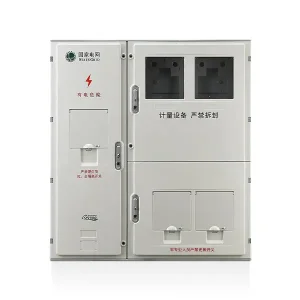
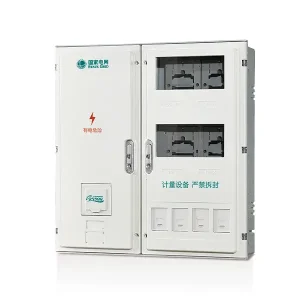
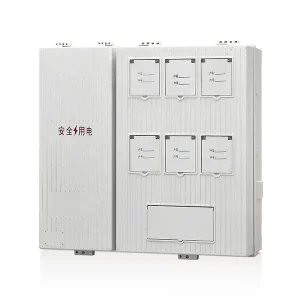
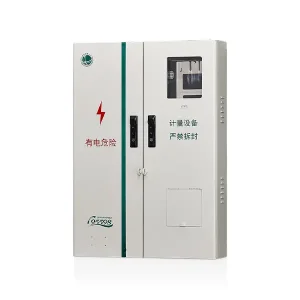
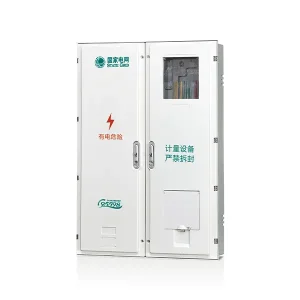
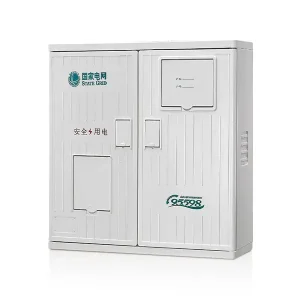
Complete your tender specification with our heavy-current three-phase, transformer-rated metering boxes, distribution control panels, and multi-tenant terminal solutions direct from our Yueqing factory floor.
End-to-End Factory Inspection & Certification Protocol
Zero-defect manufacturing governance applied across every production phase. How Zhejiang Teyi Electric guarantees absolute mechanical and electrical compliance for international tenders.
Stage 1: Raw Polymer Spectrometry
Every incoming batch of unsaturated polyester resin, continuous E-glass fiber rovings, and flame-retardant ATH (aluminum trihydrate) fillers undergoes rigorous thermal gravimetric analysis (TGA) and infrared spectrometry to ensure precise chemical stoichiometric balance and zero volatile contaminants before compound compression.
Stage 2: High-Voltage Flashover Routine Testing
100% of finished meter boxes undergo high-potential dielectric breakdown verification. Assemblies are stressed at 3,750V AC (50Hz) for 60 seconds across all phase-to-neutral busbars and terminal mounting plates, validating absolute isolation and ensuring complete personnel shock protection.
Stage 3: Environmental Chamber Validation
Random sample units from each mold batch undergo cyclic temperature-humidity stress conditioning (-40°C to +85°C, 95% RH) and water immersion testing in automated IPX5/IPX6 high-pressure spray chambers to verify continuous gasket resilience and mechanical joint integrity.
Frequently Asked Questions by Power Utilities & Importers
Authoritative technical guidance compiled by our senior enclosure engineering team to assist electrical EPCs, utility procurement directors, and wholesale distributors.
What is the specific material composition of Teyi SMC meter boxes?
Our SMC (Sheet Molding Compound) enclosures are compression-molded under high heat and pressure using a premium formulation of thermosetting unsaturated polyester resin, cross-linked with styrene, reinforced with 25%–30% chopped continuous E-glass fibers, and blended with aluminum trihydrate (ATH) flame retardants. This delivers Class II electrical insulation, high mechanical rigidity (tensile strength ≥60 MPa), and UL94-V0 flammability.
Why is SMC superior to stainless steel for smart metering AMI deployments?
While stainless steel (304/316) offers superior brute-force mechanical resistance, it creates a total Faraday cage that attenuates wireless RF signals (Cellular 4G/5G, NB-IoT, Zigbee, LoRa) utilized by smart meters. To deploy smart meters in steel boxes, utilities must bore external antenna holes, creating water ingress vulnerabilities. SMC composite is non-metallic and completely transparent to radio frequencies, enabling internal antennas to achieve optimal signal connectivity.
What is the field service life under extreme tropical solar UV exposure?
Our TY-SXD and TY-SXS series are engineered with specialized hindred amine light stabilizers (HALS) and titanium dioxide UV blockers within the resin matrix. The designed service life exceeds 40 years for indoor installations and 30+ years for outdoor direct-sun installations across equatorial regions, passing ASTM G154 accelerated weathering testing without chalking or structural matrix micro-fissuring.
Can internal layouts be customized to fit regional utility standards?
Yes. We specialize in OEM/ODM manufacturing. We routinely customize DIN rail positions, brass/copper neutral link assemblies, cable entry gland knockouts (PG/metric), internal CT transformer mounting brackets, optical reading port dimensions, and laser-embossed utility logo seals to comply precisely with national grid specifications across BS, DIN, and ANSI markets.
What anti-tamper and revenue protection measures are built-in?
Our metering enclosures integrate multi-tier security: utility-sealed master triangular or padlocked latching mechanisms, internal concealed door hinges that prevent external pin removal, high-impact polycarbonate inspection windows sonically fused from the interior, and compartmentalized designs separating the incoming service connection from the tenant-accessible circuit breaker panel.
What are the standard lead times for wholesale container orders?
For standard catalog configurations (such as TY-SXD1, TY-SXD2, and TY-SXS3), finished goods can ship within 10 to 15 calendar days from our Yueqing factory. For customized OEM tender orders requiring dedicated tooling or pre-installed internal switchgear and busbars, mold tooling requires 20–25 days, with mass volume container-scale manufacturing cycling every 20 days thereafter.