
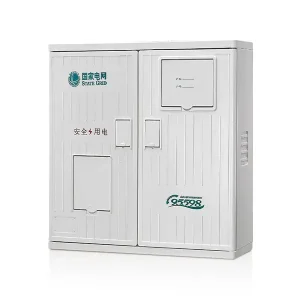
Priority Catalog Showcase
High-Performance Metering & Distribution Units
Direct from Yueqing's advanced manufacturing center: comprehensive single-phase, three-phase, and CT-operated metering box solutions designed for global utility compliance and extreme durability.
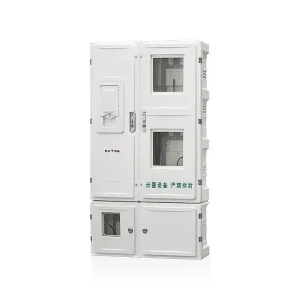
China Three-Phase Electric Energy Metering Box TY-SXS2 for Efficient Management
Explore Enclosure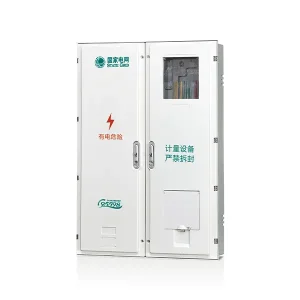
TY-SXS3 Three-Phase Electric Energy Metering Box (Transformer Type)
Explore Enclosure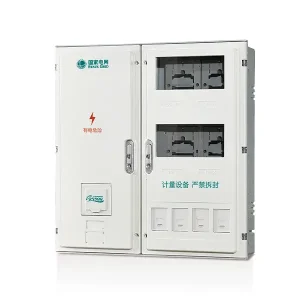
China TY-SXD2-B Single-Phase Electric Energy Metering Box
Explore Enclosure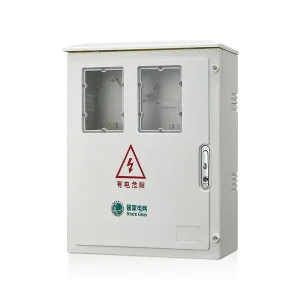
Wholesale Durable TY-SXS3-2B D-Type Enclosure Box from China Suppliers
Explore Enclosure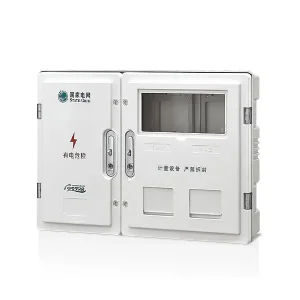
Wholesale China TY-SXD2-A Single-Phase Multi-Position Metering Enclosure
Explore Enclosure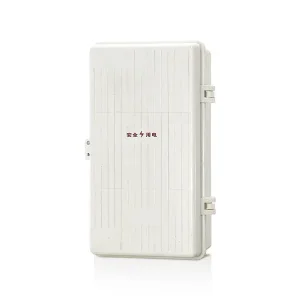
China TY-SXS1-CJ Three-Phase Collector Box - Reliable Electrical Solution
Explore Enclosure
China TY-SXS1-CJ Energy Solutions Enclosure - Utility Grade Build
Explore Enclosure
Industry Technical Whitepaper
The Global Macro Transition in Electrical Meter Enclosures
Decarbonization, Advanced Metering Infrastructure (AMI), and non-technical loss mitigation are fundamentally restructuring low-voltage metering design requirements.
Combating Non-Technical Losses (Electricity Theft)
Global electrical utilities lose an estimated $96 billion annually to revenue protection failures, illegal line taps, and magnetic or physical meter tampering. Modern trical meter boxes engineered in China incorporate complex labyrinth sealing strips, integrated optical intrusion switches, specialized lead-seal locking screws, and physical segregation between main incoming circuit breakers and the utility metering chamber. This partitioned architecture blocks unauthorized access while preserving transparent, UV-stabilized polycarbonate reading windows for visual verification.
Accelerated AMI & Smart Grid Integration
The transition from legacy Ferraris meters to digital Smart Meters (utilizing GPRS, NB-IoT, PLC, and LoRaWAN wireless telemetry) imposes strict physical constraints on enclosure housing. Enclosures must deliver complete electromagnetic transparency—rendering traditional sheet metal boxes obsolete due to the Faraday cage effect that degrades cellular antenna propagation. SMC (Sheet Molding Compound) fiberglass composites offer near-zero RF attenuation, facilitating continuous, uninterrupted automated meter reading across complex utility architectures.
Bidirectional Distributed Energy (PV Infeed)
With rooftop solar installations surging across residential and commercial sectors, electric meter enclosures must safely house bidirectional four-quadrant energy meters, dedicated DC isolators, surge protection devices (SPDs), and anti-islanding breakers. The thermal profile within the enclosure shifts under constant bidirectional power flow, demanding high glow-wire flammability ratings (IEC 60695-2-11 compliant up to 960°C) and advanced convective heat dissipation channels to prevent component de-rating.
Material Engineering Benchmark
SMC Composite vs. Conventional Sheet Metal & Polycarbonate
A rigorous metallurgical and polymer assessment demonstrating why compression-molded SMC (Sheet Molding Compound) represents the benchmark for modern power distribution enclosures.
| Performance Parameter | Compression-Molded SMC (Teyi Spec) | Cold-Rolled Sheet Steel (Painted) | Standard Polycarbonate (PC / ABS) |
|---|---|---|---|
| Dielectric Strength (Insulation) | ≥ 12-15 kV/mm (Class II Safety) | 0 kV/mm (Conductive; Earth bonding mandatory) | ≥ 10-14 kV/mm (Class II Safety) |
| Mechanical Impact Resistance | IK10 (20 Joules Impact Energy) | IK08 - IK10 (Prone to denting/coating cracks) | IK07 - IK08 (Prone to brittle fracture) |
| Corrosion & Salt Mist Resistance | Immune to oxidation (C5-M Marine Ready) | High risk of rust at cut edges and welds | Immune to rust, sensitive to solvent exposure |
| UV Degradation Resistance | > 30 Years (Anti-UV masterbatch resin) | Chalking, fading, and micro-cracking of powder | Yellowing, embrittlement after 5-8 years |
| Glow Wire Flammability Index (GWFI) | 960 °C Self-extinguishing (UL94 V-0) | Non-flammable (Metal substrate) | 650 °C - 850 °C depending on halogen additives |
| RF Transparency (Smart Meter Signals) | Near Zero Attenuation (Ideal for AMI) | Complete Signal Blocking (Faraday Shield) | Near Zero Attenuation |
| Thermal Ingress / Condensation Risk | Low Thermal Conductivity (No condensation) | High Conductivity (Severe condensation cycles) | Low Thermal Conductivity |
Field Engineering Deployments
Engineered for Global Operating Micro-Climates
Enclosures deployed across international power networks face severe physical stressors. Our modular tooling accommodates specialized regional environmental modifications.
Coastal Marine & Offshore Island Environments
Salt spray, relentless relative humidity (above 95%), and ambient chloride atmospheres corrode conventional metal enclosures within 24 to 36 months. Teyi’s SMC meter boxes employ 316-grade stainless steel internal fasteners, specialized EPDM dual-lip rubber seals, and inert glass fiber formulations that neutralize galvanic and chemical decay across coastal Pacific, Southeast Asian, and Middle Eastern installations.
Sub-Zero Continental & High Altitude Terrains
In high-latitude installations across Central Asia and the Northern Americas, low temperatures (-40°C) induce severe impact embrittlement in standard thermoplastics. Our compression formulations maintain high tensile strength and elasticity ratios via continuous strand glass roving networks. Integrated drainage gutters prevent freeze-thaw ice damming around door seams, preserving IP65 ingress integrity year-round.
High-Density Urban Multi-Family Residential
Urban residential substations require maximum metering density within constrained electrical shaft clearances. Our TY-SXD2 multi-meter series (supporting 2 to 12 single-phase meters within a unified structural frame) features dedicated busbar chambers, isolated incoming breaker compartments, independent customer tenant switches, and structured concealed cable routing for fire-safe vertical risers.
Heavy Commercial & Industrial CT-Operated Metering
For installations drawing exceeding currents (from 100A to 630A), direct-fed meters fail. Our TY-SXS3 transformer-type three-phase metering cabinets offer dedicated mounting plates for current transformers (CTs), standardized test blocks (TTBs), and secondary circuit segregation. With short-time withstand capabilities up to 30 kA, these enclosures maintain containment during catastrophic short-circuit conditions.
Supply Chain Excellence
Why Yueqing’s Industrial Cluster Yields Unrivaled Value
Zhejiang Teyi Electric operates at the core of Yueqing, globally recognized as China's Electrical Capital, generating structural, manufacturing, and logistical advantages for international project EPCs.
Sub-Kilometer Component Sourcing Ecosystem
Within a 15-minute radius of our manufacturing base sits the world's most concentrated ecosystem of mold designers, copper busbar extruders, brass terminal machinists, precision DIN rail manufacturers, and low-voltage switchgear specialists (MCB, MCCB, and RCBO). This hyper-localized ecosystem compresses prototyping and procurement lead times by 65% compared to isolated manufacturers, eliminating logistical choke points in component procurement.
High-Tonnage Compression Press Machinery
Our facility houses high-tonnage automated hydraulic compression molding presses (ranging from 500 tons to 3,000 tons of clamping pressure). Combined with precision-heated chrome-plated hardened steel tooling, our automated process achieves micro-meter control over shell wall thickness, eliminates internal porosity, ensures structural uniformity across corner radiuses, and guarantees repeatable sealing surfaces across 100,000-unit continuous production runs.
Full-Chain In-House Quality Assurance
Every production batch undergoes strict quality checkpoints: raw material resin viscosity assays, high-voltage dielectric breakdown testing (≥ 2500V/min with zero flashover), IP6X dust chambers, high-pressure IPX5 water jet verification, and Charpy impact testing. Our closed-loop testing protocol ensures that every unit leaving the loading dock satisfies the rigorous requirements of national utility qualification tenders worldwide.
Innovation Trajectory
Technology Roadmap & Next-Decade Grid Evolution
Enclosures are transforming from passive structural shells into active, sensor-rich endpoints in cyber-physical power grids.
Edge Intelligence & Thermal Sensor Nodes
Loose busbar joints and terminal screw relaxation induce thermal runaway, which causes distribution cabinet fires. Next-generation Teyi enclosures integrate micro-aperture infrared sensor ports, embedded RFID inspection tags, and low-power IoT surface-temperature probes. These sensors interface with local data concentrator units (DCUs) to trigger preventive alarms before catastrophic thermal ignition occurs.
Circular Materials & Carbon Accounting (CBAM Ready)
With the European Union Carbon Border Adjustment Mechanism (CBAM) and international ESG supply standards shifting procurement criteria, our R&D team is developing partially bio-based thermoset resins, closed-loop recycled glass fiber fillers, and low-energy mold curing cycles. These advancements systematically decrease product lifecycle embedded carbon without compromising mechanical rigidity or UL94-V0 compliance.
Electronic Smart Locks & Dynamic Bluetooth Access
Traditional brass padlocks are vulnerable to master keys, unauthorized duplication, and physical shearing. Our advanced enclosure series introduces high-security electronic latching mechanisms unlocked exclusively via utility-encrypted Bluetooth low-energy (BLE) handshake or dynamic time-sensitive OTP smartphone authorization. Every opening event logs the operator ID and timestamp, establishing an indisputable audit trail for grid security.
International Compliance
Engineering Verification, Tender Specs & Quality Codes
Our engineering support services are built to satisfy the rigorous technical criteria required by overseas utilities, governmental tenders, and multi-national EPC contractors.
Full Harmonization with IEC 61439 & 62208
All enclosures comply with IEC 61439-1/-2 (Low-voltage switchgear and controlgear assemblies) and IEC 62208 (Empty enclosures for low-voltage switchgear). Testing includes mechanical impact resistance (IK10 verified per IEC 62262), ingress protection (IP65 per IEC 60529), flammability limits, and clearance/creepage distance verifications across all internal busbar arrays.
Precision Engineering & Custom Tooling
We provide comprehensive engineering services for global utilities with bespoke dimension criteria, custom mounting hole patterns, specialized branding embossing, or unique knockout arrangements. Utilizing advanced 3D CAD/CAM parametric software, we develop high-durability production molds, evaluate resin flow through mold-flow simulations, and deliver production-grade verification samples with short lead times.
Container Optimization & Global Logistics
High international freight costs demand intelligent packaging engineering. Our meter boxes feature modular stacking footprints, interlocking stacking ribs, protective scratch-resistant polyethylenes, and reinforced palletizing solutions. This space-efficient packaging increases 40ft High Cube container volumetric utilization by up to 28%, significantly lowering your landed per-unit freight costs.
Distribution & Control Solutions
Cable Branch, Collector & Transformer Meter Cabinets
Engineered distribution assemblies, terminal branch boxes, and customized transformer-type metering units ready for container-scale utility supply.
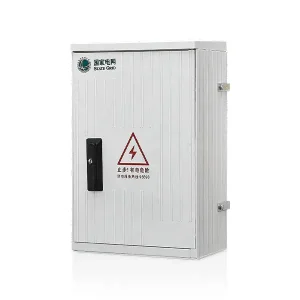
Wholesale China TY-DFW Wall-mounted Outdoor Cable Branch Box
Explore Enclosure
Three-Phase Electric Energy Metering Box (Transformer Type) - TY-SXS3
Explore Enclosure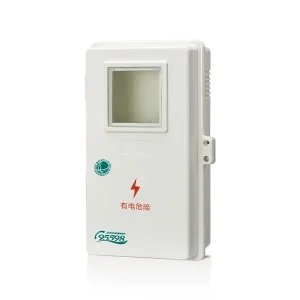
China TY-SXD1-1C Single-Phase Collector Box for Power Management
Explore Enclosure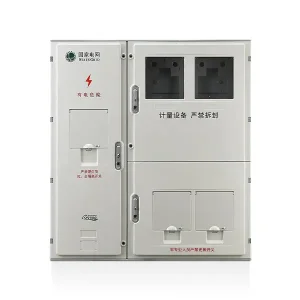
Wholesale China TY Three-Phase Transformer Type Metering Cabinet
Explore Enclosure
China Durable TY-SXS3-2B D-Type Metering & Distribution Cabinet
Explore Enclosure
Wholesale TY-SXD1-1C Single-Phase Collector Box Factory Supply
Explore Enclosure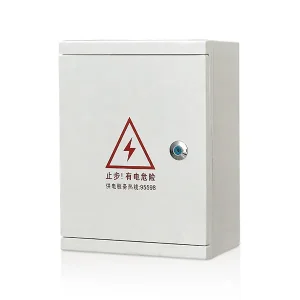
China Wall-Mounted Control Box TY-KZX Series - Durable Compact Design
Explore Enclosure
Wholesale TY-SXD2-B Single-Phase Multi-Position Meter Enclosure
Explore Enclosure
Technical Support & Tender FAQ
Frequently Asked Engineering & Procurement Questions
Clear, technical explanations addressing material composition, custom tooling, compliance certification, and global utility qualification.
What specific resin formulation is used in Teyi SMC meter boxes, and what is its rated lifespan?
Our meter boxes are compression-molded from specialized Sheet Molding Compound (SMC) composed of unsaturated polyester resin, 25%–30% chopped continuous E-glass fibers, mineral functional fillers (aluminum trihydrate for flame suppression), and specialized anti-UV stabilization masterbatches. Under indoor operating conditions (TY-SXD2 series), the certified design service life exceeds 40 years; in direct outdoor environments exposed to severe ultraviolet radiation, tropical humidity, or coastal salinity, the rated service life exceeds 30 years without structural degradation, delamination, or loss of dielectric isolation.
How does an SMC fiberglass meter box perform during internal short-circuit arcing compared to steel cabinets?
During an internal electrical fault or arc-flash event, cold-rolled metal enclosures conduct electrical charge straight to the outer frame, posing severe electrocution hazards to nearby technicians or pedestrians if protective earth bonding is impaired. In contrast, SMC exhibits high inherent dielectric resistance (≥ 12 kV/mm) and zero electrical conductivity (Class II double insulation rating), eliminating touch-potential electric shock risks. Furthermore, our SMC enclosures satisfy UL94-V0 flammability standards with a Glow-Wire Flammability Index (GWFI) of 960°C per IEC 60695-2-12, self-extinguishing within 10 seconds without producing molten flaming droplets.
What anti-tampering and anti-theft hardware features are incorporated into the enclosure designs?
To eliminate non-technical power losses, our enclosures implement an integrated anti-tamper security matrix: (1) Concealed internal hinges inaccessible from the outside; (2) Dual-mechanism locking systems incorporating specialized triangular/hexagonal security screws paired with lead-seal wire loops and padlock hasps; (3) Complete physical isolation between the utility metering zone and customer-accessible incoming/outgoing circuit breaker compartments; (4) Ultra-sonically welded or internally clamped high-transparency polycarbonate viewing windows that cannot be removed externally without complete destructive failure of the door frame.
Can Teyi adapt internal busbars, CT brackets, and knockout patterns to comply with unique regional utility specifications?
Yes. Approximately 70% of our production volume is delivered under OEM/ODM tender contracts. Our engineering design department works directly from customer single-line diagrams (SLDs), utility technical tender specs, and 3D equipment arrangements. We easily modify copper busbar cross-sections (supporting rated currents from 10A to 630A with short-circuit withstand capabilities up to 30 kA), adjust current transformer (CT) and test terminal block (TTB) mounting plates, and adapt PG gland knockouts or cone cable entry grommets to match national conduit and wiring conventions.
What are the standard ambient temperature limits and ingress protection ratings of your meter boxes?
Standard models are rated for continuous ambient operating temperatures ranging from -25°C up to +50°C (with daily 24-hour average ambient thresholds ≤ 35°C), and relative operating humidity reaching up to 80% at 40°C. For extreme regional micro-climates, we offer high-temperature formulations functioning up to +70°C and cold-climate formulations tested for impact resistance down to -40°C. Ingress protection ratings across our standard utility-grade product portfolio stand at IP54 to IP65 in strict accordance with IEC 60529, backed by an IK10 mechanical impact protection rating per IEC 62262.
What is your typical production turnaround, sample dispatch timeline, and container loading efficiency?
For existing catalog models with ready compression tooling, pre-production evaluation samples ship within 3 to 5 business days. Mass production of standard utility-scale orders (1,000 to 5,000 units) completes in 20 to 25 calendar days. For custom ODM enclosure projects requiring new compression steel molds, tool fabrication, flow simulation, and prototype validation take approximately 30 to 45 days. Our products feature nesting exterior structures and stackable geometric ribs, allowing efficient palletization that packs up to 28% more units per 40'HQ shipping container.