
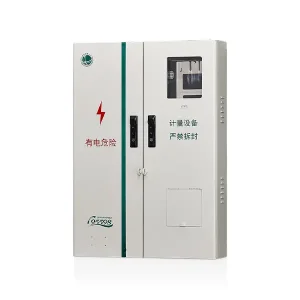
Secondary Distribution Solutions
Precision Metering & Distribution Assemblies
Pre-engineered, type-tested secondary power distribution enclosures and smart terminal collector boxes direct from our Yueqing manufacturing hub.
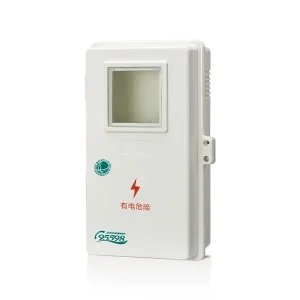
TY-SXD1-1C Single-Phase Intelligent Collector Box
Configure Model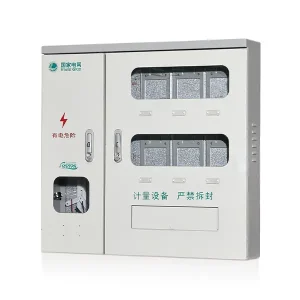
Heavy-Duty Stainless Steel Single-Phase Meter Enclosure
Configure Model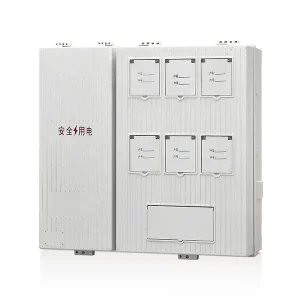
TY Series Outdoor Single-Phase Metering Distribution Unit
Configure Model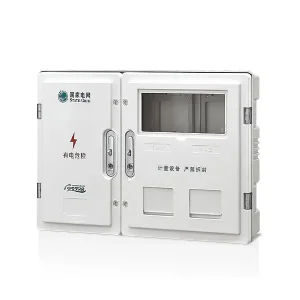
TY-SXD2-A Multi-Tenant High Reliability Meter Enclosure
Configure Model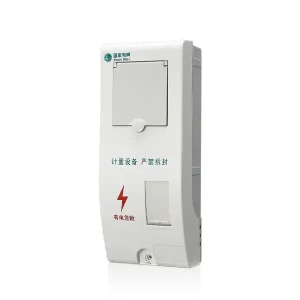
TY-SXD1 Single-Phase Utility Standard Meter Cabinet
Configure Model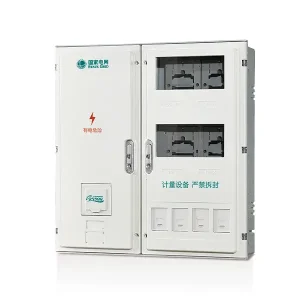
TY-SXD2 Series Centralized Measurement Distribution Panel
Configure Model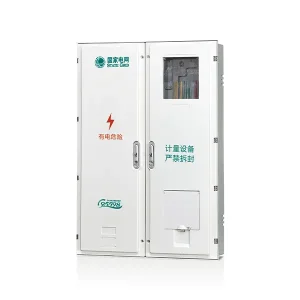
TY-SXS3 Industrial Transformer-Rated Metering Enclosure
Configure Model
Technical White Paper
Engineering Architecture of Gas Insulated Ring Main Units (GIS RMU)
A comprehensive examination of dielectric integrity, hermetic tank construction, and secondary network protection standards for modern power grids.
In the landscape of modern medium-voltage (MV) electrical distribution networks, the Gas Insulated Ring Main Unit (GIS RMU) serves as the fundamental backbone for secondary distribution networks rated from 12kV up to 40.5kV. Designed to maintain continuous loop feeds and rapidly isolate faulted circuits, GIS RMUs integrate switching, metering, earthing, and protection instruments into a compact, hermetically sealed enclosure that completely insulates live primary conductors from corrosive atmospheric environments.
Manufactured in compliance with stringent international standards including IEC 62271-200, IEC 62271-100, and IEC 62271-102, China's advanced GIS RMUs employ robotic laser-welded austenitic stainless steel tanks (AISI 304 or AISI 316L) with minimum 3.0 mm plate thickness. Within this sealed envelope, high dielectric strength gases—traditionally Sulphur Hexafluoride (SF6) or advanced eco-friendly alternative fluoronitriles and clean air mixtures—provide exceptional arc-quenching capability. This allows primary phase-to-phase and phase-to-ground clearances to be reduced by more than 70% compared to traditional air-insulated switchgear (AIS), yielding exceptional volumetric efficiency.
Hermetic Seal Integrity
Fabricated inside automated welding cells utilizing precision CNC laser seam tracking. Every primary tank undergoes vacuum-pressure helium mass-spectrometer testing to guarantee an annual leakage rate strictly beneath 0.1% per year.
- Laser-welded stainless steel (AISI 304/316L)
- Helium leakage detection standard: ≤ 1×10⁻⁸ mbar·l/s
- Impervious to moisture, salt-spray, chemical vapors
Arc-Proof Operator Safety
Integrated pressure relief channels directed toward the bottom or rear trench ensure zero hot-gas ingress into front-operating aisles, meeting strict Internal Arc Classification (IAC AFLR) criteria up to 20kA for 1.0 second.
- Standard IAC AFLR 20kA 1s qualification
- Mechanical interlocks preventing illegal operations
- Visual three-position switch position indicators
Digital Smart Grid Interfacing
Equipped with low-power current/voltage transformers (LPCT/LPVT) and integrated Feeder Terminal Units (FTU) supporting IEC 61850, Modbus, and DNP3.0 protocols for rapid automated fault detection, isolation, and service restoration (FLISR).
- Real-time SF6 density and temperature monitoring
- Plug-and-play motor operating mechanisms
- Integrated SCADA remote switching integration
Manufacturing Cluster Superiority
Why China GIS RMU Factories Lead the Global Value Chain
A mature industrial ecosystem centered in Yueqing, Zhejiang, driving engineering agility, high automation, and unprecedented supply resilience.
China’s dominance in the medium- and low-voltage electrical switchgear market is grounded in an exceptionally dense supply chain cluster. Yueqing, recognized internationally as China's "Electrical Capital," houses a fully integrated industrial matrix comprising precision sheet metal stamping, epoxy resin casting using automated pressure gelation (APG) technology, vacuum interrupter production, and advanced CNC tooling. At Zhejiang Teyi Electric Co., Ltd., this geographic proximity enables direct collaboration with world-class component fabricators, slashing raw material transit delays and optimizing procurement economies of scale.
Vertical Supply Integration
From sheet compression SMC and stainless cabinets to internal vacuum interrupters, 95% of subcomponents are fabricated within a 30km radius, driving down production cycle times by 40%.
Robotic APG Resin Casting
All switch bushings, capacitive dividers, and insulating barriers utilize automated pressure gelation (APG) epoxy casting with zero partial discharge (<5pC at 1.2 Un) under severe load conditions.
Full-Spectrum Type Certification
Products are rigorously tested in ISO/IEC 17025 accredited laboratories for dielectric withstand, short-circuit making/breaking capacity, temperature rise limits, and mechanical endurance (M2 class, 5000+ operations).
Cost-to-Performance Ratio
Chinese GIS RMU manufacturers offer unmatched Total Cost of Ownership (TCO). Western utility-grade quality is delivered at capital expenditure savings of up to 35% without compromising technical standards.
Technology Roadmap
Macro Industry Trends: Decarbonization, Eco-Gases & Digital Twins
The transition from traditional greenhouse gas insulants toward eco-friendly fluoronitrile blends, dry air architectures, and IoT-driven predictive maintenance.
1. The SF6-Free Eco-Friendly Revolution
With Sulphur Hexafluoride carrying a Global Warming Potential (GWP) of approximately 23,500 times that of CO₂, global electrical grid operators—particularly in the European Union, North America, and high-standard APAC utilities—are transitioning toward eco-efficient alternative insulants. Chinese switchgear pioneers have industrialized zero-GWP and low-GWP solutions:
- Clean Dry Air / Synthetic Air: Pressurized pure nitrogen and oxygen mixes eliminating F-gases entirely for zero ozone depletion and zero global warming impact.
- Fluoronitrile (C4-FN) Gas Mixtures: Delivering dielectric strength equivalent to SF6 at operating temperatures down to -25°C while reducing carbon footprint by >99%.
- Solid-Insulated Switchgear (SIS): Encapsulating the primary vacuum interrupter in high-grade epoxy and silicone rubber, removing pressurized gas systems entirely.
2. Digitalized Substation & Smart Grid Integration
Modern utilities require more than passive switching; they demand real-time telemetry, thermal imaging, and prognostic failure analytics. Modern Chinese GIS RMUs integrate edge-computing DTU/FTU controller modules directly into the low-voltage auxiliary compartment:
- Optical Fiber Temperature Sensors: Real-time busbar joint and cable termination temperature sensing to proactively detect resistive overheating.
- IoT Gas Density Sensors: Continuous digital micro-leakage tracking via temperature-compensated piezoresistive transducers, eliminating manual pressure gauge rounds.
- Automated FLISR Automation: Millisecond fault localization and re-routing algorithms communicating seamlessly over 5G/4G, optical Ethernet, and LoRaWAN.
Engineering Comparison
Comparative Analysis: GIS RMU vs. Solid Insulated (SIS) vs. Air Insulated (AIS)
A rigorous technical evaluation across dielectric performance, footprint, maintenance intervals, and environmental resilience.
| Evaluation Parameter | Gas Insulated RMU (GIS) | Solid Insulated RMU (SIS) | Air Insulated Switchgear (AIS) |
|---|---|---|---|
| Primary Dielectric Medium | SF6 or Eco-Fluoronitrile / Dry Air | Epoxy Resin Solid Insulation | Atmospheric Air |
| Physical Footprint (Width/Unit) | Ultra-Compact (320mm – 420mm) | Compact (380mm – 450mm) | Large (650mm – 1000mm) |
| Environmental Hermetic Seal | IP67 Stainless Steel Welded Tank | IP67 Phase-Segregated Modules | IP4X Open Air Compartment |
| Resistance to Harsh Elements | Immune to flood, salt-spray, humidity | High resistance, surface tracking risk | Susceptible to condensation and dust |
| Maintenance Cycle | 30+ Years Maintenance-Free | 20–25 Years Minimal Maintenance | 3–5 Years Regular Servicing Required |
| Dielectric Stability vs Altitude | Constant inside sealed tank (≤4000m) | Stable, bushings need de-rating | Requires significant clearance de-rating |
| Capital Expenditure (Initial) | Moderate to Competitive | High | Low |
| Total Cost of Ownership (30 Yrs) | Lowest (Zero maintenance, high uptime) | Low to Moderate | High (Frequent inspections & parts replacement) |
Technical ratings based on IEC 62271-200 testing standards for 12kV–24kV medium-voltage distribution apparatus.
Real-World Deployment
Mission-Critical Applications & Macro Industry Solutions
Engineered to ensure zero unplanned outages across complex infrastructure, high-hazard facilities, and utility scale renewable projects.
Solar PV & Wind Farm Ring Feeders
Renewable power plants require switchgear capable of handling frequent switching operations, reverse power flows, and extreme temperature fluctuations. Our 33kV/36kV/40.5kV GIS RMUs easily mount inside compact skid transformers.
- Harsh desert and coastal salt-fog immunity
- Compact footprint for containerized E-Houses
- Fast isolation of individual string inverters
Urban Compact & Underground Substations
Skyrocketing real-estate values in metropolitan centers demand minimal switchgear room footprints. Front-accessible GIS RMU lineups reduce civil engineering costs by up to 60% compared to traditional switchgear arrangements.
- Zero fire hazard: self-extinguishing vacuum bottles
- Low noise emission for commercial basements
- Extendable modular busbars for rapid capacity growth
Metro Rail Transit & Traction Power
Metros, light rails, and high-speed railway passenger stations require 99.999% power availability. Our RMUs withstand severe harmonic distortion, vibration, and abrupt current surges caused by locomotive acceleration.
- Shock & vibration tested to EN 61373 railway standards
- Motorized remote control from central dispatching
- Dual power transfer schemes for traction auxiliaries
Petrochemical & Hazardous Refining
Petrochemical plants feature aggressive hydrogen sulfide, sulfur dioxide, and hydrocarbon concentrations that cause rapid copper corrosion in open-air gear. Fully hermetic IP67 gas tanks protect primary contacts permanently.
- Explosion-proof arc quenching in vacuum chambers
- Corrosion-resistant stainless steel structural housing
- Segregated low-voltage and cable terminations
Global Procurement Standards
Addressing International EPC & Utility Procurement Criteria
Navigating global tender requirements: mechanical endurance, interface compatibility, type-test verifications, and custom OEM/ODM delivery.
Tender Specification Compliance
International tenders routinely specify strict busbar ratings (630A to 1250A), short-circuit withstand capacity (20kA/25kA for 3s or 4s), and exact scheme configurations (C-circuit breaker, F-load break switch with fuse, V-vacuum circuit breaker, D-direct cable tie). Our engineering team converts tender SLDs into factory shop drawings within 48 hours.
Standardized Bushing Interfaces
Units feature standard outer-cone bushings compliant with EN 50181 (Type A 200A plug-in, Type C 630A screw-in, or Type F 1250A bolt-in), ensuring seamless compatibility with international cable termination kits from Raychem, Euromold, Cellpack, or Nexans.
Flexible OEM / White-Label Manufacturing
We empower regional panel builders, electrical distributors, and global conglomerates to market customized GIS RMUs under their own brand. We deliver unbranded bare gas tanks, fully wired lineups, custom mimic panel schemes, and private-label silk-screen branding.
Intelligent Enclosure Series
Advanced Metering & Distribution Terminal Units
Engineered SMC composite enclosures, smart fusion terminal units, and multi-tenant metering systems designed for demanding continuous operation.
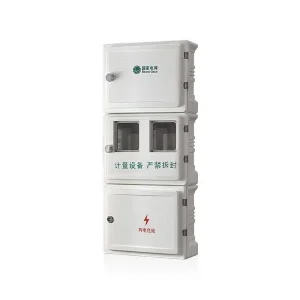
TY-SXD2 Metering Box with 30kA Withstand Capacity
Configure Model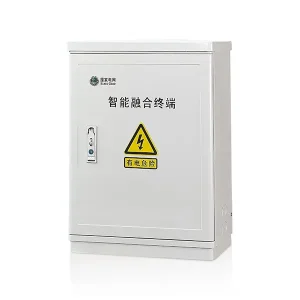
TY-TTU Intelligent Grid Fusion Terminal Box
Configure Model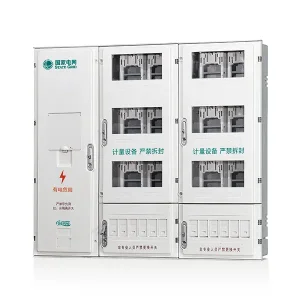
TY Series Residential Single-Phase Energy Meter Box
Configure Model
TY-SXD2 High Capacity Residential Metering Panel
Configure Model
Hanging-Type Stainless Steel 3-Phase Meter Enclosure
Configure Model
TY-SXD1 Weatherproof Single-Phase Distribution Cabinet
Configure Model
TY-SXS3 Heavy Current CT Metering Distribution Box
Configure Model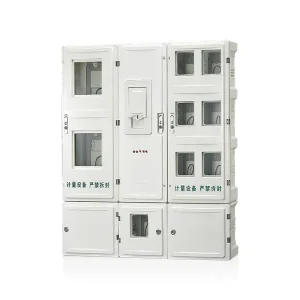
TY-SXD2+SXS2-1B Dual Phase High Capacity Meter Cabinet
Configure Model
Procurement FAQ
Frequently Asked Questions by Global EPCs & Grid Engineers
Direct technical answers addressing engineering validation, gas monitoring, standard type-tests, and OEM qualification.
What are the key technical differences between extendable and non-extendable GIS RMUs?
Non-extendable (compact) RMUs enclose all functional switching units (typically 2 to 5 functions such as CCF, CCC, or CCV) within a single, shared hermetic stainless steel tank. This delivers maximum compactness and economic efficiency. In contrast, extendable units feature side-mounted or top-mounted solid-insulated busbar extensions with plug-in silicone rubber couplings, allowing engineers to add additional switch bays on-site without disturbing the original factory gas seals.
How does the factory verify that SF6 gas tanks will not leak over a 30-year lifecycle?
Every tank manufactured at Zhejiang Teyi Electric is subject to a two-stage vacuum chamber helium mass spectrometer test before gas filling. The chamber is evacuated to high vacuum, and any leakage is measured with an absolute sensitivity threshold down to 1×10⁻⁸ mbar·l/s. This guarantees that annual gas leakage remains strictly below 0.1% per year, complying with IEC 62271-200 criteria for sealed pressure systems with a maintenance-free design life exceeding 30 years.
What internal arc classification (IAC) ratings do your GIS RMUs satisfy?
Our standard units are certified to IAC AFLR ratings (Accessibility Front, Lateral, and Rear) for fault currents of 20kA for a duration of 1.0 second. Integrated rear and downward overpressure rupture discs vent high-temperature arc gases directly into the foundation cable trench away from operational personnel.
Can Chinese GIS RMUs operate at high altitudes without dielectric breakdown?
Yes. Because the primary switching apparatus and busbars reside within an airtight, pressurized stainless steel tank, the internal dielectric withstand capability is completely independent of external atmospheric pressure. However, for installations exceeding 1,000 meters above sea level (up to 4,000 meters), external cable termination bushings and low-voltage auxiliary components are selected with extended creepage distances according to IEC altitude derating formulas.
What type-test certificates can Zhejiang Teyi Electric provide for utility approvals?
Our products have undergone full-spectrum type testing at independent ILAC-MRA and CNAS accredited testing organizations (such as KEMA, Xi'an High Voltage Apparatus Research Institute - XIHARI, and National Quality Supervision & Inspection Center). Test reports cover power frequency withstand voltage, lightning impulse withstand (BIL up to 125kV for 24kV class), temperature rise limits at rated current, short-time and peak withstand current tests, and M2 mechanical endurance tests.
What is the standard manufacturing lead time for OEM/ODM switchgear projects?
Standard modular configurations (such as 3-way or 4-way 12kV/24kV RMUs) can be assembled, tested, and pre-commissioned within 3 to 4 weeks. Customized OEM projects requiring non-standard secondary protection relays, special metering boxes, or specific paint coatings (C5-M marine grade) typically take 4 to 6 weeks from final schematic sign-off to Factory Acceptance Testing (FAT) and container dispatch.