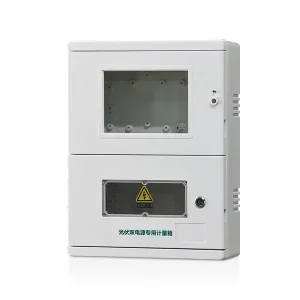
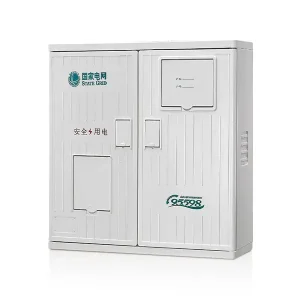
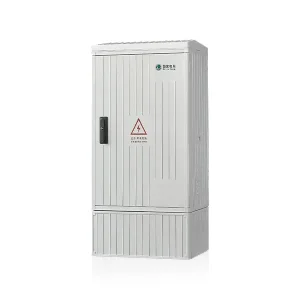
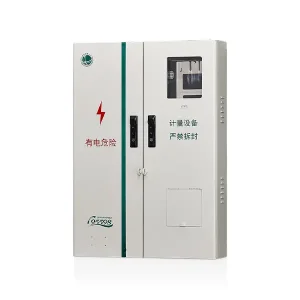
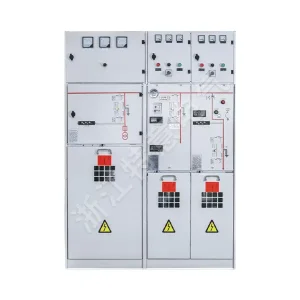
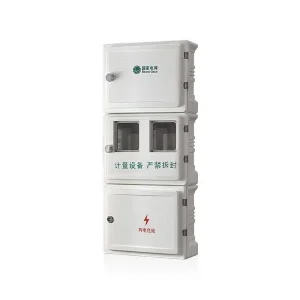
Primary Power Distribution & Metering Assemblies
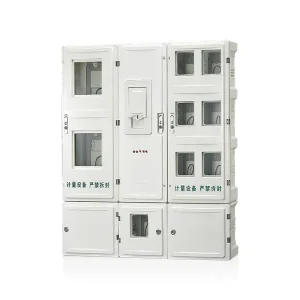
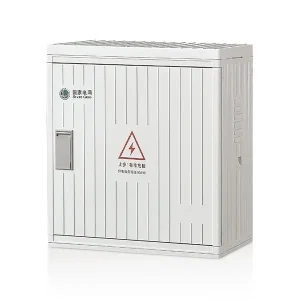
Precision-engineered low-to-medium voltage control enclosures, branch boxes, and three-phase modular meter units manufactured in Yueqing—China’s global electrical hardware cluster.
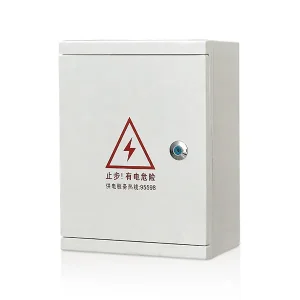
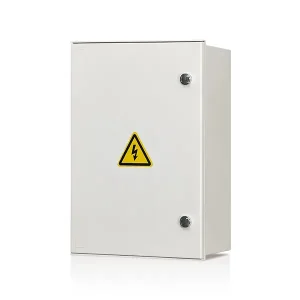
State of 11 kV Ring Main Unit Manufacturing in China
An authoritative evaluation of architectural trends, materials engineering, and the technological pivot toward non-SF6 environmentally insulated medium-voltage networks.
Ecosystem Densification & Yueqing Clustered Agility
The global dominance of China 11 kV Ring Main Unit factories originates from unmatched spatial clustering in Yueqing, Wenzhou. Medium-voltage switchgear production relies on thousands of upstream micro-components: copper busbars, vacuum interrupters (VI), epoxy resin bushings, current transformers (CTs), and digital protection relays. With 95% of components sourced within a 15-kilometer radius, Chinese manufacturers sustain typical lead times 40% shorter than European and North American peers while offering custom configurations without minimum order penalties.
Decarbonization & The Shift Away from SF6 Gases
Sulfur hexafluoride (SF6) features a Global Warming Potential (GWP) 24,300 times greater than CO2. Forward-leaning Chinese manufacturing plants have established advanced high-vacuum laser welding lines to transition medium-voltage 11 kV/12 kV RMU production to dry air insulation and solid dielectric systems (SIS). Utilizing cycloaliphatic epoxy resin encapsulation and pressurized technical air tanks, contemporary Ring Main Units operate sustainably across fragile urban and nature-reserve infrastructures without regulatory greenhouse gas liabilities.
Smart Grid Integration & Native Edge Telemetry
Modern distribution engineers no longer view the 11 kV Ring Main Unit as passive electromechanical switchgear. State-of-the-art Chinese RMU factories now natively embed Feeder Terminal Units (FTUs), intelligent directional fault passage indicators (FPIs), optical temperature transducers, and non-intrusive partial discharge (TEV/Ultrasonic) sensors. Conforming to IEC 61850 and DNP3, these secondary distribution switchboards enable self-healing loop networks (FLISR), automating fault isolation in under 450 milliseconds.
Global Procurement Criteria & Turnkey Architectures
Analyzing how international utility buyers, engineering procurement and construction (EPC) conglomerates, and renewable asset managers evaluate factory partners.
TCO vs. Capex Equation in Utility Tenders
Evaluating an 11 kV RMU strictly by ex-factory unit pricing leads to premature asset impairment. International utility operators prioritize Total Cost of Ownership (TCO). This calculates leak-rate guarantees (<0.1% per annum), laser-welded SUS304 tank integrity, maintenance intervals, and internal arc safety ratings. Teyi Electric implements standardized multi-tank and single-tank layouts that reduce civil footprint requirements by 35% in dense urban kiosks.
Utility-Scale Renewables & BESS Interconnections
Large-scale solar parks and Battery Energy Storage Systems (BESS) pose unique challenges: severe harmonic distortions, bidirectional power flows, and repeated switching under inverter fault regimes. Leading Chinese manufacturers deliver customized 11 kV RMUs fitted with heavy-duty vacuum circuit breaker (VCB) functions, self-powered electronic trip relays, and transient surge voltage suppressors rated to handle high dV/dt stresses from inverter power-conversion systems.
Standard Configurations: CCF, CCC, and CFF Units
Global procurement teams specify flexible arrangement blocks: standard 'C' (Load Break Switch) and 'F' (Switch-Fuse Combination) or 'V' (Vacuum Circuit Breaker). Standard modular or extensible 3-way (CCV/CCF) and 4-way (CCCV/CCCC) configurations from tier-1 Chinese factories permit on-site busbar extension without SF6 field gas handling, slashing installation time on EPC worksites worldwide.
Testing Compliance, Quality Verification & Global Delivery
How tier-1 Chinese medium-voltage factories ensure rigorous electrical endurance, personnel safety certifications, and localized tender compliance for overseas utilities.
Accredited Laboratory Type Test Verification
Exported 11 kV RMU platforms undergo rigorous third-party verification at internationally recognized laboratories, including KEMA (CESI), ASTA, and China’s National High Voltage Apparatus Quality Supervision and Inspection Center (Xi’an High Voltage Apparatus Research Institute - XIHARI). Crucial test benchmarks include IEC 62271-200, IEC 62271-100, and IEC 62271-102 covering 20 kA / 21 kA short-time withstand current for 3 seconds.
Extreme Environmental & Seismic Adaptations
Switchgear intended for global deployment must endure aggressive environments. Standard Chinese production lines engineer enclosures to satisfy IP67 hermetic tank sealing and IP4X/IP54 external cabinet ratings. For coastal or high-salinity zones, enclosures leverage 316-grade stainless steel or hot-compression molded Sheet Molding Compound (SMC). For seismic installations across Southeast Asia and Latin America, assemblies conform to IEEE 693 standards.
Comprehensive Routine Factory Acceptance Tests (FAT)
Prior to containerized dispatch, 100% of finished 11 kV switchgear units undergo mandatory multi-step FAT testing: high-voltage power-frequency withstand (up to 42 kV/1min), helium mass spectrometer vacuum leak-rate checks, primary loop resistance measurement via micro-ohmmeter, and complete electrical/mechanical interlocking integrity audits to safeguard field personnel.
Technology Roadmap: Medium-Voltage Switchgear Evolution
Tracking the industrial engineering milestones shaping China’s medium-voltage manufacturing industry through 2030.
SF6 Gas Hermetic Steel Enclosures
Laser-welded stainless steel tanks providing compact, modular footprint for urban secondary substations. Focus on mechanical reliability, IP67 core sealing, and complete climatic immunity against flood, dust, and high humidity.
Solid Insulated Switchgear (SIS)
Epoxy and silicone-encapsulated conductive paths completely eliminating greenhouse gas containment. Phase-segregated architecture eradicating internal inter-phase flashovers with fully shielded separable connectors.
Pressurized Synthetic Air Tanks
Deployment of zero-GWP natural gases (N2/O2 mix) paired with vacuum interrupters. Designed to fulfill the stringent European F-gas phase-down and global net-zero municipal distribution goals.
Autonomous Self-Healing Digital RMU
Integrated edge-AI microcontrollers tracking real-time thermal gradient analytics, contact wear algorithms, online partial discharge (PD) monitoring, and autonomous peer-to-peer GOOSE communication.
Frequently Asked Questions for Sourcing Engineers
Targeted engineering answers regarding ratings, internal arc resistance, certifications, and customization parameters for overseas utility buyers.
What is the standard rated insulation level for a China-manufactured 11 kV RMU?
Under IEC 62271-1, an 11 kV nominal rated Ring Main Unit is typically engineered with a 12 kV maximum rated operational voltage. It provides a power frequency withstand voltage of 28 kV (dry/wet for 1 minute) across terminals and 32 kV across the isolating distance, alongside a Lightning Impulse Withstand Voltage (BIL) of 75 kV to 85 kV peak value (1.2/50 µs wave shape).
How does an Internal Arc Classification (IAC) protect operators in substation kiosks?
An IAC classification according to IEC 62271-200 verifies personnel protection in the rare event of an internal arc flash. Standard ratings are IAC AFL or AFLR up to 20 kA or 21 kA for 1 second. 'AFLR' designates safe accessibility on Front, Lateral, and Rear sides, utilizing pressure relief blow-out flaps with gas-cooling channels that direct hot gases away from maintenance teams.
What is the difference between extensible and compact non-extensible Ring Main Units?
A compact non-extensible unit houses multiple switching ways (e.g., 3-way CCF or 4-way CCCV) inside a single sealed stainless steel enclosure. Extensible units incorporate plug-in screened solid-insulated external busbar connectors on the left, right, or top, enabling utilities to add future feeder ways or circuit breakers without cutting busbars or refilling insulation gas.
Can Chinese 11 kV switchgear factories support custom SCADA protocols and RTUs?
Yes. Manufacturers configure low-voltage auxiliary instrument compartments to house any specified Remote Terminal Unit (RTU) brand or microgrid controller. Standard wiring harnesses interface seamlessly with Modbus RTU, DNP 3.0, and IEC 60870-5-104/IEC 61850 communication standards, featuring motorized 24V/48V/110V/220V DC spring-charging mechanisms.
Specialized SMC, Photovoltaic & Ring Main Systems
Explore our full line of composite fiberglass enclosures, cable branch equipment, heavy-duty busbar assemblies, and medium-voltage Ring Main Units.