
High-Performance Substation & Metering Series
Explore production-ready industrial branch enclosures, metering units, and substation-grade isolation assemblies manufactured under strict ISO9001 and IEC manufacturing directives.
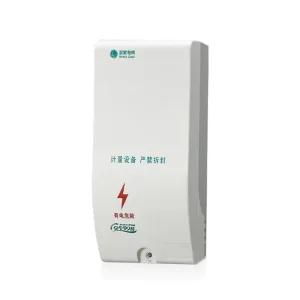
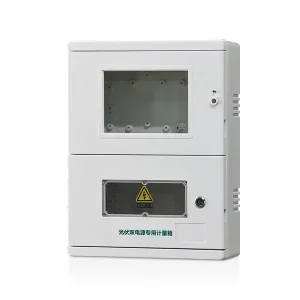
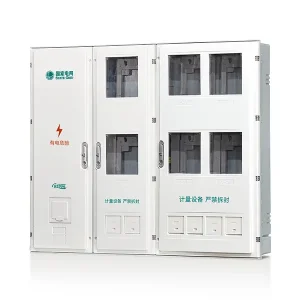
Substation Breaker Architecture & System Integration
Industrial substations require circuit breaking mechanisms that deliver ultra-rapid fault isolation, supreme arc interruption, and seamless SCADA telemetry interfacing across high-stress grid environments.
Arc Quenching Media Selection
Modern electrical engineering relies on high-grade Vacuum Interrupters (VI) and Sulphur Hexafluoride (SF6) alternatives. While SF6 has traditionally governed high-voltage GIS, eco-gas blends and sealed solid dielectric vacuum modules eliminate greenhouse gases while sustaining exceptional transient recovery voltage (TRV) withstand capabilities.
- Axial Magnetic Field (AMF) Contact Geometries
- Solid Epoxy Resin Cast Insulation
- Maintenance-Free Interrupter Lifecycles
Spring vs. Magnetic Actuation
High reliability demands stable mechanical drive systems. Spring-operated mechanisms provide field-tested kinetic storage for standardized Open-Close-Open (O-0.3s-CO-15s-CO) cycles, while permanent magnetic actuators reduce moving mechanical linkages by over 60%, mitigating friction-induced failure risks in critical utility switchyards.
- 10,000 to 30,000 Operations Mechanical Endurance
- Electronic Interlocking Integration
- Low-Current Tripping Coil Protection
Condition Monitoring & SCADA
Modern substations transition from scheduled routine upkeep to predictive condition-based maintenance (CBM). Integrated sensors continuously trace contact erosion, dynamic travel curve metrics, partial discharge (PD), and gas density levels, feeding vital operational health data via native IEC 61850 substation bus networks.
- Optic-Isolated Trip Circuit Supervision
- GOOSE Messaging Protocol Compatibility
- Microsecond Precision Timestamping
Yueqing Electrical Hub: China Supply Chain Advantage
Navigating global procurement requires assessing industrial supply depth, raw material verticalization, and rigorous cross-border compliance standards across major international transmission markets.
Unrivaled Industrial Cluster Efficiency
Situated in Yueqing, Zhejiang—widely recognized as China’s Electrical Capital—our factory facilities operate within direct proximity to foundational material foundries, copper extrusion plants, stamping tooling centers, and molding facilities. This cluster depth slashes intermediate procurement lead times, protects production agility against global supply shocks, and guarantees wholesale cost competitiveness.
Global Compliance & Testing Traceability
Overseas utility grids maintain no tolerance for regulatory gaps. Factory outputs are systematically verified against IEC 62271-100, IEEE C37.04, and UL electrical standards. Routine high-potential withstand tests, BIL lightning impulse assessments (up to 125kV+), and metallurgical micro-inspections accompany every exported shipping lot to assure border-to-site engineering clearance.
Dedicated Localization Support for EPCs
Large-scale turnkey substation developments necessitate tailored mounting dimensions, diverse terminal clamp dimensions (DIN, NEMA, or custom busbar hole drilling), and specialized secondary control voltages. Our factory engineering teams provide pre-sales CAD layout simulations, site electrical schematic alignment, and spare parts kit bundles tailored for 10-year utility maintenance cycles.
Substation Enclosure & Housing Durability Standards
A side-by-side engineering comparison designed to support EPC procurement directors, utility engineers, and system integrators during material specification drafting.
| Evaluation Parameter | SMC Fiberglass Composite (GRP) | Stainless Steel (AISI 304/316) | Standard Cold-Rolled Carbon Steel |
|---|---|---|---|
| Galvanic & Chemical Corrosion | Immune to oxidation, salt-spray, acid soil contact | Excellent, but susceptible to pitting in coastal Cl- rich zones | Poor; depends entirely on paint/zinc boundary layers |
| Dielectric Safety & Insulation | Total inherent dielectric; zero touch-potential hazard | Conductive; mandatory ground-fault grounding bonds | Conductive; high risk of enclosure energization on fault |
| Impact Resistance (IK Code) | IK10 certified (high elastic modulus absorption) | IK10 (deformation occurs without internal fracture) | IK08 - IK09 (susceptible to denting and coat failure) |
| Thermal Distortion & Weathering | -25°C to +50°C continuous; non-softening polymer | Exceptional thermal range; highly conductive heat gain | High solar absorption heat buildup inside cabinet |
| Outdoor Service Lifetime | 30 to 40+ Years (Zero routine maintenance) | 25 to 30 Years (Periodic surface passivation required) | 8 to 12 Years (Frequent repainting / antirust cycles) |
Global Grid Scenarios & Substation Breaker Implementations
Industrial breaker stations and distribution cubicles adapt to diverse environmental stresses, grid topologies, and mission-critical operating environments across five core sectors.
Renewable Utility-Scale Solar PV
Modern PV collector substations encounter heavy bidirectional current swings and rapid cloud-cover power surges. Our vacuum breakers integrated with SMC-housed grid-connection cabinets defend central string inverters, providing reliable capacitive switching without restrike risks.
Heavy Petrochemical & Refineries
Explosive hydrocarbon airborne particles and chemical vapor mists rapidly corrode generic switchgear. Solid dielectric vacuum interrupters sealed within IP44/IP54 stainless and SMC enclosure cabinets prevent combustible atmospheric contact and suppress electrical sparking.
Metro Traction & Electrified Rail
Rail traction substations operate under brutal duty cycles featuring recurring short-circuit impacts and harmonics from rolling stock acceleration. Breakers installed along feeder tracks ensure ultra-stable recovery speed and rapid auto-reclose sequencing to keep operations flowing.
Urban Distribution & Commercial High-Rise
Space-constrained basement substations demand compact Ring Main Units (RMU) and multi-circuit metering boxes. Concealed internal wiring layouts, flame-retardant SMC partitions, and high breaking capacities isolate internal electrical fire propagation risk completely.
Key Technology Shifts Reshaping Substation Switchgear
The electrical power transmission and distribution landscape is undergoing rapid transformation driven by decarbonization, microgrid proliferation, and edge telemetry.
Decarbonization & Eco-Gas Breakthroughs
Strict European and global F-gas regulations are phasing out conventional SF6 gas, demanding clean-air, N2/O2 mixes, or synthetic fluoronitrile insulation alternatives. Factory investments focus on high-reliability vacuum breaker cores coupled with environmental-friendly insulation systems that drop Global Warming Potential (GWP) to under 1.
IoT Edge Sensing & Digital Twins
Mechanical switchgear is converting into cyber-physical assets. Real-time temperature measurement at primary busbar connections, continuous spring tension monitoring, and high-frequency CT partial discharge detection enable AI-driven prognostic analytics, preventing catastrophic failures before physical breakdown occurs.
Composite Modularization
Heavy sheet steel enclosures are increasingly being replaced by compression-molded SMC (Sheet Molding Compound) fiber-reinforced polyester enclosures across low and medium voltage tiers. SMC significantly reduces shipping weights, cuts crane logistics costs during onsite installation, and completely eliminates rust oxidation.
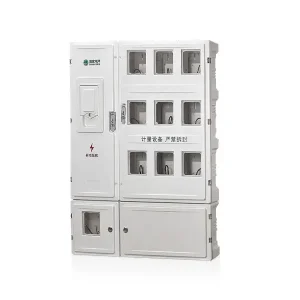
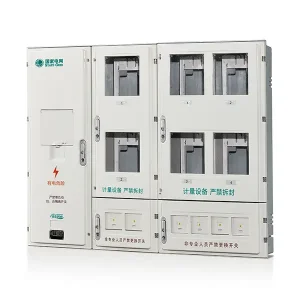
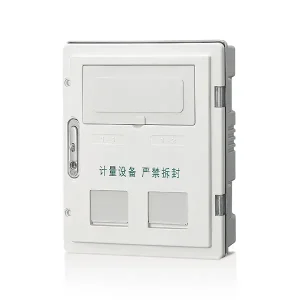
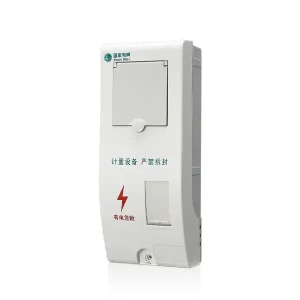
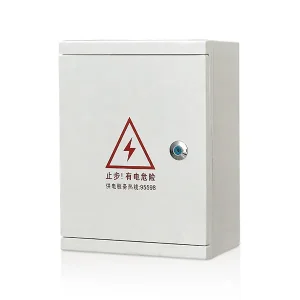
Distribution & Metering Infrastructure Units
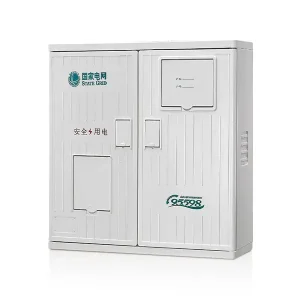
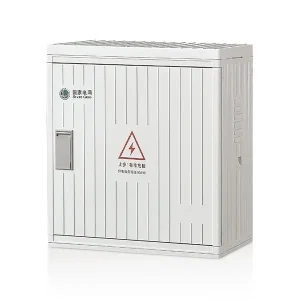
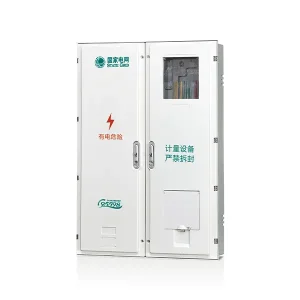
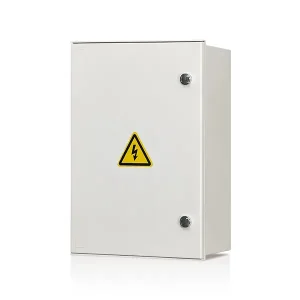
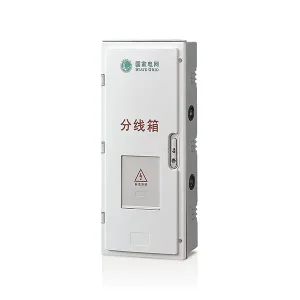
Explore our single-phase, three-phase, and modular terminal control boxes engineered for pole installations, residential blocks, and industrial substation branches.
End-to-End Factory Verification Procedures
To eliminate onsite commissioning setbacks, all primary substation switchgear components, vacuum breakers, and compression-molded enclosures pass multi-stage internal diagnostic checklists.
Power-Frequency Dielectric
High-voltage AC dielectric withstand verification across open breaker gaps and phase-to-earth busbars ensures high safety margins against atmospheric overvoltages.
Contact Resistance Testing
Micro-ohmmeter contact testing using steady 100A DC current injection guarantees that primary conductor contact resistance remains strictly below 35 micro-ohms.
Mechanical Timing Diagnostics
Computer-assisted sensor measurements plot closing and opening velocities, bounce duration (<2ms), and simultaneous multi-phase contact synchronization down to fractions of a millisecond.
Helium Mass Leak Detection
Vacuum and gas-sealed breaker chambers are tested via vacuum chamber helium mass spectrometer sniffing to guarantee leakage rates below 0.05% per calendar year.
Frequently Asked Questions on Substation Breaker Sourcing
Clear, direct technical answers regarding electrical parameters, custom engineering cycles, containerized freight logistics, and factory OEM capabilities.