
Factory-Direct Distribution & Intelligent Metering Equipment
Engineered for utility compliance, renewable grid interconnection, and industrial secondary power distribution with rigorous IEC and GB/T standard testing.
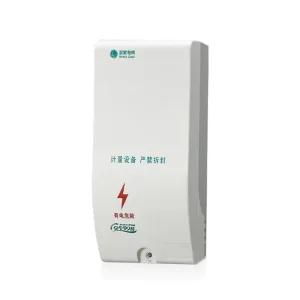
Wholesale China TY-SXD1-FX Single-Phase Distribution Box - Reliable Power Solution from Leading Suppliers & Factory
Explore Technical Specs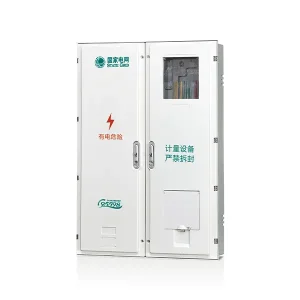
Wholesale TY-SXS3 Three-Phase Electric Energy Metering Box (Transformer Type) Manufacturers, Supplier
Explore Technical Specs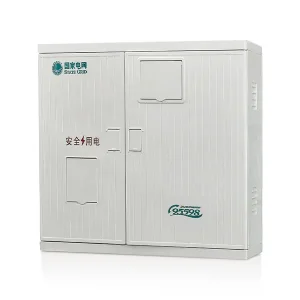
China TY-SXS3-BXJ Low Voltage B-Type Box for Transformers - Reliable Power Management
Explore Technical Specs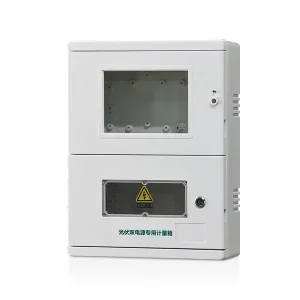
Wholesale China SMC Fiberglass Photovoltaic Grid-connected Boxes - TY-SXD2-GF1 and TY-SXS2-GF1 Factory
Explore Technical Specs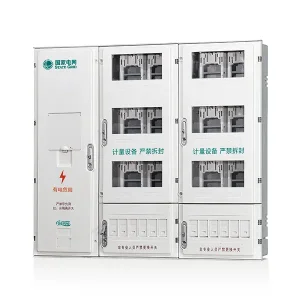
Wholesale Single-Phase Electric Energy Metering Box - TY Series by Leading China Suppliers & Factory
Explore Technical Specs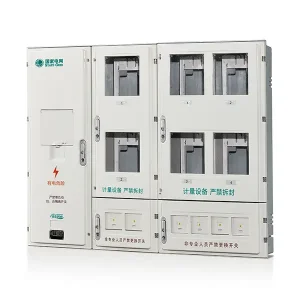
Wholesale TY Series Three-Phase Electric Energy Metering Box - China Suppliers and Factory Solution
Explore Technical Specs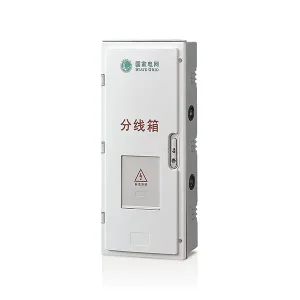
China TY-FXX Junction Box Manufacturer, Industrial Distribution Enclosure Direct Supplier
Explore Technical Specs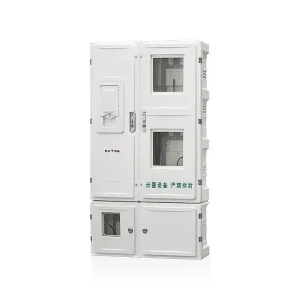
China TY-SXS2 Three-Phase Electric Energy Metering Box from China Suppliers | High Precision Factory
Explore Technical Specs1. The Global Landscape of Smart Ring Main Units (RMU) in Contemporary Power Grids
The modernization of medium-voltage (MV) distribution networks is rapidly shifting from static electromechanical topologies toward self-healing, digitized distribution automation systems. At the center of this transition is the Smart Ring Main Unit (Smart RMU). Serving as the primary node within 11kV, 24kV, and 36kV secondary distribution rings, an advanced Smart RMU does not merely isolate fault zones; it continuously ingests high-frequency telemetry, assesses thermal integrity across critical busbars, monitors gas density or dielectric insulation levels, and communicates autonomously with regional SCADA or Distribution Management Systems (DMS).
Globally, electrical utilities and private infrastructure operators face unprecedented operational stressors. The massive influx of intermittent Distributed Energy Resources (DERs)—predominantly utility-scale solar PV farms, commercial battery energy storage systems (BESS), and decentralized wind generation—has created multi-directional power flows that obsolete traditional unidirectional protection schemes. Simultaneously, the proliferation of rapid EV charging plazas demands rapid load transfer and precise sub-cycle fault interruption to preserve power quality and grid resilience. As a result, municipal power authorities and global EPC contractors increasingly mandate wholesale factory partnerships capable of delivering native intelligence integrated directly into switchgear assemblies.
Core Architecture: The Synergy of Primary Switchgear and Edge-Computing IEDs
A genuinely intelligent Ring Main Unit breaks away from legacy modular boxes that simply retrofitted an external Remote Terminal Unit (RTU). True modern Smart RMU manufacturing embodies complete hardware-firmware cohesion. The primary switch compartment—whether utilizing dry-air solid insulated switchgear (SIS) or low-pressure SF6 gas-insulated tanks (GIS)—integrates optical current sensors (Rogowski coils), electronic resistive voltage dividers (LPVT), and surface acoustic wave (SAW) wireless thermal sensors embedded at cable termination bushings and vacuum interrupter contacts.
This high-fidelity analog telemetry feeds straight into an embedded Feeder Terminal Unit (FTU) or Distribution Automation Terminal (DTU) supporting native IEC 61850 protocol stacks with GOOSE messaging, IEC 60870-5-101/104, and DNP3.0 over Ethernet or hardened 4G/5G private cellular gateways. Edge-computing microprocessors execute automated fault detection, isolation, and service restoration (FDIR) algorithms within 100 milliseconds, allowing non-faulted feeder sections to re-energize without dispatching line maintenance crews.
Engineering Takeaway for Tenders: Modern international switchgear tenders require strict segregation between primary medium-voltage compartments and low-voltage secondary control intelligence. Ensuring factory-tested electromagnetic compatibility (EMC class 4 per IEC 61000-4) prevents high-frequency transients generated during circuit breaker opening from disrupting microprocessors and optocouplers.
2. China Wholesale Manufacturing Ecosystem: Precision, Scale, and Supply Chain Depth
The international procurement landscape for secondary power distribution gear has transformed dramatically over the last decade. Historically dominated by European and North American conglomerates with exorbitant engineering premiums and 32-to-48-week delivery lead times, the global utility sector now turns to leading Chinese specialized smart RMU manufacturing clusters, located primarily in Yueqing (Zhejiang Province), Jiangsu, and Guangdong.
This industrial concentration is not merely a cost arbitrage mechanism; it represents a qualitative advantage in manufacturing agility, supply chain velocity, and extreme automation:
Cluster Density
Sub-tier supplier ecosystems located within a 30-kilometer radius provide stainless steel laser-cutting, epoxy casting, vacuum interrupters, and copper busbars within hours, eliminating international logistics bottlenecks.
Robotic Laser Hermetic Sealing
Fully automated robotic multi-axis CNC laser welding ensures 3mm 304 or 316L stainless steel gas chambers achieve leak rates below 0.05% per annum, validated by enclosed vacuum helium spectrometry.
End-to-End Digital Testing
Automated test benches verify mechanical timing, contact resistance, power frequency dielectric withstand, and secondary relay logic in a single unified flow with real-time traceability.
Furthermore, Chinese factories operate under ultra-responsive OEM/ODM frameworks. Where global tier-1 brand houses charge excessive engineering change fees to adapt cable termination height or customize circuit breaker interlocks, specialized Chinese facilities offer dedicated engineering teams capable of modifying structural enclosures, enclosure ingress protections (IP4X, IP54, IP67), and auxiliary schematics within weeks.
3. Strategic Industry Trends: The Green Switchgear Revolution & SF6-Free Evolution
Sulfur hexafluoride (SF6) has long served as the dominant dielectric insulating and arc-quenching medium in medium-voltage gas-insulated switchgear (GIS) due to its exceptional dielectric breakdown voltage and thermal conductivity. However, with a Global Warming Potential (GWP) 24,300 times that of CO2 and an atmospheric residence time exceeding 3,200 years, regulatory frameworks worldwide—such as the European Union’s F-gas Regulation revisions and North American clean air mandates—are imposing decisive bans on new SF6 MV switchgear installations starting from 2026 to 2030.
In response, vanguard wholesale smart RMU factories have heavily invested in Eco-Friendly Green Switchgear architectures:
- Clean Air & Synthetic Air GIS: Utilizing a pressurized mixture of purified nitrogen and synthetic medical-grade air (80% N2, 20% O2) at slightly elevated pressures (1.3 to 1.5 bar abs), completely eliminating greenhouse gas impact (GWP < 1) while retaining the compact physical footprint of classic GIS units.
- Solid Dielectric Insulated Switchgear (SIS): Eliminating all pressurized gases by completely casting the vacuum interrupters, disconnectors, and three-position switches in solid epoxy resin or thermoplastic elastomers, providing an impervious, non-explosive modular unit immune to harsh ambient moisture and aggressive coastal salt-fog.
- Fluoronitrile-Based Gas Mixtures (C4-FN): Incorporating proprietary fluorinated gas blends combined with carbon dioxide and oxygen, delivering dielectric properties comparable to SF6 with a 99% reduction in GWP without increasing physical switchgear footprint.
| Insulation Technology | Dielectric Medium | GWP Rating | Operating Life | Maintenance Profile | Optimal Deployment Arena |
|---|---|---|---|---|---|
| Standard Smart GIS | SF6 Gas (Hermetic Sealed) | 24,300 | 30-35 Years | Minimal (Pressure gauge telemetry) | Urban compact substations, utility networks |
| Eco-Dry Air Smart GIS | Synthetic Dry Air (N2 / O2) | 0 | 35-40 Years | Zero gas monitoring liabilities | EU / North America ESG tenders, LEED builds |
| Solid Insulated (SIS) | Epoxy Resin Encapsulation | 0 | 40+ Years | Maintenance-free, non-gas environment | Mining tunnels, flood-prone & high humidity zones |
| Air Insulated (AIS) Smart | Atmospheric Air + Barriers | 0 | 25-30 Years | Periodic mechanical & dust servicing | Cost-sensitive dry industrial installations |
4. Localized Application Scenarios & Global Operational Realities
A resilient Smart RMU must operate unflinchingly across vastly divergent environmental extremes. Factories must account for precise local climatic conditions, fault capacity margins, and installation constraints during the pre-engineering design review:
Utility-Scale Solar PV & BESS
High-ambient thermal operating ranges (-30°C to +60°C). Requires integrated bidirectional electronic protective relays capable of instantaneous trip on reverse power, anti-islanding, and fast communication with central power plant controllers.
Subway & Light Rail Transit
Subject to heavy continuous vibration and conductive metal dust. Switchgear tanks must be tested for seismic resilience and shock resistance, featuring redundant auxiliary contacts and rapid arc extinguishing in under 10 ms.
Coastal Offshore & Desalination
Heavy salt spray and relative humidity consistently exceeding 95%. Requires external stainless steel or SMC fiberglass enclosure protection class C5-M, corrosion-proof marine hinges, and anti-condensation heating elements.
Hyperscale AI Data Centers
Uncompromising Tier IV uptime mandates dual-loop automatic transfer switching (ATS) with motorized mechanism operating within 80 ms, accompanied by continuous partial discharge acoustic monitoring.
5. Global Enterprise Procurement Checklist & Factory Quality Verification
When evaluating wholesale smart RMU manufacturers, international procurement officers, electrical consultants, and EPC technical directors must look beyond generic marketing brochures. The qualification process should follow an airtight technical audit based on international standards:
- IEC 62271-200 & IEC 62271-100 Type Testing: Demand verified type test certificates issued by internationally accredited STL member laboratories (e.g., KEMA-DEKRA, CESI, ASTA, or XIHARI). Essential test validations include Short-Time Withstand Current (e.g., 20kA/25kA for 3 seconds), Internal Arc Classification (IAC AFLR up to 20kA 1s), Temperature Rise at rated continuous current (630A/1250A), and Mechanical Endurance Class M2 (up to 10,000 operations without maintenance).
- Internal Arc Classification (IAC AFLR): Ensuring operator safety in the unlikely event of an internal fault. The enclosure must safely channel explosive hot gases away from operating personnel via dedicated downward or upward pressure relief ducts.
- Partial Discharge (PD) Verification: Switchgear chambers must display partial discharge levels strictly below < 5 pC (picocoulombs) at 1.1 times nominal line-to-line voltage to prevent long-term insulation degradation and catastrophic flashover.
- Secondary IED Interoperability: Verification that the integrated DTU/FTU logic can parse multiple concurrent telemetry requests, handle cyber-secure firmware encryption (IEC 62351), and support remote diagnostics via secure tunnel interfaces.
6. Frequently Asked Questions (FAQ) for Engineering & Procurement Teams
What distinguishes a "Smart" RMU from a traditional manual Ring Main Unit?
Can your factory provide custom switchgear configurations such as CCC, CCV, and VVV?
What testing protocols are executed during the Factory Acceptance Test (FAT)?
How does solid dielectric insulation compare against gas-insulated switchgear for harsh environments?
What is the standard lead time for wholesale custom-engineered Smart RMU orders?
Specialized Medium-Voltage Switchgear & Branch Network Assemblies
High-reliability secondary power switching, cable branch enclosures, and intelligent fusion terminal solutions designed for uninterrupted urban and industrial service.
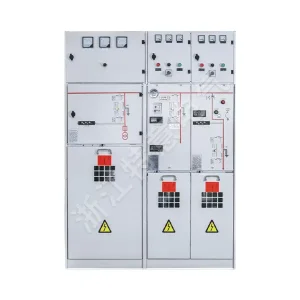
China Ring Main Unit Factories, Factory - Primary & Secondary Intelligent Switchgear Solutions
Explore Technical Specs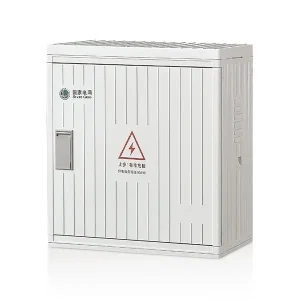
China High-Quality TY-DFW-7A Branch Box from China Suppliers | Reliable Electrical Safety Factory
Explore Technical Specs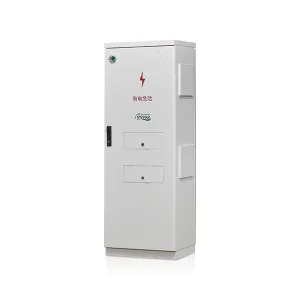
China Stainless Steel Single Phase Twelve-Position Meter (Floor-Standing Type) Supplier
Explore Technical Specs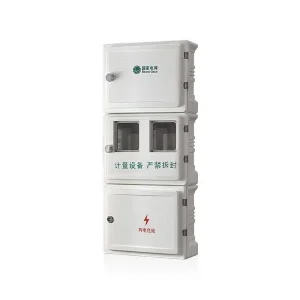
China TY-SXD2 Single-Phase Electric Energy Metering Box (2-6) Manufacturers, Factories
Explore Technical Specs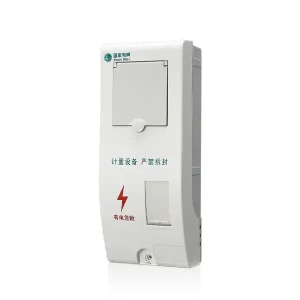
Wholesale China TY-SXD1 Single-Phase Electric Energy Metering Box Suppliers & Factory
Explore Technical Specs
Wholesale TY-DFW-7A Branch Box - High-Performance Electrical Solution from China Factory
Explore Technical Specs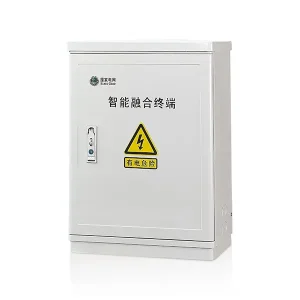
China TY-TTU Intelligent Fusion Terminal Box - Distribution Automation Node Factory
Explore Technical Specs
Wholesale TY Three-Phase Electric Energy Metering Box - Quality China Factory Suppliers
Explore Technical SpecsRequest Engineering Specifications & Factory Pricing
Direct communication with our senior switchgear design engineers ensures seamless alignment with your utility tender criteria, single-line diagrams (SLD), and environmental specifications. Partner directly with an experienced manufacturing hub in Yueqing.