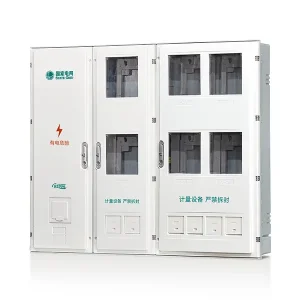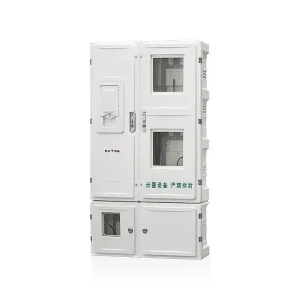
Flagship Enclosures
Primary Power Metering & Distribution Series
Utility-grade electrical metering boxes engineered for extreme thermal, chemical, and physical resistance across commercial and residential utility deployments.
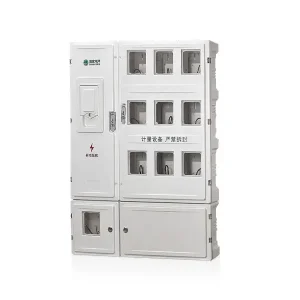
Wholesale High-Quality TY-SXD2 Single-Phase Electric Energy Metering Box - China Suppliers & Factory Certified Manufacturers, Factories
Configure Model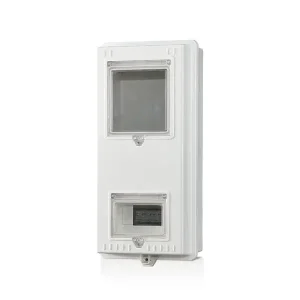
China China SMC Fiberglass Foreign Trade Box Supplier - Durable Single & Three-Phase Electric Meter Boxes from Factory Manufacturer, Manufacturers
Configure Model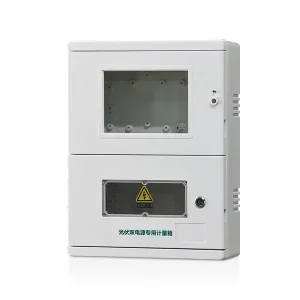
Wholesale China SMC Fiberglass Photovoltaic Grid-connected Boxes - TY-SXD2-GF1 and TY-SXS2-GF1 from Reliable Suppliers and Factory Suppliers, Factory
Configure Model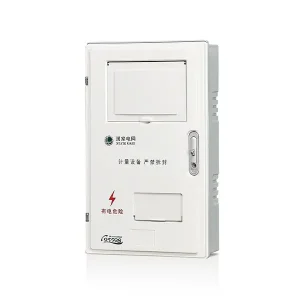
China Three-Phase TY-SXS1 Electric Energy Meter Box - Reliable China Suppliers & Factory Quality Assurance Supplier, Factory
Configure Model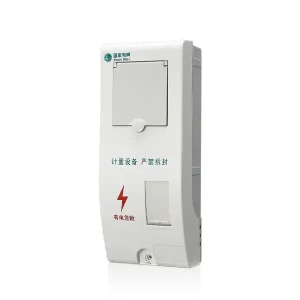
Wholesale China TY-SXD1 Single-Phase Electric Energy Metering Box - Reliable Suppliers & Factory Solutions Supplier, Factory
Configure Model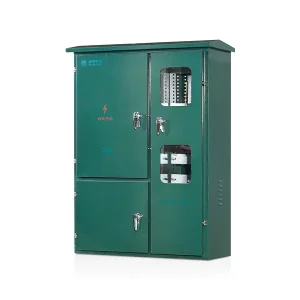
Wholesale Stainless steel three-phase two-position electric energy metering box (ground-standing transformer type) Manufacturers, Factory
Configure Model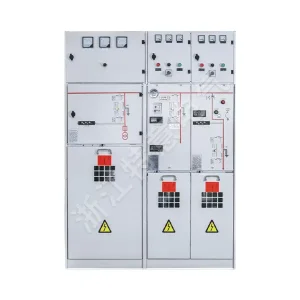
Wholesale China Ring Main Unit (RMU) - Reliable Power Distribution Solutions from Top Suppliers and Factory Manufacturers, Suppliers
Configure ModelMarket Dynamics & Procurement Demands
Global Procurement Architecture & Field Engineering
Energy utilities, regional grid operators, and EPC project managers face rising challenges: escalating urban power densities, distributed renewable penetration, and extreme ambient weather events. Meter boxes serve as the critical perimeter safeguarding billing accuracy, grid safety, and service uptime.
Revenue Protection & Anti-Tamper
Global utilities experience billions in non-technical line losses via direct metering bypass and magnetic tampering. Modern metre boxes electric integrate compartmentalized designs, internal lead-seal latches, and sensor-ready enclosures that eliminate unauthorized busbar intervention without visible disruption.
Thermal Dissipation & Arc Mitigation
Higher load profiles driven by EV charging stations and bidirectional rooftop solar feed-ins trigger significant thermal load inside cabinets. Our enclosures leverage optimized passive convection channels and zero-halogen flame-retardant composites that resist thermal creep and prevent localized flashover cascades.
Harsh Climate Reliability (C5/UV-Proof)
From desert high-UV irradiance to offshore high-salinity maritime humidity, traditional steel rusts and commodity thermoplastics embrittle. High-density Sheet Molding Compound (SMC) provides an inert dielectric barrier impervious to chemical attack, salt-spray exposure, and broad thermal swings from -25°C to +50°C.
Smart Grid & AMI Telemetry Integration
Transitioning toward Advanced Metering Infrastructure (AMI) requires structural enclosure transparency for cellular (NB-IoT, 4G/5G Cat-M) and RF Mesh signals. Unlike metal cabinets that create Faraday cages, SMC fiberglass enclosures enable low-attenuation radio propagation for zero data loss transmission.
40+ Yrs
Designed Indoor Operating Lifespan for SMC Housings
30 kA
Short-Time Busbar Withstand Rating (1s Duration)
IK10 / IP65
Mechanical Impact Strength & Environmental Sealing
100%
Dielectric Inherent Insulation (No Earth Fault Hazard)
Engineering Comparison
Material Specification Matrix for Global Grid Infrastructure
A rigorous engineering evaluation for procurement directors, distribution engineers, and tender authorities balancing structural integrity, lifecycle total cost of ownership (TCO), and human safety.
| Evaluation Parameter | SMC GRP Composite (Teyi Benchmark) | Stainless Steel (304 / 316) | Standard Thermoplastic (ABS / PC) |
|---|---|---|---|
| Dielectric Safety & Shock Hazard | Complete intrinsic insulation. Eliminates stray ground fault currents and earthing loop failures. | Conductive substrate. Demands meticulous earthing bonds; hazard if lightning hits. | Insulating, but prone to electrostatic buildup and surface tracking in humid air. |
| Atmospheric & Chemical Corrosion | Zero rust. 100% resistant to salt mist, acid rain, industrial airborne chemicals. | High resistance (316 grade), but highly prone to stress corrosion in marine pitting regions. | Resistant to oxidation, but dissolves or discolors in organic solvents/vapors. |
| UV Stability & Outdoor Ageing | Unsaturated polyester matrix with UV inhibitors retains structural modulus for 30+ yrs. | Unaffected by UV rays; coating paint may chalk or degrade over prolonged exposure. | High risk of photolytic degradation, micro-cracking, and yellowing within 3–7 yrs. |
| Impact Resistance (IK Code) | IK09 to IK10 certified. Retains structural elasticity without permanent deformation. | IK10+. Extremely tough, but susceptible to visible denting affecting interior clearance. | IK07 to IK08. Becomes brittle and prone to catastrophic shattering under cold stress. |
| RF Transparency (Smart Metering / IoT) | Nearly 0 dB signal attenuation. Seamless RF, 4G, 5G, and LoRa transmission. | Faraday cage shielding effect. Mandates external antennas drilled through the body. | Good RF transparency, but structurally inferior for long-term weight support. |
Technology Roadmap
Next-Generation Electric Metering Architecture (2025–2030)
How our Yueqing engineering labs are anticipating decentralized energy transition, AI-assisted telemetry, and stringent decarbonization mandates.
Phase 01: Present
Modular Multi-Tariff Enclosures
Rapid deployment of multi-position single-phase (TY-SXD2) and transformer-type three-phase (TY-SXS3) boxes configured for rapid DIN-rail snapping and concealed busbar compartments.
Phase 02: 2025–2026
Integrated PV & Storage Hubs
Hybrid metering boxes built for bidirectional net-metering. Built-in slots for Class II SPDs, DC circuit disconnects, micro-inverter breakers, and automated transfer switches.
Phase 03: 2027–2028
Edge-Sensing Intelligent Housings
Embedding passive RFID tags, optical fiber ports, thermal sensing strips, and micro-electromechanical lid sensors to immediately broadcast unsealing attempts or busbar hotspot alerts.
Phase 04: 2029+
Bio-Resin & Circular Composites
Developing recyclable low-carbon thermoset molding compounds that meet EU circular economy goals and reduce embedded carbon footprints during mass power distribution rollouts.
Compliance & Reliability
Global Standards, Factory Rigor & Localization
Ensuring total compliance with international electrical codes and tender requirements across Europe, the Americas, the Middle East, Southeast Asia, and Africa.
IEC & EN Compliance Testing
Manufactured under ISO 9001, ISO 14001, and ISO 45001 certifications. Each enclosure series undergoes third-party verification for IEC 62208 (Empty enclosures for low-voltage switchgear assemblies), IEC 60529 (IP degrees of protection), and IEC 62262 (IK impact codes).
Flame Retardancy & Glow-Wire Proof
Our composite sheet molding formulations achieve UL94 V-0 flame-retardant compliance and pass Glow-Wire Flammability Index (GWFI) testing up to 960°C per IEC 60695-2-12, preventing combustion self-sustainment in worst-case internal short-circuit events.
Tender Customization & Regional Punching
Tender specifications differ by region—from specific BS 7657 cut-out mounting holes in the UK/Commonwealth zones to French Enedis-type configurations or Latin American aerial pole-mounting brackets. Our flexible CNC tooling molds adapt knockouts, clear view windows, and laser-etched branding rapidly.
Comprehensive Quality Checkpoints
From raw resin viscosity analysis to hydraulic hot press pressure tracking (up to 2000-ton hydraulic compression presses), our factory conducts closed-loop audits. Final batch inspections include ingress spray checks, torque load limits on hinge pins, and 5000V dielectric breakdown verifications.
Procurement & Engineering FAQ
Frequently Asked Questions for Utility & EPC Buyers
Addressing key technical, manufacturing, and commercial inquiries to accelerate tender evaluation and supplier qualification.
What is the primary formulation used in Teyi SMC fiberglass meter boxes?
Our meter enclosures are compression-molded from Sheet Molding Compound (SMC)—a composite formulation of unsaturated polyester resin, chopped structural glass fibers (typically 25–30%), mineral fillers (such as aluminum trihydrate for flame extinguishing), and UV stabilizer additives. This creates an isotropic structure with exceptional mechanical stiffness and zero electrical conductivity.
How do Teyi metre boxes electric handle high short-circuit faults?
Our industrial and multi-user boxes (such as the TY-SXS and TY-SXD series) are engineered to withstand prospective electrodynamic short-circuit forces up to 30 kA short-time withstand current (Icw 1s). The robust ribbing and reinforced mounting standoffs ensure busbar supports retain physical integrity during upstream clearing intervals.
Can internal components (breakers, busbars, terminals) be pre-assembled?
Yes. Under our OEM and complete-solution programs, we offer factory-installed internal architectures, including nickel-plated copper busbars, DIN rails, incoming/outgoing MCCBs, MCBs, RCBOs, neutral-earth links, and pre-wired CT harnesses certified to relevant utility schematics.
What custom tooling and branding options are available for overseas tenders?
We maintain comprehensive in-house tooling capabilities. We can adapt mold inserts for utility logos, custom meter viewing windows (clear polycarbonate with UV stabilizers), specialized knockout sizes (PG, metric, or conical stepped grommets), and distinct triangle, padlock, or square latch locking mechanisms under full OEM confidentiality.
Extended Portfolio
Auxiliary Distribution, Protection & Collector Units
Comprehensive low- and medium-voltage solutions designed to complete grid infrastructure deployments from substation interconnects to end-user metering nodes.
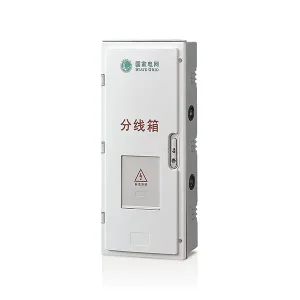
China Flame Retardant TY-FXX Junction Box Series - Reliable China Suppliers & Factory by Teyi Electric Co., Ltd Supplier, Factory
Configure Model
Wholesale China Suppliers Factory SMC Fiberglass Foreign Trade Box for Single-Phase and Three-Phase Electrical Applications Supplier, Suppliers
Configure Model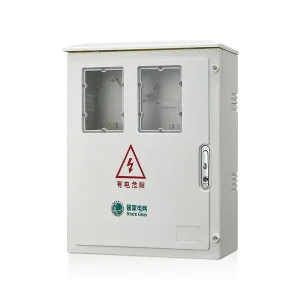
China China TY-SXS3-2B D-Type Box - Durable Electrical Meter Box from Reliable Suppliers and Factory Manufacturer, Manufacturers
Configure Model
Wholesale TY-SXS1-CJ Three-Phase Collector Box - Reliable Electrical Solutions from China Suppliers and Factory Suppliers, Factory
Configure Model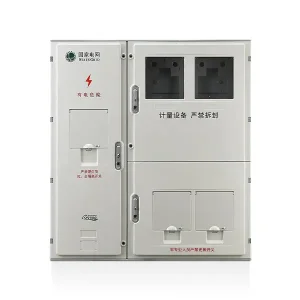
Wholesale China TY Three-Phase Electric Energy Metering Box (Transformer Type) - Reliable Suppliers & Factory Options Manufacturer, Factory
Configure Model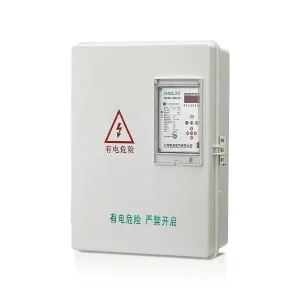
Wholesale China Suppliers Factory TY-DXZB-1 Single-Phase & TY-SXZB-1 Three-Phase Intermediate Protection Boxes Supplier, Factory
Configure Model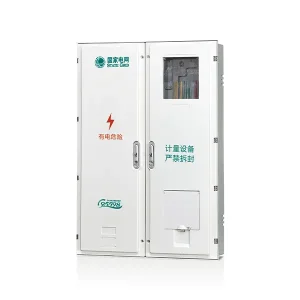
China TY-SXS3 Three-Phase Electric Energy Metering Box (Transformer Type) - China Suppliers & Factory Manufacturer, Manufacturers
Configure Model