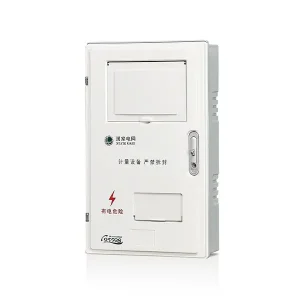
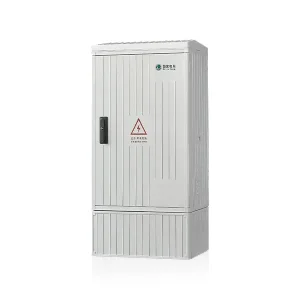
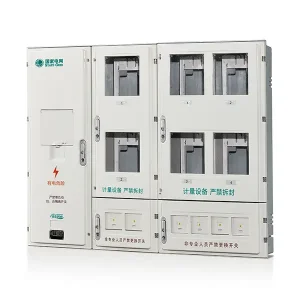
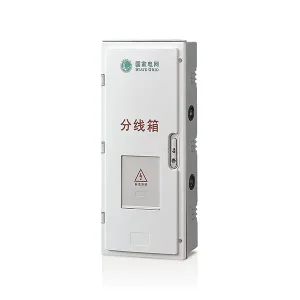
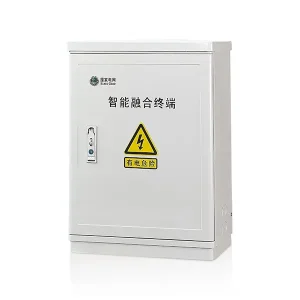
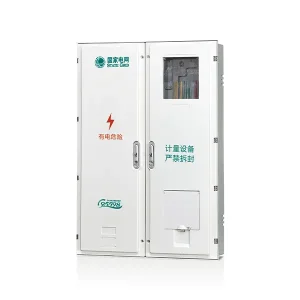
Primary Wholesale Distribution Enclosures
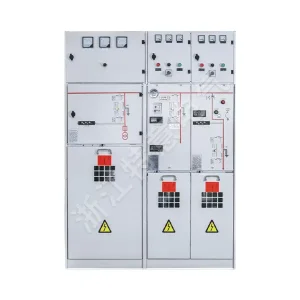
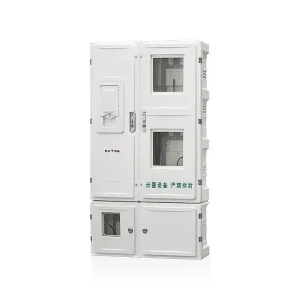
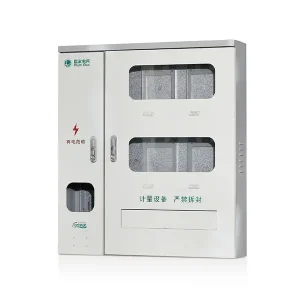
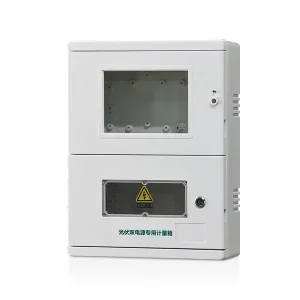
Precision-engineered metering hardware, low-voltage branch boxes, and medium-voltage switchgear direct from our Yueqing manufacturing hub.
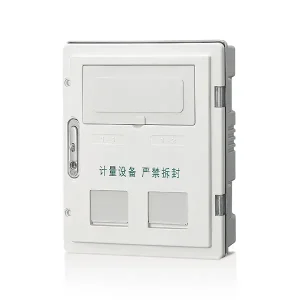
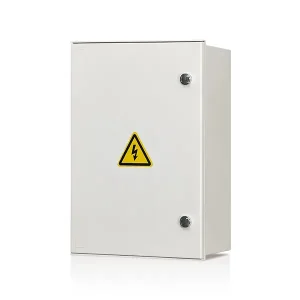
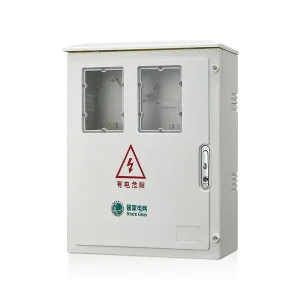
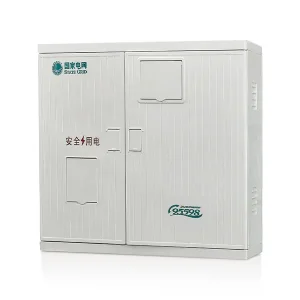
Engineering Architecture of Modern 320 Amp Metering Hardware
Demystifying the threshold between self-contained residential service and instrument-rated commercial metering systems.
In low-voltage utility distribution, the 320 Amp meter box (often classified under class 320 or 400A maximum service entrance equipment) serves as the ultimate benchmark for heavy-duty residential, mixed-use commercial, and modern high-draw industrial systems. As global electrification accelerates through the mass adoption of dual Level 2 EV charging stations, variable-refrigerant HVAC systems, commercial heat pumps, and distributed solar PV installations, legacy 200 Amp infrastructures face unprecedented thermal bottlenecks.
A true wholesale 320 Amp meter enclosure is specifically engineered to handle 320 Amperes of continuous electrical current with an absolute peak intermittent rating of 400 Amperes without thermal runaway or terminal degradation. Navigating this current magnitude requires distinct metallurgical and structural configurations compared to smaller consumer metering boxes:
Thermodynamic Dissipation
At continuous 320A operation, Joule heating ($I^2R$) across internal terminal blocks and bypass jaws generates elevated internal temperatures. Our enclosures utilize high-conductivity extruded tin-plated copper/aluminum alloy busbars and convection draft channels that maintain temperature rise below 50K under standard ambient loading.
Lever-Operated Bypass Mechanism
Safety during live meter maintenance is paramount. Our Class 320 assemblies integrate heavy-duty mechanical jaw bypass systems with reinforced insulating bases, enabling utility technicians to swap smart meters without dropping load or triggering hazardous arc flashes.
Dielectric Integrity & SMC Material
Compression-molded Sheet Molding Compound (SMC) unsaturated polyester provides non-conductive, fire-retardant (UL94-V0) exterior housing that eliminates stray voltage hazards and completely eliminates galvanic corrosion common to seaside coastal metallic enclosures.
Engineering Parameter Matrix: 200A vs. 320A vs. CT Enclosures
Comparative evaluation matrix for power engineers, utility procurement panels, and EPC electrical contractors.
| Evaluation Parameter | Standard 200A Enclosure | Industrial Class 320A Enclosure | Current Transformer (CT) Cabinet |
|---|---|---|---|
| Continuous Amperage Rating | 160 Amps (80% Continuous) | 320 Amps Continuous (100% rated) | 400 Amps - 1200+ Amps |
| Maximum Service Ampacity | 200 Amps | 400 Amps Intermittent | Continuous rating dependent on CT ratio |
| Bypass Mechanism | Horn Bypass or None | Heavy-Duty Rotary/Jaw Lever Bypass | Test Switch Assembly with Shorting Bar |
| Metering Topology | Direct Plug-in Self-Contained | Direct Plug-in Self-Contained (Large Form) | Instrument-Rated (5A secondary via CTs) |
| Terminal Wire Range | #6 AWG to 250 kcmil (Cu/Al) | Twin 3/0 to 250 kcmil or Single 600 kcmil | Dual or Quad 500-750 kcmil Busbar Lugs |
| Short-Circuit Current Rating (SCCR) | 10 kA to 22 kA RMS Symmetrical | 25 kA to 30 kA RMS Symmetrical | 50 kA to 100 kA RMS Symmetrical |
| Installed CapEx Efficiency | Baseline Economy | Optimal (Avoids high CT & transformer costs) | High (Requires standalone CTs, wiring, meter) |
Global Commercial & Industrial Adoption Drivers
How regional electrification requirements and infrastructure retrofits govern global procurement cycles.
North American Grid Transition
In the United States and Canada, single-family residential builds exceeding 3,500 sq.ft with all-electric HVAC and double EV home chargers cannot comply with standard NEC 200A service load calculations. The Class 320 continuous (400A peak) meter box serves as the national standard for avoiding expensive dedicated instrument-rated utility transformers.
European Three-Phase Direct Networks
Across Western Europe, commercial buildings, light bakeries, machine workshops, and solar-coupled charging hubs operate on 400V 3-phase direct feeds. High-capacity direct-connect metering boxes eliminate the space penalties of separate CT enclosures within dense urban service cupboards.
Middle East & Tropical Infrastructure
Extreme ambient solar irradiance in GCC territories pushes enclosure ambient temperatures beyond 50°C. Standard thermoplastic boxes warp or soften under high continuous current; our specialized UV-stabilized SMC formulations provide the high heat deflection temperature (HDT > 200°C) demanded by local power authorities.
Localized Support & Global Compliance Assurance
Eliminating deployment risks through rigorous metallurgical validation, international testing protocols, and complete tender documentation.
IP65 / NEMA 3R, 4X
Precision polyurethane foam-in-place continuous gasket sealing prevents fine dust, wind-blown driving rain, sleet, and ice ingress from compromising terminal blocks.
IEC 61439 & UL 414
Factory production follows stringent type-tested temperature rise thresholds, short-circuit containment protocols, and creepage/clearance distance specifications.
IK10 Impact Resilience
Compression-molded glass-fiber matrix exhibits exceptional shock absorption, withstanding mechanical impacts of up to 20 Joules against vandalism or rough handling.
Utility Anti-Tamper Sealing
Multi-point padlockable hasps, utility wire sealing screws, and optical barrel lock fittings safeguard non-technical loss (revenue theft) across the perimeter.
Specialized Deployment Environments for 320A Hardware
Engineered for extreme operating environments where downtime or casing embrittlement carries catastrophic financial risk.
Solar Commercial Grid Ties
Used as bidirectional boundary metering points for 100 kW to 250 kW rooftop commercial photovoltaic solar arrays. The fiberglass body is immune to high solar UV flux and chemical air pollutants, ensuring flawless long-term feed-in tariff auditing.
High-Capacity Fleet EV Charging Hubs
Dedicated sub-metering nodes for multi-dispenser commercial EV fleet parking terminals. Continuous full-capacity current drawn for hours poses serious thermal loading; our optimized lug connections dissipate concentrated heat cleanly.
Suburban Residential Estates
Luxury subdivisions and modern smart homes equipped with induction kitchen suites, multi-zone geothermal heating, and instantaneous hot water systems requiring reliable 320A single-phase or 3-phase four-wire entrances.
Technology Roadmap & Smart Grid Outlook
Anticipating utility digitalization and structural smart-metering transformations through 2030.
Busbar Thermal Monitoring
Integration of passive RFID and wireless surface acoustic wave (SAW) thermal sensors inside the 320A bypass jaw block to report thermal hot spots before catastrophic equipment failure.
Cellular RF Transparent Doors
Polycarbonate viewing portals engineered with minimal 5G / LoRaWAN signal attenuation, ensuring smart electricity meters transmit telemetry data through thick enclosure barriers effortlessly.
Bio-Based Resins
Advancing compression chemistry by infusing recyclable bio-resins and closed-loop glass fabrics, shrinking the embodied carbon footprint of electrical infrastructure per ESG utility mandates.
Internal Arc-Fault Deflectors
Passive chamber pressure-relief vents that direct superheated plasma away from technicians in the rare event of line-to-ground flashovers during hot-swapping.
Frequently Asked Questions for Engineers & Wholesalers
In-depth technical clarifications addressing electrical sizing, testing protocols, and international supply chain parameters.
What distinguishes a true 320 Amp continuous meter box from a standard 400 Amp intermittent unit?
Why choose SMC fiberglass instead of stainless steel for a 320 Amp enclosure?
How does lever bypass operation enhance maintenance safety on 320 Amp systems?
What wire size and conduit knockouts are supported in Teyi 320A meter boxes?
What OEM/ODM customizations can Teyi Electric provide for utility tender bids?
Explore Further Metering & Switchgear Offerings
High-specification three-phase enclosures, intelligent fusion terminal boxes, and modular power branch units.