
High-Performance Metering & Distribution Units
Direct factory wholesale assemblies designed for grid-tie substations, commercial tenant distribution, and three-phase industrial service entries.
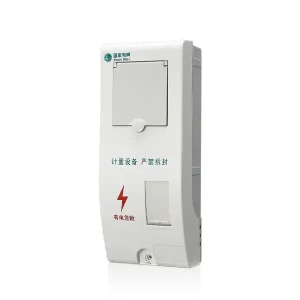
Wholesale TY-SXD1 Single-Phase Electric Energy Metering Box - High-Voltage Models from China Suppliers and Factory Manufacturers, Supplier
View Product Specs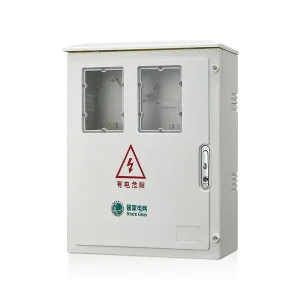
China TY-SXS3-2B D-type box Manufacturer, Suppliers
View Product Specs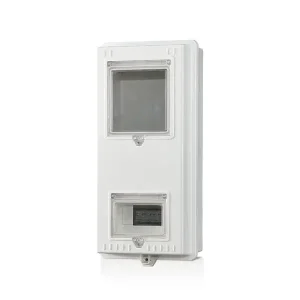
China China SMC Fiberglass Foreign Trade Box Supplier - Durable Single & Three-Phase Electric Meter Boxes from Factory Manufacturer, Manufacturers
View Product Specs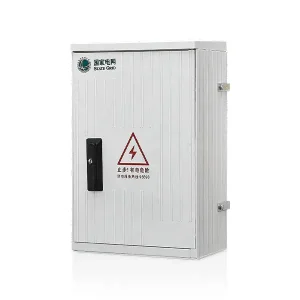
Wholesale China TY-DFW Wall-mounted Cable Branch Box - High-Quality Suppliers and Factory Solutions for Outdoor Use Suppliers, Factories
View Product Specs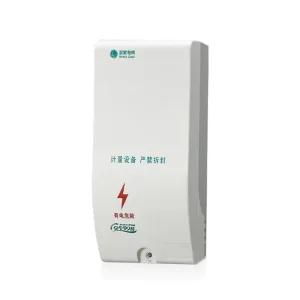
China China TY-SXD1-FX Single-Phase One-Position Distribution Box from Leading Suppliers and Factory Manufacturer, Factories
View Product Specs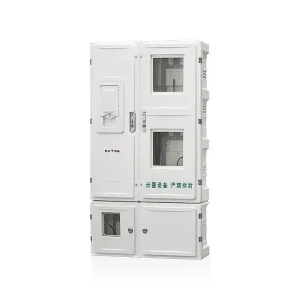
China Three-Phase Electric Energy Metering Box TY-SXS2 from China Suppliers and Factory for Efficient Power Management Manufacturers, Factory
View Product Specs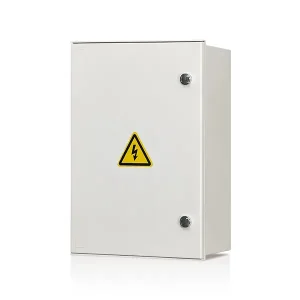
Wholesale China Suppliers Factory TY-SXD1-FSH1 Waterproof Box for IP44 Meter Protection Against Moisture and Dust Supplier, Suppliers
View Product Specs
Wholesale China TY-SXD1 Single-Phase Electric Energy Metering Box - Trusted Suppliers and Factory Solutions Supplier, Suppliers
View Product SpecsEngineering Executive Summary: The Critical Role of Three-Phase Enclosures
In contemporary electrical infrastructure, three-phase outdoor meter boxes serve as the critical demarcation boundary between medium-to-low voltage public grid distribution and private industrial, commercial, or multi-residential revenue accounting. With the global acceleration of Advanced Metering Infrastructure (AMI), renewable microgrids, and electric vehicle charging stations, these enclosures must guarantee electrical safety, high electromagnetic compatibility, resilience against non-technical losses (electricity theft), and unconditional survivability under severe climatic extremes.
Global Industrial Landscape & The Commercial Reality of 3-Phase Enclosures
The global market for three-phase outdoor electrical metering enclosures is undergoing a structural transformation driven by urbanization in emerging economies, utility-scale replacement cycles in developed markets, and the universal shift from legacy mechanical induction meters to smart, communicating solid-state polyphase meters. The integration of cellular IoT (NB-IoT, LTE-M), Zigbee, and LoRaWAN modules within meters requires modern enclosure housings that minimize RF signal attenuation while shielding internal electronics from extreme ultraviolet radiation, high operating ambient temperatures, and caustic atmospheric pollution.
Historically dominated by fabricated mild steel and unreinforced commodity plastics, grid engineering standards worldwide have systematically shifted toward SMC (Sheet Molding Compound) unsaturated polyester glass-fiber reinforced thermosets and high-grade austenitic stainless steel (AISI 304/316). Standardized bodies such as the International Electrotechnical Commission (IEC), British Standards (BS), the American National Standards Institute (ANSI), and national utility boards like the State Grid Corporation of China (SGCC), Enel, EDF, and Eskom enforce rigorous benchmarks regarding mechanical impact resistance (IK10), ingress protection (IP54 to IP66), glow-wire flammability (up to 960°C), and short-time withstand current ratings (up to 30kA for 1 second).
In manufacturing hubs like Yueqing, Zhejiang Province—widely recognized as China's electrical engineering capital—the synthesis of large-capacity precision hydraulic compression molding (operating from 500 to 3,000 metric tons of force) and vertically integrated terminal block, breaker, and busbar supply networks has created unparalleled economies of scale. Turnkey manufacturers no longer simply supply plastic boxes; they deliver fully type-tested, compartmentalized low-voltage metering assemblies capable of handling primary rated currents from 10A to 630A, direct-entry or Current Transformer (CT) operating configurations, and embedded anti-tamper telemetry.
Comprehensive Material Selection Matrix for 3-Phase Meter Enclosures
Comparative technical analysis between compression-molded SMC composite, stainless steel, and standard polycarbonate enclosures.
| Evaluation Parameter | SMC Fiberglass Composite (GRP) | Austenitic Stainless Steel (304 / 316) | Engineering Polycarbonate (PC/ABS) |
|---|---|---|---|
| Dielectric Strength & Insulation | Class II Insulation; >12 kV/mm (No grounding required) | Conductive; mandatory protective earth bonding | Dielectric; moderate breakdown voltage |
| Mechanical Impact Toughness | IK10 (Resists 20 Joules direct point impact) | IK10+ (Extremely ductile; dents under impact) | IK08 - IK09 (Susceptible to low-temp cracking) |
| Corrosion & Chemical Resistance | Impervious to marine salt spray, SO2, acids, & rust | Excellent in 316; pitting risk in 304 near sea spray | Degrades in contact with industrial solvents |
| Thermal Conductivity & Condensation | Low (0.3 W/m·K); minimal internal sweating | High (16 W/m·K); severe internal condensation risk | Low (0.2 W/m·K); acceptable condensation control |
| Flame Retardancy & Heat Deflection | UL94-V0; GWFI 960°C; HDT >200°C (Non-melting) | Non-combustible; structural warping above 600°C | UL94-V2 to V0; softens at 120°C - 140°C |
| RF Signal Transparency (AMI/IoT) | 100% Transparent; optimal for internal antenna | Opaque Faraday cage; requires external drill-in antenna | Transparent; optimal for RF propagation |
| Target Lifecycle & Maintenance | 30–40 Years Maintenance-Free; zero repainting | 25–35 Years; requires periodic surface passivation | 10–15 Years outdoor; subject to UV degradation |
Industrial & Regional Localized Deployment Scenarios
How modern three-phase outdoor meter boxes adapt to distinct utility topologies, environmental stressors, and commercial installations globally.
Commercial Substation Secondary Metering
Installed adjacent to step-down distribution transformers (11kV/400V or 33kV/415V), three-phase transformer-type boxes like the TY-SXS3 house internal Current Transformers (CTs) and secondary test terminal blocks. These configurations feature dedicated, sealable metering compartments separated from the main MCCB disconnect chamber, preventing unauthorized technician interference while providing uninhibited transparent window access for visual validation.
Rooftop Solar & Microgrid Bidirectional Metering
Distributed commercial photovoltaic arrays mandate four-quadrant bidirectional metering enclosures capable of recording forward generation and reverse grid consumption. Enclosures deployed on flat commercial roofs endure relentless ambient heat exceeding 50°C and severe thermal cycling. Teyi’s compression-molded SMC construction provides natural thermal dissipation and UV stabilizers preventing brittleness or fiber bloom over decades of exposure.
Coastal, Maritime & High-Salinity Infrastructure
Harbor authorities, offshore wind ancillary connections, and coastal water treatment works face relentless chloride-induced galvanic corrosion. While conventional coated steel enclosures fail within 24 to 36 months, thermoset SMC enclosures with 316-grade stainless steel internal fasteners and brass hinge assemblies achieve flawless IP65 performance across thousands of hours of ASTM B117 salt spray exposure.
Utility Anti-Theft & Revenue Protection Schemes
In regions plagued by high non-technical power losses, the TY-SXS1 / SXS2 platforms provide multi-tiered security architectures. Multi-point master cam locks, secondary utility padlock tabs, concealed internal hinges, microswitch door-open tamper sensors, and polycarbonate display windows ultrasonically welded or mechanically keyed from the inside eliminate physical access to unmetered service terminals.
EV Charging Hubs & Fleet Electrification
Level 3 DC fast chargers and multiple AC commercial charging bollards require dedicated, high-amperage three-phase service drop entrances. These meter boxes house heavy copper busbars (rated up to 250A–400A continuous), surge protective devices (Type 1+2 SPD), and integrated shunt-trip breakers tied to emergency stop circuits, maintaining absolute compliance with IEC 61439-1 low-voltage switchgear rules.
Modular Underground Cable Distribution Pillars
Combining three-phase energy metering with cable branching networks, systems like the TY-DFW series act as secondary sub-distribution nodes in underground residential developments (URD). Ground-mounted or plinth-installed enclosures feature segmented cable entry skirts with conical EPDM rubber grommets, preventing the entry of rodents, subterranean moisture, and insects into sensitive switchgear compartments.
Macro Industry Solutions & Next-Gen Technology Roadmap
How smart grids, IoT edge computing, and circular economy imperatives are redefining three-phase outdoor enclosure design.
Edge-Connected Smart Enclosures & Condition Monitoring
The next evolution of low-voltage meter boxes transitions from passive structural enclosures to active edge monitoring hubs. By embedding low-power fiber Bragg grating (FBG) or digital temperature sensors at critical busbar connection lugs, the meter box alerts utility control rooms via cellular telemetry of loose terminations before thermal runaway sparks an arc flash. Integrated humidity sensors drive micro-thermoelectric dehumidifiers, preventing condensation in tropical environments.
Cyber-Physical Anti-Tamper & Optical Sealing Systems
Traditional lead wire seals and plastic security tags are giving way to encrypted NFC (Near Field Communication) dynamic electronic seals and ambient light sensors within the enclosure cabinet. The instant an unauthorized technician cracks the box lid, an encrypted timestamped event log is transmitted to the utility central AMI server via the smart meter’s auxiliary port, immediately triggering automated inspection workflows and identifying meter-bypass fraud.
Bio-Based Resins & Circular Composite Recycling
In alignment with international decarbonization goals and Scope 3 lifecycle mandates, materials science research at Teyi focuses on incorporating bio-derived unsaturated polyester resins and chemically recyclable fiber composites. By engineering thermochemically dissolvable matrices, decommissioned SMC meter enclosures can be reclaimed at end-of-life, separating glass fibers from fillers for closed-loop industrial remanufacturing without structural mechanical degradation.
Standardized Modular Interiors (DIN Rail & Busbar Flexible Cassettes)
Grid specifications vary wildly between North American modular meter sockets, European 35mm top-hat DIN-rail layouts, and Asian multi-position baseplate practices. Advanced manufacturing leverages internal reconfigurable chassis systems. Removable composite gear plates and slide-in current transformer brackets enable EPC contractors to swap between direct-connected electronic meters and CT-operated multi-function tariff meters in under 10 minutes on-site.
Precision Factory Engineering & Global OEM/ODM Capacity
Why Tier-1 utility contractors and wholesale distributors partner directly with our Yueqing manufacturing headquarters.
In-House Tooling & Mold Design
Equipped with high-precision 5-axis CNC machining centers, EDM spark machines, and advanced flow-simulation mold analysis software, we engineer, test, and validate custom SMC compression molds and metal stamping dies entirely in-house. This internal capability reduces tooling turnaround cycles from industry averages of 12 weeks down to just 21 days for custom utility tender specifications.
Closed-Loop Quality Control Laboratory
Every production batch undergoes comprehensive internal laboratory screening prior to bill of lading issuance. Testing protocols include dielectric withstand testing at 50Hz/3750V for 1 minute, IPX5/IPX6 high-pressure water spray validation, pendulum impact testing for IK10 certification, and thermal hot-wire ignition verification in strict compliance with ISO 9001 and IEC 60695-2-11 standards.
Global Tender Engineering Support
Bidding on national power utility tenders requires exact adherence to documentation, material certificates, and specific structural accessories. Our dedicated multilingual technical sales team collaborates directly with EPC bid managers, supplying full 3D CAD models, finite element analysis (FEA) reports, factory routine test certificates, and complete compliance dossiers to ensure tender eligibility.
Engineering & Wholesale Procurement Questions Answered
Expert answers addressing the electrical, mechanical, and logistical concerns of project engineers and utility procurement directors.
Direct-connected meter boxes (typically rated up to 100A continuous current) route the main supply phases directly through the terminal block of the energy meter. Current Transformer (CT) operated meter boxes (such as the TY-SXS3 series) are deployed for industrial loads exceeding 100A (typically 150A to 630A+). In CT configurations, the primary service cables pass through doughnut-shaped current transformers that step down the primary amperage to a standardized 5A or 1A secondary signal. CT meter boxes require separate, sealable test terminal blocks (TTBs) and isolated compartments to ensure technicians can short-circuit CT secondaries safely during on-site meter calibration without interrupting high-voltage facility loads.
Unlike metal enclosures, SMC material has low thermal conductivity (approx. 0.3 W/m·K), which inherently moderates rapid internal temperature swings that cause airborne moisture to condense on internal walls. Furthermore, our enclosures incorporate labyrinth-style downward-slanted ventilation louvers fitted with hydrophobic stainless steel fine mesh (or sintered PTFE breathable vents). This design permits continuous thermodynamic air convection while preventing the ingress of driving rain, insects, and fine dust, fully maintaining IP54 or IP65 integrity.
Yes. We offer extensive ODM tooling and latching customizations. Enclosures can be configured with triangular locks, square-drive locks, double-bitted locks, anti-vandal barrel locks with unique master utility keying, or heavy-duty padlocking hasps fabricated from 316 stainless steel. Multi-point linkage systems (driving top, bottom, and side latching cams from a single central keyway) are routinely manufactured for utility contracts requiring high tamper resistance.
Our meter boxes are manufactured to meet or exceed IEC 62208 (Empty enclosures for low-voltage switchgear and controlgear assemblies), IEC 61439-1/-2 (Low-voltage switchgear and controlgear assemblies), and IEC 60529 (Degrees of protection provided by enclosures - IP Code). Type test reports from certified international laboratories (including CE, CB, RoHS, and national utility inspection authorities) covering glow-wire flammability (IEC 60695), IK code impact resistance (IEC 62262), and UV resistance (ISO 4892-2) are available upon request for qualifying procurement volumes.
For standard catalogue configurations (such as standard TY-SXS1, TY-SXS2, or TY-DFW branch boxes), standard manufacturing lead time is 15 to 25 calendar days for a 20ft/40ft HQ container. Custom OEM modifications requiring dedicated mold changes, corporate laser marking, customized busbar configurations, or custom pre-wired miniature circuit breakers require an initial 20 to 30 days for sample sign-off, followed by high-speed serial manufacturing at rates exceeding 15,000 units monthly.
Specialized Three-Phase & Auxiliary Enclosures
Stainless steel cabinets, heavy-duty cable branch hubs, and multi-tenant metering assemblies engineered for global electrical contractors.
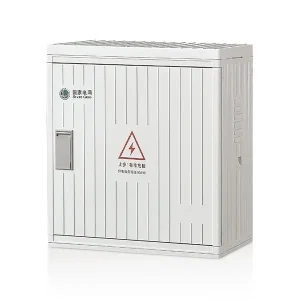
Wholesale TY-DFW-7A branch box Supplier, Factory
View Product Specs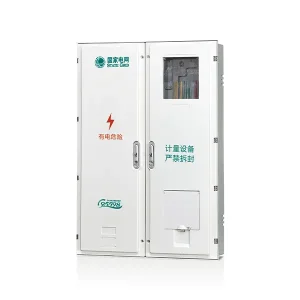
China Three-Phase Electric Energy Metering Box (Transformer Type) - TY-SXS3 by Teyi Electric Co., Ltd., China Suppliers, Factory Manufacturers, Factories
View Product Specs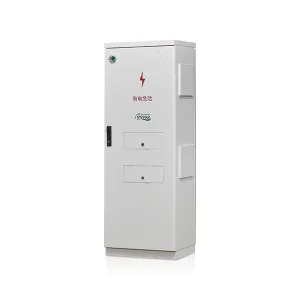
China China Stainless Steel Single Phase Twelve-Position Meter Suppliers - Durable Floor-Standing Type Factory Solutions Supplier, Factory
View Product Specs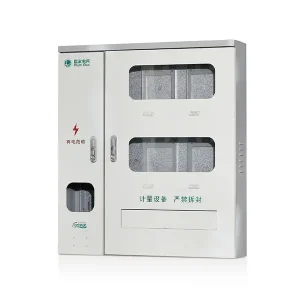
China China Stainless Steel Three-Phase Electric Energy Metering Box Direct Entry - Suppliers and Factory Solutions Manufacturer, Suppliers
View Product Specs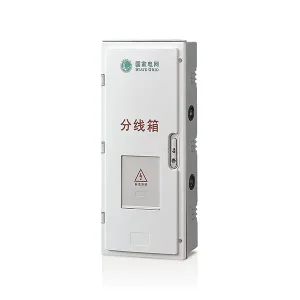
Wholesale TY-FXX Junction Box Series - Flame Retardant Solutions from China Factory & Reliable Suppliers Suppliers, Factory
View Product Specs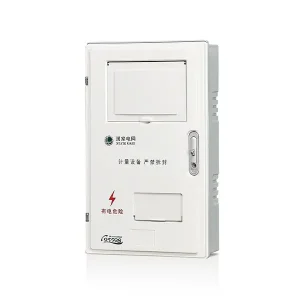
China Three-Phase TY-SXS1 Electric Energy Meter Box - Reliable China Suppliers & Factory Quality Assurance Supplier, Factory
View Product Specs
Wholesale Single-Phase One-Position Distribution Box TY-SXD1-FX from China Suppliers and Factory - Teyi Electric Co., Ltd Manufacturers, Factories
View Product Specs