
Industrial Energy Metering & Distribution Units
Precision-molded SMC composite, heavy-gauge stainless steel, and modular multi-tier low-voltage distribution enclosures manufactured in China’s high-precision electrical industrial hub.
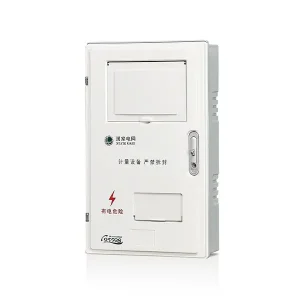
Wholesale TY-SXS1 three-phase one-position electric energy metering box Suppliers, Factories
Configure Model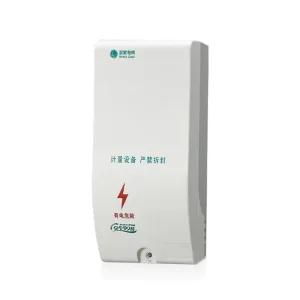
China China TY-SXD1-FX Single-Phase One-Position Distribution Box from Leading Suppliers and Factory Manufacturer, Factories
Configure Model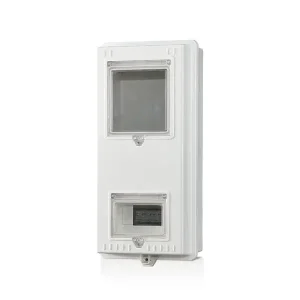
China SMC Fiberglass foreign trade box Manufacturer, Factory
Configure Model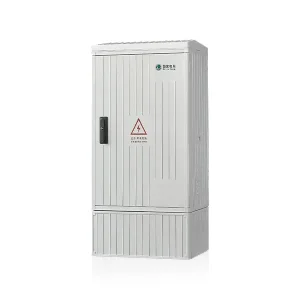
Wholesale TY-DFW Floor-standing Cable Branch Box Supplier, Factories
Configure Model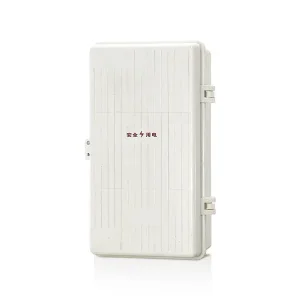
Wholesale TY-SXS1-CJ Three-Phase Collector Box - Reliable Electrical Solutions from China Suppliers and Factory Suppliers, Factory
Configure Model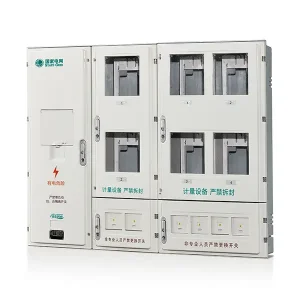
Wholesale TY Series Three-Phase Electric Energy Metering Box - High-Quality Supplier & Factory in China Manufacturers, Factories
Configure Model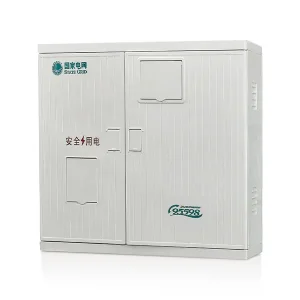
Wholesale TY-SXS3-BXJ Low Voltage B-Type Box for Transformers - Reliable Power Management Solutions from China Suppliers and Factory Manufacturer, Factory
Configure Model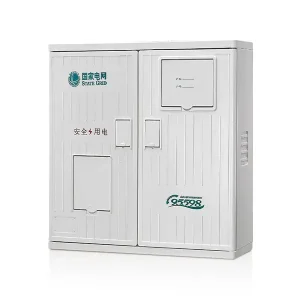
China China TY-SXS1 A-Type Meter Box Suppliers - Low & High Voltage Factory Options for Enhanced Safety Suppliers, Factory
Configure ModelThe Critical Role of Single-Phase Meter Enclosures in Smart Grid Modernization
Single-phase electric meter boxes represent the foundational demarcation junction between utility grid distribution lines and residential or commercial end-users. Far beyond passive plastic or sheet metal housings, contemporary metering enclosures have evolved into mission-critical nodes governing revenue protection, technical loss reduction, fire-hazard isolation, and smart bidirectional IoT telemetry.
Utility Revenue Protection & Anti-Tamper Mechanisms
In power utilities across Latin America, South Asia, Africa, and Eastern Europe, non-technical commercial losses from illegal tap-ins, magnetic meter braking, and neutral line disruption exceed billions of dollars annually. Modern single-phase meter boxes engineered by Chinese Tier-1 suppliers feature patented dual-cavity segregation (sealing utility metering circuits separately from customer-accessible circuit breakers), high-security mechanical barrel locks with RFID tamper tracking, and electromagnetic isolation chambers that eliminate external tampering vectors.
Advanced Metering Infrastructure (AMI) Integration
The global transition toward AMI smart metering requires meter enclosures to overcome significant RF attenuation. Traditional metal enclosures completely block cellular NB-IoT, LTE-M, 4G, and RF Mesh frequencies, demanding costly external antennas prone to sabotage. Modern SMC (Sheet Molding Compound) fiber-reinforced polymer meter boxes provide inherent electromagnetic transparency, low dielectric dissipation, and optimized radiation geometry, allowing smart digital meters to communicate reliably with utility base stations.
Decentralized Rooftop Solar & Bidirectional Flow
With the rapid adoption of residential distributed photovoltaic (PV) systems and localized micro-inverters, single-phase metering enclosures must now facilitate bi-directional net energy measurement. This requires dual-position mounting brackets, segregated DC isolators, lightning surge protection device (SPD) slots, and auxiliary power monitoring terminals that withstand continuous thermal stress generated by continuous daytime export currents.
Engineering Excellence: SMC Composites vs. Polycarbonate & Stainless Steel
Selecting the ideal enclosure substrate requires a rigorous assessment of dielectric strength, chemical degradation resistance, mechanical impact deflection, and total lifecycle expenditure.
Thermosetting SMC (Sheet Molding Compound) Synthesis
SMC is a high-performance composite formulated from unsaturated polyester resins, chopped roving glass fibers (typically 25mm–50mm length at 25%–30% concentration), inorganic mineral fillers (calcium carbonate, aluminum trihydrate), and low-shrinkage additives. Under high-tonnage hydraulic compression (1,500 to 3,000 metric tons) and elevated tooling temperatures (140°C–155°C), the resin undergoes irreversible three-dimensional molecular cross-linking. The resulting composite possesses remarkable mechanical tensile strength (>70 MPa), flexural strength (>140 MPa), and an operating lifespan exceeding 40 years indoor and 30 years outdoor without creep, melting, or thermal distortion.
Dielectric Integrity & Class II Safety Insulation
SMC materials exhibit a dielectric breakdown strength greater than 12 kV/mm and an insulation resistance exceeding 1,000 MΩ even under 95% relative humidity. Unlike metallic sheet cabinets, SMC enclosures provide inherent Total Insulation (Class II protection according to IEC 61140). This completely eliminates the threat of stray-current electrocution or fault-to-chassis electrification, allowing safe installation on public utility poles, building exterior facades, and communal stairwells without requiring complex low-resistance earthing grids.
| Performance Parameters | SMC Glass-Fiber Composite (Teyi Spec) | Polycarbonate (PC / ABS Blend) | 304 / 316 Stainless Steel |
|---|---|---|---|
| Dielectric Safety & Grounding | Class II Total Insulation; No earthing needed | Class II Total Insulation; No earthing needed | Class I Conductive; Requires low-impedance earth |
| Mechanical Impact Resistance | IK10 (20 Joules Impact Energy) | IK07 to IK08 (Prone to brittle cracking) | IK10+ (Subject to cosmetic denting) |
| Ingress Protection Rating | IP54 to IP65 (Automated PU gasket sealing) | IP54 to IP65 | IP55 to IP66 |
| Solar UV Weathering Resistance | ISO 4892-2 Class A (>10,000 hours UV-A/B) | Moderate; degrades, discolors & embrittles | Immune to UV; surface finish stable |
| Fire Retardancy & Glow-Wire | UL94 V-0; IEC 60695-2-11: 960°C passed | UL94 V-1 / V-2 (Toxic droplet risk) | Non-combustible (A1 rating) |
| Electromagnetic RF Transparency | 100% RF Transparent (Ideal for AMI smart meters) | 100% RF Transparent | Faraday Cage (Blocks RF; needs external whip antenna) |
| Design Service Lifespan | 30+ Years Outdoor / 40+ Years Indoor | 10 to 15 Years (Outdoor degradation) | 25+ Years (Subject to chloride pitting) |
Localized Application Scenarios: Engineered for Global Geographic Challenges
From salt-laden tropical coastlines to sub-zero continental plains and high-density urban residential high-rises, single-phase metering enclosures must maintain structural and electrical stability under severe real-world environmental stress.
High-Salinity Marine & Coastal Environments
In regions like Southeast Asia, the Caribbean, and coastal Latin America, airborne sodium chloride and relentless humidity cause severe galvanic corrosion on traditional galvanized steel enclosures, often causing structural breakdown within 3 to 5 years. Teyi SMC enclosures utilize inert polyester formulations certified under ASTM B117 salt spray testing for over 2,000 hours with zero blistering, rust, or resin degradation. Combined with 316-grade stainless steel internal hinge pins and brass inserts, they deliver continuous, maintenance-free performance.
Hyper-Arid Deserts & Extreme Solar Radiation
Installations across the Middle East, North Africa, and Western Australia face ambient summer temperatures exceeding +50°C and surface solar irradiance above 1,000 W/m². Teyi’s single-phase meter boxes integrate proprietary double-roof passive convection heat-dissipation canopies, internal labyrinth ventilation louvers with insect-proof stainless mesh, and UV-stabilized hindered amine light stabilizers (HALS). This limits internal temperature rise to less than 15K above ambient, shielding delicate smart meter microcontrollers from thermal aging and drift.
High-Density Multi-Family Residential Complexes
In dense urban residential towers, space constraints demand consolidated metering banks. Our modular single-phase multi-position series (e.g., TY-SXD2 2-to-12 meter positions) optimizes utility meter reading by grouping tenants into structured vertical risers. Standardized concealed busbar trunks, pre-wired color-coded copper distribution combs, transparent polycarbonate inspection viewports with anti-scratch UV coatings, and independent padlock/lead-seal lock points allow utility inspectors to conduct meter readings and audits in seconds.
The Engineering Roadmap: Intelligent, Circular & Cyber-Physical Enclosures
As national distribution grids transform into responsive cyber-physical networks, the enclosure must evolve from a static mechanical barrier into an intelligent, active substation endpoint.
Edge IoT Sensing Modules
Incorporating integrated non-intrusive current transducers, temperature telemetry sensors on primary bus connections, and optical fiber intrusion sensors that stream live security and load diagnostics directly to utility SCADA architectures.
Digital Twin Thermal Engineering
Utilizing finite element analysis (FEA) and computational fluid dynamics (CFD) modeling during the mold manufacturing phase to optimize internal airflow conduits, ensuring maximum heat dissipation across densely grouped multi-meter arrays.
Bio-Based Resins & Recycled Composites
Pioneering the industrial integration of post-consumer chemically recycled glass fibers and low-carbon bio-based unsaturated polyester polymers, driving down the embedded carbon footprint of every enclosure without sacrificing mechanical rigidity.
Robotic Seamless PU Foam Gasketing
Replacing standard glued neoprene strips with 6-axis robotic automated polyurethane (FIPFG) dispensing systems, delivering a continuous IP65 elastomeric hermetic seal that resists aging, deformation, and thermal cycling over decades.
Macro Sourcing Solutions: Why Yueqing China Is the Global Hub for Meter Boxes
Zhejiang Teyi Electric operates in Yueqing, Wenzhou—recognized globally as the "Electrical Capital of China." This high-density industrial cluster provides unique manufacturing speed, cost efficiency, and end-to-end quality assurance for global grid modernization tenders.
Hyper-Integrated Component Supply Chain
Within a 15-kilometer radius of our Yueqing production base sits the world's most concentrated ecosystem of mold designers, copper busbar extruders, miniature circuit breaker (MCB) plants, current transformer (CT) winders, and certified testing laboratories. This vertical integration cuts component lead times down to days rather than months, enabling rapid prototyping, sample turnaround, and high-volume container dispatch.
Tailored OEM / ODM Tender Customization
International power utility tenders from utilities like Enel, SEC, Eskom, PLN, and CFE require precise compliance with proprietary dimensions, internal DIN-rail elevations, laser-etched barcodes, security seals, and unique knock-out gland configurations. Our dedicated engineering R&D department delivers custom tooling design, structural CAD/CAM drawings, prototype CNC machining, and full design confidential agreements for private-label distributors.
Rigorous Factory Acceptance Testing (FAT)
Quality assurance at Teyi Electric follows a strict, closed-loop inspection system. In addition to ISO 9001 and ISO 14001 factory operational certifications, every production lot undergoes standardized batch validation: high-voltage dielectric withstand checks, 960°C glow-wire flammability screening, IP65 water spray ingress validation, IK10 drop-weight pendulum impact verification, and dimensional tolerance checks.
High-Performance Metering & Distribution Assemblies
Browse our high-capacity floor-standing stainless cabinets, smart collection boxes, ring main switchgear, and multi-tenant metering assemblies designed to meet rigorous utility procurement specifications.
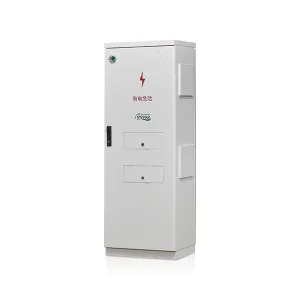
China China Factory Stainless Steel Single Phase Twelve-Position Meter - Durable Floor-Standing Solution from Reliable Suppliers Supplier, Suppliers
Configure Model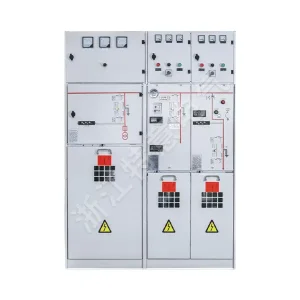
China China Ring Main Unit (RMU) Suppliers: Reliable Power Distribution Solutions from Factory Direct Factories, Factory
Configure Model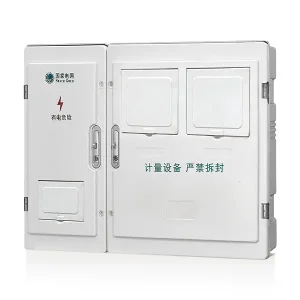
China China Suppliers Factory TY-SXS2-DXJ Low Voltage Three-Phase Two-Position Electric Energy Metering Box Supplier, Factory
Configure Model
Wholesale China SMC Fiberglass Foreign Trade Box Factory Suppliers for Single & Three-Phase Electrical Applications Manufacturer, Manufacturers
Configure Model
China TY-SXS1-CJ Three-Phase Collector Box - Reliable Electrical Energy Solutions from China Suppliers and Factory Suppliers, Factory
Configure Model
China Stainless steel single phase twelve-position meter (Floor-standing type) Supplier, Suppliers
Configure Model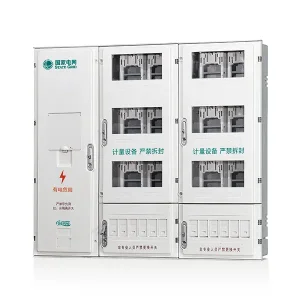
Wholesale TY single-phase electric energy metering box Suppliers, Factories
Configure Model
China Three-Phase TY-SXS1 Electric Energy Meter Box - Reliable China Suppliers & Factory Quality Assurance Supplier, Factory
Configure ModelFrequently Asked Questions for Utility Engineers & Sourcing Managers
Key technical answers covering international standards compliance, anti-tamper engineering, sample prototyping, and logistics governance.
Which international quality standards govern Teyi single-phase meter boxes?
Our meter boxes are designed, molded, and certified in strict compliance with IEC 62208 (Empty enclosures for low-voltage switchgear and controlgear assemblies), IEC 60529 (Degrees of protection provided by enclosures - IP code), IEC 62262 (IK code for external mechanical impacts), and UL 94 flammability ratings. In addition, our manufacturing facilities adhere strictly to ISO 9001 quality management, ISO 14001 environmental standards, and ISO 45001 occupational health frameworks.
Why is compression-molded SMC superior to injection-molded polycarbonate for outdoor utility enclosures?
While thermoplastics like Polycarbonate (PC) and ABS are easy to inject into molds, they remain vulnerable to solar UV-B radiation degradation, causing structural embrittlement, color fading, and loss of impact strength within 5 to 8 years. In contrast, SMC is a cross-linked thermosetting composite reinforced with long glass fibers. It does not melt, exhibit plastic creep, or break down under prolonged UV radiation, maintaining its full IK10 impact rating and 960°C glow-wire flame retardancy for more than 30 years outdoors.
Can you customize enclosure knockouts, Din-rail heights, and utility brand logos?
Yes. As a direct manufacturer and high-capacity factory in Yueqing, our OEM/ODM capabilities encompass custom hydraulic mold modifications, client-specific cable entry punch layouts (for PG or metric brass glands), laser-engraved utility ownership marks, custom RAL exterior color pigmentation, pre-installed copper neutral/ground busbars, and specific tamper-evident sealing provisions to meet project tender specifications.
How do Teyi meter enclosures prevent electricity theft and consumer meter bypass?
Our anti-theft designs include physical segregation between the utility-locked meter chamber and the customer-accessible circuit breaker panel. Meter compartments feature concealed tamper-proof internal hinges, tri-point mechanical locking systems, dedicated utility seal loops for plastic or wire wire-security seals, and opaque SMC walls that prevent optical interference with smart optical ports.
What is the standard production lead time and minimum order quantity (MOQ)?
For standard catalog models like the TY-SXD1 and TY-SXD2 series, our MOQ starts at 50 units for trial testing batches, with functional evaluation samples dispatched in 5 to 7 business days. For high-volume utility tenders (e.g., 5,000 to 50,000 units), mass manufacturing takes roughly 20 to 30 days after drawing sign-off, with high-speed automated container loading out of Ningbo or Shanghai ports.
How are smart AMI wireless signals affected when enclosed inside an SMC meter box?
SMC composite material is fully non-magnetic and electrically non-conductive, with a low dielectric constant (εr ≈ 4.0–4.5 at 1 MHz) and minimal dielectric dissipation factor. Unlike stainless steel or galvanized carbon steel enclosures that act as Faraday cages, SMC allows cellular LTE, NB-IoT, Zigbee, LoRa, and RF-Mesh signals to pass through with near-zero signal loss, eliminating the need to install external antennas.