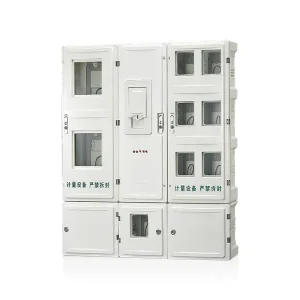
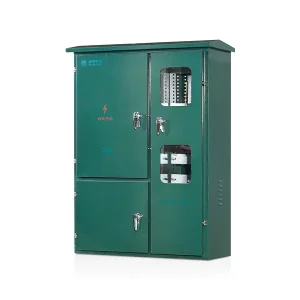
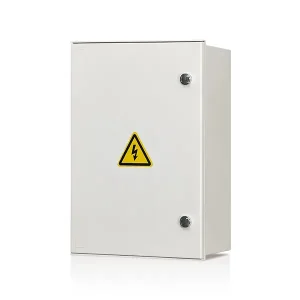
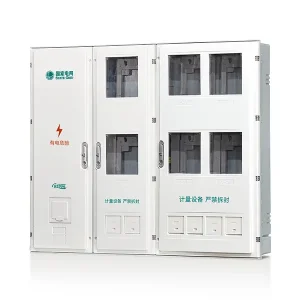
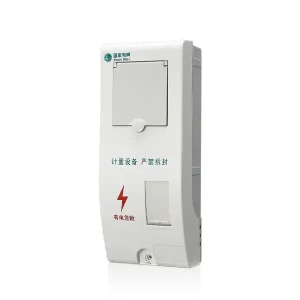
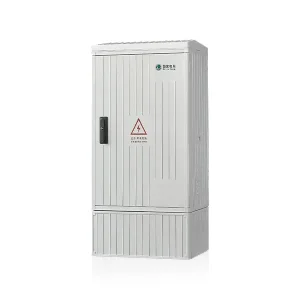
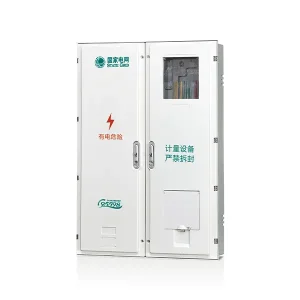
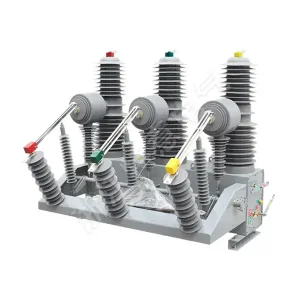
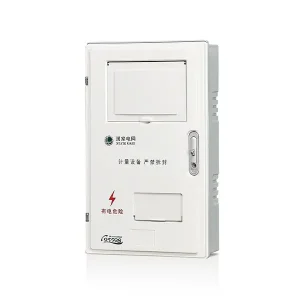
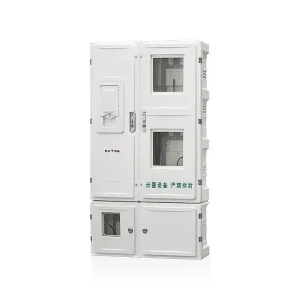
Featured Grid Distribution & Metering Assemblies
Explore factory-direct secondary distribution gear, SMC non-metallic cabinets, and smart metering integration units engineered in China's electrical manufacturing capital.
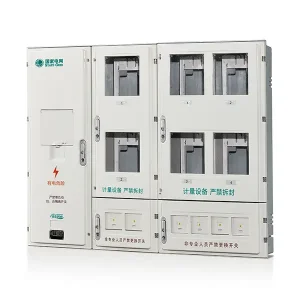
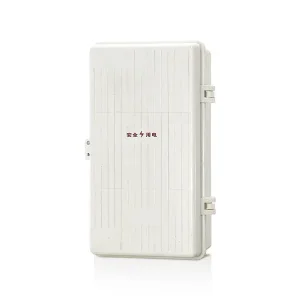
Global RMU Market Shift: Decarbonization & Grid Decentralization
Strategic analysis of Ring Main Unit (RMU) engineering, transitioning from legacy SF6 gas insulation toward environment-conscious solid insulation and zero-GWP alternative dielectric media.
SF6-Free Dielectric Transformation
Under strict European F-gas directives and global ESG mandates, utilities are rapidly phasing out sulfur hexafluoride (GWP=23,500). Modern high voltage RMU architectures utilize clean air, synthetic technical air, or precision solid-dielectric epoxy vacuum interrupters, completely preventing fugitive emissions without compromising breaking capacity.
Integrated Edge IoT & Primary/Secondary Fusion
Next-generation secondary distribution incorporates primary-secondary fusion technology. Micro-sensor arrays for Partial Discharge (PD), cable temperature, ambient humidity, and gas pressure report in real-time via MQTT and IEC 61850 protocol stacks directly to Distribution Management Systems (DMS/SCADA).
Extreme Environmental Ruggedization
Secondary substations are frequently installed in corrosive littoral zones, high-altitude installations, and tropical humidity. Combining stainless steel hermetically sealed switch chambers with compression-molded Sheet Molding Compound (SMC) outer kiosks ensures uncompromised salt-mist resilience and total dielectric safety.
Enterprise Procurement Criteria for China High Voltage RMU Suppliers
Global EPC contractors and regional grid operators evaluate high voltage RMU vendors based on technical resilience, supply chain maturity, and life-cycle economics.
Full Type-Test Certification & STL Accreditation
Utilities mandate third-party validation from STL member laboratories (such as KEMA, CESI, or accredited national HV test centers in China). Key mandatory type tests encompass internal arc fault classification (IAC AFLR up to 20 kA 1s), impulse withstand voltage, and mechanical endurance class M2.
Total Modular Scalability (Compact & Extensible)
Global procurement teams prioritize versatile multi-bay architectures. Compact designs allow standard "C-C-V" (Two Load Break Switches + One Circuit Breaker) or extensible "C-C-F" (Load Break Switch with Fuse-Switch Combination) formats to adapt seamlessly to unpredictable civil trench layouts and expansion phases.
Total Cost of Ownership (TCO) & Zero Maintenance
Life-cycle costing models dictate sealed-for-life gas tanks (IP67) constructed from robotically laser-welded 304 or 316L stainless steel. Eliminating on-site gas refilling or routine mechanical lubrication over 30 to 40 years delivers substantial operational savings for remote substations.
Engineering Matrix: RMU Enclosure & Structural Materials
Direct comparative benchmark for high-voltage kiosks, cable distribution boxes, and secondary substation enclosures.
| Evaluation Parameter | SMC Unsaturated Polyester (GRP) | Marine Grade 304/316 Stainless Steel | Cold-Rolled Powder Coated Steel |
|---|---|---|---|
| Galvanic & Atmospheric Corrosion | Total immunity; zero corrosion in chemical/saline sites | Excellent passivation; requires proper weld finishing | Moderate; prone to rust once coating chips |
| Electrical Insulation & Shock Safety | Class II inherently insulated; prevents touch-potential risks | Conductive metal; mandatory rigid grounding circuit | Conductive metal; mandatory safety grounding |
| Mechanical Rigidity (IK Rating) | IK10; high-impact resistance with elastic deformation | IK10+; superior yield strength against vandalism | IK08 - IK09; prone to plastic deformation |
| Thermal Insulation & Anti-Condensation | Low thermal conductivity (0.23 W/m·K); inhibits dew point | High thermal transfer; requires anti-condensation heater | High thermal transfer; requires active heating |
| Target Operational Lifespan | 30+ Years Outdoor / 40+ Years Substation Interior | 30+ Years Outdoor (316L Marine Grade) | 10 - 15 Years Outdoor before recoating |
Comprehensive Solutions Across Critical Infrastructure
Engineered to ensure power continuity, grid visibility, and operator safety across harsh operating environments.
Utility-Scale Solar PV & BESS
Configured for 1500V DC strings conversion step-up stations (11kV / 22kV / 33kV loops). Incorporates directional overcurrent protection, motorized earthing switches, and remote SCADA tripping to isolate reverse-power faults in millisecond intervals.
Refineries & Petrochemical Complexes
Corrosion-proof sealed switch tanks equipped with internal pressure relief ducts and ATEX-compliant control compartments. Protects vital process machinery against corrosive sulfur dioxide and hydrocarbon vapors while preventing hazardous electrical arc flash.
Commercial High-Rise & Data Centers
Ultra-compact footprint minimizes structural spatial cost in subterranean transformer vaults. Features low partial discharge characteristics (<5 pC at 1.1 Un) and fail-safe mechanical interlocks to safeguard technical facility staff during building maintenance.
Urban Rail Transit & Traction Power
Medium-voltage auxiliary feeding networks demand superior vibration resistance and lightning impulse withstand capability. Seamlessly synchronizes with ring distribution loops to isolate fault sections without shutting down train line power.
Localization Support & Compliance Assurance
Ensuring export compliance, localized tender adaptability, and field-ready reliability across international energy markets.
Harmonized Global Grid Standards
All switchgear assemblies, disconnectors, and vacuum circuit breakers are manufactured in strict compliance with IEC 62271-200, IEC 62271-100, IEC 62271-102, and regional equivalents (such as IEEE C37 and GB 1984). Pre-aligned busbar geometries support easy inter-connection with existing legacy switchboards.
Full EPC Tender Documentation Packs
Accelerate utility pre-qualification and approval cycles. Our engineering team provides comprehensive tender submission packages: certified dimensional CAD/BIM models, schematic wiring diagrams, complete type-test reports, and step-by-step commissioning checklists.
Export-Grade Protection & Shipping
Medium and high-voltage equipment requires robust protection during long maritime transit. Assemblies are vacuum-sealed with active desiccant matrices, enclosed in fumigated anti-vibration timber crates, and monitored with continuous shock and tilt indicator tags.
Technology Roadmap: The Next-Gen Intelligent Ring Main Unit
Anticipating the technological transitions defining secondary power distribution over the next decade.
2025-2027: Deep Sensorization & Self-Healing
Adoption of LPIT (Low-Power Instrument Transformers) replacing heavy iron-core CT/VTs. Fiber-optic temperature sensing embedded directly inside cable bushings to provide early warning of thermal degradation long before insulation breakdown occurs.
2027-2030: Pure Synthetic Air & Vacuum Switching
Complete obsolescence of greenhouse gases across global supply chains. Next-generation high voltage RMUs will integrate pure synthetic air insulation at moderate overpressure (1.3 to 1.5 bar abs), matching traditional SF6 dimensions while operating with true zero global warming potential.
2030+: AI-Driven Autonomous Grid Node Operation
Ring Main Units transitioning from passive switching stations into autonomous grid balancing nodes. Onboard edge machine learning engines evaluate real-time bidirectional power flow from distributed energy resources (DERs) to self-heal ring loops without centralized SCADA latency.
Frequently Asked Questions (FAQ) for Engineering & Sourcing
Comprehensive technical and commercial responses to common utility and EPC procurement inquiries.
What is the difference between Gas-Insulated (GIS) and Solid-Insulated (SIS) RMUs?
What short-circuit breaking and withstand capabilities are available from China manufacturers?
How do Teyi Electric's SMC meter and distribution boxes perform in harsh outdoor conditions?
Can our engineering team specify custom secondary control, automation, and RTU brands?
What is the typical production lead time and factory inspection procedure for international tenders?
Complete Secondary Power Distribution Portfolio
Explore our full range of field-tested metering cabinets, stainless steel enclosures, and outdoor cable branch structures.