
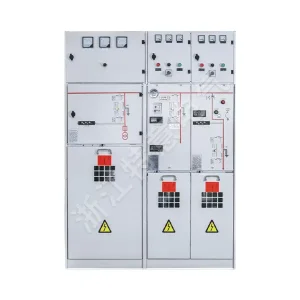
Medium Voltage Ring Systems
Engineered to endure 55°C desert ambient temperatures, extreme ultraviolet radiation, and corrosive coastal saline dust storms across Abu Dhabi, Dubai, and the Northern Emirates.
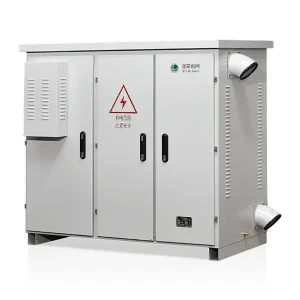
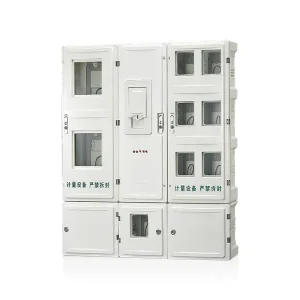
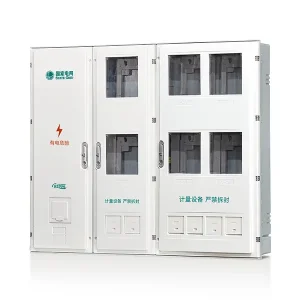
The UAE power sector is undergoing a massive capital transition driven by the UAE Energy Strategy 2050, the Dubai Clean Energy Strategy, and massive giga-developments by Emaar, Aldar, and Modon. This drives rigorous requirements for switchgear reliability and meter cabinet durability.
Distribution assets must strictly adhere to specifications laid down by Dubai Electricity and Water Authority (DEWA), Abu Dhabi Distribution Company (ADDC), Al Ain Distribution Company (AADC), and Sharjah Electricity, Water and Gas Authority (SEWA).
Internationally, the medium- and low-voltage electrical segment is pivoting away from heavy carbon-intensive fabrication toward composite materials with optimized lifecycles.
Desert microclimates exhibit diurnal temperature swings of over 30°C within hours, alongside hyper-saline desert fog that destroys standard coatings.
Tailored supply matrices matching the rigorous standards of UAE EPC contractors, industrial zones, and energy developers.
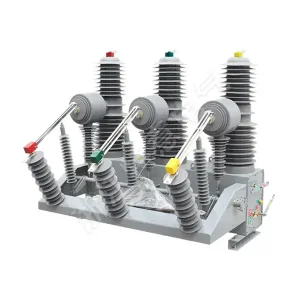
For large-scale utility and distributed rooftop photovoltaic farms, our PV grid-connection boxes and secondary fusion pole-mounted breakers deliver bidirectional power management, reactive surge protection, and uninterrupted feed-in telemetry.
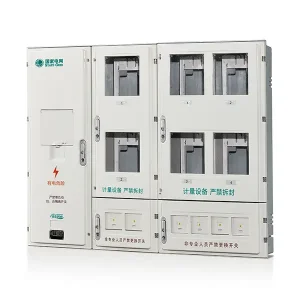
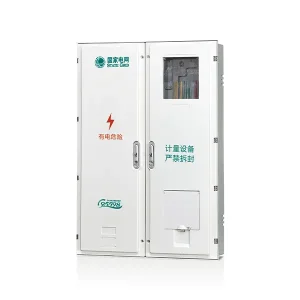
Heavy logistics parks, chemical processing hubs, and manufacturing facilities demand high-fault-current stability. Our 30 kA short-time withstand JP cabinets and transformer-type three-phase metering assemblies guarantee uncompromised sub-metering.
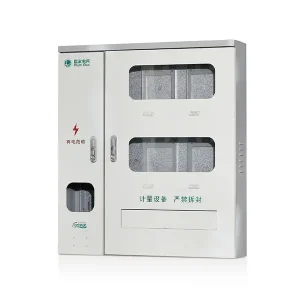
From Downtown Dubai to Saadiyat Island, high-density developments require centralized multi-meter configurations. Our multi-meter single-phase and three-phase enclosures provide lockable, flame-retardant tenant sub-meter clusters.
Anticipating next-generation electrical infrastructure specifications to ensure long-term deployment compatibility.
Embedded thermal IR probes, micro-switch door monitors, and NB-IoT/LoRaWAN modules fitted directly within standard SMC meter cabinetry to track sub-surface fault hotspots.
Transition of regional Ring Main Unit architecture toward synthetic dry air and vacuum interrupters, eliminating greenhouse gas liabilities in line with UAE Net Zero 2050 directives.
Introduction of graphene-reinforced unsaturated SMC matrices offering 40% higher mechanical tensile strength and complete UV stabilization against intense Gulf solar degradation.
Pole-mounted breakers and secondary fusion units equipped with edge-AI controllers capable of autonomous fault location, isolation, and service restoration (FLISR).
Explore our heavy-duty three-phase metering cabinets, transformer-rated enclosures, junction boxes, and pole-mounted vacuum circuit breakers engineered for GCC utility protocols.
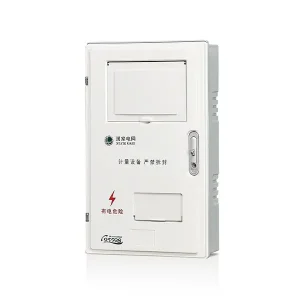
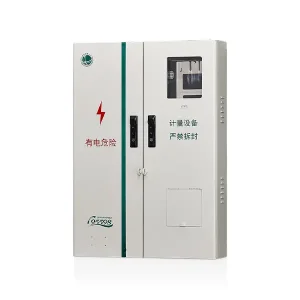
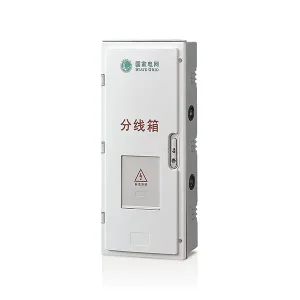
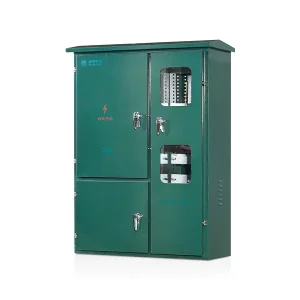
In-depth engineering answers covering compliance, materials science, customization, and logistical support across the GCC.
Our compression-molded SMC enclosures feature a low thermal conductivity coefficient (0.33 W/m·K) compared to steel (approx. 50 W/m·K). This natural insulation prevents external solar irradiance from transferring into internal chambers, protecting smart digital meters and delicate current transformers from overheating.
Yes. Our metering boxes and switchgear enclosures are engineered to meet IEC 61439-1/2, IEC 60529 (IP65/IP66 ingress rating), and IEC 62262 (IK10 impact resistance). We support contractors with factory test certificates, routine dielectric test reports, and third-party laboratory certifications for client review.
Primary and secondary fusion pole-mounted circuit breakers integrate high-voltage vacuum interrupting chambers with integrated electronic current and voltage sensors. This enables fast transient fault clearance during desert sandstorms, mitigating false tripping caused by windborne debris.
Through our dedicated OEM/ODM division, we provide custom tooling for specialized meter footprints, utility padlock hasps, triangular key locks, transparent observation windows made of polycarbonate (PC), and pre-punched knockouts with synthetic rubber grommets.
Standard production lead times for standard SMC and stainless steel cabinets range from 15 to 25 business days. Transit time by direct sea freight from Ningbo/Shanghai to Jebel Ali Port or Khalifa Port (Abu Dhabi) typically requires 14 to 18 days.
We manage hydraulic compression presses ranging from 300 to 2,000 metric tons, paired with CNC sheet metal processing centers. Every production batch undergoes dielectric breakdown tests, glow-wire flammability screening (IEC 60695-2-11), and dimensional tolerance verification.