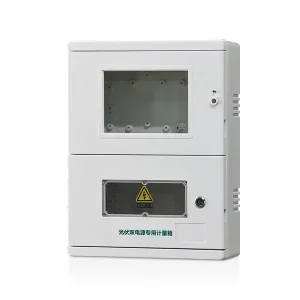
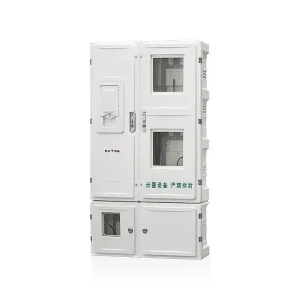
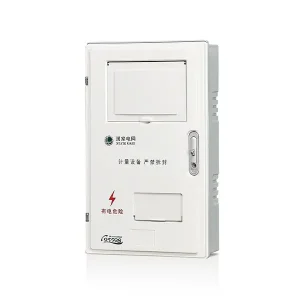
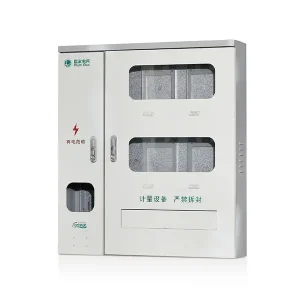
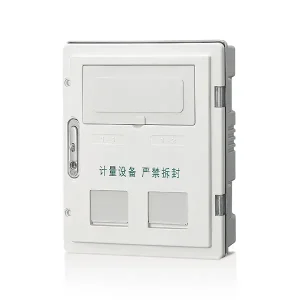
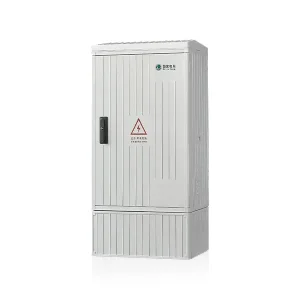
Standard Distribution & Energy Metering Lineup (Top Series)
Direct-sourced medium-to-low voltage apparatus compliant with IEC 62271-200 and utility grid interconnection frameworks.
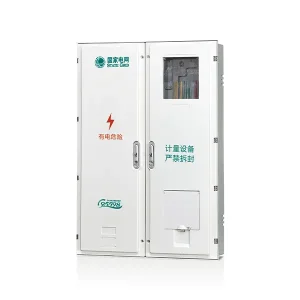
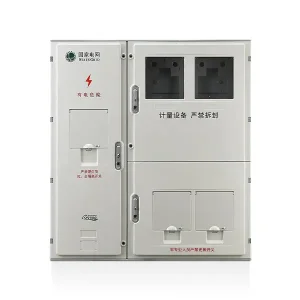
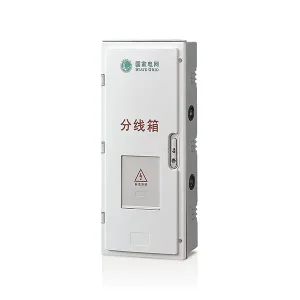
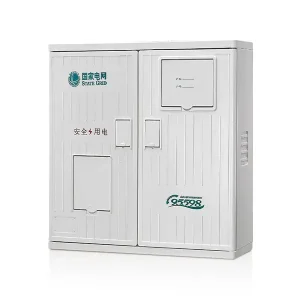
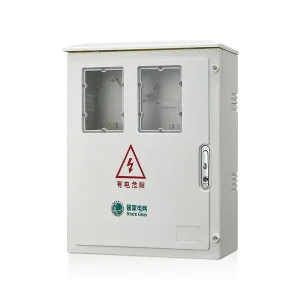
Grid Decentralization & Ring Main Unit (RMU) Evolution
Medium-voltage secondary distribution systems are experiencing an architectural revolution driven by microgrids, distributed renewable feeding, and urban density demands. Ring Main Unit (RMU) substations provide continuous closed-loop electrical networks, ensuring that downstream feeders can be isolated, restored, and rerouted within milliseconds during fault dynamics.
Zhejiang Teyi Electric incorporates compression-molded Sheet Molding Compound (SMC) housing options alongside 304/316 stainless steel enclosures. By merging compact gas-insulated switchgear (GIS) or eco-friendly solid-dielectric units with smart automated metering interfaces, our substations safeguard distribution points against short-circuit spikes, phase ground faults, and thermal load variations.
Corrosion Elimination via SMC Composite Engineering
Traditional metallic enclosures deployed in coastal, industrial, or tropical microclimates face accelerated galvanic degradation, requiring scheduled cyclic painting and premature replacement. Our hot-compression SMC formulations yield an isotropic matrix of unsaturated polyester reinforced by chopped glass fibers, creating complete galvanic isolation without earthing degradation.
The resulting enclosure features self-extinguishing flame retardancy, IK10 mechanical impact ratings, and UV weatherability validated beyond 30 outdoor operating years. Combined with precision silicone gasket sealing, ingress thresholds comfortably sustain IP65 and IP67 designations across volatile ambient temperatures.
Macro Solutions Across Critical Grid Demands
Tailored MV/LV switchgear and substation node solutions answering utility-scale tenders, heavy EPC contracts, and remote renewable installations.
Solar PV & Battery Storage (BESS)
Dynamic bidirectional metering units with reinforced thermal ventilation ducts to absorb harmonic currents and withstand cyclic peak inverter discharge demands without phase drifting.
Data Centers & Hyperscale Infrastructure
Ultra-fast auto-transfer ring configurations (ATS) offering zero downtime ring switching, integrated transient surge suppression, and continuous optical arc sensor monitoring.
Petrochemical & Heavy Industrial
Hermetically sealed stainless tank compartments insulated with vacuum interrupters, eliminating explosive ignition vectors in environments rich in hydrogen sulfide and volatile vapors.
Urban High-Density Multi-Family Utilities
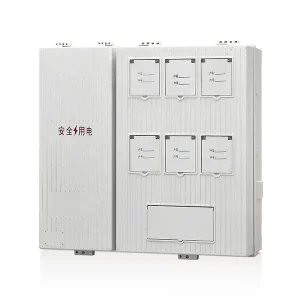
Concealed internal wiring trunks, modular metering rows (up to 12 clusters), and anti-tamper electronic digital locking systems for theft-free municipal revenue security.
Rail Transit & Electrified Transport
Resilient DC stray current protection and vibration-dampened busbar supports engineered to absorb low-frequency track harmonics and preserve telemetry fidelity.
Mining & Harsh Sub-Surface Networks
Compact skidded footprints with heavy mechanical anchors, ingress barriers against mine slurry, and fast reconnect couplers for dynamic operational relocation.
Compliance Framework & Localization Assurances
Rigorous type-testing criteria, safety mechanisms, and structural parameters built directly into each production run.
| Evaluation Parameter | IEC / Utility Standard | Teyi Substation / Enclosure Performance | Engineering Benefit |
|---|---|---|---|
| Internal Arc Classification (IAC) | IEC 62271-200 (AFLR 20kA 1s) | Directed gas exhaust vents, rear blowout flaps | Zero personnel risk during accidental flashover events |
| Enclosure Protection Class | IEC 60529 / NEMA 4X | IP54 standard to IP65 custom gasketed fit | Absolute block against driving monsoon rain & desert dust |
| Mechanical Impact Resilience | EN 50102 / IEC 62262 | IK10 certified (20 Joules kinetic resistance) | Protection against severe civic vandalism & external impacts |
| Dielectric Strength (Dry & Wet) | IEC 60060-1 / GB/T 16927 | Power Frequency Withstand: 42 kV/1min; BIL: 95 kV | Total line stability across intense switching lightning surges |
| Busbar Current Carrying Matrix | IEC 60439 / GB 7251 | Continuous nominal: 630 A to 1250 A | Thermal rise under full load strictly controlled below 40K |
Engineering Roadmap: Towards SF6-Free & AI Edge Nodes
Leading the transition from legacy gas insulation to eco-friendly, digitally synchronized intelligent substations.
Smart TTU Fusion & Telemetry
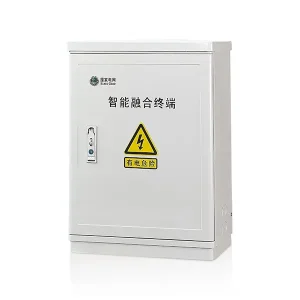
Embedding edge AI microcontrollers directly into metering arrays for precise harmonic analysis, waveform capture, and instant fault localization via 4G/5G and optical Ethernet.
Solid Dielectric & Clean Air
Phasing out SF6 greenhouse gases in favor of vacuum interrupters enveloped in hydrophobic epoxy resin, paired with synthetic clean dry air at zero gauge pressure.
Predictive Fiber Thermal Sensing
Integrated passive fiber optic sensors along primary busbar junctions and cable terminations, streaming real-time thermal gradient telemetry to cloud SCADA platforms.
Self-Healing Loop Automation
Fully autonomous peer-to-peer directional protection schemes restoring healthy ring segments in less than 80 milliseconds without requiring central dispatch intervention.
Ring Main Unit & Substation Technical Q&A
Direct answers to crucial inquiries made by international utility engineers, procurement committees, and EPC specifiers.
Auxiliary Substation Distribution & Infrastructure Enclosures
Expanding network reach: solar combiner boxes, heavy-duty floor cable branch enclosures, and multi-user configurations.