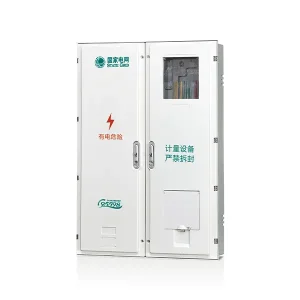
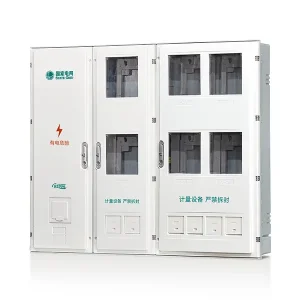
Flagship Photovoltaic & Metering Assemblies
Explore our foundational low-voltage solar grid-tie interfaces and precision electricity distribution enclosures, engineered to exceed international utility specifications and withstand extreme climates.
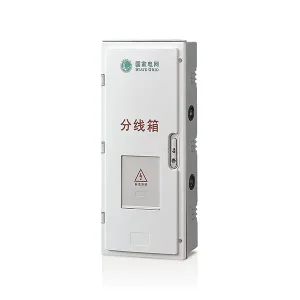
Global Enterprise Procurement Dynamics for Solar Interconnect Systems
Strategic analysis of engineering procurement criteria, supply chain resilience, and lifecycle risk mitigation across tier-1 EPC contractors, utility developers, and public infrastructure operators.
Total Cost of Ownership (TCO) & Degradation
Procurement directors evaluate photovoltaic grid-connected boxes not as passive enclosures, but as mission-critical network assets. Atmospheric weathering, UV induced embrittlement, and terminal hotspotting can cause premature catastrophic downtime in utility assets. Sheet Molding Compound (SMC) demonstrates superior lifecycle ROI against galvanised sheet metals in saline, humid, and chemical-heavy environments.
- Zero oxidation / cathodic protection needs
- 30+ Year outdoor operational design index
Smart Grid Telemetry & Remote Curailment
Modern commercial PV tenders necessitate integrated intelligence within the low-voltage grid-connected box. Buyers mandate factory-fitted bidirectional multifunction metering, RS485 Modbus-RTU, and LoRaWAN gateways. These telemetry nodes enable instantaneous islanding protection, power factor compensation, and automated fault reporting directly into SCADA networks.
- Class 0.5S / 0.2S Revenue-grade CT inputs
- Under/over-voltage & frequency protection
Supply Chain Scalability & OEM Flexibility
Multi-megawatt distributed portfolios demand rapid engineering turns. Global enterprise sourcing teams avoid rigid stock catalogs in favor of vertically integrated factories that control precision compression toolmaking, internal copper busbar fabrication, automated wiring harness assembly, and batch-wise dielectric testing under strict ISO 9001/14001 guidelines.
- Custom CNC punching & gland plate options
- Multi-tenant metering partitions (1 to 12 slots)
Comprehensive Architecture & Industrial Solutions
Configurable low-voltage photovoltaic grid-connection interfaces tailored for four core distributed generation ecosystems.
Commercial Rooftop & Industrial PV
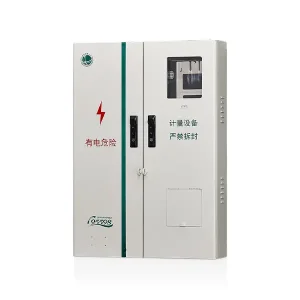
High-density solar installations on logistics warehouses and manufacturing facilities require robust AC breaker protection, Type 1+2 surge protective devices (SPDs), and clear physical isolation handles to support regular maintenance protocols.
Our solutions feature molded case circuit breakers (MCCB) up to 630A, motorized disconnectors, and dual-direction metering bays designed for zero phase imbalance and thermal equilibrium in ambient temperatures up to +50°C.
Residential Multi-Tenant Microgeneration
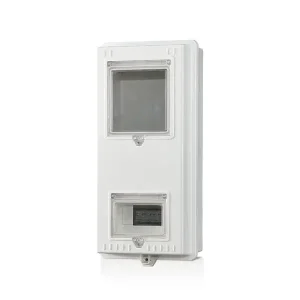
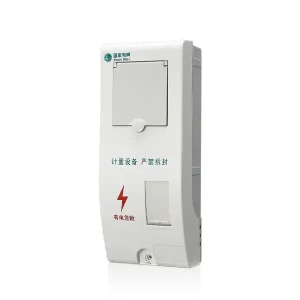
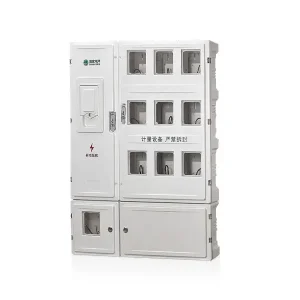
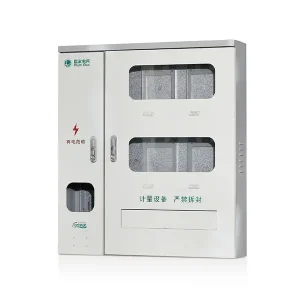
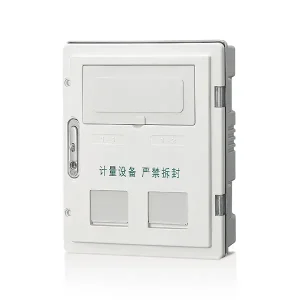
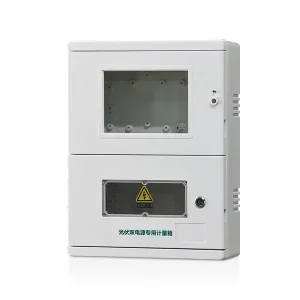
Urban residential developments integrating rooftop solar arrays necessitate compact, tamper-proof metering infrastructure. Zhejiang Teyi Electric manufactures the TY-SXD and SXS multi-position series, combining generation tie-in and consumption metering.
Featuring independent lockable compartments, transparent inspection windows, and lead-sealable breaker toggles, our designs entirely preclude unauthorized grid tapping and maintain strict galvanic security.
Utility Distributed Step-Up Feeder Nodes
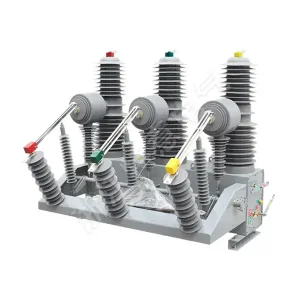
For decentralized ground-mounted arrays tieing into medium-voltage distribution grids, we engineer primary/secondary fusion feeder boxes coupled with ring main units (RMU) and pole-mounted outdoor reclosers.
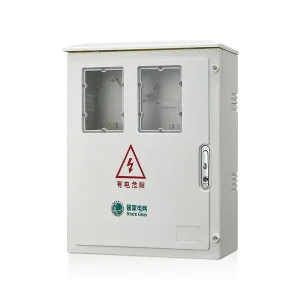
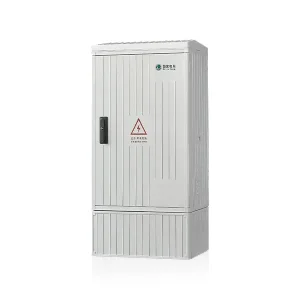
Our floor-standing TY-DFW cable branch boxes provide heavy-duty busbar branching (up to 250A/630A) with internal touch-proof screens, providing safe, modular link points between PV string inverters and station transformers.
Material Engineering & Next-Gen Technology Roadmaps
A rigorous metallurgical and polymer evaluation matrix comparing SMC Fiberglass Composites against classical metallic enclosures for next-generation solar grid tie installations.
| Performance Parameter | SMC Fiberglass (GRP) Compound | Grade 304 / 316 Stainless Steel | Cold-Rolled Sheet Metal (Painted) |
|---|---|---|---|
| Dielectric Strength & Insulation | ≥ 25 kV/mm (Inherently Insulating) | Conductive (Mandatory PE Bonding) | Conductive (Hazardous upon ground fault) |
| C5-M Coastal / Marine Salt Spray | Immune to chemical oxidation (> 3000 hrs) | High resistance (susceptible at crevice/weld) | Severe corrosion within 24–48 months |
| Mechanical Rigidity (IK Rating) | IK10 (High elastic deformation rebound) | IK10 (Subject to permanent plastic denting) | IK08 - IK09 (Permanent indentation) |
| Thermal Conductivity (λ) | 0.33 W/(m·K) (Suppresses interior condensation) | 16.2 W/(m·K) (Rapid condensation cycling) | 50 W/(m·K) (Extreme internal baking) |
| Flammability & Glow Wire | UL94-V0 / IEC 60695-2-11 at 960 °C | Non-combustible (A1) | Non-combustible body; coating ignitable |
| Weight to Strength Ratio | 1.85 g/cm³ (Lightweight, rapid pole/wall mount) | 7.93 g/cm³ (Heavy, requires structural bracing) | 7.85 g/cm³ (Substantial logistics footprint) |
Emerging Technology Horizon: Intelligent Grid-Tied Combiners (2026–2030)
As grid saturation of distributed PV increases, international distribution codes mandate proactive islanding prevention and dynamic power factor tracking at the low-voltage coupling stage. Teyi Electric's R&D pipeline incorporates solid-state breaker mechanisms, optical arc-fault detection (AFD) compliant with UL 1699B, and built-in edge computing modules running machine learning algorithms for thermal run-away prediction on primary terminals.
Global Grid Codes & Quality Certification Standards
Our OEM/ODM manufacturing workflows are structured to meet regional low-voltage distribution frameworks, electrical safety mandates, and renewable grid-interconnection codes worldwide.
European Union & UK (IEC / EN)
Full conformance to IEC 61439-1 & -2 (Low-voltage switchgear and controlgear assemblies). Enclosures are validated for compliance with EN 50549-1 for generating plants connecting in parallel with distribution networks.
- CE Marking, RoHS & REACH Compliant
- IEC 60529 IP65 & EN 62262 IK10
North America (UL / IEEE)
Designed in accordance with UL 1741 (Inverters, Converters, Controllers and Interconnection System Equipment) and IEEE 1547-2018 interconnection rules. Capable of housing Rapid Shutdown initiators satisfying NEC 690.12 specifications.
- NEMA 3R / NEMA 4X Environmental Equivalency
- 60 Hz Power System Optimization (120/240V, 277/480V)
MENA & Tropical APAC Markets
Engineered for hyper-arid desert installations and high-humidity equatorial coastlines. Enclosure compounding integrates hindered amine light stabilizers (HALS) and hydrophobic silicone gasketing to maintain insulation under intense solar irradiation.
- Operating Ambient: -25 °C to +50 °C (Surge to +70 °C)
- Sand-storm abrasion & fungus growth resistance
Factory Rigor in China's Electrical Capital: Zhejiang Teyi Electric
Located in the Yueqing Economic Development Zone, Wenzhou, our manufacturing facilities harness a globally preeminent supply chain cluster, shortening component lead times while guaranteeing multi-stage production control.
Precision Hydraulic SMC Molding
Our workshop houses high-tonnage hydraulic compression molding presses operating with high-precision mirror-polished steel molds. This enables repeatable wall thickness, micro-tolerance rib reinforcements, and smooth surface finishes that resist dust and particulate accumulation.
Automated Busbar & Harness Wiring
Equipped with CNC copper busbar punching, bending, and laser cutting machines, we maintain strict conductor clearances and minimal contact resistance across all low-voltage bus systems. Automated wiring harnesses ensure neat, error-free secondary control circuits.
Closed-Loop Multi-Point QA Protocol
Every photovoltaic grid-connected box and metering assembly undergoes end-of-line verification, including power frequency withstand voltage testing (up to 2.5 kV for 1 minute), insulation resistance screening (> 5 MΩ), and robotic continuous gasket IP water-tightness auditing.
Frequently Asked Questions: Industrial & Utility Procurement
Exhaustive engineering and logistical inquiries addressed directly by our chief technical specialists.
Specialized Cable Branching & High-Capacity Metering Boxes
Complete your balance-of-system architecture with secondary distribution cabinets, transformer-rated metering panels, and medium-voltage tie-in apparatus direct from our manufacturing facility.