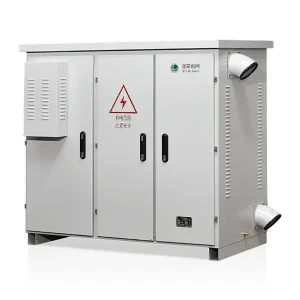
High-Demand Outdoor Metering Enclosure Solutions
Factory-calibrated single-phase, three-phase, and terminal units manufactured by Zhejiang Teyi Electric Co., Ltd. for global power utilities, EPC contractors, and distribution networks.
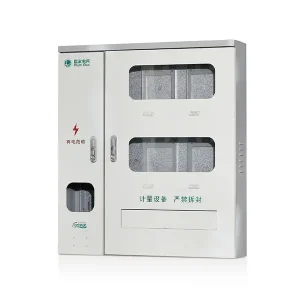
Stainless Steel Three-Phase Metering Box Direct Entry
View Specifications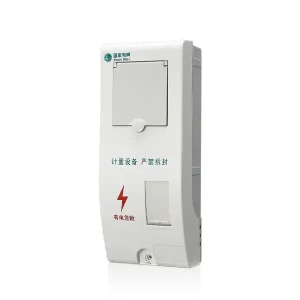
TY-SXD1 Single-Phase Electric Energy Metering Box
View Specifications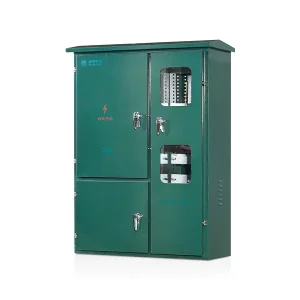
Stainless Steel Three-Phase Two-Position Metering Box
View Specifications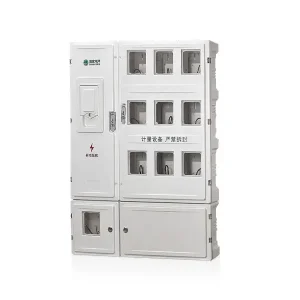
TY-SXD2 Single-Phase High Insulation Metering Box
View Specifications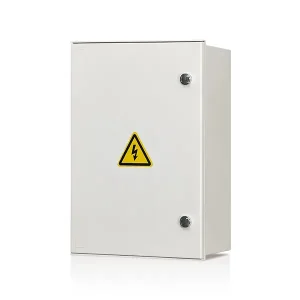
TY-SXD1-FSH1 Waterproof IP44 Meter Protection Box
View Specifications
TY-SXD2 Series Single-Phase Wholesale Factory Model
View Specifications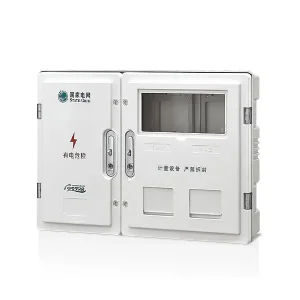
TY-SXD2 Multi-Position Civil Substation Metering Box
View Specifications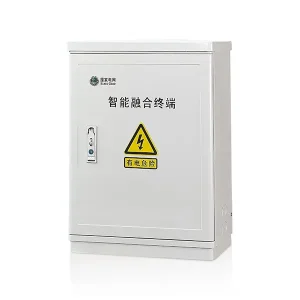
TY-TTU Intelligent Fusion Distribution Terminal Box
View SpecificationsTechnological Trajectory of Outside Metering Boxes
Modern outdoor meter enclosures have evolved from passive, stamped sheet-metal junction boxes into critical intelligent edge nodes within modern Advanced Metering Infrastructure (AMI).
Thermosetting SMC Composite Paradigm
Sheet Molding Compound (SMC)—an unsaturated polyester matrix reinforced with chopped structural glass fibers—has largely displaced traditional carbon steel. SMC eliminates corrosion in maritime and humid climates, provides inherent dielectric insulation that prevents human electric shock without reliance on earthing cables, and provides class-leading flame retardancy conforming to UL94-V0 criteria.
Anti-Tampering & Revenue Protection
Power utilities globally incur billions in non-technical losses due to unauthorized meter bypass. Modern factory-engineered outside meter boxes incorporate multi-point concealed mechanical locking, tamper-evident electronic seals, micro-switch open-door alarm triggers, and transparent high-impact polycarbonate inspection windows that eliminate the necessity of opening enclosures for visual audit.
Smart Grid & IoT Antenna Transparency
With the rapid rollout of cellular IoT (NB-IoT, LTE-M) and RF-mesh smart meters, metallic enclosures often act as Faraday cages, severely attenuating wireless signals. SMC fiberglass provides near-zero RF signal attenuation, allowing embedded transceivers within smart meters to reliably transmit telemetry back to substation SCADA systems without external antenna mounting penetrations.
Global Enterprise Procurement Evaluation Framework
When sourcing wholesale outdoor meter enclosures for international grid tenders, utility supply contracts, or large-scale EPC industrial projects, procurement directors evaluate material properties, mechanical integrity, and electrical safety thresholds.
| Evaluation Parameter | SMC Fiberglass Composite (GRP) | Grade 304 / 316 Stainless Steel | Ordinary Engineering ABS / PC |
|---|---|---|---|
| Dielectric Breakdown Voltage | > 25 kV/mm (Inherent Non-Conductive) | Conductive (Rigid Grounding Mandated) | 18 - 20 kV/mm (Variable with Aging) |
| Mechanical Impact Rating | IK09 to IK10 (≥ 20 Joules Impact) | IK10+ (Extremely High Elasticity) | IK07 to IK08 (Prone to Low-Temp Cracking) |
| UV Photodegradation Resistance | ASTM G154 > 5,000 hrs (Zero Surface Fissure) | Immune to UV Degradation | Chalking, Embrittlement after 3-5 Years |
| Ingress Protection Capability | IP54 Standard, IP65 with EPDM Seal Matrix | IP66 with Continuous Robot Gasket Bead | IP44 - IP54 (Gasket Channel Creep Common) |
| Chemical & Salt-Spray Stability | ISO 9227 > 1,000 hrs Neutral Salt Spray Neutral | High (304), Extreme Marine (316L) | Moderate; Degraded by Airborne Solvents |
| Total Cost of Ownership (30-Yr TCO) | Optimal (Zero Painting, Low Maintenance) | High Initial Capital Outlay | Sub-optimal (Multiple Replacement Cycles) |
Macro-Sector Deployment Architecture
Zhejiang Teyi Electric Co., Ltd. customizes outside meter enclosure internal chassis configurations to align with the disparate load profiles and structural environments of major global infrastructure sectors.
Commercial & Utility Photovoltaic
Solar PV arrays require dedicated bidirectional metering boxes equipped with secondary disconnect breakers, anti-islanding isolation switches, and lightning surge protection modules (Type II SPD). Teyi outdoor PV connection boxes are resistant to high ambient desert temperatures and elevated UV radiation without thermal warping.
High-Density Residential Developments
Urban multi-tenant residential districts require centralized single-phase multi-meter arrays (e.g., TY-SXD2 series supporting 2 to 12 user meter clusters). These enclosures integrate dedicated upper busbar chambers, mid-level transparent viewing chambers, and independently lockable customer switch compartments with concealed terminal routing.
Heavy Petrochemical & Coastal Plants
Refineries and offshore coastal installations present acidic airborne vapors, high humidity, and aggressive chloride concentrations. For these high-risk areas, Teyi delivers IP65/IP66 Grade 304/316 stainless steel JP cabinets and three-phase CT transformer enclosures with silicone door gaskets and multi-point wedge latching.
Electrified Rail Transit & Traction Power
Subway and light rail lines depend on steady auxiliary power supplies where high electromagnetic fields, vibration, and mechanical shock can cause premature failure. Outdoor intermediate protection boxes and Ring Main Unit (RMU) enclosures protect trackside signalling power and line monitoring equipment against vibration fatigue.
Precision Manufacturing Ecosystem in Yueqing, China
Situated within the Yueqing Economic Development Zone in Wenzhou—internationally recognized as the "Electrical Capital of China"—Zhejiang Teyi Electric Co., Ltd. operates high-tonnage SMC hydraulic presses, precision mold-tooling workshops, and automated metal CNC sheet processing lines.
Hydraulic Compression Molding Tech
Our manufacturing facility utilizes high-tonnage multi-axis compression molding presses operating at up to 150°C mold temperatures. This guarantees uniform resin distribution, dense cross-linking of glass-fiber reinforcement, free of micro-voids, and consistent dimensional accuracy across multi-thousand production runs.
In-House Type Testing Laboratory
Quality control extends beyond simple dimensions. Every Teyi design undergoes verified type-testing: 30 kA short-time withstand tests, glow wire flammability tests up to 960°C (IEC 60695-2-11), IP rating ingress verification chambers (water jets and blowing talcum dust), and high-voltage dielectric isolation testing at 50/60 Hz.
Electrical Supply Chain Integration
By operating inside Yueqing's industrial manufacturing core, Teyi directly integrates miniature circuit breakers (MCBs), molded-case circuit breakers (MCCBs), copper busbars, and current transformers into turn-key meter enclosures. This consolidated cluster reduces lead times, optimizes freight volume, and minimizes intermediate logistics markups.
Localized Support & Global Compliance Assurance
Cross-border utility engineering tenders require strict adherence to national and regional technical codes. Our dedicated international engineering support desk assists EPC contractors with documentation and testing compliance.
Global Standards Alignment
Products conform to IEC 61439-1/-3 (Low-voltage switchgear and controlgear assemblies), IEC 60529 (IP code protection), IEC 62262 (IK code impact resistance), and IEC 62208 for empty enclosures. OEM documentation includes test reports and certificates of conformity for streamlined tender submissions.
Custom Tooling & Mold Development
For major municipal utility contracts requiring non-standard meter mounting geometry, proprietary knockout knockouts, corporate utility logos embossed in the door molding, or unique terminal spacing, our in-house tool design team delivers CAD/CAM prototype molds and fast sample validation.
Containerization & Export Packaging
Meter enclosures are fragile high-volume products subject to container sea-freight humidity and stacking pressures. Teyi utilizes custom reinforced export cartons, non-fumigation wood pallets, moisture-barrier polyethylene wrapping, and corner edge protectors to guarantee zero transit warping or surface abrasions.
The Next Era: Edge-Intelligent Meter Enclosures
Grid decentralization, bidirectional renewable power flows, and EV fast-charging stations demand higher performance and connectivity from outside meter enclosures.
TTU Fusion & Distribution Automation
Our next-generation TY-TTU Intelligent Fusion Terminal Boxes represent the union of conventional metering enclosures with low-voltage distribution management. By embedding edge computing gateways directly alongside metering panels, utilities track transformer balance, monitor line loss, and analyze power quality in real time.
EV Charging & Dynamic Load Shedding
As residential EV charging surges, outside meter boxes are being engineered to house smart contactors and current limiters that execute dynamic load shedding. When primary feed capacity nears threshold, secondary priority loads (such as level-2 vehicle chargers) are throttled back to protect substation distribution transformers from phase overload.
Bio-Resin & Circular SMC Composites
To satisfy stringent EU and global corporate Scope 3 decarbonization metrics, our R&D team is developing recyclable SMC formulations that combine bio-based unsaturated resins with recycled structural glass fibers. This initiative reduces embedded carbon emissions by up to 35% without sacrificing tensile strength or weather resistance.
Frequently Asked Questions for Wholesale Buyers
Answers to technical, operational, and supply chain queries raised by global procurement managers and utility engineers.
SMC (Sheet Molding Compound) offers an optimal balance of electrical safety and field durability. It is naturally non-conductive, eliminating the risk of enclosure electrification and personal injury if an internal conductor shorts. It does not rust, requires no periodic painting, and resists UV degradation in extreme temperatures (-25°C to +50°C).
Our meter boxes integrate multi-point tamper prevention: specialized triangular or star-drive padlockable latch locks, designated wire seal eyelets for utility serialization tags, internal physical partitions separating utility power lines from user switch access, and optional micro-switch sensors that trigger remote telemetry alarms if the door is opened.
Our TY-SXS three-phase metering box models feature reinforced busbar support brackets engineered to withstand rated short-time currents up to 30 kA (1 second). This protects the enclosure and surrounding gear from mechanical damage caused by electrodynamic forces during heavy downstream line faults.
Yes. We provide complete OEM/ODM engineering customization. Clients supply smart meter dimensions (e.g., standard DIN-rail mounting, BS British Standard bottom-connection, or ANSI socket-type) and our engineers adjust mounting brackets, transparent polycarbonate viewing windows, and pre-punched cable knockout patterns to match.
For standard catalog SMC single-phase and three-phase meter boxes, our standard MOQ is 100 units, with typical production lead times ranging from 15 to 25 calendar days for a 40-foot HQ container. Custom mold fabrication typically requires 30 to 40 days for tooling and initial sample approval.
We use continuous tongue-and-groove perimeter channels fitted with UV-resistant EPDM or polyurethane foam gaskets. Along with down-angled water-shedding louver vents that keep driving rain and dust out while allowing internal condensation to breathe, our meter boxes reliably achieve IP54 to IP65 ratings according to IEC 60529 standards.
Industrial Protection Cabinets & Distribution Units
Complete your outdoor power distribution network with transformer metering boxes, intermediate protection housings, wall-mounted control boxes, and integrated power distribution (JP) cabinets.
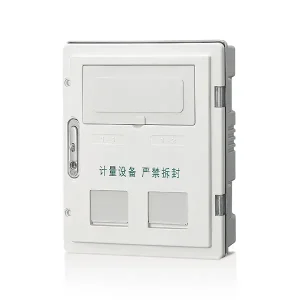
TY Single-Phase Transformer Type Metering Box
View Specifications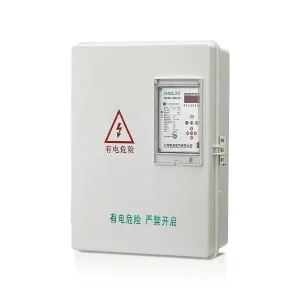
TY Intermediate Cable Branching & Protection Box
View Specifications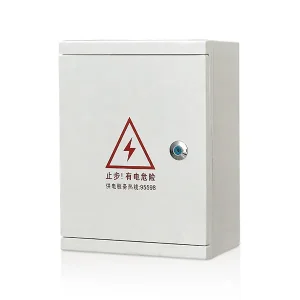
TY-KZX Industrial Wall-Mounted Control Box
View Specifications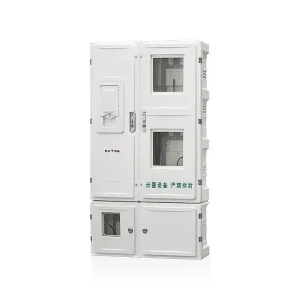
TY-SXS2 Three-Phase Power Management Meter Box
View Specifications
TY Single-Phase CT Type Reliable Meter Enclosure
View Specifications
TY-SXD1-FSH1 Outdoor IP44 Sealed Enclosure
View Specifications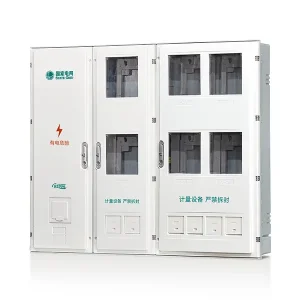
TY Three-Phase High Capacity Energy Metering Box
View Specifications