
Primary Catalog
Precision Metering & Distribution Assemblies
Direct manufacturer supply for utility grid operators, EPC contractors, and global power hardware distributors.
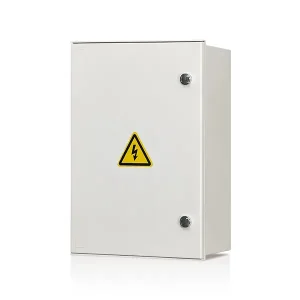
China TY-SXD1-FSH1 Waterproof Box
View Product Details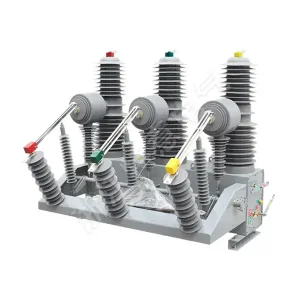
Wholesale Primary and Secondary Fusion Pole Mounted Circuit Breaker
View Product Details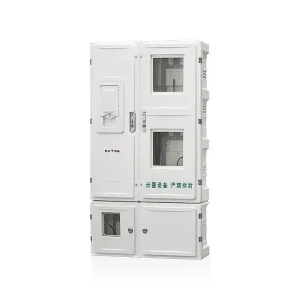
China Three-Phase Electric Energy Metering Box TY-SXS2
View Product Details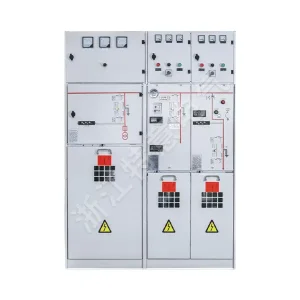
Wholesale High-Quality Ring Main Unit (RMU)
View Product Details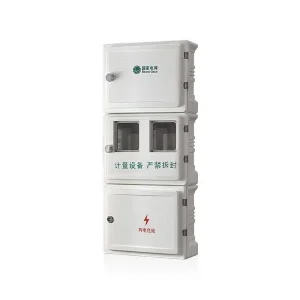
Wholesale TY-SXD2 Single-Phase Electric Energy Metering Box
View Product Details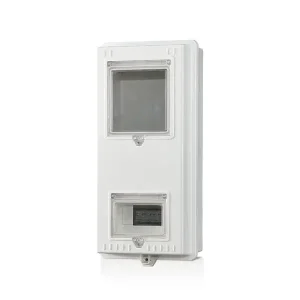
SMC Fiberglass Foreign Trade Box for 1-Phase & 3-Phase
View Product Details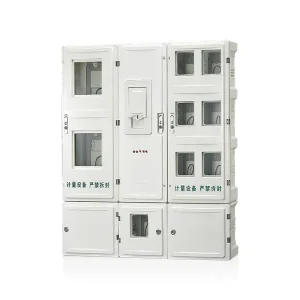
China TY-SXD2+SXS2-1B Three-Phase 2-Pos + Single-Phase 6-Pos Box
View Product Details40+
Years Indoor Lifecycle
IK10
Impact Shock Resistance
IP66
Ingress Protection Grade
30 kA
Short-Time Withstand Icw
Macro-Industry Solutions & Commercial Landscape
The Global Shift Toward High-Performance Metering Enclosures
As national electrical grids undergo rapid modernizations under Advanced Metering Infrastructure (AMI) and distributed renewable additions, traditional sheet-metal meter boxes are failing prematurely. Modern distribution systems demand enclosure hardware that prevents non-technical losses (electricity theft), resists aggressive saline and chemical corrosion, and facilitates wireless RF/cellular data communications.
Revenue Assurance & Anti-Tamper
Non-technical losses account for billions in lost utility revenues globally. Modern wholesale outdoor electric meter boxes incorporate multi-point security: internal concealed hinge systems, anti-pry labyrinth door flanges, polycarbonate tamper-evident observation windows, and utility seal lock cavities that immediately signal unauthorized manual bypass.
- Concealed captive sealing screws
- RFID/NFC seal integration tracking
- Zero exterior exposed conductive parts
Smart Grid & IoT Transmission Transparency
Unlike steel or iron enclosures which act as Faraday cages attenuating wireless electromagnetic signals, SMC (Sheet Molding Compound) fiberglass composites offer full electromagnetic transparency. This allows high-gain transmission for GPRS, NB-IoT, LoRaWAN, and Zigbee smart metering modems without requiring expensive external dipole antennas.
- Zero RF signal attenuation for AMI meters
- Dedicated low-loss antenna pass-throughs
- Internal housing for TTU edge controllers
Atmospheric Weathering Resilience
Outdoor meter boxes face solar UV degradation, coastal salt fog, monsoon rain ingress, and extreme temperature fluctuations (-40°C to +80°C). Teyi Electric engineers deploy thermoset unsaturated polyester matrices compounded with silane-treated glass fibers, producing non-hygroscopic enclosures that resist acid rain, sulfur dioxide, and ultraviolet embrittlement.
- UL 746C outdoor suitability (f1 rated)
- Seamless EPDM continuous gasket seals
- Zero rusting, blister-free life >30 years
Material Science & Engineering Evaluation
Comparative Analysis: SMC Fiberglass vs. Stainless Steel vs. Thermoplastics
Selecting the appropriate enclosure substrate requires balancing dielectric safety, mechanical rigidity, environmental degradation vectors, and total lifecycle expenditure. The technical matrix below reflects empirical data derived from standardized IEC/ASTM laboratory testing.
| Performance Parameter | SMC Fiberglass (GRP / FRP) | 304/316 Stainless Steel | Polycarbonate (PC) / ABS | Standard Cold-Rolled Steel |
|---|---|---|---|---|
| Dielectric Strength | ≥ 18 kV/mm (Class II Insulation) | Conductive (Requires PE Earthing) | ≥ 15 kV/mm (Class II) | Conductive (Risk of Step Potential) |
| Impact Resistance (IK Code) | IK10 (20 Joules dynamic shock) | IK10+ (High deflection resistance) | IK08 - IK09 (Brittle under cold) | IK08 (Subject to permanent denting) |
| Corrosion & Saline Resistance | Immune (ISO 9227 > 1000h no corrosion) | Excellent (Subject to pitting in marine Cl⁻) | High (Vulnerable to solvent cracking) | Poor (Prone to galvanic rust at edges) |
| RF / Cellular Transparency | 100% Permeable (Optimal for AMI) | 0% (Faraday Shielding blocks signal) | 100% Permeable | 0% (Signal reflection / attenuation) |
| Thermal Conductivity (W/m·K) | 0.25 (Self-insulating against internal condensation) | 16.3 (Rapid condensation cycle) | 0.20 (Low conductivity) | 50.0 (High solar heat gain index) |
| Flammability Rating | UL 94 V-0 & Glow-Wire 960°C | Non-combustible | UL 94 V-1 / V-2 | Non-combustible |
| Weight / Installation Footprint | Lightweight (1/3 of steel, 1-man mount) | Heavy (Requires heavy mounting anchors) | Very Lightweight | Heavy |
Global Deployment Scenarios & Regional Compliance
Engineering Adaptations for Global Grid Environments
Distribution challenges vary significantly by geographic location. Teyi Electric engineers configure mechanical hardware, internal busbar configurations, and ingress seals to meet localized utility criteria worldwide.
Middle East & North Africa (MENA)
Environmental Vectors: Direct solar irradiance generating internal box temperatures over 75°C, high dust concentrations (sandstorms), and dry heat cycle stress.
- Double-roof convection ventilation baffles
- IP66 sand-tight labyrinth gasket systems
- UV stabilizers resisting 350 kLy/yr solar exposure
- Compliance: SASO, DEWA, SEC utility standards
Southeast Asia & Pacific Rim
Environmental Vectors: Sustained 95%+ relative humidity, coastal salinity, torrential monsoons, and biological fungus/mold growth.
- Hydrophobic non-nutrient composite formulation
- Downward-facing condensation drainage valves
- Tinned high-grade electrolytic copper busbars (Cu-ETP)
- Compliance: IEC 62208, SIRIM, PLN, PEA guidelines
Latin America & Sub-Saharan Africa
Environmental Vectors: High incidence of non-technical commercial losses, rugged rural pole mounts, lightning surge events.
- Split Prepayment DIN-rail keypad metering integration
- Hot-dip galvanized steel pole mounting clamps
- Integrated Class II surge protection devices (SPDs)
- Compliance: SABS, CFE, IEC 61439-1/2 conformity
Future-Proof Architecture & R&D Roadmap
Next-Generation Smart Metering Enclosure Capabilities
The meter box is evolving from a passive mechanical shield into an active edge-sensing node of the power distribution network. Our R&D engineering matrix incorporates smart monitoring interfaces directly within the composite molding.
Embedded Temperature & Arc-Fault Sensors
Loose terminal lugs generate thermal runaway, causing catastrophic meter box burnouts. We integrate wireless surface acoustic wave (SAW) or PT100 temperature sensors at main cable terminations, interfacing with TTU concentrators to trigger early preventative tripping.
Integrated Edge Concentrators (TTU Units)
Designed to bridge low-voltage distribution topologies with distribution automation systems (DAS). Houses modular fusion terminal units that analyze power quality parameters (harmonics, phase unbalance, reactive power) directly at the meter clustering level.
Photovoltaic Microgrid Bi-Directional Balancing
Distributed rooftop solar feeds unpredictable reverse power flows. Our PV grid-connected meter boxes integrate dual-direction smart meters, DC-disconnect isolators, residual current protective devices (RCDs), and rapid automatic shutdown mechanisms.
Precision Engineering Workflow
End-to-End Factory Verification & Testing Protocol
Every meter box production batch manufactured in our Yueqing facility undergoes rigorous laboratory verification prior to maritime export.
1. Raw Material Rheology & Compounding
Continuous testing of unsaturated polyester resin, glass roving content (25% - 30%), zinc stearate release agents, and fire-retardant aluminum trihydrate (ATH) fillers. Hydraulic compression molding presses apply 1,500 to 2,500 metric tons at 150°C curing temperatures to eliminate microscopic voids.
2. Ingress & Environmental Verification
Enclosures undergo water jet testing in accordance with IEC 60529 (IPX6 high-pressure washdown) and dust-tight positive air pressure tests. Salt fog exposure chambers run 1,000-hour cyclic corrosion testing according to ASTM B117 to assure corrosion immunity in marine atmospheres.
3. Mechanical Stress & Glow-Wire Testing
Spring-hammer dynamic impact testers verify IK10 structural integrity at low temperature thresholds (-25°C). Flammability compliance is verified with glow-wire apparatus testing to 960°C (IEC 60695-2-11), ensuring zero flaming drops and self-extinction within 30 seconds.
Engineering Knowledgebase
Frequently Asked Questions for Utility Engineers & Sourcing Managers
Detailed technical responses addressing engineering specifications, tender compliance, custom tooling, and supply chain logistics.
Why is SMC composite preferred over polycarbonate for outdoor meter boxes?
While polycarbonate is a thermoplastic vulnerable to UV yellowing, surface embrittlement, and environmental stress cracking from industrial airborne hydrocarbons, SMC (Sheet Molding Compound) is a thermoset material. Once compression molded under intense heat and pressure, it forms permanent cross-linked polymer chains. SMC delivers far higher structural rigidity (IK10), will not soften under extreme ambient heat, and exhibits superior resistance to electrical tracking (CTI > 600V).
How do Teyi outdoor meter boxes mitigate internal condensation?
SMC possesses naturally low thermal conductivity (0.25 W/m·K) compared to steel (50 W/m·K), drastically reducing the interior-exterior temperature gradient that drives dew point crossing. In addition, our enclosures feature internal downward-sloped top ceilings, labyrinth air exchange vents with hydrophobic breathable membranes, and bottom one-way drainage valves to prevent moisture accumulation.
Can you manufacture custom dimensions and meter configurations for public utility tenders?
Yes. We provide complete OEM/ODM tooling services. Our in-house mold tooling shop utilizes high-precision CNC machining centers to fabricate custom compression molds for any configuration: from single-meter residential units (TY-SXD1) to multi-meter residential clusters (up to 12 or 24 positions) integrating DIN-rail switchgear compartments, current transformer (CT) metering bays, and secure busbar runs.
What short-circuit withstand ratings do your three-phase meter boxes support?
Our three-phase commercial and industrial energy metering enclosures (such as the TY-SXS2 series) are engineered for main busbar nominal ratings up to 250A and short-time withstand currents (Icw) up to 30 kA for 1 second, compliant with IEC 61439-1 standards. Busbar supports are manufactured from high-tracking-index reinforced insulating polymers.
What tamper-prevention features are integrated for utility revenue assurance?
Our enclosures feature patented multi-point locking mechanisms compatible with utility master padlocks, recessed tamper-proof sealing screws, zero exterior-accessible fasteners, internally housed hinges, and ultrasonically welded or mechanically clamped polycarbonate viewing windows that cannot be removed from the outside without destroying the housing.
What is the standard production lead time and container packing format?
Standard high-runner models ship within 15–20 business days. Custom molded tender production runs typically require 30–45 days, including sample pilot batch validation. Boxes are packed individually in shock-absorbent multi-layer corrugated cartons with protective PE film wrapping, palletized on heat-treated ISPM-15 compliant wooden pallets for marine container loading.
Industrial & Substation Series
High-Capacity Metering & Distribution Assemblies
Specialized stainless steel, CT-operated transformer cabinets, and photovoltaic grid-tied enclosures for heavy commercial and renewable infrastructure.
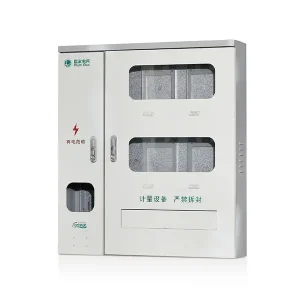
Stainless Steel Three-Phase Metering Box (Direct Entry)
View Product Details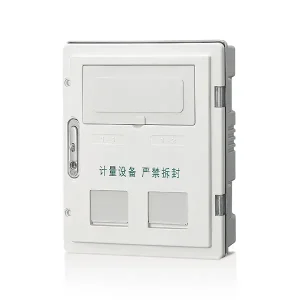
China TY Single-Phase Electric Energy Metering Box
View Product Details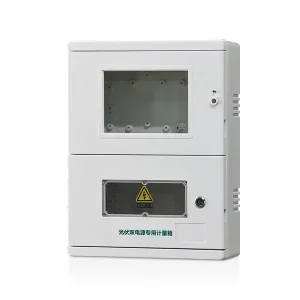
Wholesale SMC Fiberglass Photovoltaic Grid-Connected Box
View Product Details
China SMC Fiberglass Foreign Trade Box Factory Direct
View Product Details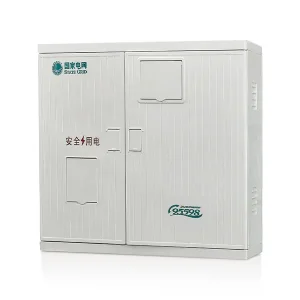
China TY-SXS3-BXJ LV B-Type Box (Transformer Type)
View Product Details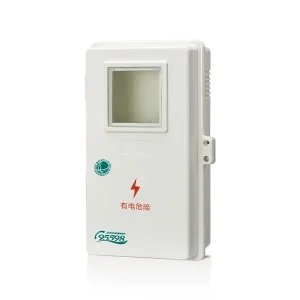
China TY-SXD1-1C Single-Phase Data Collector Box
View Product Details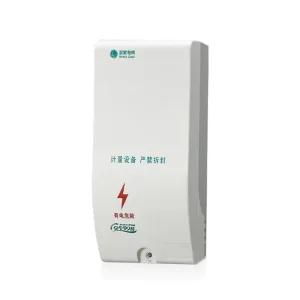
China TY-SXD1-FX 1-Phase 1-Position Distribution Box
View Product Details