
High-Performance Metering & Distribution Units
Explore utility-validated meter enclosures and control boxes certified for residential, industrial, and secondary substation deployments.
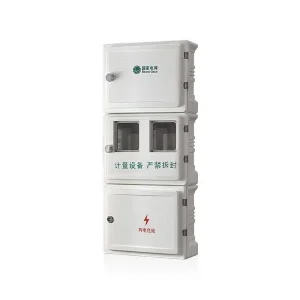
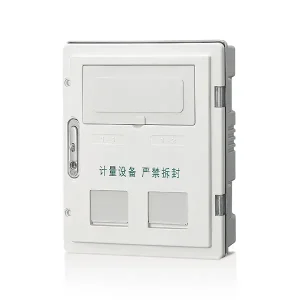
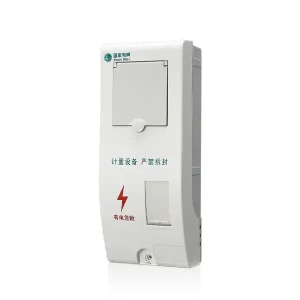
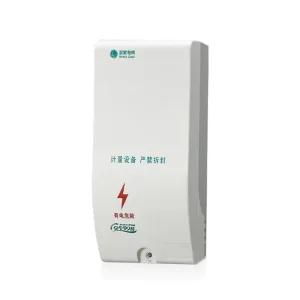
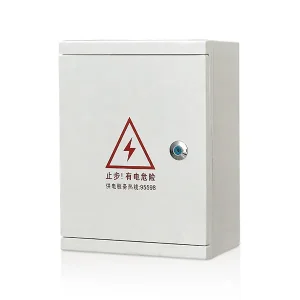
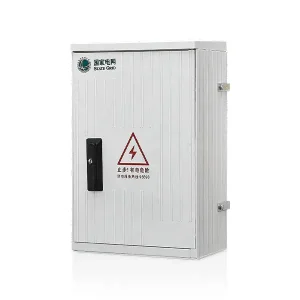
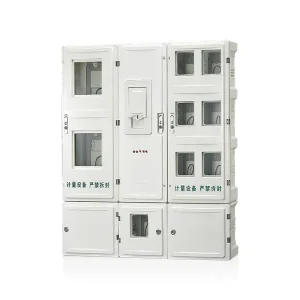
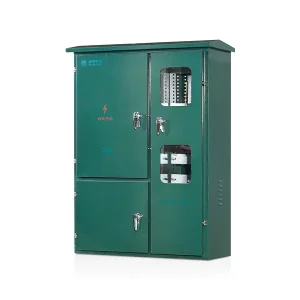
Macro Commercial & Industrial State of Meter Box Cabinets
In-depth technical analysis of energy metering enclosures across global electrical distribution grids, urbanization projects, and utility modernizations.
Grid Modernization & AMI Rollouts
Global utilities are rapidly phasing out electromechanical meters in favor of Advanced Metering Infrastructure (AMI 2.0). Modern meter box cabinets function not merely as protective shells, but as intelligent physical nodes housing dual-mode wireless modems (cellular IoT, NB-IoT, LoRaWAN), current transformer (CT) blocks, disconnect switches, and dynamic surge protection devices (SPDs).
Mitigation of Non-Technical Losses (NTL)
Power utilities in developing and emerging markets lose billions annually to power theft, line tapping, and unauthorized meter tampering. Modern compression-molded SMC meter cabinets incorporate multi-layer anti-tamper mechanisms, electronic seal ports, proprietary triangular locksets, and optical sensor interlocks designed to immediately flag perimeter breaches to centralized SCADA systems.
Material Evolution: Transition to Composite SMC
Traditional deep-drawn sheet steel and lower-tier ABS plastics are rapidly being replaced by Sheet Molding Compound (SMC) unsaturated polyester glass-fiber reinforced polymer. SMC delivers dielectric strength exceeding 12 kV/mm, IK10 mechanical impact ratings, zero rust formation in coastal maritime climates, and a certified lifecycle exceeding 30 to 40 continuous operating years.
Enclosure Material Science: SMC vs. Stainless Steel vs. ABS
A comprehensive engineering comparison of structural enclosure substrates under electrical fault, severe weather, and chemical exposure parameters.
| Performance Characteristic | SMC Fiberglass Composite (GRP) | AISI 304 / 316 Stainless Steel | Standard Thermoplastic (ABS / PC) |
|---|---|---|---|
| Dielectric / Insulation Strength | Inherently Insulating (>15 kV/mm, Class II) | Conductive (Mandatory Protective Earthing) | Insulating (Degrades Under UV & Heat) |
| Corrosion & Salt Spray Resistance | Immune to Oxidation (C5-M Marine Rated) | Excellent (Subject to Crevice Attack) | Resistant to Moisture, Poor Chemical Tolerance |
| Mechanical Shock (Impact Index) | IK10 (Up to 20 Joules Impact Energy) | IK10+ (Extremely High, Prone to Dents) | IK07 - IK08 (Prone to Low-Temp Cracking) |
| Thermal Stability & Fire Rating | UL94 V-0 / Glow-Wire 960°C Compliant | Non-combustible (Transmits Extreme Heat) | UL94 HB to V-1 (Deforms at >85°C) |
| Outdoor Useful Service Lifespan | 30+ Years Outdoor / 40+ Years Indoor | 25–35 Years (Requires Coating Maintenance) | 8–12 Years (UV Discoloration & Embrittlement) |
| RF Transparency for AMI / Smart Mesh | Zero RF Attenuation (Optimal for Smart Meters) | Faraday Cage Effect (Requires External Antennas) | Transparent (Subject to Weathering) |
Localized Application Scenarios & Regional Compliance Frameworks
Precision-tailored electrical meter cabinet engineering compliant with tier-1 international standards and diverse geographic environments.
European & British Standard (IEC / BS)
Engineered to satisfy IEC 61439-1/-3 and BS 7671 regulations, our single- and three-phase meter cabinets feature partitioned service head chambers, pre-cut meter fixing points for DIN-rail smart meters, and segregated compartments for utility cut-out fuses and client miniature circuit breakers (MCBs), offering IP54 to IP65 water/dust resistance.
North American & Latin American Grid Norms
Aligned with NEMA 3R/4X and ANSI C12 specifications, these enclosures accommodate direct-entry overhead (OH) and underground (UG) secondary service conduits. Our custom models feature ring-type and ringless meter socket provisions, heavy-duty bypass handles, and dedicated CT mounting plates for commercial sub-metering configurations.
Tropical, Desert & Coastal Installations
For high-humidity equatorial zones (Southeast Asia, Sub-Saharan Africa) and desert climes (Middle East GCC), our SMC enclosures feature specialized UV-stabilizer additives, labyrinth natural convection breathers to inhibit internal condensation, and stainless steel hardware to prevent seizing in sulfurous and saline environments.
Macro Industry Solutions Powered by Custom Metering Cabinets
From decentralized renewable power production to multi-family residential towers, discover how our cabinet ecosystems resolve critical power delivery challenges.
Utility-Scale & Commercial Solar PV Metering
Commercial photovoltaic installations mandate bi-directional (net metering) cabinets that safely isolate inverter feeds from the low-voltage grid. Our PV grid-connection and metering cabinets incorporate Class II surge protection, DC/AC disconnector switches, anti-islanding relay slots, and transparent inspection windows for zero-touch utility verification.
High-Density Residential Multi-Family Enclosures
High-rise civil buildings demand consolidated metering banks that optimize riser space while maintaining rigorous fire containment. Our multi-meter modular systems (TY-SXD2 series supporting up to 12 positions) feature pre-wired, tin-plated copper busbar systems (rated 10A to 250A) with short-circuit current withstand capabilities up to 30 kA.
EV Charging Hubs & Microgrid Distribution
Public and fleet EV charging stations require localized sub-metering cabinets to allocate utility bills accurately. Our enclosures house dynamic load balancers, secondary branch circuit breakers, and revenue-grade MID-certified meters within vandal-resistant, IP65-rated fiberglass or double-walled stainless enclosures.
Technology Roadmap: Smart Meter Enclosures (2025–2035)
Anticipating the technological transformation of power distribution enclosures from passive hardware into autonomous, sensor-rich IoT distribution nodes.
Widespread Deployment of Class II Fire-Resistant & Anti-Arc Enclosures
Industry-wide phase-out of halogenated flame retardants in favor of zero-halogen, low-smoke SMC formulations compliant with EN 45545 and UL 94 V-0 standards. Integration of internal arc-quenching deflectors and standardized DIN 43870 multi-vendor meter mounting plates.
Edge-Connected Structural Health & Microclimate Telemetry
Direct integration of low-power internal microclimate sensors (temperature, relative humidity, partial discharge detection) communicating via Bluetooth Low Energy (BLE) or wireless mesh to mobile utility field inspection crews, predicting insulation breakdown prior to catastrophic faults.
Autonomous Grid-Interactive Smart Feeder & Meter Nodes
Transition toward fully autonomous metering substations featuring solid-state circuit breaking, dynamic phase balancing, AI-driven edge anomaly detection for non-technical loss pinpointing, and fully recyclable bio-resin bio-fiber composite enclosures meeting global circular economy mandates.
Frequently Asked Questions: Global Procurement & Engineering
Detailed engineering, procurement, and testing guidance for utility asset directors, EPC contractors, and wholesale distributors.
Why is compression-molded SMC preferred over injection-molded ABS/PC for outdoor meter cabinets?
Sheet Molding Compound (SMC) is a thermoset material reinforced with continuous chopped glass fibers under high pressure and temperature. Unlike thermoplastics (ABS/Polycarbonate) which soften under heat and embrittle under UV exposure, SMC retains structural rigidity across -40°C to +140°C, does not melt, maintains an IK10 impact rating, and resists environmental stress-cracking caused by UV, acids, and atmospheric pollutants.
How do Teyi Electric meter boxes achieve short-time current withstand ratings up to 30 kA?
Our three-phase and centralized multi-meter enclosures integrate high-purity electrical copper busbars (Cu-ETP, 99.9% conductivity) supported by non-tracking, high-creepage thermoset resin busbar holders. The geometric design and conductor clearance spacing are engineered and type-tested in compliance with IEC 61439-1 to safely withstand electromagnetic repulsive forces during transient short circuits up to 30 kA for 1.0 second.
Can internal components (breakers, CTs, busbars, terminal blocks) be pre-assembled at the factory?
Yes. As an end-to-end OEM and ODM manufacturer, we provide complete internal electrical integration. We can source, wire, and test DIN-rail MCBs, MCCBs, residual current devices (RCDs), current transformers, neutral/ground disconnect terminals, and optical viewing windows according to your national wiring regulations and utility standard drawings.
What anti-tamper and security mechanisms are integrated to prevent power theft?
Our enclosures feature recessed internal hinge designs immune to external hinge-pin extraction, patented three-point latching locks compatible with utility-restricted master keys, lead-wire and barcode security seal apertures, and separate padlock hasps. Internally, transparent polycarbonate viewing windows allow meter reading while preventing unauthorized contact with energized terminals.
What is the typical lead time and sample verification process for custom mold tooling?
For custom ODM enclosure dimensions or specialized internal compartmentalization, our Yueqing tooling workshop creates 3D CAD/CAM models and delivers rapid CNC-machined prototypes within 7 to 10 days. Precision steel mold compression tooling typically takes 30 to 45 days, followed by sample delivery, dielectric breakdown verification, and IK/IP ingress lab testing prior to full production runs.
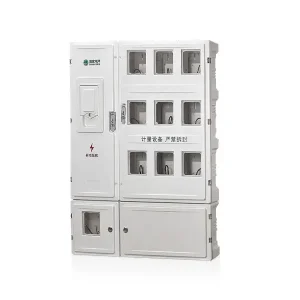
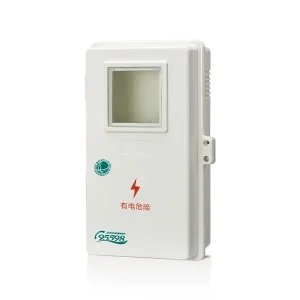
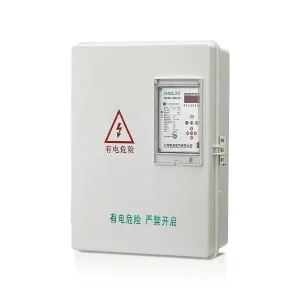
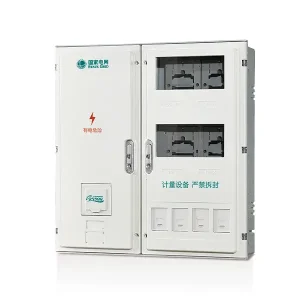
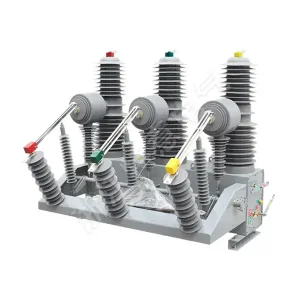
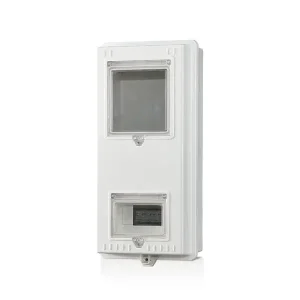
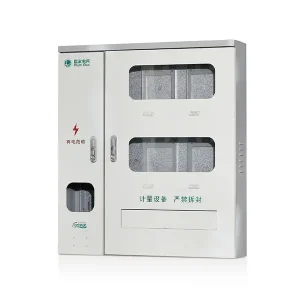
Advanced Utility Metering & Distribution Assemblies
Explore our specialized range of high-insulation meter collectors, protection panels, switchgear, and primary/secondary circuit breakers.
End-to-End Quality Assurance & Factory Testing Standards
Every meter box cabinet manufactured at our Yueqing production base undergoes rigorous mechanical, thermal, and electrical tests before global container shipment.
Dielectric Voltage Withstand Test
Conducted in accordance with IEC 61439-1 Section 10.9, testing main and auxiliary power circuits under power-frequency test voltages up to 2.5 kV AC for 60 seconds with zero dielectric puncture, breakdown, or flashover.
Glow-Wire Flammability Index (GWFI)
Compliant with IEC 60695-2-12. Composite fiberglass SMC test specimens are subjected to a heated glow-wire element at 960°C to guarantee self-extinguishing capabilities within 30 seconds, preventing electrical fire propagation.
Ingress Protection (IP65 / NEMA 4X) Verification
Continuous oscillating spray testing and pressurized dust chamber trials ensuring complete dust tightness and high-pressure water jet resistance from any vector without water penetration into live meter or breaker chambers.