
Flagship JP Distribution & Energy Metering Solutions
Precision-molded SMC and marine-grade stainless steel integrated power distribution cabinets, designed for high-stress electrical grid infrastructure and industrial substations.
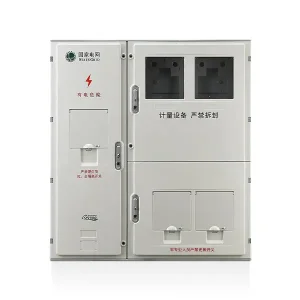
Wholesale China TY Three-Phase Electric Energy Metering Box (Transformer Type) - Reliable Suppliers & Factory Options Manufacturer, Factory
View Technical Specs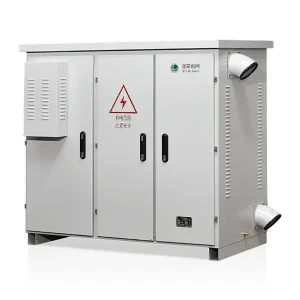
China Stainless Steel JP Cabinet for Power Distribution - Reliable China Suppliers & Factory Solutions Manufacturer, Suppliers
View Technical Specs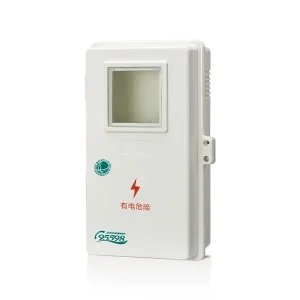
China TY-SXD1-1C Single-Phase Collector Box – Reliable Power Measurement Solution from China Suppliers and Factory Suppliers, Factory
View Technical Specs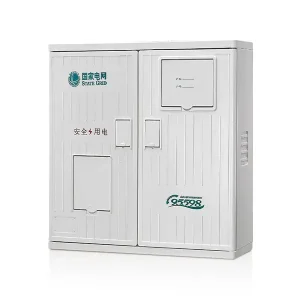
China TY-SXS1 A type box Manufacturers, Factories
View Technical Specs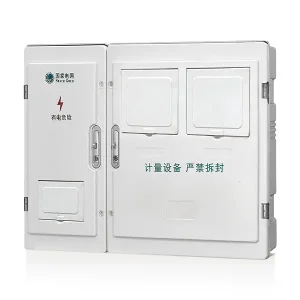
China China TY-SXS2-DXJ Low Voltage Three-Phase Electric Energy Metering Box - Reliable Suppliers & Factory Solutions Manufacturers, Supplier
View Technical Specs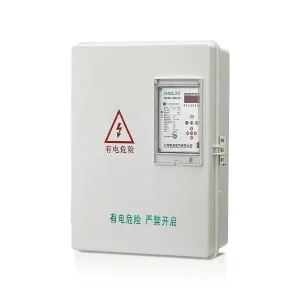
Wholesale China TY-Intermediate Protection Box Suppliers - Durable Single & Three-Phase Meter Boxes from Reliable Factory Supplier, Suppliers
View Technical Specs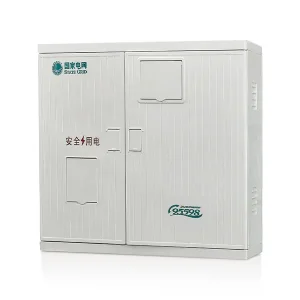
China TY-SXS3-BXJ Low Voltage B-Type Box for Transformers - Reliable Power Management from China Suppliers and Factory Factories, Factory
View Technical Specs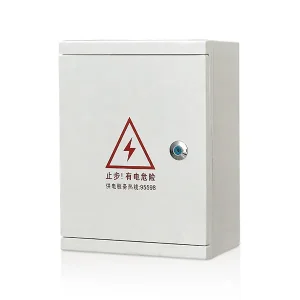
China Wall-Mounted Control Box TY-KZX Series - Durable, Compact Designs from China Suppliers & Factory Manufacturers, Factory
View Technical SpecsThe Architectural Evolution of JP Integrated Distribution Cabinets
Comprehensive engineering insight into modern low-voltage transformer terminal management, consolidating discrete outdoor apparatus into unified smart enclosure systems.
The contemporary power distribution network is witnessing an unprecedented transition driven by bi-directional power flows, rapid penetration of distributed photovoltaics (PV), high-density electric vehicle (EV) charging infrastructure, and urgent utility demands for reduced Line Loss (Non-Technical & Technical Losses). In this operational ecosystem, the JP Integrated Distribution Cabinet (Outdoor Transformer Terminal Integrated Cabinet) has evolved from an optional accessory to the critical, mission-critical nexus of the secondary low-voltage grid.
Historically, low-voltage distribution terminals adjacent to outdoor pole-mounted transformers (typically ranging from 50 kVA to 630 kVA) were deployed utilizing fragmented, decentralized electrical equipment. An installation conventionally required four completely segregated boxes: a feeder circuit breaker enclosure, an independent revenue billing metering cabinet, a detached reactive power compensation capacitor bank, and a separate surge arrester/monitoring module. This obsolete topology caused massive electrical line losses, increased footprint, complex on-site wiring hazards, high vulnerability to moisture and salt-fog degradation, and exorbitant operational and maintenance (O&M) overheads.
As a tier-one JP Integrated Distribution Cabinet manufacturer, Teyi Electric synthesizes these four distinct capabilities into an advanced, compact, and thermally optimized enclosure assembly. By integrating power distribution, revenue-grade electricity metering, automatic reactive power compensation, and multi-stage short-circuit / thermal overload protection, the modern JP cabinet provides utility engineers and EPC engineering leaders with an all-in-one factory-tested solution. Engineered to interface directly with distribution transformers (10kV/0.4kV or 33kV/0.4kV), our integrated JP cabinets guarantee seamless operation, high dielectric integrity, and robust cyber-physical telemetry capabilities directly compatible with SCADA and DMS (Distribution Management Systems).
Substation-Level Distribution
Featuring high-breaking-capacity molded case circuit breakers (MCCB) or air circuit breakers (ACB), equipped with intelligent micro-processing trip units (LSIG) to isolate downstream branch faults without interrupting main transformer feeders.
Anti-Tamper Revenue Metering
Isolated metering compartments with independent security seals, optical reading windows, high-accuracy current transformers (Class 0.2S / 0.5S), and RS-485 / LoRa / NB-IoT telemetry modules to eradicate non-technical revenue losses.
Dynamic Reactive Compensation
Thyristor-switched or compound-switch capacitor banks featuring anti-harmonic detuned reactors (7% or 14%) to eliminate zero-crossing inrush current, correct inductive displacement, and stabilize grid voltage at cos φ ≥ 0.98.
Global Sourcing Requirements & Material Selection Engineering
Evaluating enclosure materials, seismic resistance, and total cost of ownership (TCO) across varying international climatic and electrical topologies.
Procuring JP cabinets on a wholesale scale requires international EPC directors, electrical wholesalers, and grid authorities to analyze critical trade-offs between capital expenditure (CAPEX), operational durability, and harsh environmental resilience. The decision between SMC (Sheet Molding Compound) Fiberglass and Metallic Enclosures (AISI 304 / 316 Stainless Steel or Hot-Dip Galvanized Al-Zn Coated Steel) serves as the primary engineering crossroad.
| Evaluation Parameter | SMC Fiberglass Composite (GRP) | AISI 304 / 316 Stainless Steel | Standard Powder-Coated Mild Steel |
|---|---|---|---|
| Dielectric Safety & Grounding | Total Inherent Insulation (Class II); No Touch-Voltage Hazards | Conductive; Demands Rigorous Grounding Grid Verification | Conductive; Prone to Hazardous Ground Faults on Scratch |
| Atmospheric Corrosion (C4/C5 Coastal) | Completely Immune to Rust, Acid Rain, Saline Mist | Excellent Pitting Resistance (especially AISI 316); Zero Oxidation | High Corrosion Vulnerability; Rapid Coating Delamination |
| Mechanical Shock Impact (IK Code) | IK08 – IK10 (Elastic recovery under typical utility impacts) | IK10+ (Highest ductility and ballistic tamper resistance) | IK07 – IK08 (Permanent structural plastic deformation) |
| Thermal Insulation Coefficient (λ) | Very Low (Reduces Internal Solar Heating Accumulation) | Moderate Thermal Conduction (Requires Active Air Louvers) | High Thermal Conduction (Rapid Condensation Cycles) |
| Expected Service Life (Outdoor) | 30 to 40+ Years (Zero Surface Repainting Required) | 35+ Years (Requires Minimal Surface Maintenance) | 8 to 12 Years (High Maintenance & Repainting Need) |
| Wholesale Total Cost of Ownership | Lowest Lifecycle Cost; Optimal ROI for Remote Grids | High Initial CAPEX; Justified for Hazardous/Industrial Sites | Low Initial CAPEX; Unacceptably High Long-Term OPEX |
Overcoming Microclimate Thermal Runaway & Moisture Hazards
One of the most persistent failure mechanisms identified in low-voltage pole-mounted enclosures is internal thermal condensation. During high-solar radiation daylight periods, internal temperatures within sealed cabinets containing reactive capacitors and circuit breakers can easily exceed +65°C. At twilight, rapid ambient cooling creates condensation micro-droplets on terminal blocks and busbars, leading to catastrophic phase-to-phase flashovers.
Teyi Electric’s advanced JP cabinets counter this phenomenon through patented labyrinth ventilation slots coupled with IP55 micro-porous PTFE membranes. These vents equalize barometric pressure differentials while preventing water entry. For extreme climates, we incorporate automated solid-state dehumidifiers and thermal convective chimneys, ensuring the internal electronics remain strictly below the critical 80% relative humidity threshold even during tropical monsoon conditions.
Macro Industry Solutions & Deployment Topologies
Tailored low-voltage distribution and compensation engineering architectures addressing the specific operational demands of global power sectors.
Renewable Distributed Generation & Solar PV
Commercial and residential rooftop solar arrays inject intermittent power into low-voltage grids, causing severe phase unbalance, overvoltage spikes, and reverse power flow. Our solar-dedicated JP cabinets feature bidirectional electronic energy metering, integrated anti-islanding voltage protection relays, and dynamic SVG (Static Var Generator) modules to actively counteract inverter harmonic injection.
Rural Electrification & Substation Modernization
Rural feeders are characterized by extreme line lengths, low terminal voltages, and high seasonal variations from agricultural irrigation pump loads. Our pole-mounted JP cabinets provide automatic multi-stage step-up reactive compensation, boosting voltage margins at distant line ends while maintaining rugged resistance against lightning surges via integrated zinc oxide (ZnO) surge arresters.
Heavy Industrial & Petrochemical Complexes
Subject to airborne sulfur, chlorine, abrasive particulates, and heavy inductive motor loads, petrochemical plants require exceptional reliability. We supply custom AISI 316L stainless steel JP cabinets with tin-plated, flame-retardant heat-shrink-sleeved copper busbars (rated for 125°C thermal withstand) and explosion-venting top pressure-relief flaps for internal arc safety.
International Regulatory Standards & Type Testing Regimes
Every wholesale JP cabinet fabricated by Teyi Electric undergoes rigorous stage-gate qualification testing to ensure total compliance with international power utility specifications.
IEC 61439-1 / IEC 61439-2 Compliance
Our low-voltage switchgear assemblies are fully type-tested under the rigorous IEC 61439 architecture. We rigorously evaluate temperature-rise limits across busbars, dielectric properties under 2.5 kV impulse withstand voltages, short-circuit withstand strength up to 50 kA / 1s, and the continuous efficacy of internal protective bonding circuits.
Environmental Ingress & Flammability Testing
Enclosures undergo full environmental chamber stress profiling. SMC materials are verified to UL 94 V-0 flame retardancy and glow-wire test compliance (IEC 60695-2-11 at 960°C). Enclosure water and dust tightness are rigorously validated according to IEC 60529 (IP54 / IP55 verification), while external mechanical impact resilience is confirmed via IEC 62262 pendulum impact testing (IK10).
Factory Acceptance Testing (FAT) Protocols
Prior to international dispatch, 100% of manufactured JP cabinets undergo closed-loop FAT protocols. This encompasses automated insulation resistance testing (> 1000 MΩ at 1000 V DC), wiring continuity verification, micro-ohm busbar joint contact resistance analysis, and electronic calibration of the smart reactive power controller across multi-stage capacitive load banks.
Next-Generation Smart Grid Technology Roadmap (2025–2035)
Strategic product engineering trajectory guiding our research, development, and advanced manufacturing initiatives.
Edge-AI Telemetry & Condition Monitoring
Integration of embedded Edge Computing Units (ECUs) supporting high-frequency busbar temperature fiber-optic sensors, wireless vibration analysis for contactor switching, and autonomous power quality harmonic diagnosis.
Hybrid Solid-State Circuit Protection
Transitioning secondary distribution feeders from electromechanical breakers to hybrid solid-state circuit interrupters (SSCB), enabling sub-millisecond arc-free fault clearance and eliminating contact pitting.
Active Filtering & Bi-directional Power Routing
Replacing conventional capacitor banks with modular Silicon Carbide (SiC) based Active Power Filters (APF) and micro-inverter tie-ins, transforming JP cabinets into intelligent nodes for microgrid peer-to-peer energy dispatch.
Circular Carbon-Neutral Polymer Chemistry
Pioneering fully recyclable bio-resin based SMC thermoset polymers with zero halogenated flame retardants, maintaining UL 94 V-0 ratings while reducing Scope 3 manufacturing carbon intensity by 65%.
Specialized Metering & Distribution Cabinet Configurations
Wall-mounted, pole-hanging, and transformer-coupled outdoor enclosures engineered to withstand severe climates, vandalism, and rigorous utility operating cycles.
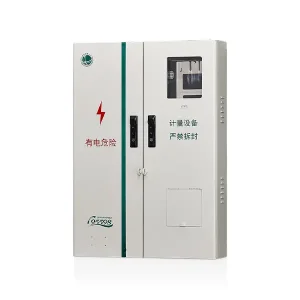
China China Stainless Steel Three-Phase Electric Energy Metering Box Suppliers - Hanging Type Factory Solutions Manufacturer, Supplier
View Technical Specs
China China Suppliers Factory TY-SXS2-DXJ Low Voltage Three-Phase Two-Position Electric Energy Metering Box Supplier, Factory
View Technical Specs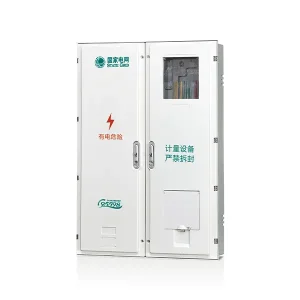
China Three-Phase Electric Energy Metering Box (Transformer Type) - China Suppliers & Factory from Teyi Electric Co., Ltd. Manufacturer, Factories
View Technical Specs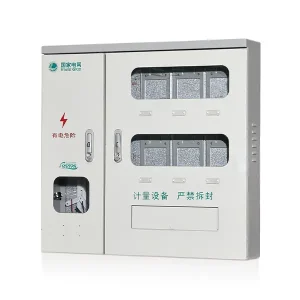
Wholesale Stainless steel single phase electric energy metering box Manufacturers, Factories
View Technical Specs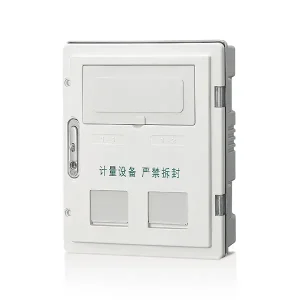
Wholesale Single-Phase Electric Energy Metering Box (Transformer Type) - China Suppliers & Factory for Home and Commercial Use Manufacturer, Factories
View Technical Specs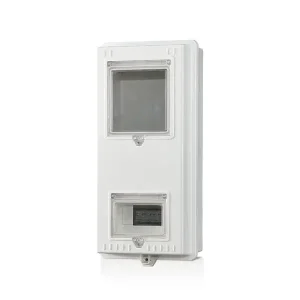
Wholesale China Suppliers Factory SMC Fiberglass Foreign Trade Box for Single-Phase and Three-Phase Electrical Applications Supplier, Suppliers
View Technical Specs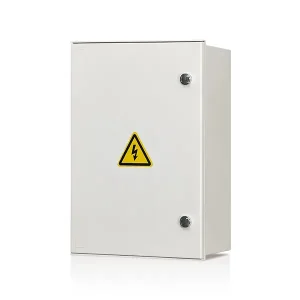
Wholesale TY-SXD1-FSH1 Waterproof Box: Durable IP44 Protection from China Suppliers and Factory for Power Metering Equipment Suppliers, Factory
View Technical Specs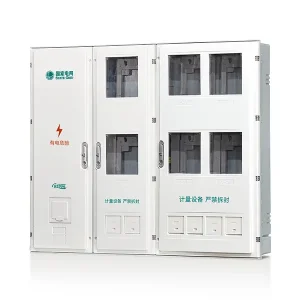
Wholesale China Suppliers Factory - TY Three-Phase Electric Energy Metering Boxes for Efficient Power Management Factories, Factory
View Technical SpecsWholesale Procurement & Engineering FAQ
Direct answers to the most critical technical, operational, and supply-chain inquiries submitted by global power authorities and utility EPC contractors.