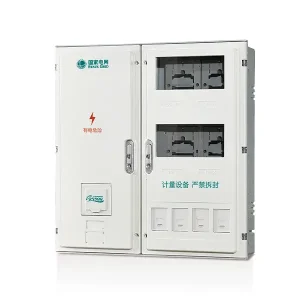
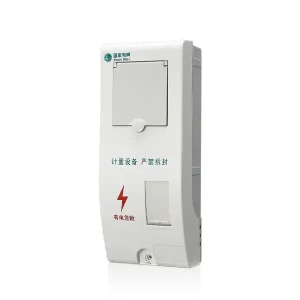
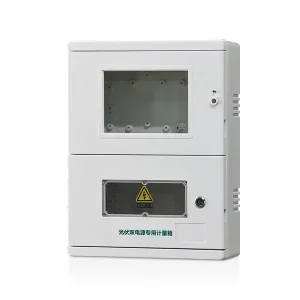
Flagship 3-Phase & Low-Voltage Meter Enclosures
Precision-molded SMC composite cabinets, transformer-rated meter centers, and outdoor cable distribution solutions tested to rigorous dielectric and mechanical benchmarks.
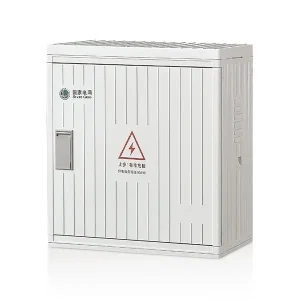
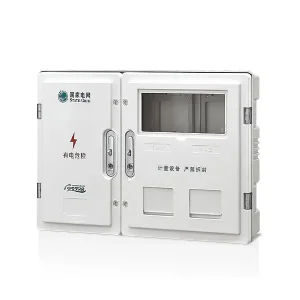
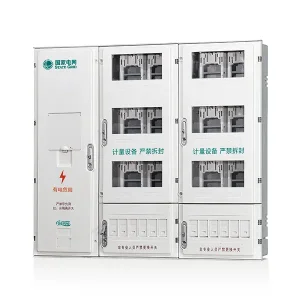
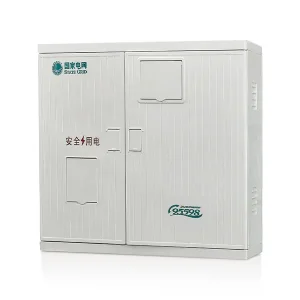
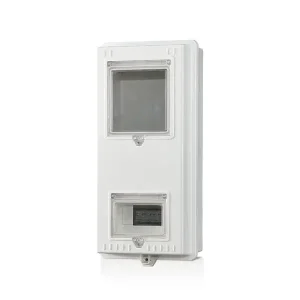
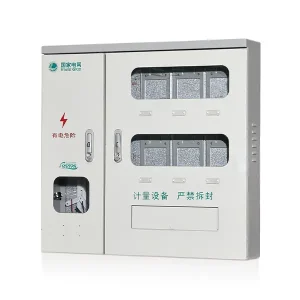
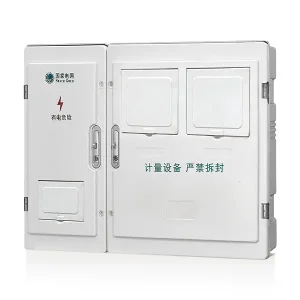
Engineering Architecture of Modern 3-Phase Meter Enclosures
Balancing mechanical impact resilience, high dielectric strength, thermal dissipation under 250A continuous load, and tamper-resistant sealing for revenue security.
In modern electrical distribution networks, the three-phase electric meter box is not merely a passive protective housing; it serves as the critical demarcation boundary between grid infrastructure and user consumption. Driven by rapid electrification, the expansion of high-amperage commercial facilities, and the proliferation of distributed energy resources (DERs) such as rooftop solar photovoltaic systems, three-phase systems now manage severe thermal and mechanical stresses that demand high structural integrity.
A wholesale 3-phase electric meter box must withstand environmental exposure while safeguarding complex instrumentation. Standard single-phase residential units typically manage currents under 60A at 230V AC; in contrast, a three-phase metering enclosure regularly handles rated operational voltages up to 690V AC and busbar ratings from 10A up to 250A, often reaching 630A in direct or current transformer (CT) operated configurations. This operational scale exposes the assembly to short-circuit electromechanical forces, necessitating certified short-time withstand current ratings of up to 30kA for 1 second under IEC 61439-1/2 guidelines.
Furthermore, revenue protection has become a dominant design criterion for global electrical utilities. Non-technical losses (electricity theft) cost utilities tens of billions of dollars annually. Consequently, current engineering standards demand complete separation between the utility-controlled metering compartment and the customer-accessible circuit breaker or switch compartment. Enclosures must incorporate multi-point tamper-evident locking systems, padlockable latches, infrared-permeable polycarbonate viewing windows with UV-stabilized anti-fogging agents, and concealed hinge systems to counter unauthorized entry.
Thermosetting SMC Composition
Compression-molded Sheet Moulding Compound (unsaturated polyester resin reinforced with 25-30% chopped glass fibers) provides exceptional strength-to-weight ratios, dimensional stability from -40°C to +140°C, and complete galvanic isolation that prevents touch-potential electrical shock hazards.
CT & Direct-Connect Flexibility
Engineered internal mounting chassis support both direct whole-current meters (up to 100A) and transformer-rated installations (CT-operated 3-phase systems) with dedicated space for test terminal blocks (TTB), secondary wiring ducts, and current transformer support plates without signal cross-talk.
Advanced AMI & Smart Grid Ready
Non-metallic composite walls permit unattenuated radio frequency (RF) signal propagation for Cellular (NB-IoT/4G), LoRa, and Zigbee smart metering modems, eliminating the signal shielding commonly experienced with traditional steel metering cabinets.
The Yueqing Manufacturing Advantage
How location within China's Electrical Capital enables scalable OEM/ODM throughput, precision mold engineering, and competitive life-cycle economics.
Selecting a qualified China 3 phase electric meter box factory provides strategic supply chain advantages that extend beyond basic unit cost. Zhejiang Teyi Electric Co., Ltd. operates in the Yueqing Economic Development Zone in Wenzhou—widely recognized across the international power sector as the "Electrical Capital of China." This geographical concentration creates an industrial ecosystem where raw polymers, fiber reinforcements, compression molds, brass terminal inserts, and certified circuit breakers can be sourced, validated, and integrated within an extremely tight logistical perimeter.
High-performance composite meter box production relies heavily on high-tonnage hydraulic molding equipment. Teyi Electric's facility operates high-tonnage compression presses (from 500 metric tons up to 3,000 metric tons) working under heated steel mold tooling at pressures exceeding 10 MPa and temperatures of 145°C to 155°C. This intensive thermomechanical cycle ensures complete resin polymer cross-linking, eliminating micro-voids, ensuring uniform wall thickness across ribs and bosses, and creating smooth, non-porous outer surfaces that resist dirt accumulation, chemical pollutants, and industrial acid rain.
In-House Tooling & Mold CAD
Turnkey CAD/CAM tooling capabilities allow our design engineers to transition from tender drawings to production-grade P20/718 steel compression molds within 25–35 days, accelerating bespoke configuration cycles for overseas utilities.
Direct Factory Economies
By bypassing multi-tiered trading agents, international EPC contractors and wholesale distributors save 20% to 35% on procurement overhead while gaining direct communication channels to internal product development teams.
Full-Spectrum Quality Control
Every production run undergoes strict quality checkpoints: tensile testing, Barcol hardness verification, UL94 flame tests, dielectric breakdown assays (up to 25 kV/mm), and 1,000-hour neutral salt spray (NSS) environmental trials.
Macro Industry Solutions & Tender Requirements
Structured compliance mapping across residential estates, solar power networks, commercial facilities, and utility grid upgrades.
Global utility procurement standards differ significantly based on geographic environment, regulatory frameworks, and grid typologies. When evaluating a wholesale 3 phase electric meter box supplier, procurement committees analyze specific electrical, mechanical, and safety criteria to mitigate long-term operational failure risks:
- International Standards Alignment: Enclosures must comply with IEC 61439-1 (General rules for low-voltage switchgear assemblies), IEC 61439-5 (Assemblies for power distribution in public networks), IEC 60529 (Degrees of protection provided by enclosures - IP code), and IEC 62262 (Degrees of protection against external mechanical impacts - IK code).
- Thermal Dynamics & Ventilation: Three-phase smart meters, circuit breakers, and current transformers generate notable internal resistive heat during continuous peak operation. Enclosure designs must incorporate labyrinthine ventilation louvers that dissipate internal air temperatures while strictly preventing ingress of driving rain, dust, and insects.
- Solar PV Bidirectional Integration: For distributed generation tie-ins, the metering box must accommodate dual meters (generation vs. feed-in consumption), bidirectional smart meters, Type 1+2 surge protective devices (SPD), and lockable DC/AC isolating switches in segregated compartments.
- Harsh Environment Resilience: Equipment slated for Middle Eastern deserts, Southeast Asian coastal regions, or high-humidity tropical zones requires UV-stabilized composite materials (ASTM G154 cycle testing) that resist photo-oxidation, surface chalking, and environmental stress cracking.
| Performance Parameters | SMC Fiberglass Composite (Teyi Spec) | 304/316 Stainless Steel Enclosure | Standard Polycarbonate / ABS Plastic |
|---|---|---|---|
| Galvanic Insulation | Inherently non-conductive (Class II insulation) | Conductive (Requires mandatory grounding paths) | Insulating (Lower dielectric breakdown margin) |
| Corrosion Resistance | Immune to rust, chemical fumes & salt fog | Excellent, but welds can suffer pitting corrosion | Moderate; degrades under continuous moisture & acids |
| Mechanical Rigidity (IK Code) | IK10 (Resists 20-Joule impact energy) | IK10+ (Highest impact strength, heavy) | IK07 - IK08 (Vulnerable to brittle cold fracture) |
| Thermal Deflection (HDT) | > 200 °C under load (Does not soften) | > 500 °C (Non-combustible metal) | 85 °C - 105 °C (Risk of warping under solar load) |
| AMI RF Transparency | 100% Transparent to RF, 4G, NB-IoT, LoRa | Faraday Cage shielding; requires external antennae | RF Transparent |
| Outdoor Service Life | 30 to 40+ Years | 25 to 35 Years | 8 to 12 Years (UV embrittlement risk) |
Localized Application Scenarios
Versatile installation topologies engineered for diverse infrastructure, industrial environments, and public utilities.
Multi-Family Residential Towers
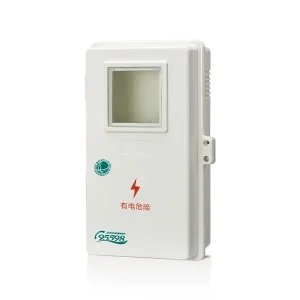
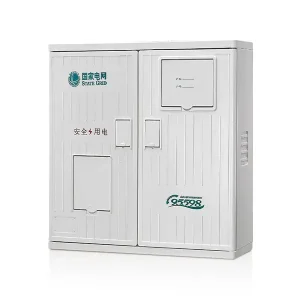
Configured with modular multi-position groupings (such as the TY-SXD2 series), consolidating up to 12 or 24 metering positions into unified shafts, reducing riser cable clutter, providing internal busbar channels, and isolating client breakers.
Industrial Parks & Heavy Machining
Demands transformer-operated cabinets (TY-SXS3 type) supporting external secondary CT ratios (e.g., 200/5A or 400/5A) coupled with integrated shorting blocks, enabling safe tariff checks and equipment replacement without cutting factory power lines.
Solar Commercial Grid-Ties
Utilizes IP65 SMC enclosures (TY-SXD2-GF1 series) housing bidirectional meters, lightning arresters, and motorized MCCBs to support automated feed-in tariff synchronization and anti-islanding isolation.
Frequently Asked Questions for B2B Procurement
Key answers regarding materials, customization, regulatory testing, and logistical timelines for international buyers.
What is the primary technical difference between direct-connected and CT-operated 3-phase meter boxes?
Direct-connected boxes house whole-current meters that handle total circuit currents (typically up to 100A) passing straight through the meter's internal current coils. CT-operated boxes (such as our TY-SXS3 series) are specified for heavy loads from 100A to 630A+, utilizing secondary current transformers to step down current to standard 5A or 1A signals. These boxes feature specialized physical partitions, reinforced busbars, and dedicated mounting plates for Test Terminal Blocks (TTB) to permit meter recalibration without disrupting power delivery.
Why is SMC composite preferred over stainless steel for high-volume utility tenders?
While stainless steel provides exceptional tensile strength, SMC composite provides Class II electrical insulation that eliminates shock hazards caused by loose internal live conductors contacting the enclosure. SMC cannot rust, requires zero field painting or cathodic maintenance, is lighter to transport and pole-mount, and avoids RF signal attenuation, allowing smart AMI transmitters to communicate reliably without needing external antennas.
Can internal components and dimensions be customized according to tender drawings?
Yes. Through our comprehensive OEM/ODM engineering services, we adapt internal DIN-rail elevations, copper busbar cross-sections, cable gland knockouts, viewing window dimensions, utility lock cylinder profiles, and internal partition plates. If standard molds do not match your utility tender specification, our in-house tooling workshop can build custom compression tooling within 30 to 45 days.
How does Teyi Electric verify flammability and flame-retardant safety ratings?
Our SMC formulations incorporate non-halogenated flame retardants like aluminum trihydrate (ATH). We test in accordance with IEC 60695-2-11 (Glow Wire Flammability Index - GWFI up to 960°C) and UL94 vertical burning tests (achieving V-0 classification). Even when exposed to electrical arcs or extreme short-circuit thermal surges, the enclosure self-extinguishes within 10 seconds without producing burning polymer droplets.
What is the standard production lead time and export packaging standard?
Standard production runs for repeat orders ship within 15–25 business days. Bespoke configurations requiring new mold qualification generally take 45–60 days for initial batch verification. Export shipments are wrapped in heavy-gauge polyethylene anti-static moisture-barrier film, fitted with protective corner caps, and securely crated on heat-treated ISPM-15 compliant timber pallets to prevent maritime container transit damage.
How does the enclosure maintain its IP65 ingress rating under severe weather?
We use continuous, robotically dispensed foamed polyurethane (PUR) or EPDM seal gaskets seated inside precision-molded tongue-and-groove enclosure channels. Combined with downward-slanted ventilation louvers, concealed internal drainage paths, and waterproof lock escutcheons, this design blocks driven rain and dust while allowing internal condensation to vent safely.
Specialized Metering & Intelligent Fusion Units
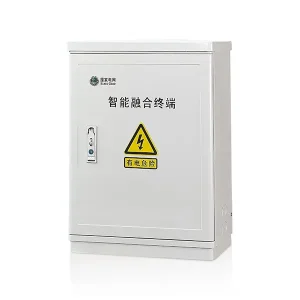
Intelligent TTU fusion terminal boxes, high/low voltage transition assemblies, and specialized PV grid-tied composite enclosures.