
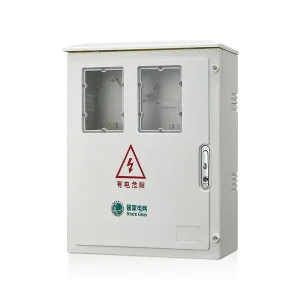
Factory Inventory Dispatch
Featured 100A & Multi-Tenant Metering Enclosures
Standardized, type-tested single-phase and three-phase modular service termination boxes engineered for high-density residential grids and commercial power entrance arrays.
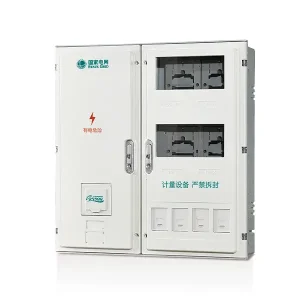
China China TY-SXD2-B Single-Phase Electric Energy Metering Box from Reliable Suppliers and Factory Manufacturers, Factories
View Product Specs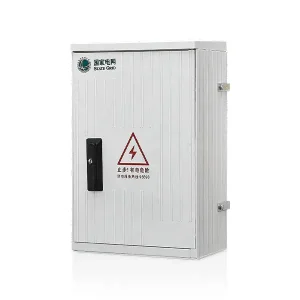
China High-Quality TY-DFW Wall-Mounted Cable Branch Box from China Suppliers | Durable Factory Solution for Outdoor Use Suppliers, Factories
View Product Specs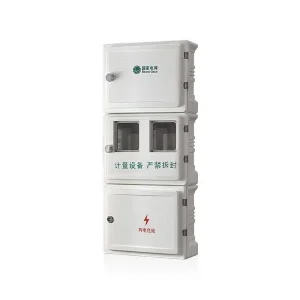
China China TY-SXD2 Single-Phase Electric Energy Metering Box 250A-10A - Reliable Suppliers & Factory Solutions Manufacturer, Suppliers
View Product Specs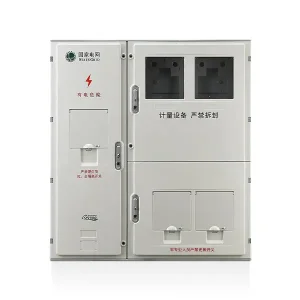
Wholesale China TY Three-Phase Electric Energy Metering Box (Transformer Type) - Reliable Suppliers & Factory Options Manufacturer, Factory
View Product Specs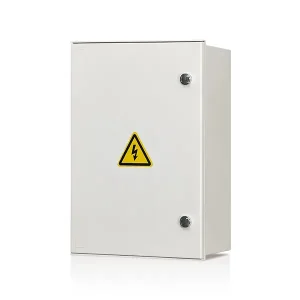
China China Suppliers TY-SXD1-FSH1 Waterproof Box - Durable IP44 Protection for Meters from Trusted Factory Manufacturer, Factory
View Product Specs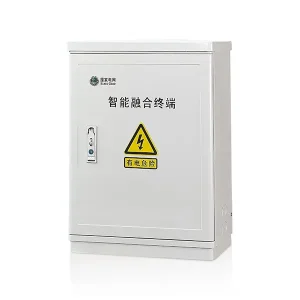
China TY-TTU Intelligent Fusion Terminal Box - Reliable Power Solutions from China Suppliers and Factory Manufacturers, Suppliers
View Product Specs
Wholesale China Factory Suppliers TY-SXD2 Single-Phase Electric Energy Metering Box with 10A-250A Busbar and 30KA Short-Term Current Capacity Manufacturer, Supplier
View Product Specs
Chapter 01: Engineering Trajectory
Evolution of the 100 Amp Meter Box in Modern Power Grids
How the global transition toward Advanced Metering Infrastructure (AMI), renewable microgeneration, and heavy residential electrification has reshaped enclosure engineering standards.
Thermal Dynamics at Continuous 100A
As modern households incorporate Level 2 EVSE (Electric Vehicle Supply Equipment) charging stations (32A to 48A continuous) alongside variable-refrigerant HVAC systems, legacy meter enclosures face severe thermal rise challenges. A standard 100 Amp meter box must operate under sustained high-load conditions without exceeding the maximum allowable terminal temperature rise defined under IEC 61439-1 (ΔT ≤ 70K).
Modern SMC (Sheet Molding Compound) enclosures incorporate engineered convection channels and conductive busbar geometry that prevent localized hot-spotting, eliminating dielectric breakdown across terminal connection blocks.
Anti-Tamper & Revenue Protection
Electricity theft and non-technical loss (NTL) represent an annual $96 billion liability for global utilities. Contemporary 100 Amp meter boxes are manufactured with multi-tiered security architectures, combining mechanical physical barriers with digital telemetry options.
- Concealed structural hinges resistant to crowbar prying
- Tamper-evident lead/polycarbonate seal integration
- Optical infrared & magnetic intrusion switch readiness
Smart Grid & RF Transparency
The transition to AMI (Advanced Metering Infrastructure) necessitates wireless telemetry over Cellular LTE-M, NB-IoT, Zigbee, or 915 MHz RF Mesh topologies. Conventional metal sheet cabinets attenuate RF signal strength by 18 to 28 dB, causing chronic communication dropouts between meter nodes and data concentrator units (DCUs).
SMC fiberglass thermoset composites exhibit complete electromagnetic transparency with near-zero signal loss, eliminating the necessity for costly external antennas and fragile coaxial penetrations.
40+
Years Indoor Design Life
30 kA
Short-Circuit Withstand
IK10
Impact Resistance Rating
V-0
UL94 Flame Retardancy
Chapter 02: Strategic Sourcing
Global Enterprise Procurement Requirements
Navigating international tender criteria, Total Cost of Ownership (TCO), and engineering compliance across utility operators, EPC contractors, and master distributors.
Utility Tender Protocols & Direct Compliance
Public utilities and national grid concessionaires operate under strict multi-year framework contracts. Procurement mandates often specify 100% compliance with IEC 62208 (empty enclosures for low-voltage switchgear and controlgear assemblies) and IEC 60529 (IP protection codes). Tenders reject suppliers failing to provide factory-stamped routine test reports covering:
- Dielectric Insulation Proof: Minimum 50 Hz AC test voltage of 2.5 kV for 60 seconds without arcing.
- Glow-Wire Flammability Index (GWFI): 960°C compliance per IEC 60695-2-12 for terminal-adjacent parts.
- UV Radiation Aging: 1000-hour Xenon Arc exposure verification under ISO 4892-2 without surface micro-cracking or loss of tensile strength.
EPC Contractor & Master Distributor Realities
For Engineering, Procurement, and Construction (EPC) consortiums managing massive urban electrification or solar photovoltaic grid-tie projects, installation ergonomics determine field profitability. Critical evaluation metrics include:
- Modularity & Knockout Precision: Multi-diameter conduit knockouts (PG/Metric/NPT) reducing on-site punching hours by 40%.
- Multi-Tenant Scalability: Stackable busbar topologies (such as our TY-SXD2 series) enabling vertical expansion from 1-phase 2-position up to 12-position assemblies without re-engineering service trunks.
- Packaging & Pallet Optimization: High cube-utilization nested packaging configurations minimizing shipping container landed costs across trans-oceanic routes.
Chapter 03: Manufacturing Mastery
China Industry 4.0: Supply Chain Resilience in Yueqing
How geographical industrial clustering, high-tonnage precision compression molding, and automated quality loops deliver decisive manufacturing advantages.
Yueqing Micro-Cluster Synergy
Located in Yueqing Economic Development Zone—globally acknowledged as China's Electrical Capital—Zhejiang Teyi Electric operates at the core of an ultra-dense supply matrix. Breakers, brass disconnect terminals, metering CT transformers, DIN rails, and flame-retardant compounding chemistry are sourced within a 5-kilometer logistics radius.
This geographic density compresses component procurement lead times from weeks down to single hours, shielding global clients from international supply chain bottlenecks and raw material volatility.
1,200T-2,500T Hydraulic Compression
Enclosure mechanical integrity begins with tonnage. Our factory utilizes multi-station 1,200 to 2,500 metric ton heavy hydraulic compression molding presses. Controlled temperature zones (145°C ± 2°C) and micro-metered pressure cycles cure unsaturated polyester resin reinforced with 25-30% high-purity alkali-free E-glass fibers.
The resulting thermoset matrices feature uniform wall thickness (3.5mm to 5.0mm), zero structural porosity, and superior dimensional stability under extreme mechanical shear forces.
Automated FIPFG Gasketing
Field ingress failure occurs almost exclusively at the door sealing perimeter. Rather than manual sponge adhesive strips, our assembly lines employ robotic Formed-in-Place-Foam-Gasket (FIPFG) dispensing systems.
Continuous polyether polyurethane elastomer gaskets are robotically applied directly into the molded sealing groove, achieving seamless 360-degree bonding, elastic memory retention over 20 years, and verified IP54 to IP65 environmental protection.
Chapter 04: Material Engineering
Comparative Matrix: SMC Fiberglass vs. Metal vs. Polycarbonate
An empirical engineering breakdown demonstrating why SMC unsaturated polyester composites outperform metals and thermoplastic polymers in severe electrical distribution environments.
| Performance Parameter | Teyi SMC Fiberglass (GRP) | 304 / 316 Stainless Steel | Powder-Coated Cold-Rolled Steel | Standard Polycarbonate (PC/ABS) |
|---|---|---|---|---|
| Dielectric Strength (Electric Breakdown) | ≥ 12 kV/mm (Inherently Insulating) | 0 kV/mm (Conductive; Requires Earthing) | 0 kV/mm (Requires Strict Earth Bonding) | ≥ 18 kV/mm (Insulating) |
| C5-M Marine Atmospheric Corrosion Resistance | Impervious (Zero Rust / Zero Oxidation) | High (Risk of pitting in high chloride) | Poor (Blisters & rusts within 24-36 mos) | High (Susceptible to chemical solvent haze) |
| Impact Resistance Class (EN 62262) | IK10 (20 Joules Impact Energy) | IK10+ (Subject to permanent denting) | IK09 (Dents; micro-fractures paint coat) | IK08 (Risk of brittle shatter below 0°C) |
| Flame Retardancy & Heat Deflection | UL94 V-0 / GWFI 960°C / HDT > 200°C | Non-combustible (Transfers high heat) | Non-combustible (Transfers high heat) | UL94 V-2 to V-0 (Softens at 120°C-135°C) |
| Comparative Weight & Installation Ease | Lightweight (1/3 of steel; 1-person mount) | Heavy (Requires dual technicians & cranes) | Heavy (Requires substantial wall anchors) | Ultra-lightweight |
| Projected Lifecycle Expectancy | 30+ Years Outdoor / 40+ Years Indoor | 25+ Years (Depends on alloy maintenance) | 8-12 Years (Subtropical / Marine sites) | 10-15 Years (Degraded by solar UV) |
Chapter 05: Field Deployments
Localized Application Scenarios & Environmental Challenges
Tailoring 100 Amp meter boxes to withstand localized climatic stresses and specific industrial use cases across four global operational theaters.
Coastal & Offshore Island Grids
Coastal distribution networks in Southeast Asia, the Caribbean, and coastal Europe suffer from salt-fog airborne salinity exceeding ISO 9227 C5-M levels. Galvanized steel boxes corrode catastrophically, freezing padlock latches and shorting phase-to-ground connections.
Our SMC enclosures utilize 316-grade stainless hardware, fluorosilicone seals, and halogen-free composite bodies that exhibit zero galvanic corrosion over decades of direct maritime surf exposure.
Desert & High-UV Solar Installations
In the Middle East, North Africa (MENA), and Australian Outback, solar irradiation peaks above UV Index 12, accompanied by day-to-night thermal swings from -5°C to +52°C. Conventional plastics quickly oxidize, turn chalky, and develop micro-fissures.
Teyi SMC formulations integrate active hindered amine light stabilizers (HALS) and nano-titanium UV-absorbing masterbatches, maintaining mechanical tensile retention (>85%) and surface hydrophobicity throughout full operating lifespans.
High-Density Multi-Family Towers
Urban multi-family residential towers in high-density regions require grouped meter distribution risers inside cramped utility corridors. Cable management complexity and heat accumulation present substantial building fire safety hazards.
Our modular multi-position TY-SXD2 series allows up to 12 single-phase 100A meters inside an integrated, segregated enclosure array. Isolated switchgear, busbar, and revenue-meter compartments limit fault propagation while concealed wire ducts guarantee neat, safe installations.
Heavy Industrial & Transit Junctions
Rail transit stations, petrochemical secondary plants, and mining sites present persistent mechanical vibrations, airborne particulate contamination, and transient short-circuit hazards up to 30 kA.
Teyi's high-withstand transformer-type meter boxes (such as the TY-SXS3 series) integrate heavy copper busbars rated for continuous currents up to 250A with reinforced mechanical clamping that resists severe dynamic electrodynamic stresses during grid faults.
Chapter 06: Engineering FAQ
Frequently Asked Technical & Procurement Questions
Direct, data-backed answers addressing the complex specifications of electrical engineers, utility buyers, and OEM project leads.
What are the thermal derating factors for a 100 Amp meter box under elevated ambient temperatures?
Our 100 Amp meter boxes are engineered based on a nominal reference ambient temperature of +35°C per IEC 61439-1 standards. Under extreme ambient conditions, such as outdoor direct desert sun installations reaching ambient air temperatures of +50°C, an internal enclosure temperature rise of 15°C to 20°C must be compensated for.
When continuous loads (exceeding 3 hours continuously, such as commercial EV charging) approach 80A or above at ambient temperatures above 45°C, we advise engineering procurement teams to specify our enclosures with internal forced convection chimneys or up-size the internal main terminal busbars to our 160A or 250A cross-sectional copper profiles. This keeps the internal terminal temperatures well below the 105°C threshold of UL-recognized meter base insulation blocks.
Why choose SMC compression molding over injection-molded Polycarbonate (PC) for utility tenders?
While thermoplastic injection molding (PC or ABS) offers low initial tooling costs for lightweight components, it has severe limitations in utility infrastructure. Polycarbonate is a thermoplastic material with polymer chains that remain vulnerable to environmental stress cracking (ESC) when exposed to cleaning chemicals, oils, or airborne industrial solvents.
Conversely, SMC is a thermosetting cross-linked composite polymer. Once chemically cured under 1,500 metric tons of hydraulic force at 145°C, its molecular bonds are permanently fixed. It cannot melt, sag, or reshape under heat. SMC provides superior mechanical strength (tensile strength ≥ 80 MPa, flexural strength ≥ 160 MPa), higher dielectric breakdown endurance, and absolute resistance to long-term UV photo-oxidation.
How does the 30 kA short-time withstand current rating protect downstream installations?
A rating of 30 kA (Icw for 1 second) indicates that during a major bolted dead short circuit on the secondary service side, the internal busbar supports and structural composite frame of our meter box can withstand the enormous dynamic electromagnetic forces and instantaneous thermal heat without mechanical shattering, busbar displacement, or explosive cabinet rupture.
This allows downstream circuit breakers or upstream pole-mounted fuses to clear the electrical fault safely within their designated tripping curve, preventing arc-flash incidents and safeguarding personnel and structural property.
What custom OEM/ODM modifications can Teyi Electric implement for national utility tenders?
Our in-house mold tooling center and CAD/CAM electrical engineering group specialize in bespoke tender adaptations. Customization capabilities include:
- Window Configuration: High-clarity, UV-stabilized polycarbonate meter observation windows with internal optical prisms or RFID reading cutouts.
- Locking Mechanisms: Triangle key latches, padlocking hasps, dual-key master utility systems, or electronically monitored smart locks.
- Pre-Wired Busbar Topologies: Integrated copper tin-plated busbars, pre-wired auxiliary CT wiring looms, and terminal blocks rated from 10A up to 250A.
- Custom Branding & Markings: Laser engraving, in-mold debossing/embossing of utility logos, property warning symbols, and permanent QR-coded asset tracking matrices.
What are the lead times, minimum order quantities (MOQ), and export packaging protocols?
For standard catalog configurations, our baseline MOQ is 100 units. For fully customized OEM projects requiring dedicated mold design and prototype validation, pilot orders typically start at 500 units. Standard production lead times run from 15 to 25 business days depending on order volume.
Export packaging features heavy-duty 5-ply corrugated carton boxes, internal expanded polyethylene (EPE) corner protectors, and vacuum-sealed desiccant pouches. Pallets are constructed from heat-treated ISPM-15 compliant wood or heavy-load recyclable polymer, wrapped in UV-resistant stretch film with edge-reinforcement bands to guarantee damage-free delivery through sea and rail transit.
Secondary Distribution & Advanced Protection
Industrial Branch Boxes & Junction Enclosures
Expanding your power metering architecture with wall-mounted junction hubs, cable branch boxes, and flame-retardant terminal enclosures.
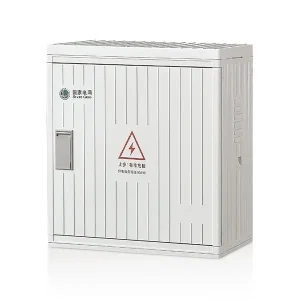
Wholesale TY-DFW-7A Branch Box - High-Performance Electrical Solution from China Suppliers & Factory Supplier, Suppliers
View Product Specs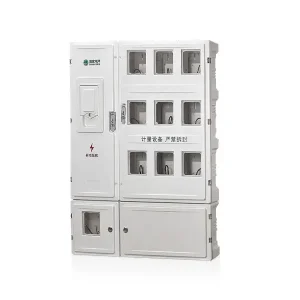
Wholesale China Suppliers Factory TY-SXD2 Single-Phase Electric Energy Metering Box with Excellent Insulation Performance Factories, Factory
View Product Specs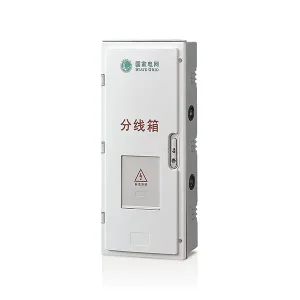
Wholesale TY-FXX Junction Box Series - Flame Retardant Solutions from China Factory & Reliable Suppliers Suppliers, Factory
View Product Specs
China TY-FXX Junction Box from China Suppliers - Flame Retardant Electrical Solutions by Teyi Electric Factory Manufacturers, Factory
View Product Specs
Wholesale TY-TTU Intelligent Fusion Terminal Box Manufacturer, Manufacturers
View Product Specs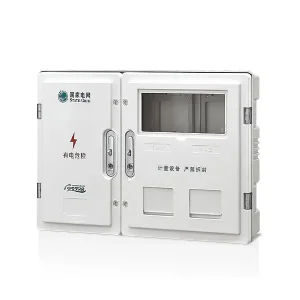
Wholesale Single-Phase Electric Energy Metering Box TY-SXD2 Series - Quality from China Suppliers and Factory Manufacturer, Supplier
View Product Specs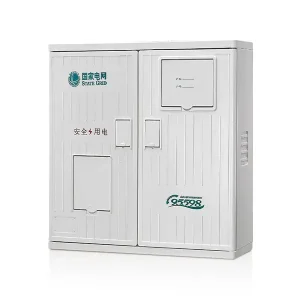
China China TY-SXS1 A-Type Meter Box Suppliers - Low & High Voltage Factory Options for Enhanced Safety Suppliers, Factory
View Product Specs
Wholesale Single-Phase Electric Energy Metering Box TY-SXD2 Series from China Suppliers and Factory - Reliable Power Measurement Solutions Manufacturer, Factories
View Product Specs
Direct Factory Engineering Access
Need Tender Specifications or Custom Tooling?
Upload your tender schedule, single-line diagrams, or enclosure drawings. Our chief technical team in Yueqing provides 2D/3D design reviews, bill-of-materials cost modeling, and rapid sample prototyping within 7 business days.