
Featured Metering Cabinets & Distribution Enclosures
Engineered for uncompromising electrical safety, vandal resistance, and optimal revenue protection across global power grids.
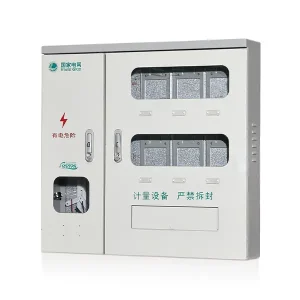
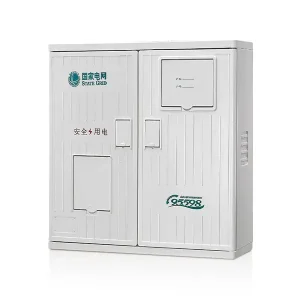
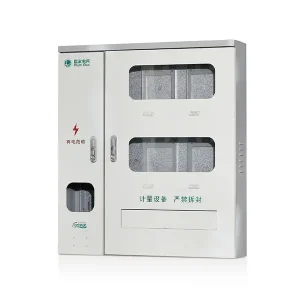
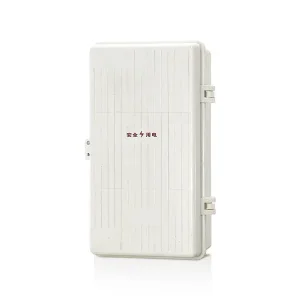
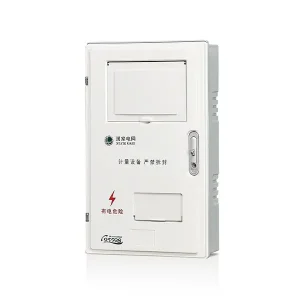
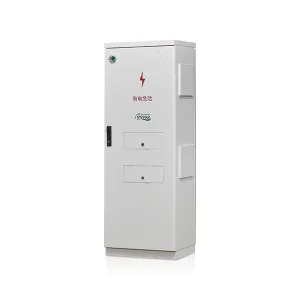
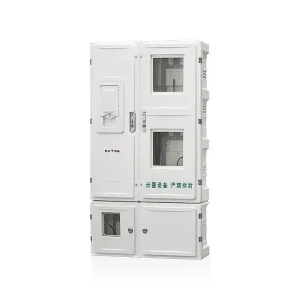
Global Power Landscape & Stainless Steel Enclosure Trends
As power grids transition toward digital smart grids and distributed renewable energy, metering enclosure requirements have moved beyond basic containment to high-longevity, anti-tamper, and smart telemetric hubs.
Corrosion Resilience in Extreme Environments
Global utility operators in littoral regions, Middle Eastern desert zones, and heavy industrial chemical corridors are systematically replacing painted mild carbon steel with cold-rolled AISI 304 and marine-grade AISI 316 stainless steel enclosures. The passive chromium oxide film prevents galvanic pitting and rust deterioration under salt-fog and acid-rain exposure.
Advanced Anti-Tamper & Non-Technical Loss (NTL) Prevention
Revenue leakages through power theft remain an acute challenge for power authorities worldwide. Contemporary stainless steel electric meter enclosures integrate multi-point concealed hinges, tamper-evident seals, anti-pick tri-groove lock mechanisms, and optical fiber loop sensors that guarantee tamper isolation and prevent unauthorized bypassing.
Smart Grid & Telemetry Gateway Integration
Modern meter boxes are no longer passive boxes. They house advanced AMI/AMR smart electricity meters, micro-inverters, GPRS/NB-IoT data concentrator units (DCU), and IoT communication cards. Engineering must account for internal thermal dissipation pathways and transparent high-impact polycarbonate windows that preserve RF transparency.
China Factory 4.0: Supply Chain Resilience & Efficiency
Located in the Yueqing Economic Development Zone—the global core of low-voltage electrical machinery—Zhejiang Teyi Electric integrates fully automated robotic fabrication with stringent quality verification protocols.
Precision CNC Fiber Laser & Robotic Bending
Our workshop utilizes high-power fiber laser cutting centers maintaining tolerance windows under ±0.05 mm, alongside automated CNC press brakes. This guarantees seamless cabinet seam alignment, burr-free edges, and structural rigidity for high batch consistency.
Automated Continuous Laser Welding & Sealing
Closed-loop robotic TIG and laser welding ensure leak-free corner seams with minimal heat-affected zones, preserving the metallurgical properties of the stainless sheet. Robotic foaming machines inject polyurethane gaskets for continuous IP54 to IP66 ratings.
Direct Ecosystem Cluster Advantage
Sitting at the heart of the Yueqing electrical manufacturing hub allows us to source tested circuit breakers, CT transformers, copper busbars, and insulated wiring harnesses in hours rather than weeks, shortening tender sample delivery to 5–7 days.
Quality Control & Testing Rigor
Every enclosure batch undergoes comprehensive salt-spray testing (ASTM B117), mechanical impact testing (IK08 to IK10), high-voltage dielectric insulation validation, and ingress water immersion trials before export staging.
Technical Comparison: Stainless Steel vs. SMC vs. Carbon Steel
Select the proper enclosure substrate based on atmospheric severity, lifecycle budget, dielectric protection, and mechanical vandal risks.
| Evaluation Parameter | Stainless Steel (AISI 304/316) | SMC Fiberglass (GRP) | Cold-Rolled Carbon Steel (Powder Coated) |
|---|---|---|---|
| Mechanical Impact (IK Code) | IK10+ (Superior vandal barrier, anti-crush) | IK08–IK09 (High resilience, flexural return) | IK07–IK08 (Vulnerable to denting and paint chips) |
| Corrosion & Chemical Resistance | Immune to airborne oxidants & solvents | Excellent resistance to chemical acids & bases | Poor if scratch exposes substrate; rust blooms |
| UV Degradation & Thermal Drift | Zero UV degradation; broad thermal tolerance | UV-stabilized resin; negligible deformation | Coating chalking, micro-cracking over time |
| Dielectric Safety | Conductive; mandatory protective PE bonding | Inherent double insulation (Class II safety) | Conductive; mandatory earthing stud continuity |
| Designed Asset Lifespan | 35–50+ Years | 30–40+ Years | 10–15 Years (requires recoating) |
| Tender Suitability | Urban hubs, high security, industrial plants | Utility mass metering, rural, solar PV farms | Budget-limited commercial indoor distribution |
Localized Solutions Across Commercial & Industrial Sectors
Tailored configurations engineered to meet regional distribution grids and challenging installation environments worldwide.
Distributed Solar Photovoltaic Stations
Utility-scale solar farms and commercial rooftop PV systems require bi-directional smart net-metering cabinets. Our enclosures accommodate internal DC breakers, AC contactors, and lightning surge protection devices (SPDs) while resisting high open-field UV loads.
Multi-Tenant High-Rise Commercial Complexes
Multi-tariff multi-meter configurations (from 4-way to 12-way) save riser-shaft space in modern architectural designs. Compartmentalized busbar zones, isolated consumer breaker switches, and fire-resistant internal wiring prevent cross-circuit thermal faults.
Heavy Petrochemical & Marine Harbors
Exposed seaside docks, naval installations, and refinery operations present extreme sulfur and saline chloride exposure. Marine-grade AISI 316 stainless steel boxes with drip hoods protect revenue-critical instrumentation from brine corrosion.
Urban Underground & Rail Transit Networks
Metro rail stations and highway tunnels demand halogen-free, non-toxic, and non-flammable enclosures. Our stainless steel boxes pair with high-speed automated switchgear to safeguard continuous service under vibrational loads.
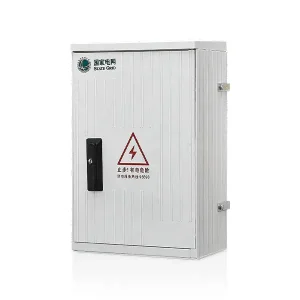
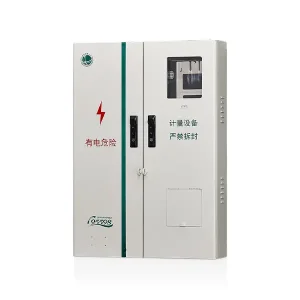
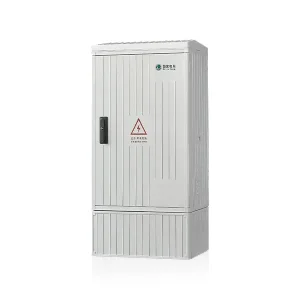
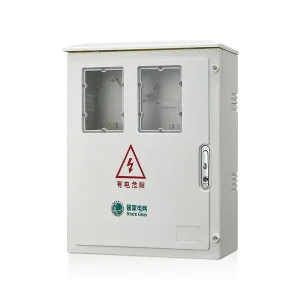
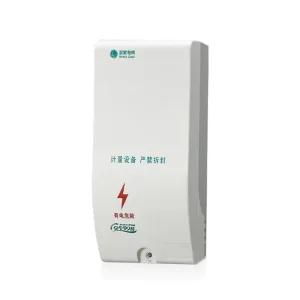
Extended Range: Distribution & Cable Branching Boxes
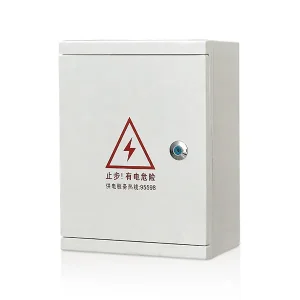
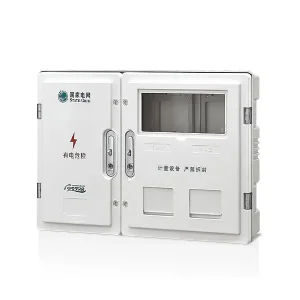
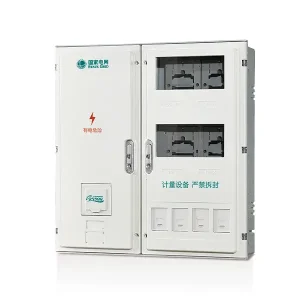
Explore our full line of floor-standing cable branching, transformer integration, and wall-mounted control equipment manufactured to IEC/CE standards.
Engineering & Procurement FAQ
Direct answers to the questions electrical consulting engineers, utility procurement managers, and tender contractors frequently raise.
Which stainless steel grade is recommended: AISI 304 or AISI 316?
For standard municipal, inland residential, and commercial projects, AISI 304 (1.4301) provides durable corrosion resistance and tensile strength. For coastal installations within 5 km of the sea, chemical plants, or environments exposed to salt spray and chlorine, AISI 316 (1.4401) with 2–3% molybdenum is strongly advised to prevent crevice pitting.
How does Teyi resolve heat dissipation in high-density smart meter boxes?
High-load multi-meter banks generate significant internal thermal loads. We engineer natural convection paths featuring downward-angled, louvered ventilation slots protected by fine stainless steel mesh (IP44–IP54 compliant). Internal solar heat load can also be mitigated with insulated reflective backplates and thermosiphon airflow baffles.
Can you manufacture bespoke enclosures to comply with overseas utility specs?
Yes. We deliver turnkey OEM and ODM modifications based on tender design drawings. Custom parameters include bespoke DIN-rail meter mounts, specialized current transformer (CT) compartments, unique latch mechanisms, viewing window placements, and laser-etched utility logos or barcode labeling.
What testing documentation and quality certifications accompany each shipment?
Every delivery includes full factory routine inspection certificates, material analysis mill test reports (MTR), dielectric withstand verifications, and grounding resistance test records. Third-party type-test reports (such as CE, CCC, IP rating, and IK impact resistance) can be provided upon project specification.