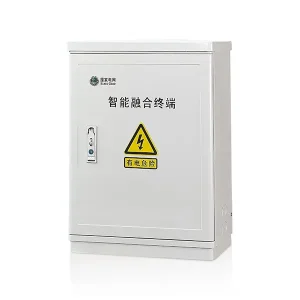
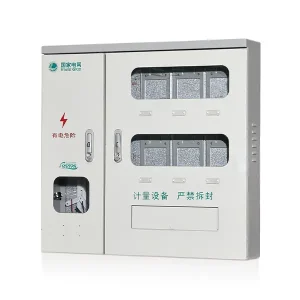
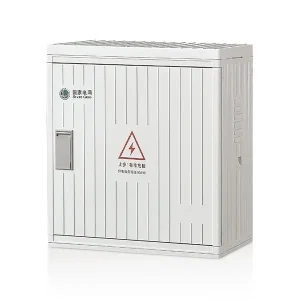
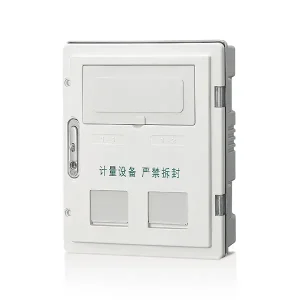
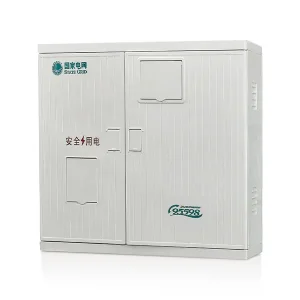
Engineered Municipal & Power Enclosure Solutions
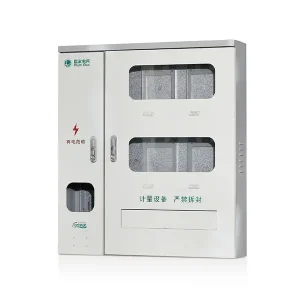
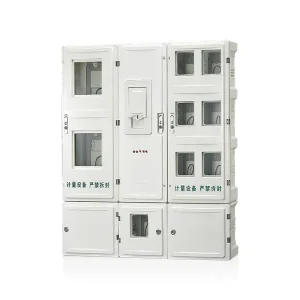
Direct-entry high-performance metering systems, GRP/SMC chambers, and cable branching nodes engineered for rigorous service conditions worldwide.
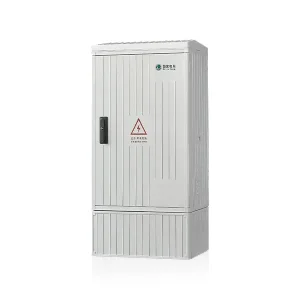
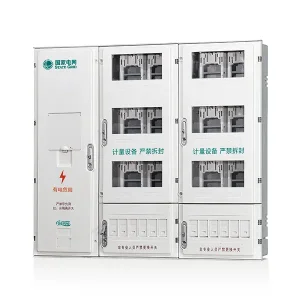
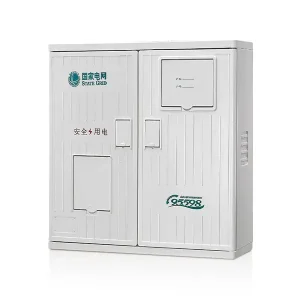
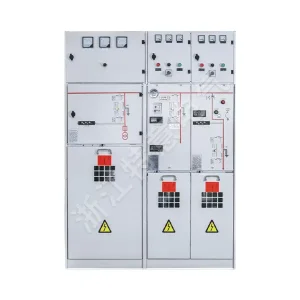
Global Civil & Industrial Infrastructure Outlook
The modernization of utility grids, combined with rigorous wastewater and subsurface infrastructure standards, demands a systemic departure from legacy ductile iron and unreinforced concrete towards smart composite and anti-corrosive alloy architectures.
Aggressive Chemical Environment Resilience
Traditional sewer networks suffer catastrophic biogenic sulfuric acid corrosion induced by microbial activities. Modern composite Sheet Molding Compound (SMC) and specialized austenitic stainless steel provide chemical inertness, eradicating structural degradations across industrial effluents.
TheFT Mitigation & Signal Penetration
Unlike scrap-value metals prone to vandalism and street hazards, GRP and composite access lids eliminate secondary resale incentives. Furthermore, composite chambers deliver non-interfering electromagnetic permeability for smart subsurface IoT water level and gas telemetry.
Lifecycle Ergonomics & Civil Safety
High strength-to-weight ratios dramatically drop manual handling injuries during field access. Precision compression molding delivers structural integrity up to EN 124 D400 and F900 classes with anti-slip surface morphologies, ensuring vehicle stability in intense urban arterials.
Engineering Deployments Across Global Environments
From smart city sanitary networks to harsh coastal power distribution, Teyi engineered manholes and technical enclosures resolve geotechnical and operational constraints.
Municipal Storm & Sanitary Trunklines
Precision-molded chambers resist continuous immersion, hydrogen sulfide off-gassing, and subsoil moisture ingress, safeguarding urban drainage networks beneath multi-lane metropolitan carriageways.
Photovoltaic & Offshore Substations
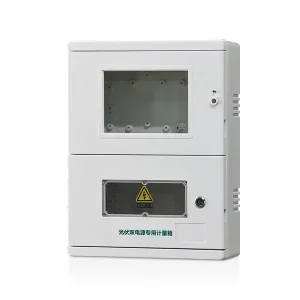
Deploying TY-SXD2-GF1 and heavy-duty composite access units in hypersaline coastal utility farms ensures zero galvanic corrosion, sustaining continuous operation under extreme ultraviolet exposure.
Petrochemical & Refinery Complexes
Where volatile organic compounds, caustic washdowns, and hydrocarbons challenge traditional civil construction, our acid-resistant stainless steel and SMC enclosures guarantee volatile-safe containment.
Urban Rail & Subsurface Traction Power
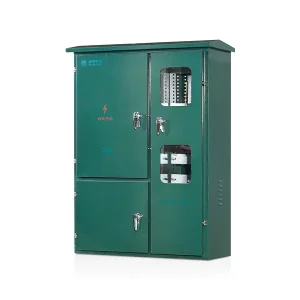
High-voltage cable trenching along rapid transit corridors demands dielectric chambers with zero electrical arc tracking, coupled with Ring Main Units (RMU) to protect traction distribution loops.
Material Performance Architecture: SMC Composite vs. Traditional Assets
A comprehensive engineering matrix designed to assist international civil consultancies and tender committees in lifecycle costing.
| Evaluation Parameter | SMC Composite / GRP Enclosures | Ductile Iron (Cast Iron) | Precast Concrete Systems |
|---|---|---|---|
| Chemical & H₂S Corrosion Resistance | Immune to acid attack, salts, and industrial solvents (pH 2 - 12) | Highly vulnerable to rust, acidic oxidation, and pitting | Subject to microbial-induced spalling and calcium leeching |
| Strength-to-Weight Optimization | High tensile strength; 1/3 weight of iron, manual handling compliant | Extreme mass; requires hydraulic cranes for site placement | Massive deadweight; prone to transit micro-cracks |
| Dielectric & Insulative Safety | Non-conductive breakdown voltage > 15 kV/mm; zero stray-voltage risk | Electrically conductive; severe hazard in underground cable vaults | Moisture-dependent conductivity; unpredictable isolation |
| Electromagnetic RF Transparency | 100% permeable to 4G/5G, LoRaWAN, NB-IoT smart sensor signals | Shields radio signals completely (Faraday cage effect) | Partially dampens RF telemetry propagation |
| Total Cost of Ownership (40 Years) | Lowest; zero resurfacing, zero painting, zero theft replenishment | High due to repeated epoxy coatings and theft replacements | High replacement frequency due to structural subsidence and fatigue |
China Supply Chain Resilience & Technology Roadmap
Headquartered in Yueqing, Wenzhou—the Electrical & Precision Manufacturing Capital of China—our integrated plant leverages an ultra-dense industrial ecosystem.
Vertical Tooling & High-Tonnage Pressing
Our facility operates hydraulic compression presses from 500 to 3,000 metric tons. Precision heating molds guarantee isotropic fiber distribution and high structural density with micrometer-level mechanical consistency across high-volume production batches.
Cluster-Driven Component Sourcing
Surrounded by raw sheet compound formulators, copper busbar cold-heading lines, terminal block specialized foundries, and automated testing labs, lead times are compressed by up to 45% compared to fragmented western supply chains.
Roadmap: AI-Integrated Smart Subsurface
Our continuous technical development incorporates optical fiber strain gauges, integrated ultrasonic level sensing cavity ports, and smart gas detection nodes directly within compression-molded composite covers for digitized urban maintenance.
Global Standards Compliance & Factory Assurance
Every meter box, GRP sewer lid, and medium-voltage cabinet undergoes rigorous quality checkpoints before export authorization.
EN 124 / ASTM C857
Verified through static load test machines applying hydraulic proofs matching A15 pedestrian up to D400 and F900 airport carriageway classifications with zero plastic deformation.
IEC 60529 / IP65-IP68
Continuous pressurized water spray and submerged hydrodynamic barometric tests confirm ingress resistance against fine silt, dust, and continuous subsurface hydrostatic heads.
IK10 Impact / UL94 V-0
Mechanical pendulum impact validation (IK10) paired with self-extinguishing polymer flame retarding characteristics prevents flame propagation in electrical or volatile gas environments.
Full Inspection Traceability
Complete traceability from resin batch chemical analysis reports, continuous curing temperature charts, to individual dimensional coordinate verification ensures tender security.
Frequently Asked Questions on Engineering & Sourcing
Essential technical and logistical answers for international project directors, consulting engineers, and import authorities.
What distinguishes compression-molded SMC composite manhole assemblies from cast ductile iron?
SMC (Sheet Molding Compound) manhole covers combine unsaturated polyester resin, glass-fiber strand reinforcement, and mineral fillers pressed under extreme heat. Unlike ductile iron, SMC is completely immune to biogenic rust, provides dielectric electrical insulation, lacks scrap resale value to eliminate street vandalism, and weighs roughly 60% less while easily meeting heavy load requirements up to EN 124 D400 ratings.
How do you guarantee load compliance for municipal roadways and industrial ports?
Every production tooling run is validated against EN 124, British BS 750, or US AASHTO M306 protocols using in-house calibrated computer-controlled hydraulic presses. We verify permanent set parameters and ultimate peak load limits (up to 400 kN for D400 and 900 kN for airport F900 tiers) with automated recording charts and third-party inspection certifications available for every shipment.
Can Teyi supply custom logos, utility color coding, and locking mechanisms?
Yes. Our integrated mold tooling engineering department develops custom tooling inserts featuring municipal badging, company insignia, and custom anti-slip relief patterns. Lids can be formulated in solid body pigments for distinct utility segregation (e.g., green for stormwater, blue for potable water, red for power). High-security 3-point locking assemblies are integrated during compression.
What is the expected operating temperature span and UV degradation profile?
Our proprietary SMC matrices incorporate high-efficiency UV stabilizer packages and thermal inhibitors. Standard systems operate continuously within a -40°C to +120°C temperature envelope. Outdoor accelerated weathering tests (ASTM G154 Xenon arc) show negligible mechanical property retention loss (>90% after 5,000 hours continuous exposure), guaranteeing operational performance over 30 years.
How do composite covers support modern smart city and IoT utility infrastructure?
Unlike metal manholes which reflect and block electromagnetic transmissions (Faraday cage), non-metallic GRP composite covers are fully transparent to wireless RF frequencies including 4G, 5G, LoRaWAN, and NB-IoT. Subsurface smart level sensors, gas detectors, and thermal monitors can transmit antenna signals directly through the lid without core drilling or external street-level transmitters.
What are the minimum order quantities (MOQ) and production lead times for overseas export?
For standard footprint units and existing factory dies, initial trial runs start at 50 to 100 units. Bespoke dimension molds require approximately 20 to 25 calendar days for CNC mold fabrication and first article sign-off. High-capacity multi-cavity presses yield containerized volume orders (20GP/40HQ) in 15 to 20 days, loaded on reinforced sea pallets direct from Ningbo or Shanghai ports.
Specialized Substation & Subsurface Distribution Hardware
Explore our complete catalog of precision-fabricated direct-entry metering enclosures, TTU terminal systems, and medium-voltage distribution hardware.