
High-Reliability Distribution & Metering Assemblies
Engineered for high short-circuit withstand capabilities, robust thermal management, and fail-safe grid sectionalizing.
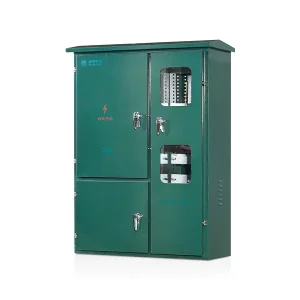
Stainless Steel Three-Phase Two-Position Metering Box (Ground-Standing)
View Specifications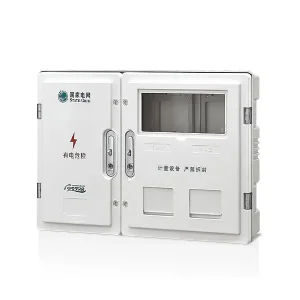
China TY-SXD2-A Single-Phase Energy Metering Box Solution
View Specifications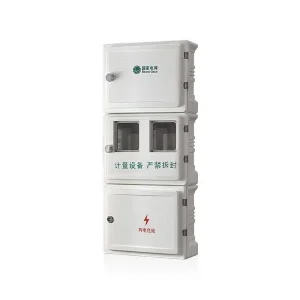
China TY-SXD2 Single-Phase Metering Enclosure 250A-10A
View Specifications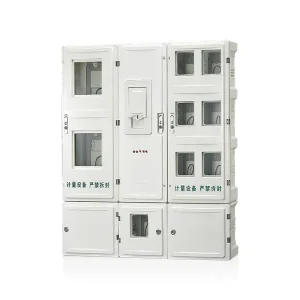
Three-Phase Two-Pos & Single-Phase Six-Pos Metering Box TY-SXD2+SXS2-1B
View Specifications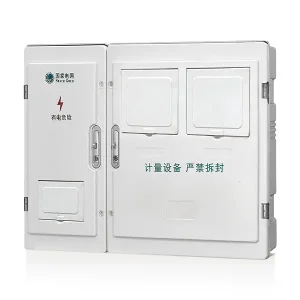
TY-SXS2-DXJ Low Voltage Three-Phase Two-Position Metering Enclosure
View Specifications
China TY-SXD2 Single-Phase Electric Metering Enclosure Unit (2-6 Way)
View Specifications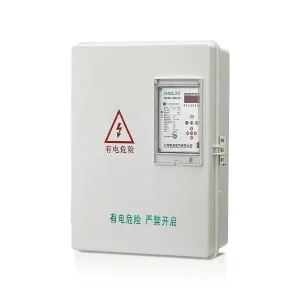
TY-DXZB-1 Single-Phase & TY-SXZB-1 Intermediate Protection Boxes
View Specifications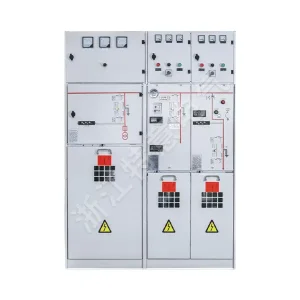
Primary Substation Ring Main Unit (RMU) Medium Voltage Switchgear
View SpecificationsMacro Dynamics in Medium Voltage RMU Modernization
Strategic analysis of grid decentralization, SF6 alternatives, and the architectural shifts dominating electrical utility procurement.
Eco-Friendly & Dry Air Switching
With stringent global mandates phasing out sulfur hexafluoride (GWP > 23,500), progressive engineering transitions to clean air insulation and vacuum interruption. Our factory champions modern dielectric topologies that satisfy both EU F-Gas regulations and heavy continuous industrial duties.
Integrated Edge Smart Grids (FTU/DTU)
Modern Ring Main Units serve as smart peripheral terminals. By integrating feeder terminal units (FTUs), integrated optical-fiber current sensors, and high-speed directional fault detectors, our systems enable sub-cycle fault isolation, automated self-healing rings, and zero-touch telemetry.
Modular Scalability & Safety Interlocks
Equipped with standardized busbar plug-in expansions, pressure relief ducted rear paths (IAC AFLR 20kA 1s), and fail-safe 5-prevention mechanical interlocks. Designed for tight compact substations, containerized BESS setups, and commercial underground networks where safety cannot be compromised.
Comprehensive Technical Specification Comparison
Rigorous parameters benchmarking standard utility-grade requirements versus heavy industrial operational environments.
| Performance Characteristic | Gas-Insulated RMU (GIS) | Solid-Insulated RMU (SIS) | Air-Insulated Switchgear (AIS) |
|---|---|---|---|
| Rated Voltage (Ur) | 12 kV / 24 kV / 40.5 kV | 12 kV / 24 kV | 12 kV / 24 kV |
| Insulation Medium | SF6 / Synthetic Clean Air (N2/O2) | Solid Epoxy Resin + Shielding Layer | Atmospheric Air + Insulating Barriers |
| Hermetic Seal Rating | IP67 (Stainless Steel Tank ≥3.0mm) | IP67 (Modular Cast Encapsulation) | IP4X to IP54 Compartmentalized |
| Short-Circuit Breaking (Isc) | Up to 25 kA / 31.5 kA | Up to 20 kA / 25 kA | Up to 31.5 kA / 40 kA |
| Corrosion & Harsh Saline Tolerance | Virtually impervious to external air | Exceptional resistance to dust & salt | Requires climate-controlled substation |
| Maintenance Protocol | Maintenance-Free during 30-40 yr lifecycle | Low-Maintenance periodic checkups | Regular mechanical lubrication & dust purging |
Turnkey Engineering Across Demanding Industrial Sectors
Specialized Medium Voltage and Low Voltage switchgear configurations matching rigorous grid code standards.
Solar PV & Storage Parks
Rugged outdoor cabinets and Ring Main Units customized for step-up transformers (0.8kV to 35kV) featuring anti-resonance PT protection and transient overvoltage suppression for remote, high-UV sites.
Heavy Petrochemical Plants
Corrosion-resistant stainless-steel housings (AISI 304/316L) combined with high-grade SMC enclosures that withstand aggressive chemical fumes, high ambient heat, and extreme electrical fault currents.
High-Density Urban Infrastructure
Ultra-compact switchgear designs maximizing internal space in commercial podium basements, subway traction substations, and mega residential multi-phase complexes with concealed cable corridors.
Wind Power Collectors
Compact modular units engineered to withstand tower vibrations, wide temperature fluctuations (-40°C to +60°C), and repetitive breaker cycles during rapid atmospheric wind fluctuations.
Localized Support, Standardization & Quality Rigor
Bridging Chinese manufacturing capacity with international field engineering standards.
Full Certification Compliance
Every RMU and distribution enclosure is developed to satisfy stringent IEC 62271-200, IEC 62271-100, and GB/T standards. Independent type test reports verify temperature rise, dielectric withstand, short-circuit impulse, and internal arc classification (IAC AFLR).
Direct OEM/ODM Utility Engineering
Tailored mechanical layouts, auxiliary switch auxiliary contacts, dual-source power supplies, and customized cable termination heights ensure seamless drop-in replacements for existing substation footprints across EMEA, APAC, and LATAM networks.
Robust Supply Chain & Logistics
Located in Yueqing, Wenzhou—the Electrical Capital of China—our integrated supply chain minimizes lead times for structural enclosures, vacuum interrupters, and microcomputer relay protection units. Fast sea packaging guarantees zero-humidity intrusion during transit.
Frequently Asked Questions for Engineering Consultants & Buyers
In-depth responses clarifying switchgear capabilities, life expectancy, and tender compliance.
What is the standard delivery timeline for customized Medium Voltage RMU panels?
Standard modular units are typically assembled, factory acceptance tested (FAT), and prepared for export packaging within 3 to 4 weeks. Specialized OEM projects requiring customized protection relays (e.g., Schneider, ABB, or SEL) or custom busbar configurations are delivered in 6 to 8 weeks with complete routine test certificates.
How does the enclosure design resist coastal salt-spray and extreme moisture?
All switchgear gas tanks are robotically TIG-welded from 304 or 316L stainless steel, helium leak-tested to achieve annual leakage rates below 0.05%, and rated to IP67. Exterior enclosures are constructed from either high-pressure SMC thermoset composite or pre-treated zinc-coated sheet with electrostatic polyester powder coating.
Can the RMU units integrate directly with our utility's centralized SCADA system?
Yes. Our systems are equipped with standardized automation compartments supporting IEC 60870-5-101/104, DNP3.0, and Modbus TCP/RTU communication protocols. We provide terminal interfaces for remote open/close commands, analog telemetry (current, voltage, gas pressure), and fault location indicators (FLI).
What testing procedures are performed before shipment from the Yueqing factory?
Every single unit undergoes rigorous 100% factory routine testing in accordance with IEC 62271-200. This includes power frequency withstand voltage testing (up to 42kV or 95kV BIL), main circuit resistance measurement, mechanical operation cycling (minimum 2,000 operations), gas tightness verification, and protection logic tripping tests.
Secondary Distribution, Branching & Monitoring Systems
Expandable enclosures, intermediate protective boxes, and multi-position power management cabinets.
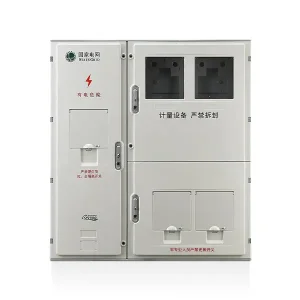
China TY Three-Phase Electric Energy Metering Box (Transformer Type)
View Specifications
TY Three-Phase Energy Metering Enclosure (CT Rated Transformer Series)
View Specifications
TY-SXD2+SXS2-1B Three-Phase 2-Pos & Single-Phase 6-Pos Multi-Meter Unit
View Specifications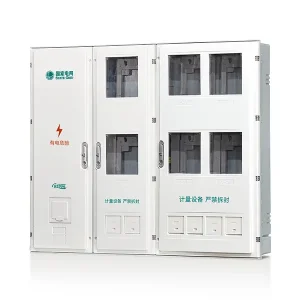
TY Three-Phase Metering Distribution Boxes for Power Management
View Specifications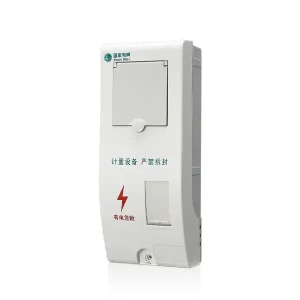
TY-SXD1 Single-Phase Electric Energy Metering Box System
View Specifications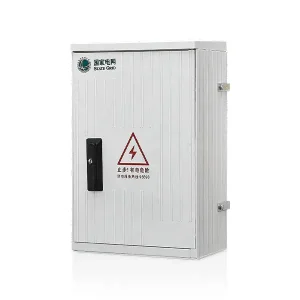
TY-DFW Heavy-Duty Wall-Mounted Cable Branch Box Enclosure
View Specifications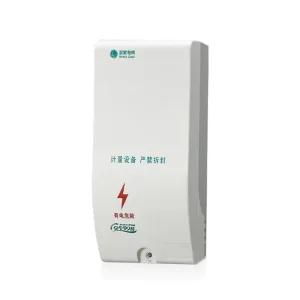
Single-Phase One-Position Distribution Enclosure TY-SXD1-FX
View Specifications
TY-SXD2 Metering Box with 10A-250A Busbar & 30KA Withstand Capacity
View SpecificationsEngineering Trajectory: Towards Net-Zero & Smart Sensing
Pioneering advancements shaping medium voltage distribution over the coming decade.
Non-SF6 Gas Solutions & Solid Dielectrics
Development of natural clean-air insulated ring main units operating at 12kV-24kV alongside modular solid-dielectric switchgear eliminates greenhouse fluorinated gases completely, significantly simplifying future plant decommissioning and end-of-life recycling.
Embedded AI-Driven Condition Monitoring
Continuous thermal sensor monitoring on internal tulip contact jaws, dynamic partial discharge (PD) acoustic measurement, and predictive motor mechanical health diagnostics allow asset managers to transition from scheduled maintenance to actionable condition-based maintenance (CBM).
Ultra-Compact Smart City Substation Units
Optimized busbar geometries, integrated compact voltage transformers, and high-frequency digital sensors reduce the spatial footprint by up to 35% compared to legacy medium voltage panels, delivering substantial cost savings for civil construction and tunnel substations.