
Standard External Electric Meter Enclosures (Batch A)
Engineered for high ingress protection, dielectric insulation, and long-term durability in outdoor power distribution networks.
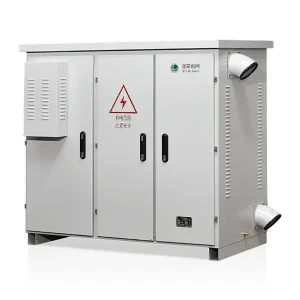
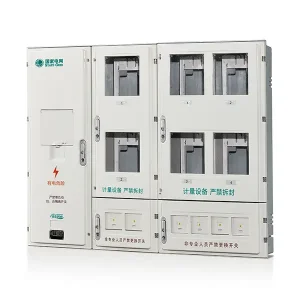
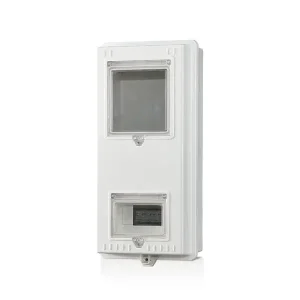
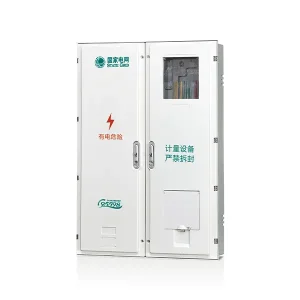
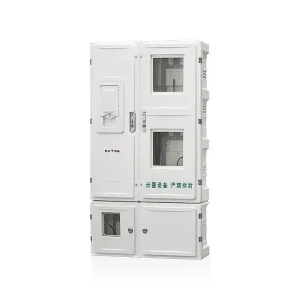
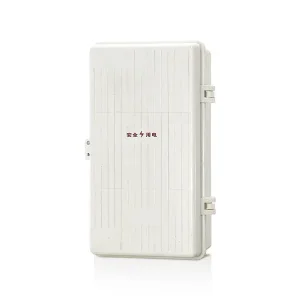
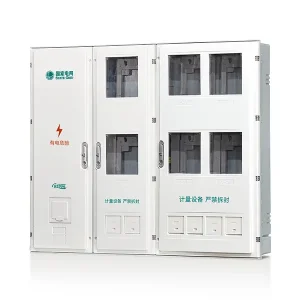
Evolutionary Trends in External Electric Meter Box Architecture
Analysis of global electrification demands, Smart Grid rollouts, and the operational shift from basic junction housings to resilient, intelligent edge-enclosures.
Material Science Paradigm Shift
The global electric utility market has decisively shifted from traditional pressed mild steel to SMC (Sheet Molding Compound) fiberglass-reinforced polyester. SMC delivers inherent Class II dielectric isolation, complete corrosion resistance in salty marine atmospheres, zero eddy-current loss, and exceeds an expected outdoor service life of 30+ years without requiring protective repainting.
AMI & IoT Smart Grid Integration
Modern revenue protection demands seamless integration with Advanced Metering Infrastructure (AMI). Contemporary external meter cabinets are engineered with non-shielding composite polymers that allow clean RF transmission (GPRS, LoRa, NB-IoT, PLC) without external antenna protrusions, ensuring secure, remote bi-directional data flow between consumer nodes and central dispatch.
Revenue Integrity & Anti-Tamper Security
Commercial non-technical electricity losses cost utilities billions annually. Next-generation external meter boxes integrate multi-level mechanical security: concealed inner hinges, tamper-evident dual utility seals, RFID-enabled latch sensors, separated customer and utility access chambers, and transparent polycarbonate inspection viewports with high UV inhibitors.
Comparative Enclosure Substrate Benchmarking
A rigorous structural, dielectric, and operational cost breakdown for project EPCs and grid authority procurement directors.
| Evaluation Parameter | Teyi SMC Fiberglass (GRP) | 304/316 Stainless Steel | Polycarbonate (PC) / ABS |
|---|---|---|---|
| Dielectric Safety | Complete isolation (No grounding required) | Conductive (Mandatory earthing system) | Good isolation (Prone to tracking over time) |
| Corrosion Resistance | Immune to salts, acid rain, sulfur gases | High (Pitting possible in extreme coastlines) | Moderate (Degrades under chemical stress) |
| Mechanical Impact (IK) | IK10 (High compression rigidity) | IK10+ (Extremely tough, heavier) | IK08 (Vulnerable under sub-zero impacts) |
| UV Degradation & Flammability | UL94 V-0 flame retardant, 30-yr outdoor UV | Non-combustible | UL94 V-1/V-2; color fades, surface chalking |
| RF Transparency (AMI) | 100% Transparent (Ideal for Smart Grid IoT) | Zero transparency (Faraday cage effect) | 100% Transparent |
| Total Cost of Ownership (TCO) | Lowest (Zero maintenance, 30+ year lifespan) | High initial CAPEX | Moderate initial; early field replacement |
Macro-Industry Distribution & Metering Solutions
Engineered hardware configurations tailored to specific operational hazards, electrical loads, and localized installation topologies.
Renewable PV & Microgrid Grid-Ties
Equipped with specialized bidirectional metering slots, solar inverter breaker compartments, DC disconnect switches, and internal surge protection devices (SPDs). These SMC enclosures resist high radiant UV levels while maintaining internal operating temperatures between -25°C and +50°C for residential and commercial solar installations.
Urban Multi-Tenant Residential Towers
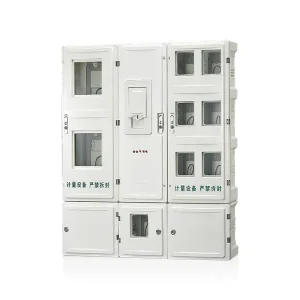
High-density multi-meter array cabinets (such as the TY-SXD2 series, available from 2 to 12 meter positions) integrate neatly into external utility shafts and perimeter walls. Featuring separated busbar chambers, concealed internal conduit raceways, and dedicated neutral/earth distribution bars, they streamline multi-family billing verification and reduce line congestion.
Petrochemical & Corrosive Heavy Industrial
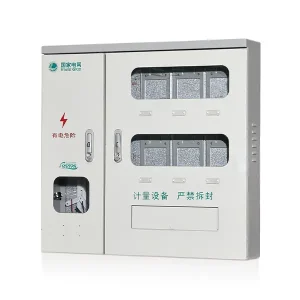
Heavy-duty, precision-welded 304/316L stainless steel JP cabinets and high-thickness SMC housings engineered for facilities exposed to aggressive caustic mists, hydrocarbon residues, and saline spray. Internal layouts support CT/PT secondary metering configurations and high fault currents with ratings up to 30 kA short-time withstand.
Municipal Infrastructure & Rail Transit
Specialized low-voltage distribution and pole-mounted branch enclosures designed to withstand constant vibrational harmonic stresses, shock loads, and high particulate ingress. Standardized mounting supports cross-arm pole clamps, wall recesses, or ground-level plinth integration alongside ring main units (RMUs).
Global Standards Compliance & Engineering Assurance
Our Yueqing production lines adhere to international electrical safety regulations to ensure seamless EPC sign-off.
IEC 62208 & IEC 61439-1/-2
Full type-tested validation covering empty enclosures for low-voltage switchgear and controlgear assemblies. Verifies temperature-rise limits, dielectric withstand up to 6 kV impulse, glow-wire flammability testing up to 960°C, and structural integrity during severe seismic or short-circuit thermal stresses.
IP65 / NEMA 4X Environmental Sealing
Continuous robotic polyurethane (PU) foamed gaskets ensure dependable sealing under driving monsoon rain, airborne desert sand, and industrial high-pressure hose-downs. Enclosures operate safely in continuous relative humidity environments of up to 80% at 40°C.
Comprehensive OEM/ODM Engineering Service
From custom laser-cut viewing apertures and pad-printable brand logos to customized brass neutral terminals, pre-wired busbars, and DIN-rail layouts matching specific single-phase and three-phase meter brands, our design team adapts enclosures to individual utility tender requirements.
Technology Roadmap: Next-Gen Smart Metering Enclosures
Anticipating the demands of smart cities, decarbonization targets, and distributed energy networks.
Embedded Edge Sensing & Diagnostics
Integrating compact temperature sensors, micro-humidity monitors, and optical arc-flash detectors directly onto internal busbars. These sensors feed data back to centralized SCADA systems to provide predictive warnings before localized thermal runaway causes network outages.
Eco-Circular Bio-Resin Formulations
Investigating low-carbon thermosetting resin systems and bio-based fibers that match the tensile strength and flame retardancy of standard SMC while lowering embodied carbon during compression molding, helping utilities reach scope 3 carbon reduction goals.
Smart Access Control with Electronic Locking
Replacing traditional triangular keys and padlocks with encrypted NFC, BLE, or cellular smart locks. Utility technicians can unlock enclosures using authorized mobile credentials, creating audit-trail records for every maintenance check or disconnect request.
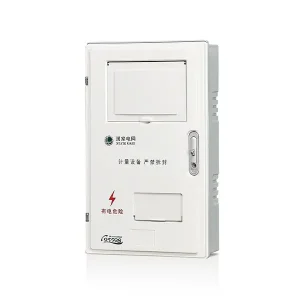
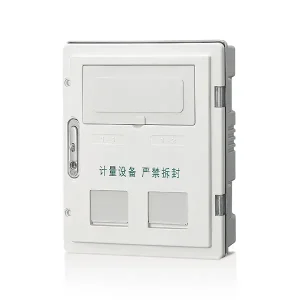
High-Capacity & Specialized Meter Enclosures (Batch B)
Engineered for complex multi-point utility metering, current transformer integrations, and stainless steel applications.
Frequently Asked Questions for Project Procurement
Direct technical answers addressing environmental performance, material selection, customization, and factory operations.
What materials are Teyi electricity meter boxes made of? +
Our metering and distribution boxes are compression-molded from SMC (sheet molding compound) unsaturated polyester glass-fiber reinforced plastic, which combines high mechanical strength with inherent electrical insulation. For projects that specify metal enclosures, we also manufacture stainless steel electricity meter cabinets.
What is the expected service life of an SMC fiberglass meter box? +
For our TY-SXD2 single-phase multi-meter series, the designed service life exceeds 40 years for indoor installation and 30 years for outdoor installation, significantly longer than conventional metal or plastic meter boxes.
Which environmental conditions are the meter boxes designed for? +
Standard models operate at ambient temperatures from -25°C to +50°C, with a 24-hour average not exceeding +35°C, and relative humidity up to 80% at 40°C in clean air. Tell us about coastal, high-altitude or high-UV sites so we can recommend the right configuration.
Can Teyi customize meter boxes to our utility or tender specification? +
Yes. Through our OEM and ODM programs we adapt meter positions, dimensions, viewing windows, locking, cable entries, internal components, color and branding. Share your drawings or tender specification and our engineers will propose a compliant design under full confidentiality.
Do you provide samples before mass production? +
Yes. Our ODM service includes fast sample turnaround so you can evaluate fit, finish and performance before confirming a production order.
Where is the Teyi Electric factory located? +
Our factory is in Yueqing Economic Development Zone, Wenzhou, Zhejiang Province, widely known as the Electrical Capital of China, giving us direct access to a mature supply chain for electrical components. We ship to customers worldwide.
How does SMC fiberglass perform against vandalism and attempted bypass? +
Our compression-molded SMC meter enclosures achieve high mechanical protection (IK10 rating under IEC 62262), resisting blunt impacts, prying crowbars, and mechanical deformation. Unlike thin metals, the structural cross-linked polymer does not dent permanently, and its dielectric nature eliminates shock risks should vandals drill or cut into live cabling.
Can these external meter enclosures support smart prepaid and keypad meters? +
Yes. Our designs accommodate STS (Standard Transfer Specification) prepaid meters, split-keypad customer interface units (CIUs), and smart meters equipped with cellular, mesh-RF, or optical port interfaces. Optical reading windows utilize UV-resistant, clear polycarbonate with optional hinged access flaps.