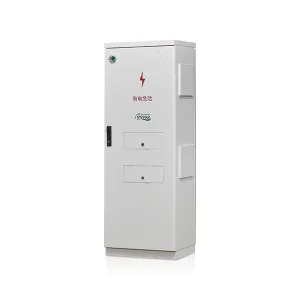
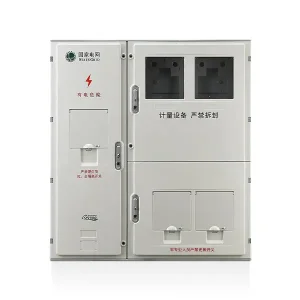
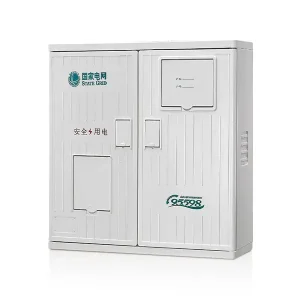
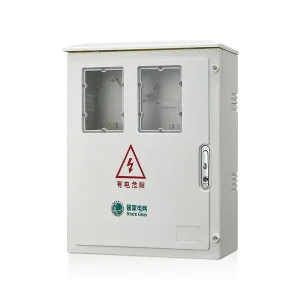
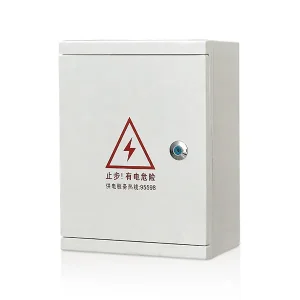
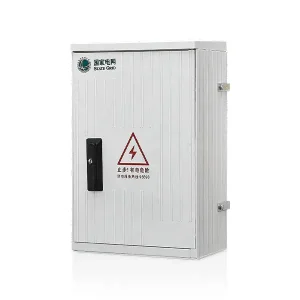
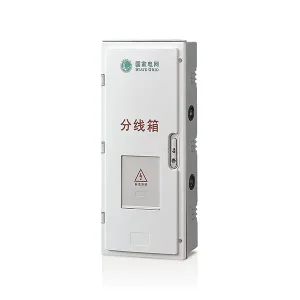
High-Performance Branching & Metering Series
Verified solutions engineered for extreme operational continuity, featuring compression-molded GRP/SMC polymers and stainless steel enclosures compliant with international IEC/GB utility standards.
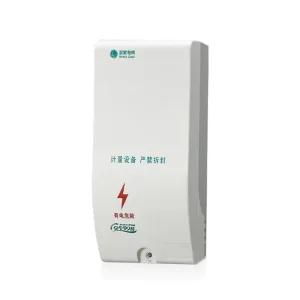
The Global Evolution of Cable Branch Distribution Systems
As transmission and distribution infrastructures transition from overhead lines to underground cabling, Cable Branch Boxes (CBB) have evolved from passive tap-off joints into critical, intelligent power nodes.
Undergrounding Utilities Shift
Rapid urbanization and grid resilience programs in North America, Europe, and Asia-Pacific mandate the conversion of overhead distribution lines into underground networks. Cable branch boxes eliminate unsightly wiring, mitigate storm-related outages, and secure secondary networks against windborne debris and vehicular impacts.
Renewable Energy Ingestion
The explosive penetration of decentralized Distributed Energy Resources (DER), particularly commercial rooftop and utility-scale solar PV, requires robust aggregation nodes. Cable branch systems now integrate multi-circuit fuse protection, bidirectional metering capabilities, and remote circuit isolation to manage dynamic reverse power flows safely.
Smart Grid Edge Perception
Modern branch boxes are transitioning toward autonomous smart distribution units. By integrating edge computing micro-RTUs, current transformer sensing, temperature tracking at busbar contacts, and wireless IoT telemetry (NB-IoT/4G), maintenance teams achieve real-time load balancing and preemptive thermal runaway alerts.
Comparative Enclosure Substrate Analysis
A technical baseline comparison helping electrical engineers, EPC estimators, and utility procurement officers evaluate the long-term total cost of ownership (TCO) across harsh service conditions.
| Performance Parameters | SMC Fiberglass Composite (GRP) | Stainless Steel (304 / 316 Marine) | Conventional Polycarbonate / ABS |
|---|---|---|---|
| Dielectric Strength & Insulation | Inherently Class II Non-conductive; Zero touch-potential hazard | Conductive; strictly requires continuous grounding bond | Insulating; lower internal arc flash containment |
| Environmental & Salt-Spray Resistance | Immune to oxidation, acid rain, and heavy coastal salinity (C5-M) | Excellent, but prone to pitting in stagnant marine chloride areas | Moderate; degrades under intense chemical and hydrocarbon vapors |
| UV Radiation Resistance (Outdoor) | UV-stabilized resin prevents chalking, cracking, and brittleness | Unaffected by solar UV radiation | Prone to yellowing, loss of mechanical elasticity, and embrittlement |
| Mechanical Rigidity (IK Rating) | IK10; High elastic memory absorbs vehicle impacts without denting | IK10+; Highly rigid, but permanent denting restricts internal access | IK07 - IK08; Vulnerable to shattering under low-temperature impacts |
| Service Life Cycle Expectancy | 30+ Years Outdoor / 40+ Years Indoor with minimal maintenance | 25–35 Years (dependent on environmental maintenance) | 8–12 Years outdoor before composite breakdown occurs |
Macro Industry Solutions & Deployment Archetypes
Tailored engineering configurations designed to address the specific environmental, electrical, and structural stresses encountered across diverse operational theaters.
Urban Residential & High-Rises
Multi-unit domestic distribution schemes rely on clean concealment, fire resistance, and anti-tamper security.
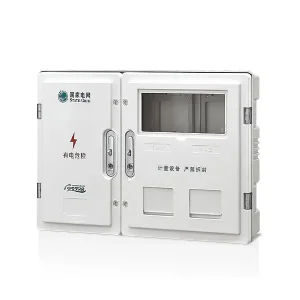
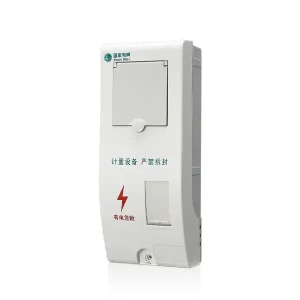
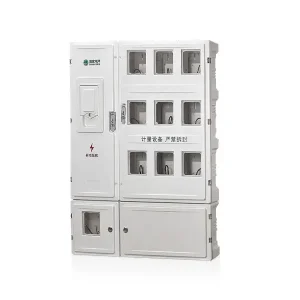
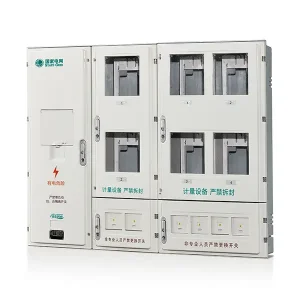
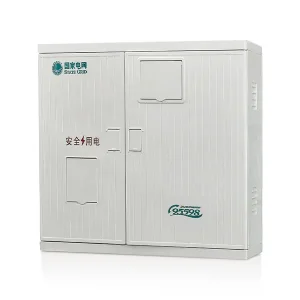
- Multi-position energy metering cabinets (TY-SXD2 series)
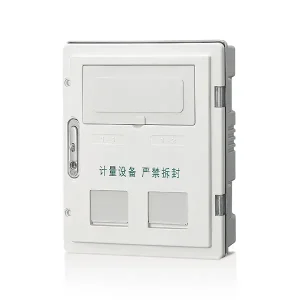
- Concealed internal cabling channels with transparent inspection seals
- Self-extinguishing V0 flame retardancy eliminating vertical fire spread
Heavy Petrochemical & Mining
Harsh ambient chemical fumes, explosive atmospheres, and heavy mechanical vibrations require fortified protection.
- Hermetically sealed stainless steel metering units (IP66/IK10)
- Corrosion-resistant copper busbars with high-tin plating
- Transformer-type CT monitoring boxes (TY-SXS3) handling wide loads
Utility-Scale Photovoltaics
Decentralized solar fields operating in desert or maritime conditions with extreme daily thermal cycles.
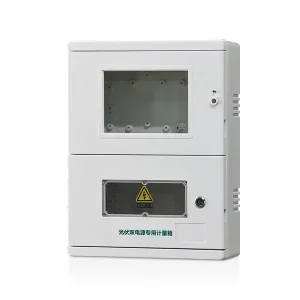
- SMC fiberglass solar grid-tie combiner boxes with breathable vents
- Inherent thermal dissipation suppressing internal condensation
- Integrated DC/AC surge arresters safeguarding invertor electronics
Railway & Critical Infrastructure
Uninterrupted power supplies for track switching, signaling networks, and tunnel auxiliary ventilation.
- High dynamic short-circuit withstand up to 30 kA/1s duration
- Ring Main Unit (RMU) integration with SF6 or eco-gas insulation
- Pad-mounted outdoor cable branch boxes with tamper-proof locks
Engineering Roadmap & Advanced Factory Ecosystem
Situated in Yueqing, the electrical hardware capital of China, our facility merges advanced compression molding, automated assembly, and strict laboratory verification into a unified quality matrix.
Thermosetting SMC Pressing
Our workshop operates high-tonnage hydraulic compression presses equipped with multi-zone PID thermal regulation. We formulate high-purity unsaturated polyester resin compounded with chopped E-glass fibers, yielding void-free enclosures with exceptional dimensional stability and uniform wall thickness across large runs.
Automated Quality Protocols
Every branch enclosure undergoes exhaustive electrical and physical stress testing before packaging. Routine protocols include high-voltage dielectric withstand checks (up to 42 kV for MV equipment), short-time current thermal shock verifications, IPX6 water jet ingress assays, and glow-wire flammability tests up to 960°C.
Tailored OEM/ODM Engineering
We provide full-spectrum engineering services for global public utilities and private EPC contractors. From customized internal copper busbar layouts and specific DIN-rail component integration to localized laser engraving, utility-specific key locks, and custom color matching (RAL standard), our R&D team converts schematics into production-ready products.
Frequently Asked Questions (Technical FAQ)
Authoritative technical clarifications addressing common engineering specifications, material capabilities, and manufacturing standards for global distribution networks.
What separates an outdoor cable branch box from a standard junction cabinet?
A cable branch box (CBB) is engineered specifically for sectionalizing and distributing power directly on underground cable trunk lines without requiring full substation switchgear. Unlike light-duty junction boxes, branch boxes incorporate insulated high-capacity busbars, rated disconnect switches or HRC fuse bases, arc-extinguishing barriers, and touch-proof dead-front cable connectors designed to handle high short-circuit stresses (up to 30 kA).
Why is SMC composite preferred over stainless steel in coastal or humid regions?
Sheet Molding Compound (SMC) is chemically inert and completely non-metallic, eliminating galvanic corrosion, rust, and surface degradation caused by airborne sea salts and persistent humidity. Furthermore, SMC eliminates touch-potential hazards, ensuring complete operator safety without relying on grounding continuity which frequently fails in high-salinity marine soils.
How do Teyi branch boxes handle internal heat dissipation and condensation?
Our enclosures feature optimized computational fluid dynamics (CFD) convective ventilation channels fitted with hydrophobic, dust-proof membrane filters (IP44 to IP65 compliant). SMC composite material naturally possesses a low thermal conductivity coefficient (0.33 W/m·K), which suppresses internal temperature fluctuations and eliminates the condensation commonly seen in metal cabinets under sudden evening cooling.
Can you provide custom mechanical layouts to match local utility specifications?
Yes. Our in-house engineering team works directly with client electrical single-line diagrams (SLD) to customize knock-out entries, cable gland plates, internal busbar cross-sections, viewing window positions, and mounting backplates. We accommodate proprietary utility locks, padlocking hasps, and RFID smart tag integration.
High-Capacity Industrial Distribution & Switching Series
Explore our heavy-duty three-phase cabinets, transformer-rated meter units, and industrial branch enclosures built for dependable low- and medium-voltage grid distribution.