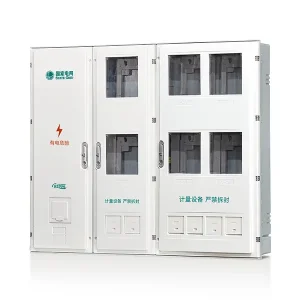
High-Integrity Enclosures & Distribution Systems
Engineered for seamless integration with 13.8 kV substations, feeder distribution networks, and regional smart grid topologies.
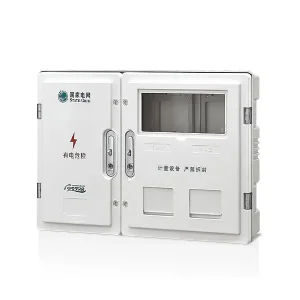
Wholesale Single-Phase Electric Energy Metering Box TY-SXD2 Series
View Specifications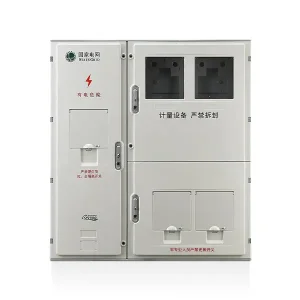
Wholesale TY Series Three-Phase Electric Energy Metering Box (Transformer Type)
View Specifications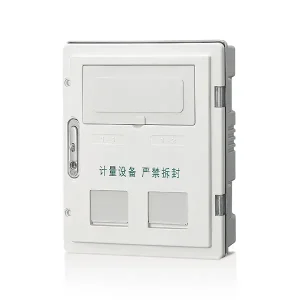
Wholesale China TY Single-Phase Electric Energy Metering Box Direct
View Specifications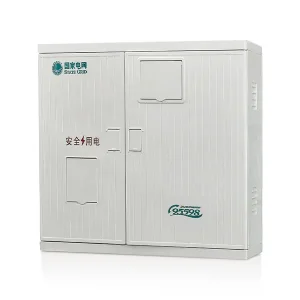
Wholesale TY-SXS3-BXJ Low Voltage B-Type Meter Box Solution
View Specifications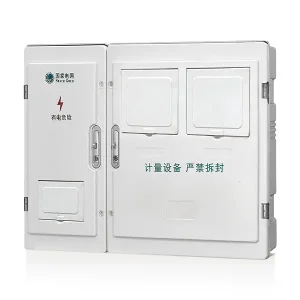
China Low Voltage Three-Phase Two-Position Metering Box
View Specifications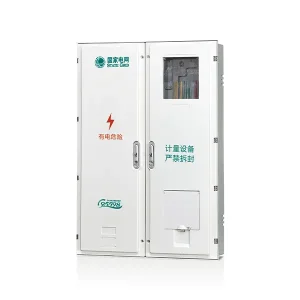
China Three-Phase Electric Energy Metering Box (Transformer Type) - TY-SXS3
View Specifications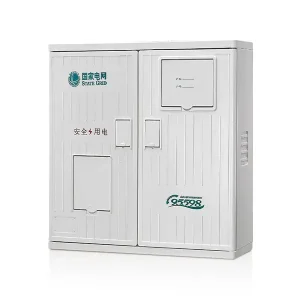
China A-Type Meter Box TY-SXS1: Low & High Voltage Solutions
View Specifications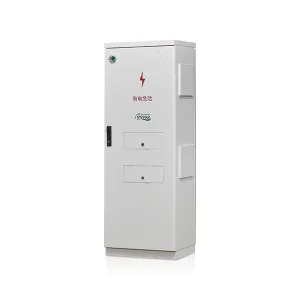
China Stainless Steel Single Phase Twelve-Position Meter Cabinet
View Specifications13.8 kV Ring Main Unit Engineering & Design Standards
A Ring Main Unit (RMU) operating within 13.8 kV distribution topologies serves as a foundational component for medium-voltage secondary loops, urban ring networks, and high-density renewable energy substations.
SF6 & Dry Air Hermetic Gas Tanks
Fabricated using robotic laser welding of 3.0mm grade 304 or 316 stainless steel sheets, ensuring zero leakage rates (less than 0.1% per annum) across 30+ years of operational service.
- Hermetically sealed against salt fog and dust
- Integrated molecular sieve moisture absorption
- Internal arc classification IAC AFLR up to 20 kA 1s
Advanced Feeder Automation (FTU/RTU)
Equipped with standardized secondary wiring and microprocessor-based feeder terminal units supporting modern remote telemetry, digital metering, and fault sectionalization protocols.
- Native IEC 61850, Modbus TCP, and DNP3.0 support
- Rapid autonomous loop sectionalizing (<100ms)
- Integrated CT/PT sensor interfaces for smart monitoring
Solid & Eco-Friendly Gas Insulated Options
In response to international SF6 phase-down directives, state-of-the-art Chinese manufacturers provide eco-efficient dry air insulated and solid dielectric epoxy encapsulated RMUs.
- Zero Global Warming Potential (GWP) options
- Hydrophobic cycloaliphatic epoxy resin encapsulation
- Modular scalability for C, F, V, and D breaker bays
Why Tier-1 EPCs Partner with Chinese 13.8 kV RMU Manufacturers
China's centralized power switchgear ecosystem offers unrivaled economies of scale, rigorous type testing compliance, and end-to-end component traceability.
Full Supply Chain Integration
Located in Yueqing—the Electrical Capital of China—our operations integrate every critical phase from raw SMC compression molding and stainless steel stamping to vacuum interrupter production and automated secondary testing.
- Direct procurement of certified vacuum bottles
- In-house CNC sheet metal stamping and bending
- Substantially compressed production lead times
Stringent Type-Testing & Verification
Chinese RMU lines are tested and certified according to IEC 62271-200, IEC 62271-100, and GB/T standards by internationally accredited testing bodies such as KEMA, ASTA, and China National Quality Inspection Centers.
- Impulse withstand tests up to 95 kV BIL
- Mechanical endurance: Class M2 (10,000 operations)
- Temperature rise performance under continuous full load
Bespoke OEM/ODM Flexibility
Every national utility possesses bespoke requirements regarding busbar dimensions, grounding philosophies, cable terminations, and interlocking safety keys. Chinese suppliers excel in engineering rapid configuration adjustments.
- Tailored bushing heights and cable compartment depth
- Customized control schemes for SCADA interfaces
- Dual-frequency compliance (50 Hz / 60 Hz grids)
Standard 13.8 kV RMU Engineering Specifications
Comprehensive ratings reflecting standard Chinese manufacturing benchmarks for medium-voltage primary and secondary distribution networks.
| Electrical Parameter | Standard Rating (IEC 62271-200) | High-Capacity Option |
|---|---|---|
| Rated Operational Voltage (Ur) | 13.8 kV | Up to 17.5 kV / 24 kV |
| Power Frequency Withstand Voltage (1 min) | 38 kV (to earth & between phases) | 42 kV / 48 kV across isolating distance |
| Lightning Impulse Withstand Voltage (1.2/50µs) | 95 kV BIL | 110 kV BIL |
| Rated Continuous Current (Ir) | 630 A (Load Break / Breaker) | 1250 A (Main Incomer Busbar) |
| Rated Short-Time Withstand Current (Ik) | 20 kA (3 Seconds) | 25 kA (3 Seconds) |
| Rated Peak Withstand Current (Ip) | 50 kA Peak | 63 kA Peak |
| Internal Arc Classification (IAC) | IAC AFLR 20 kA 1s | IAC AFLR 25 kA 1s |
| Gas Enclosure Protection Degree | IP67 (Sealed Stainless Tank) | IP67 Hermetic |
| External Outer Cabinet Protection Degree | IP4X / IP54 (Outdoor Enclosure) | IP65 (SMC Composite Enclosure) |
Macro Distribution Solutions & Use Cases
Delivering uninterrupted distribution resilience across challenging geographic environments, utility substations, and private industrial microgrids.
Coastal, Desert & High-Humidity Subsurface Vaults
Deployments across Southeast Asia, the Middle East, and Latin America often expose distribution equipment to intense salinity, blowing sand, or periodic water submersion. Our compact 13.8 kV gas-insulated RMUs paired with anti-corrosion SMC fiberglass or heavy-gauge stainless steel outer kiosks ensure complete protection against environmental ingress.
Utility-Scale Solar PV & BESS Integration
Renewable solar generation requires frequent switching cycles, bidirectional metering accuracy, and rapid circuit isolation under transient feeder conditions. Our 13.8 kV Ring Main Unit configurations interface directly with step-up container transformers and battery energy storage system (BESS) tie-in breakers with specialized protection relays.
Dense Urban Underground Networks & Mixed Commercial Complexes
Space optimization is paramount in modern municipal distribution. The ultra-compact footprint of China-built RMUs enables direct installation within compact pad-mounted substations, multi-tenant basement utility rooms, and prefabricated package stations without compromising internal arc containment safety.
Heavy Petrochemical & Mining Microgrids
Continuous industrial processing leaves zero tolerance for electrical outages. Ring Main Units equipped with fast vacuum circuit breaker bays and automatic bus transfer schemes allow zero-downtime maintenance of feeder lines while providing robust protection against downstream fault propagation.
Frequently Asked Questions for Overseas Buyers
Critical considerations regarding standards compliance, factory acceptance testing, customization, and lead times.
Standard configurations (e.g., typical 3-way or 4-way CCC, CCV schemes) typically feature a factory production cycle of 3 to 4 weeks. Highly customized schemes involving specific utility-specified protection relays, motorized mechanisms, or custom external kiosks generally require 5 to 7 weeks inclusive of routine factory acceptance testing (FAT).
Manufacturers support both third-party on-site inspection (e.g., SGS, Bureau Veritas, TÜV) and real-time remote digital FAT via high-definition video feeds. Routine testing protocols include power frequency withstand testing, partial discharge measurement, gas leakage rate verification, and mechanical interlock operational cycles.
Yes. While domestic Chinese networks operate at 50 Hz, major export-oriented factories design and test current transformers, potential transformers, cooling structures, and magnetic circuit breakers specifically for 60 Hz electrical grids commonly used in North America, Saudi Arabia, the Philippines, and parts of South America.
Our 13.8 kV sealed stainless steel tanks are engineered for a maintenance-free operating lifespan of 30+ years. The mechanical operating mechanisms are rated for 2,000 to 10,000 operations (M1/M2 class). Routine inspections are typically limited to periodic visual checks of the pressure manometer gauge and battery status.
Branch Boxes, Feeder Controls & Metering Cabinets
Complementary distribution infrastructure designed and verified for turnkey commercial, utility, and civil grid applications.
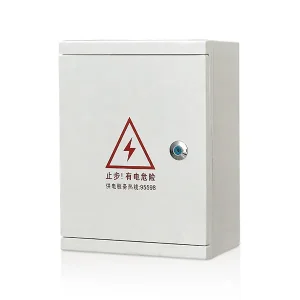
China Wall-Mounted Control Box TY-KZX Series
View Specifications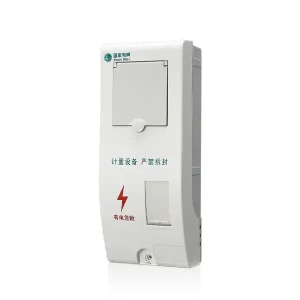
China TY-SXD1 Single-Phase Metering Box for 50Hz/60Hz
View Specifications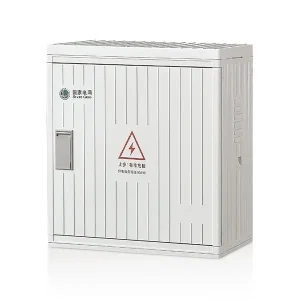
Wholesale TY-DFW-7A Branch Box Supplier, Factory Direct
View Specifications
China TY-DFW-7A Branch Box - High-Performance Electrical
View Specifications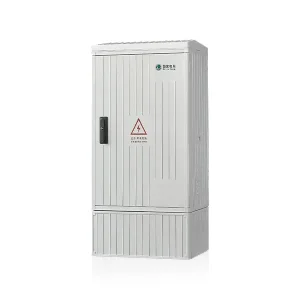
Wholesale TY-DFW Floor-standing Cable Branch Box
View Specifications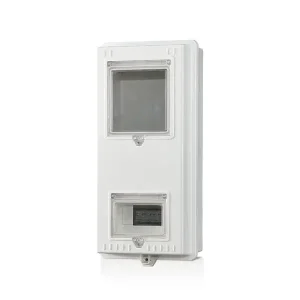
China SMC Fiberglass Foreign Trade Enclosure Box
View Specifications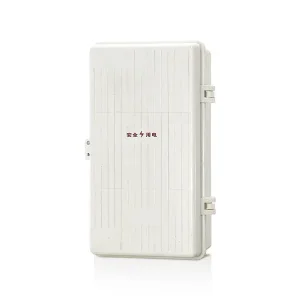
Wholesale TY-SXS1-CJ Three-Phase Collector Box
View Specifications