
Tokyo Industrial Zone Fast-Deploy Circuit Breakers & Metering Enclosures
Engineered to operate seamlessly across high-density feeder systems, coastal bays, and smart residential networks across Greater Tokyo and Kanto region.
Electrical Modernization Demands across Tokyo Metropolitan Area
Analyzing Tokyo's unique power distribution challenges: earthquake mitigation, microgrid isolation, and underground-to-overhead network transitions.
The Tokyo Metropolitan Area represents one of the world's most intricate and dense power distribution networks. Driven by the Tokyo Metropolitan Government’s resilient infrastructure initiatives and utilities like TEPCO (Tokyo Electric Power Company Holdings), the regional electrical architecture undergoes continuous hardening against seismic risks, intense typhoon seasons, and urban heat island effects. While major business arteries like Marunouchi, Shinjuku, and Roppongi utilize extensive underground cabling, vast peripheral industrial belts—ranging from the Keihin Industrial Zone in Kawasaki/Yokohama to the logistics hubs along Tokyo Bay, Edogawa, and northern Saitama corridors—depend heavily on overhead 6.6 kV and 22 kV distribution networks.
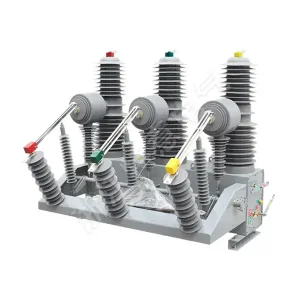
In Tokyo, power continuity is not merely an operational efficiency goal; it is a matter of civil safety and data-center uptime. High-density commercial districts demand ultra-fast fault isolation to prevent feeder dropouts from cascading into tier-3 and tier-4 server facilities. Furthermore, coastal salt spray drifting inland from Tokyo Harbor accelerates galvanic corrosion on pole-mounted switchgear. Consequently, EPC contractors and procurement managers in Tokyo require vacuum circuit breakers (VCB) encased in robust 304/316 grade stainless steel or compression-molded SMC (Sheet Molding Compound) with severe anti-corrosion finishes capable of outlasting wet, high-humidity summer seasons and winter thermal cycling.
Tokyo Bay Waterfront & Logistics Hubs
Installed across container terminals, cold-storage warehouses, and logistics centers in Koto, Shinagawa, and Ota wards where salt-fog and marine winds require heavy IP67 sealing and hermetic vacuum interrupters.
Commercial Solar & Distributed BESS
Providing bidirectional overcurrent protection, anti-islanding isolation, and automated zero-sequence voltage monitoring for medium-voltage grid-tied industrial solar farms across suburban Tokyo.
Suburban Seismic Hardening Routes
Compact, vibration-tested lightweight pole-mounted units designed to withstand sudden high-acceleration ground shock without triggering false mechanical tripping or secondary busbar flashovers.
Why Tokyo EPCs & International Utilities Source from Chinese Manufacturers
Combining Yueqing's comprehensive electrical cluster ecosystem with stringent international conformance and competitive OEM/ODM manufacturing agility.
For engineering, procurement, and construction (EPC) conglomerates operating in Tokyo, balancing Japanese regulatory adherence (such as JIS and JEC standards) with realistic infrastructure project timelines presents a persistent dilemma. Domestic Japanese switchgear makers often grapple with elongated 16-to-24 week fabrication schedules, constrained capacity, and high unit expenditures. This dynamic has driven Japanese procurement directors and multinational contractors overseeing projects in Japan to partner directly with leading Chinese manufacturers located in the Yueqing electrical hub of Zhejiang Province.
Zhejiang Teyi Electric Co., Ltd. exemplifies the modern tier-1 manufacturing partner. Backed by dedicated compression molding workshops, automated vacuum interrupter testing rigs, and precision sheet metal fabrication lines, our factory delivers substantial architectural advantages:
Full Supply Chain Integration
Located in Yueqing, the electrical capital of China, raw materials, vacuum chambers, copper busbars, and micro-controller relays are sourced within an 8 km radius, drastically slashing lead times to under 3-4 weeks.
Primary & Secondary Fusion R&D
Seamlessly integrates the medium-voltage vacuum breaker body with electronic CT/PT current transformers, smart feeder terminal units (FTU), and DNP3.0/IEC 61850 communication gateways in a factory-tested monobloc.
Rigorous Quality Validation
Every pole-mounted circuit breaker unit undergoes lightning impulse withstand tests (BIL up to 125 kV/170 kV), partial discharge screening (≤ 10 pC), mechanical endurance cycling, and strict helium mass-spectrometer leak checks.
| Technical Characteristic | Teyi Primary & Secondary Fusion Breaker | Conventional Japanese Domestic Pole Switch | Standard Commodity Breaker |
|---|---|---|---|
| Rated System Voltage | 12 kV / 24 kV / 36 kV (Dual 50/60 Hz) | 6.6 kV / 22 kV (Fixed Frequency) | 12 kV only |
| Rated Breaking Current | 12.5 kA to 25 kA (0.05s trip) | 12.5 kA | 8 kA to 12.5 kA |
| Insulation Medium | Environment-friendly Dry Air / Solid Epoxy Resin | SF6 Gas (Greenhouse Gas Phase-out pressure) | Standard SF6 or Oil |
| FTU Automation Integration | Built-in RTU/FTU with DNP3.0 / Modbus / IEC 60870 | External auxiliary terminal box required | Manual trip or rudimentary pulse control |
| Production Lead Time | 15 – 25 Days (Direct Factory Dispatch) | 14 – 20 Weeks | 30 – 45 Days |
Global Grid Trends: From Passive Protection to Self-Healing Automation
How the fusion of solid-dielectric insulation, distributed intelligence, and automated reclosing drives modern city grids.
The medium-voltage distribution switchgear sector is in the midst of a historic paradigm shift. Historically, overhead utility networks depended on pole-mounted load-break switches (LBS) paired with downstream drop-out fuses. In the event of a transient fault—such as tree branch contact during a typhoon or an animal flashover—the fuse melted, triggering an extensive localized outage until a field maintenance crew could locate and physically replace the link. In dense metropolitan zones like Tokyo, such operational latency induces unacceptable economic disruption.
Modern distribution strategies center around Automated Reclosing & Loop-Feeder Self-Healing:
- Eco-Friendly Solid Dielectric & Vacuum Interruption: As global governments align with COP decarbonization treaties, the phase-out of Sulphur Hexafluoride (SF6)—a potent greenhouse gas with a global warming potential 23,500 times greater than CO2—is accelerating. Teyi pole-mounted circuit breakers utilize cycloaliphatic epoxy resin casting or environmentally benign dry air, guaranteeing zero greenhouse emissions over the equipment's 30+ year lifecycle.
- Primary and Secondary Fusion Integration: By embedding high-precision electronic current transformers (LPCT) and low-power voltage transformers (LPVT) directly into the breaker's solid-sealed poles, internal cabling is drastically simplified. This prevents signal loss, mitigates secondary resonance, and delivers real-time telemetry on line loss, phase angle, and harmonics directly to utility SCADA dashboards.
- Bi-directional Protection for Distributed Renewable Energy: Rooftop PV installations across Tokyo commercial structures frequently invert line power flow. Our intelligent reclosers feature dynamic directional overcurrent relays, programmable auto-reclose cycles (up to 4 shots: O-0.3s-CO-2s-CO), and sensitive earth fault (SEF) detection capable of picking up fault currents as low as 0.5 A.
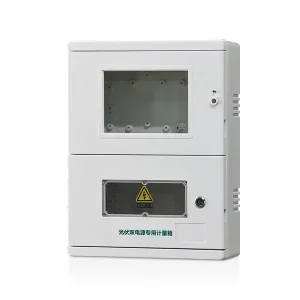
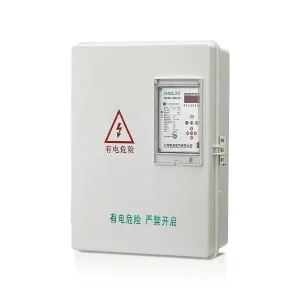
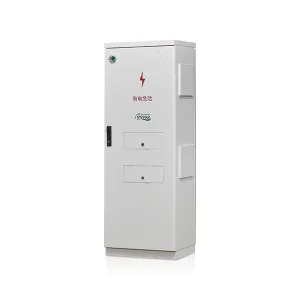
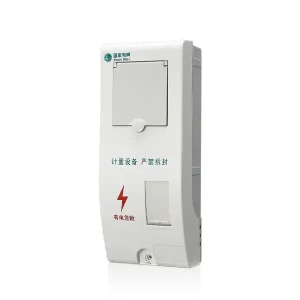
Comprehensive Electrical Metering & Protection Portfolio
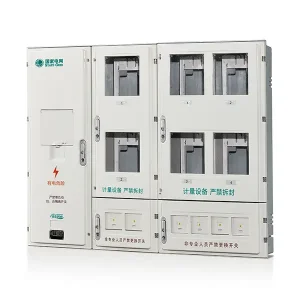
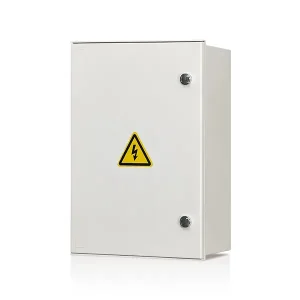
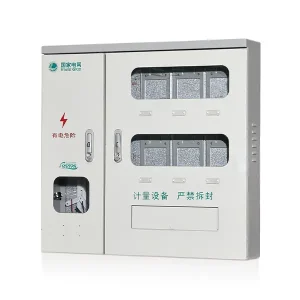
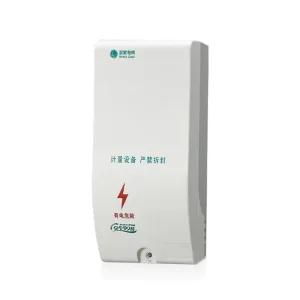
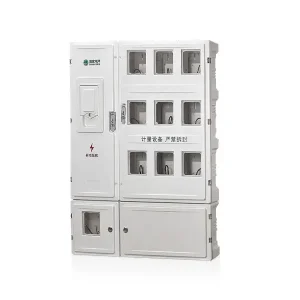
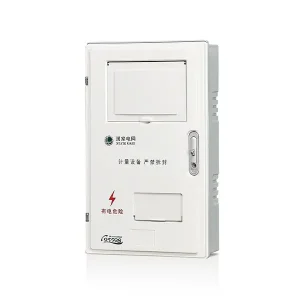
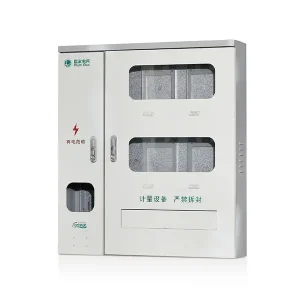
Complete your substation-to-service-entrance hardware portfolio with high-performance SMC fiberglass boxes, stainless steel multi-meter enclosures, and solar grid-tied junction units.
Frequently Asked Questions for Tokyo & Overseas Buyers
Comprehensive engineering insights addressing shipping, testing certifications, environmental durability, and custom OEM parameters.