
Primary Engineering Catalog
Featured Industrial Metering Enclosures & Control Units
Direct factory-sourced power metering systems, intelligent fusion terminals (TTU), and high-durability stainless steel metering assemblies engineered for utility grids and commercial secondary distribution loops.
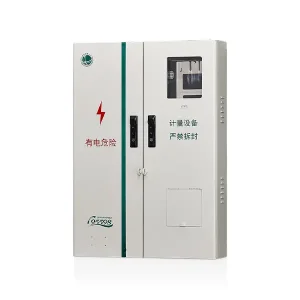
Wholesale Single-Phase Electric Energy Metering Box TY-SXD2 Series from China Suppliers and Factory - Reliable Power Measurement Solutions Manufacturer, Factories
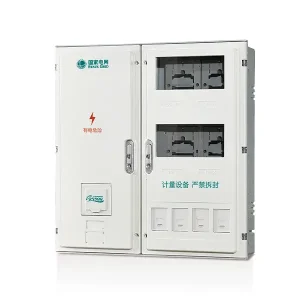
View Technical Specs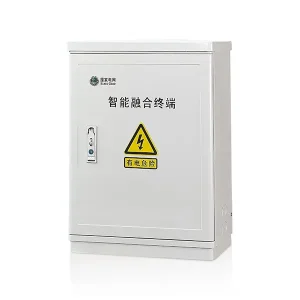
China China TY-TTU Intelligent Fusion Terminal Box - Reliable Suppliers and Factory Installation Guide Manufacturer, Manufacturers
View Technical Specs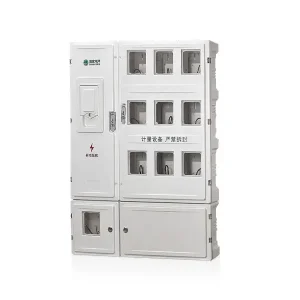
Wholesale TY-SXD2 single-phase electric energy metering box(9-18) Suppliers, Factories
View Technical Specs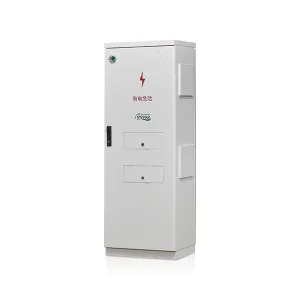
China China Factory Stainless Steel Single Phase Twelve-Position Meter - Durable Floor-Standing Solution from Reliable Suppliers Supplier, Suppliers
View Technical Specs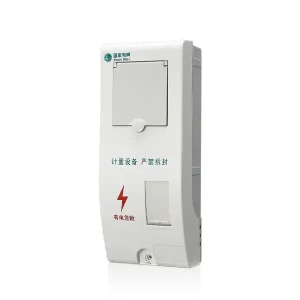
Wholesale China TY-SXD1 Single-Phase Electric Energy Metering Box - Suppliers & Factory for Reliable Power Measurement Manufacturers, Supplier
View Technical Specs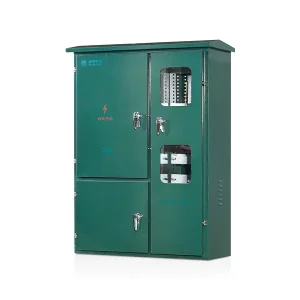
China China Stainless Steel Three-Phase Electric Energy Metering Box - Factory Direct Supply for Industrial Use Supplier, Suppliers
View Technical Specs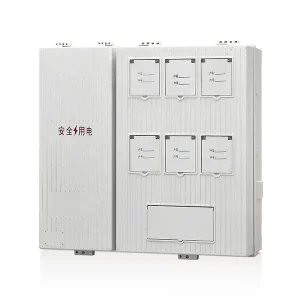
Wholesale TY Single-Phase Electric Energy Metering Box from China Suppliers and Factory - Safe & Reliable Outdoor Use Manufacturer, Suppliers
View Technical Specs
Industry Strategic White Paper
The Strategic Transformation of Secondary Distribution Grids
Analyzing the structural shift toward decentralized secondary rings, medium-voltage intelligence, and non-stop operational resilience across modern power distribution architectures.
40.5 kV
Maximum Rated Operating Voltage Capability
30 kA
Short-Time Withstand Current (1s / 3s Rated)
40+ Yrs
Designed Indoor Service Lifecycle (SMC/Stainless)
IP67
Gas Tank Hermetic Protection Rating
In modern electrical grid engineering, the Ring Main Unit (RMU) represents the foundational switching and protection node of secondary distribution networks. As global power architectures shift from centralized fossil-fuel generation toward intermittent renewable microgrids, distributed solar photovoltaic (PV) complexes, and electric vehicle (EV) fleet mega-chargers, the demands placed upon medium-voltage (MV) switchgear have escalated exponentially. Modern secondary substations can no longer function as passive switching points; they must act as active, self-healing, data-driven nervous systems capable of uninterrupted bidirectional power flow.
"The modern RMU system is no longer a static mechanical enclosure. It is a converged electro-mechanical platform integrating solid/gas insulation, vacuum arc interruption, smart metering sensors, and Feeder Automation Terminals (FTU/TTU) capable of sub-cycle fault isolation."
Historically, secondary distribution depended on conventional air-insulated switchgear (AIS), which required vast installation footprints and exhibited high vulnerability to atmospheric humidity, coastal salt-mist, and industrial pollutants. The wholesale RMU system manufacturing sector has systematically resolved these challenges through hermetically sealed enclosures, compressing multi-functional circuit switching (V-modules), load break switches (C-modules), and busbar metering tie-ins into ultracompact, factory-tested monolithic enclosures.
Hermetic Environmental Isolation
State-of-the-art RMUs seal all energized components, including disconnectors, vacuum interrupters, and busbar manifolds, inside robotically laser-welded stainless steel tanks (AISI 304/316L) rated to IP67. This prevents oxidation, partial discharges, and particulate contamination across lifetime operations.
IP67 Enclosure
Corrosion Immunity
Zero Air Gap Arcing
Modular Extensibility
Distribution topologies require dynamic expansion. Leading wholesale manufacturers utilize standardized plug-in solid-insulated busbar extensions, allowing network operators to scale from basic 2-way or 3-way rings to complex 6-way automated switching configurations without degassing or field welding.
Plug-In Busbar
Compact Footprint
Field Upgradeable
Intelligent Edge Automation
Through tight integration with intelligent fusion terminal units (like the TY-TTU series) and low-power current/voltage sensors (LPITs), the modern RMU executes autonomous fault detection, isolation, and service restoration (FDIR) in less than 300 milliseconds.
IEC 61850
Modbus / DNP3
Predictive Telemetry
Next-Generation Engineering
Technological Paradigms: The SF6-Free & Solid-Insulated Revolution
Addressing global greenhouse gas compliance (GWP < 1) through Clean Air medium, fluoronitrile eco-gas replacements, and Solid-Insulated Switchgear (SIS) architectures.
For more than four decades, Sulfur Hexafluoride (SF6) served as the undisputed insulation medium of choice for compact switchgear due to its unmatched dielectric strength and thermal interruption performance. However, SF6 carries a Global Warming Potential (GWP) of approximately 24,300 times that of CO2, remaining active in the atmosphere for over 3,200 years. With statutory bans taking effect across the European Union (EU F-Gas Regulation) and rigorous decarbonization goals implemented across North America and Asia-Pacific utilities, global procurement mandates demand zero-SF6 alternatives.
Wholesale RMU system manufacturers have pioneered three core replacement paradigms to eliminate greenhouse gas risks without sacrificing physical footprints or mechanical endurance:
| Insulation Technology | Dielectric Medium | Global Warming Potential (GWP) | Maintenance Intensity | End-of-Life Recycling Risk | Target Grid Application |
|---|---|---|---|---|---|
| Traditional Gas-Insulated (GIS) | Sulfur Hexafluoride (SF6) | 24,300 (Severe Impact) | Low (Gas pressure monitoring mandatory) | High regulatory overhead; toxic byproducts | Legacy utility substations & classic industrial rings |
| Eco-Gas / Clean Air RMU | Dehydrated Clean Air (N2/O2 synthetic mix) | 0 to < 1 (Zero Impact) | Negligible (Natural gas mix; no decomposition toxins) | Safe atmospheric venting; zero recycling fees | Environmentally regulated urban grids, green certifications |
| Solid-Insulated Switchgear (SIS) | Epoxy Resin / Silicone Rubber Encapsulation | 0 (Completely Gas-Free) | Zero maintenance; zero gas pressure monitoring | Direct mechanical recovery; no chemical mitigation | High-altitude sites, mine galleries, subway transit networks |
| Shielded Solid Insulated (2SIS) | Epoxy with conductive earthed outer coating | 0 (Completely Gas-Free) | Zero maintenance; touch-safe outer perimeter | Simple dismantling; fully shielded phase isolation | Flooded manholes, ultra-compact underground distribution |
In addition to dielectric chamber advancements, the arc-quenching mechanism has completely transitioned from gas blast to high-vacuum interrupters (VI). Vacuum interrupters guarantee an electrical operational lifecycle of over 10,000 switching operations at rated current and up to 50 operations under maximum short-circuit break conditions (e.g., 20kA to 25kA). The integration of shielded solid insulation (2SIS) provides touch-safe outer enclosures, preventing cross-phase flashovers even when foreign particulate intrusions occur inside the cabinet.
Procurement Engineering Matrix
Global Procurement Criteria & International Standards Compliance
Critical specifications international utility engineers, EPC contractors, and tender authorities mandate when vetting wholesale switchgear manufacturers.
IEC & IEEE Benchmarking
Tenders mandate rigorous type-test validation according to IEC 62271-200 (AC metal-enclosed switchgear and controlgear), IEC 62271-100 (high-voltage circuit breakers), and IEC 62271-102 (disconnectors and earthing switches). Equipment must carry verified reports from accredited laboratories (KEMA, ASTA, or national high-power testing authorities).
- Rated Lightning Impulse (BIL) up to 170 kV
- Power frequency withstand up to 70 kV/min
Internal Arc Classification (IAC)
Operator safety is paramount during unforeseen internal fault conditions. Modern RMU tenders require IAC AFLR certification (Access: Front, Lateral, Rear) testing short-circuit thermal gas relief at 16kA to 20kA for a full 1.0 second without casing breach.
- Gas exhaust directional venting downward
- Operator chamber zero-cotton flash ignition
Enclosure Metallurgy & SMC GRP
Depending on ambient site stress, enclosures must resist intense salinity and chemical vapor. Sheet Molding Compound (SMC) unsaturated polyester fiberglass reinforced plastic enclosures guarantee dielectric isolation, rust immunity, and over 40 years of service life without maintenance.
- C5-M extreme marine corrosion resistance
- High IK10 mechanical impact absorption
Smart RTU & Protocol Fusion
Tenders mandate complete interoperability with centralized SCADA systems. Factory-integrated terminal boxes (such as TY-TTU) support native IEC 60870-5-104, IEC 61850 GOOSE/SV, and cellular NB-IoT/4G/5G encrypted industrial telemetry channels.
- Remote trip, close, and disconnector locking
- Busbar partial discharge (PD) monitoring
Smart Manufacturing & Supply Chain
China Factory 4.0: Supply Chain Resilience & The Yueqing Ecosystem
How industrial cluster specialization, robotic precision, and localized supply chains allow Chinese wholesale manufacturers to deliver superior lead times and economic competitiveness.
In electrical equipment manufacturing, geographical clustering plays a transformative role in total cost of ownership (TCO) and rapid delivery cycles. Located in the Yueqing Economic Development Zone in Wenzhou—globally recognized as the "Electrical Capital of China"—Zhejiang Teyi Electric Co., Ltd. sits at the heart of one of the planet's dense concentrations of low- and medium-voltage engineering intelligence.
This geographic concentration creates an unmatched supply chain velocity. Core sub-tier components—such as ceramic vacuum interrupters, silver-nickel contact alloys, microcomputer-based protection relays, current transformers, and mold-compression raw materials—are sourced within a 30-kilometer manufacturing perimeter. This proximity insulates OEM and ODM production from cross-border shipping delays and component supply disruptions.
Robotic Laser Welding & CNC Bending
Gas tanks for RMUs require absolute airtight integrity. Production lines utilize multi-axis robotic fiber-laser welding systems operating in shielding gas chambers, delivering seam uniformity with zero micro-porosity and eliminating the human error inherent in manual TIG welding.
Helium Mass Spectrometry Testing
Every hermetically sealed tank is evaluated inside vacuum helium chambers capable of detecting leakage rates lower than 0.05% per annum (exceeding IEC 62271-1 sealed-for-life criteria). This guarantees a gas-maintenance interval exceeding 30 to 40 years without manual top-ups.
High-Tonnage Compression Molding
For outdoor and basement metering applications, Teyi deploys multi-ton hydraulic compression presses utilizing SMC thermosetting compounds. Precision molds yield high mechanical stiffness, uniform structural density, and UV-stabilized outdoor durability across extensive batch runs.
Localized Application Engineering
Field Scenarios: Engineering RMUs for Real-World Demands
From utility loops to high-load renewables and transport networks, explore how modular RMU designs adapt to mission-critical infrastructure requirements.
Solar PV & BESS Grid Intertie
Renewable generation plants suffer from high ambient temperatures, dusty terrain, and intense harmonics. RMU systems integrated with TY-SXS3 metering boxes and transformer interfaces ensure bidirectional power metering and swift vacuum breaker protection against inverted fault currents from battery arrays.
Bidirectional Protection Thermal StabilityUrban Rail Transit & Metros
Subway networks cannot tolerate power blackouts or smoke hazards during internal faults. Solid-insulated and clean-air RMUs deliver zero-fire-hazard operation within confined underground galleries, integrating motorized mechanisms to allow remote switching from central dispatch towers.
Zero Smoke Emission Rapid SCADA DispatchMission-Critical Data Centers
Hyperscale data facilities require Tier III/IV dual-loop distribution architectures. Fast-transfer RMUs equipped with microsecond-grade automatic transfer switching (ATS) systems cycle between main substation feeds and on-site backup generators without triggering server UPS drops.
Tier IV Architecture Sub-Cycle TransferCommercial High-Rise Distribution
Space in modern commercial towers commands a steep premium. Ultracompact multi-way RMU configurations fit into basement utility closets, pairing seamlessly with TY-SXD2 series SMC metering boxes to allocate tenant consumption across dozens of floors accurately.
Compact Footprint Multi-Tenant Metering
Direct Answers for Technical Buyers
Engineering & Procurement FAQ
Clear, definitive technical guidance addressing typical specifications, customizations, compliance criteria, and supply agreements.
What are the key technical distinctions between SF6 GIS and Solid-Insulated (SIS) RMUs?
SF6 Gas-Insulated Switchgear utilizes pressurized sulfur hexafluoride gas to provide dielectric isolation and arc quenching within a sealed stainless tank. While compact and reliable, it poses environmental compliance risks and requires gas density manometer monitoring. Solid-Insulated Switchgear (SIS) completely removes all gas, encapsulating vacuum interrupters and main bus conductors directly in cycloaliphatic epoxy resin and silicone rubber. SIS eliminates gas leakage risks, does not require pressure telemetry, and operates across high altitudes and humid tunnels without derating.
How does Teyi Electric guarantee corrosion protection for coastal and offshore installations?
For marine, coastal, and chemical corridor environments, our equipment utilizes dual-layer defense. Internal gas chambers are constructed from high-grade AISI 304 or marine-grade 316L stainless steel with automated laser welding. Outer containment enclosures are compression-molded from SMC (Sheet Molding Compound) fiberglass-reinforced polyester or powder-coated stainless steel rated to C5-M atmospheric corrosivity standards, preventing oxidation and dielectric decay over a 30- to 40-year lifespan.
Can wholesale RMUs and metering enclosures be customized to utility tender specifications?
Yes. Under our OEM and ODM engineering workflows, we tailor busbar ratings (630A, 1250A), short-circuit withstand values (20kA, 25kA, 31.5kA), cable termination depths, interlocking logic (padlock, mechanical castell interlock, electrical solenoid), viewing windows, and integrated smart fusion terminal units (TY-TTU/FTU) to align with national utility specifications across Latin America, Southeast Asia, the Middle East, and Africa.
What type-test certifications accompany bulk export consignments?
All products can be delivered with comprehensive type-test documentation issued in accordance with IEC 62271-200, IEC 62271-100, and IEC 61439-1 standards. Reports cover short-time and peak withstand current tests, temperature rise verification at rated current, internal arc fault classification (IAC AFLR), mechanical endurance (M2 class - 10,000 operations for circuit breakers), power frequency withstand, and lightning impulse tests.
How do smart metering boxes interface with medium-voltage RMU secondary networks?
In modern distribution substations, the medium-voltage RMU steps down voltage via a local distribution transformer. The secondary low-voltage side connects through our intermediate protection boxes and TY-SXS3 transformer-type three-phase metering enclosures. Equipped with precision current transformers (CTs) and digital RS-485 / optical communication ports, these enclosures transmit tenant power consumption and grid power-quality metrics to central billing automation hubs.
What are the lead times for custom-engineered wholesale switchgear and metering units?
Standard utility catalog models have baseline component stocks ready for assembly, allowing container shipments within 15 to 25 calendar days. For custom OEM/ODM configurations requiring new compression molds, specialized busbar routing, or customized digital terminal boxes, technical 3D CAD design review takes 5 to 7 days, prototype validation takes 15 days, and volume production typically completes within 30 to 45 days after engineering sign-off.
Secondary Infrastructure Solutions
Wholesale Three-Phase Metering, Protection & Control Cabinets
Explore transformer-rated three-phase energy metering boxes, intermediate protection enclosures, and heavy-duty industrial control units designed for utility-scale substations.
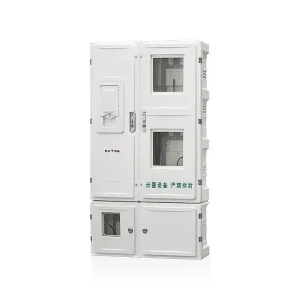
China Three-Phase Electric Energy Metering Box TY-SXS2 from China Suppliers and Factory for Efficient Power Management Manufacturers, Factory
View Technical Specs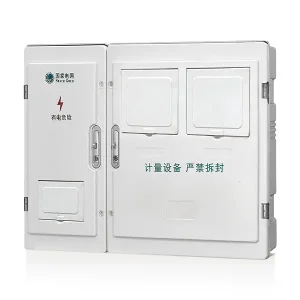
China TY-SXS2-DXJ low voltage three-phase two-position electric energy metering box Manufacturer, Manufacturers
View Technical Specs
Wholesale China TY-SXS2 Three-Phase Electric Energy Metering Box - Reliable Suppliers & Factory Solutions for Power Management Supplier, Factory
View Technical Specs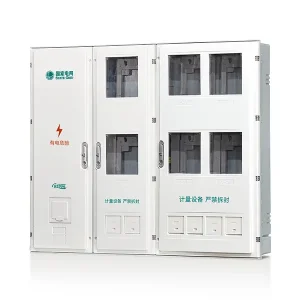
China China TY Three-Phase Electric Energy Metering Boxes - Reliable Suppliers and Factory for Efficient Energy Management Manufacturers, Suppliers
View Technical Specs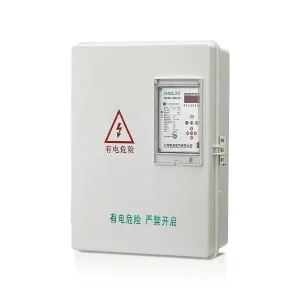
China TY-Intermediate protection box Factories, Factory
View Technical Specs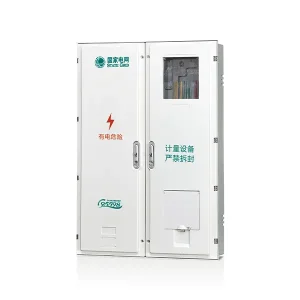
China TY-SXS3 Three-Phase Electric Energy Metering Box (Transformer Type) - China Suppliers & Factory Manufacturer, Manufacturers
View Technical Specs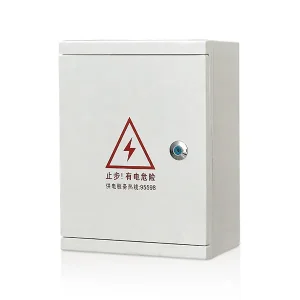
China Wall-Mounted Control Box TY-KZX Series - Durable, Compact Designs from China Suppliers & Factory Manufacturers, Factory
View Technical Specs