
Flagship Utility Metering Enclosures & Smart Distribution Boxes
Engineered to withstand rigorous climatic cycles, high short-circuit electromagnetic stresses, and uncompromised dielectric requirements across low and medium voltage utility tiers.
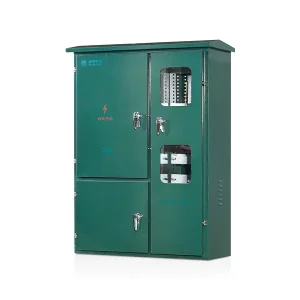
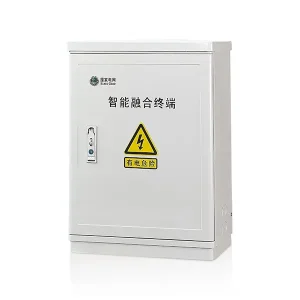
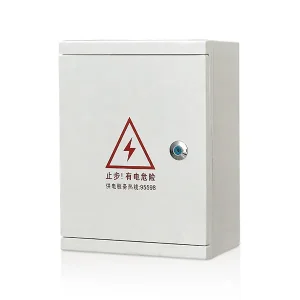
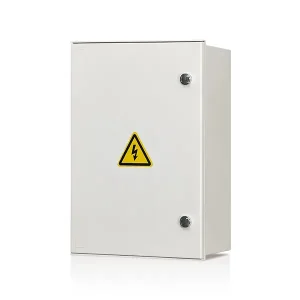
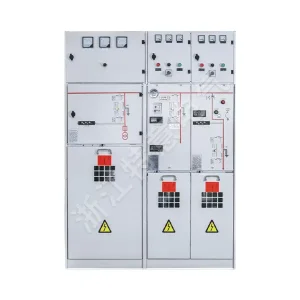
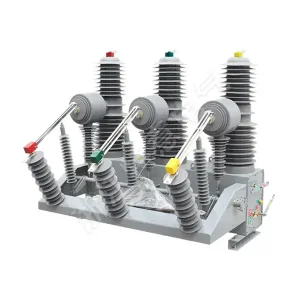
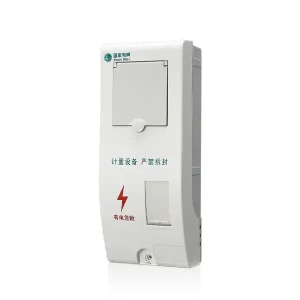
Global Commercial Dynamics of Electricity Metering Boxes & Factory Ecosystems
In modern power transmission and distribution (T&D) architectures, the electricity metering box is no longer merely a passive enclosure. It represents the mission-critical boundary interface between the electrical utility network and the revenue-generating customer endpoint. As smart metering (AMI 2.0) sweeps across European, North American, Asia-Pacific, and Middle Eastern distribution grids, wholesale procurement teams face mounting pressure to choose manufacturing partners that balance high structural robustness, zero maintenance, electromagnetic compliance, and tamper deterrence.
The Industrial Shift from Ferrous Metal to SMC Composites
Over the past decade, national power authorities including Enel, EDF, State Grid, SEC, and DEWA have steadily phased out conventional painted carbon-steel meter boxes in low-voltage distribution. Sheet Molding Compound (SMC)—a high-pressure thermosetting composite combining chopped glass fiber strands with unsaturated polyester resin—has become the gold standard.
- Eliminates electrocution hazards via inherent Class II electrical insulation.
- Complete immunity to galvanic corrosion and coastal salt fog rust.
- Drastic reduction in weight, lowering freight expenses and structural pole-loading strain.
Revenue Protection & Non-Technical Loss (NTL) Mitigation
For municipal utilities and energy distributors, electricity theft and non-technical losses represent tens of billions of dollars in lost operating revenue annually. Advanced wholesale metering box factories address this through hardened mechanical design and IoT-ready tamper architecture.
- Concealed internal multi-point latching systems preventing pry-bar intrusion.
- Optical-grade polycarbonate meter-viewing portals with UV-stabilized anti-scratch coatings.
- Integrated reed-switch bays for automated remote SCADA/AMI door-open alert telemetry.
Smart Grid Edge Node Convergence (AMI & Distributed Energy)
Modern grid endpoints are no longer purely consumption points; the rapid adoption of rooftop solar PV, residential battery storage systems (BESS), and electric vehicle charging hubs has turned the meter enclosure into a bidirectional power-flow gateway.
- Dedicated partition cavities for miniature circuit breakers (MCBs), surge protectors (SPDs), and RCBOs.
- Thermal chimney profiles venting heat generated by bidirectional current sensors.
- EMC-neutral composite structures that prevent RF attenuation for NB-IoT, LoRa, and ZigBee modems.
Enclosure Material Selection: Engineering & Life-Cycle Economics
Selecting the optimal enclosure material directly dictates long-term failure rates, maintenance truck-rolls, dielectric safety, and operational expenditure across diverse installation environments.
| Evaluation Parameter | SMC Composite (Fiberglass GRP) | Austenitic Stainless Steel (304/316) | Cold-Rolled Carbon Steel (Powder Coated) | Standard Polycarbonate / ABS Plastic |
|---|---|---|---|---|
| Dielectric Strength & Insulation | Superior (>15 kV/mm), Class II safe, zero earthing dependency | Conductive; requires active protective bonding | Conductive; fatal shock risk if bond fails | High insulation (>10 kV/mm); Class II rated |
| Marine / Coastal Saline Corrosion | Total immunity (Zero rust or surface pitting) | High (requires 316 in severe marine zones) | Poor; blister formation & deep rust within 3-5 yrs | Good; non-reactive to salts |
| Mechanical Rigidity & Impact (IK Rating) | IK10 (Resists 20J impact, does not dent) | IK10+ (Extremely tough, but subject to denting) | IK09-IK10 (Dents readily, damaging interior components) | IK07-IK08 (Vulnerable to cracking under cold impact) |
| Solar UV Degradation & Thermal Drift | Excellent (UV-stabilized thermoset resin, no softening) | Immune to UV; absorbs heat rapidly (elevates internal temp) | Coating chalks over time; high internal solar heat gain | Moderate; potential embrittlement & yellowing over time |
| RF Transparency (LoRa, NB-IoT, Cellular) | 100% transparent; eliminates external antenna costs | Faraday cage; requires external antenna punch-outs | Faraday cage; attenuates wireless signals severely | Transparent to all smart grid radio frequencies |
| Design Service Life (Outdoor) | 30 to 40+ Years (Zero routine surface maintenance) | 25 to 35 Years (Periodic wash-down recommended) | 8 to 12 Years (Requires frequent repainting) | 10 to 15 Years (Degrades under severe sun exposure) |
Localized Engineering Application Scenarios & Macro Solutions
T&D networks operate in vastly divergent geographic and regulatory ecosystems. Our wholesale manufacturing lines are pre-configured to adapt to complex localized standards.
High-Density Urban Residential & Multi-Tenant Clusters
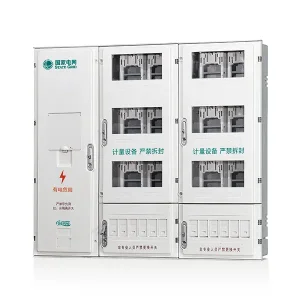
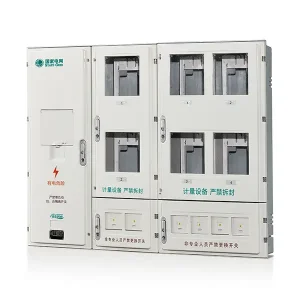
Urban high-rises and master-planned residential communities require aggregated, multi-meter enclosures (such as our TY-SXD2 series supporting 2 to 12 meter positions). Factory-engineered internal busbars reduce wiring clutter, minimize fire spread risks, and provide clean modular separation between customer breaker access and utility-sealed meter cavities.
- Individual padlockable consumer breaker windows.
- Concealed internal trunking for zero wire cross-talk.
- Fire-retardant formulation tested to UL 94 V-0 standards.
Severe Coastal, Tropical, & Desert Grid Deployments
Installations along the Arabian Gulf, Southeast Asian coastlines, or Sub-Saharan environments face relentless humidity, blowing abrasive sand, and intense solar insolation. Our SMC enclosures utilize high-density polyurethane continuous perimeter gaskets (IP54/IP65) and UV-stabilized resin packages that prevent thermal warpage and moisture penetration.
- Engineered labyrinth ventilation louvers repelling driving rain.
- Stainless steel 316 heavy-duty external hinge pins.
- Stable operating window spanning from -40°C up to +80°C.
Renewable Distributed Solar PV & Microgrid Tie-Ins
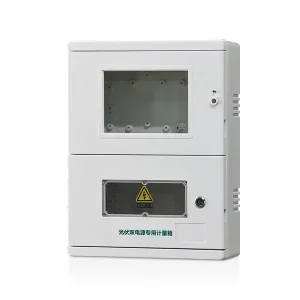
Photovoltaic grid interconnection demands bidirectional revenue-grade metering, DC/AC disconnector switches, and integrated rapid-shutdown protection. Our fiberglass PV grid-connected enclosures provide dedicated din-rail mounts, surge protective devices (Type 1+2), and optical windowing for swift feed-in tariff verification by utility inspectors.
- Bi-directional meter mounting plate with isolation barriers.
- Pre-drilled stepped cable gland knockouts for armored solar feeds.
- High short-circuit withstand for utility grid back-feed scenarios.
Industrial Petrochemical & Heavy Manufacturing Facilities
Chemical processing plants, paper mills, and mining sites release corrosive gases (such as sulfur dioxide and hydrogen sulfide) that destroy traditional painted enclosures within months. For such environments, our 304/316 grade stainless steel and chemical-resistant SMC enclosures ensure uninterrupted power accounting and critical automation integrity.
- Acid, alkali, and hydrocarbon vapor immune materials.
- Transformer-operated (CT) three-phase metering cavities.
- Rated for busbar currents from 100A up to 630A continuous.
Factory Production Architecture: From Raw Composite to Certified Batch
High-volume manufacturing of utility metering boxes requires rigorous process control at each manufacturing phase to guarantee wall thickness uniformity, mechanical tensile strength, and dielectric reliability.
SMC Compounding & Matting
Unsaturated polyester resins, catalyst systems, low-shrink additives, and inorganic fillers are mixed into a homogeneous paste, impregnated onto chopped glass fiber roving, and precision-sheeted under controlled temperature maturation.
High-Tonnage Compression Molding
Automated cutting tables slice SMC sheets to exact charge weights. Heavy hydraulic presses (600T to 2000T) apply dual-zone heat (145°C–155°C) and extreme pressure into hardened chromium-plated steel molds, cross-linking the polymer matrix.
Automated CNC Trimming & Punching
Enclosures are transferred to 5-axis robotic trimming cells to remove flashing, route window apertures, and drill precision mounting holes according to custom OEM utility tender specifications with ±0.1mm tolerance.
Gasketing, Hardware & Busbar Fitting
Automated robotic dispensing of continuous polyurethane foamed-in-place gaskets (FIPFG) creates seamless hermetic weather seals. Copper busbars, neutral links, din-rails, and tamper-resistant lock assemblies are systematically torque-fitted.
End-of-Line QA & Batch Certification
Every batch undergoes stringent dielectric withstand testing (>3.75 kV AC / 1 min), ball pressure heat deflection verification, IK impact drop-hammer tests, and IPX5/IPX6 water ingress checks before seaworthy containerization.
Technical Roadmap & Future Outlook for Meter Enclosures
As power grids transition toward autonomous self-healing topologies, the humble metering box is rapidly evolving into a distributed intelligence node. Our R&D engineering hub in Yueqing is actively pioneering four transformative technologies:
IoT-Enabled Edge Analytics & Fusion Terminal Boxes
Integration of intelligent TTU (Transformer Terminal Unit) and FTU modules directly within distribution branch boxes allows real-time low-voltage topology tracing, transformer overload monitoring, harmonic analysis, and immediate loss-of-neutral detection before customer appliances sustain damage.
Active Fire Suppression & Arc-Flash Venting Topologies
High-density residential clusters demand elevated fire safety. Future metering enclosures incorporate micro-encapsulated aerosol fire-extinguishing stickers inside meter terminal cavities, alongside pressure-relief blowout vents that exhaust high-energy arc gases away from maintenance personnel.
Circular & Recyclable Bio-Based Thermoset Composites
Aligning with European CBAM (Carbon Border Adjustment Mechanism) and global ESG imperatives, our materials laboratory is developing next-generation bio-resins and mechanically recyclable composite matrices that reduce cradle-to-gate embodied carbon by over 38% without forfeiting tensile rigidity.
Frequently Asked Questions: Global Wholesale & OEM Tenders
Comprehensive engineering clarifications addressing the critical selection parameters evaluated by electrical EPC contractors, municipal utilities, and wholesale distributors.
What international standards govern your SMC and stainless steel metering box designs?
Why do SMC fiberglass metering enclosures exhibit superior longevity compared to traditional polycarbonate?
Can your factory manufacture custom internal mounting patterns and utility lock arrangements?
What is the minimum order quantity (MOQ) and typical production lead time for utility tenders?
How do your metering boxes perform in coastal regions with high ambient humidity and salt spray?
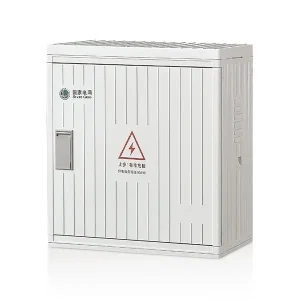
Specialized Distribution, Branch Enclosures & Grid Infrastructure
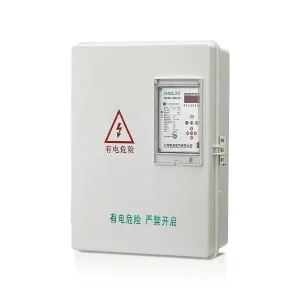
Explore our extended wholesale range covering cable branch connections, photovoltaic grid tie-in enclosures, intermediate protection, and multi-user energy metering assemblies.
Factory Direct Procurement Advantage: Yueqing Industrial Cluster & Global Delivery
Procuring electricity metering enclosures directly from a dedicated manufacturer in Yueqing, Zhejiang—widely recognized as China's Electrical Capital—delivers tangible supply chain advantages. Our ecosystem houses integrated tooling centers, SMC sheet compounding lines, certified testing laboratories, and deep tier-1 component partnerships for switchgear accessories within an immediate 15-kilometer radius. This geographic concentration reduces production lead-times, lowers manufacturing costs, and enables rapid iteration of customized tender requirements for global infrastructure projects.
Optimized Seaworthy Packaging & Nesting Geometry
Export freight costs directly impact project margins. Our R&D team designs meter box bases and covers with draft angles that allow efficient nesting during ocean transit, increasing container loading volumes by up to 35% compared to non-optimized metal enclosures.
Pre-Shipment Factory Acceptance Testing (FAT)
We welcome third-party international inspection agencies (such as SGS, Bureau Veritas, TÜV Rheinland, and Intertek) to conduct rigorous pre-shipment inspections covering dimensional checks, flame retardancy (UL 94 V-0), IP tests, and high-voltage dielectric isolation verification.
Flexible OEM/ODM Branding & Tender Support
We provide full engineering documentation for utility tenders—including 3D STEP models, bilingual CAD dimensional layouts, type-test certificates, and bill of materials (BOM) optimization—allowing our wholesale partners to submit winning proposals with full confidentiality.