
Precision Engineering Catalog
Featured Distribution Enclosures & Metering Infrastructure (Part I)
High-durability SMC fiberglass, stainless steel, and MV protection equipment engineered to international standards.
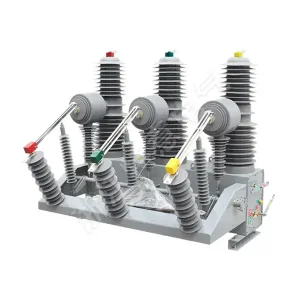
Wholesale Primary and secondary fusion pole mounted circuit breaker Factories, Factory
View Specifications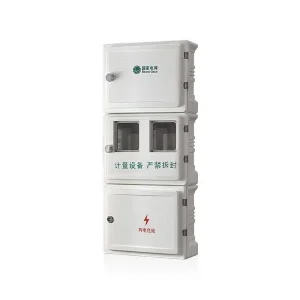
China TY-SXD2 single-phase electric energy metering box(2-6) Manufacturers, Factories
View Specifications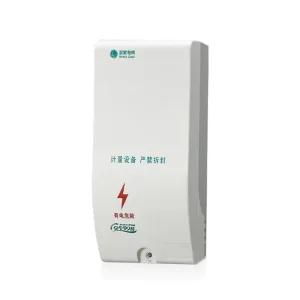
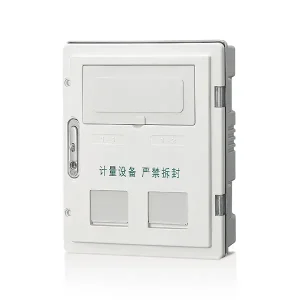
Wholesale Single-Phase One-Position Distribution Box TY-SXD1-FX from China Suppliers and Factory - Teyi Electric Co., Ltd
View Specifications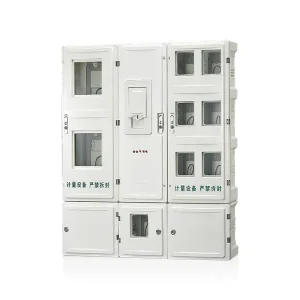
Wholesale China Ty-SXD2+SXS2-1B Three-Phase Two-Position & Single-Phase Six-Position Electric Metering Box
View Specifications
China China TY-SXD1-FX Single-Phase One-Position Distribution Box from Leading Suppliers and Factory
View Specifications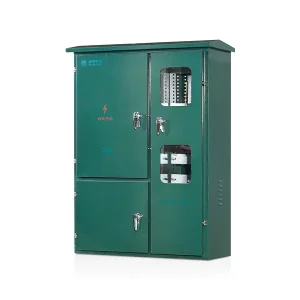
China Stainless Steel Three-Phase Two-Position Electric Energy Metering Box Ground-Standing Transformer Type
View Specifications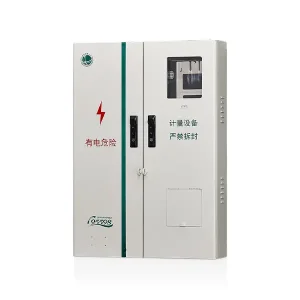
Wholesale China Stainless Steel Three-Phase Electric Energy Metering Box & Transformer - Trusted Solutions
View Specifications
Industry Macro View
Global Macro Shift: The Evolution Toward Next-Gen Ring Network Cabinets
The medium-voltage (MV) secondary distribution landscape is undergoing its most profound structural redesign since the introduction of SF6 gas-insulated switchgear.
Decarbonization, Decentralization, and Distribution Automation
Across North America, the European Union, Southeast Asia, and the Middle East, electrical utilities face the dual challenge of aging grid assets and an explosive penetration of intermittent renewable generation (Distributed Energy Resources or DERs). In traditional radial distribution topologies, a localized fault triggers upstream protective trips, resulting in extensive blackouts across several city sectors or industrial complexes. Ring Network Cabinets (Ring Main Units - RMUs) serve as the foundational architecture to convert linear distribution paths into fully closed-loop or open-loop redundant architectures.
By leveraging an RMU system, engineers isolate cable faults to specific circuit branches without disrupting upstream feeders or downstream consumers. As cities transform into megalopolises and mega-data centers require continuous 99.999% uptime, the global Ring Network Cabinet market is accelerating at an unprecedented CAGR of 8.2%, shifting the industry toward SF6-free environmentally conscious insulation (dry-air or synthetic air), solid-dielectric insulation (SIS), and native feeder automation integration (FTUs and DTUs).
99.999%
Reliability Standards
Continuous loop-fed medium voltage topologies reduce System Average Interruption Duration Index (SAIDI) by up to 68% in urban utility sectors.
GWP < 1
Eco-Friendly Dielectric
Rapid migration from conventional SF6 (GWP 23,500) to pressurized clean dry air, nitrogen blends, and vacuum interrupter assemblies.
40+ Yrs
Enclosure Service Life
Engineered SMC compression composite and marine-grade 304/316 stainless steel enclosures engineered to resist ambient corrosion and dielectric stress.
Global Procurement Specifications
Global Procurement Matrix: What EPCs, Utilities & Grid Planners Require
Procuring Ring Network Cabinets requires navigating stringent type tests, seismic qualifications, ambient tolerance thresholds, and automation protocols.
| Evaluation Parameter | IEC / Utility Tender Specification | China Tier-1 Factory Implementation | Procurement Advantage |
|---|---|---|---|
| Dielectric Rating | 12 kV, 24 kV, 36 kV / 40.5 kV AC distribution | Precision vacuum circuit breakers and SF6/Clean Air tanks | Complies with IEC 62271-200 and IEEE C37.20.2 standard |
| Internal Arc Classification | IAC AFLR rated for operator safety (1s duration) | Heavy-gauge tank bursting discs & reinforced channel flaps | Eliminates catastrophic arc blast risks in compact substations |
| Short-Time Current | Up to 25 kA / 3s, 31.5 kA / 4s rating thresholds | High-conductivity T2 oxygen-free copper busbars | Withstands extreme transient fault currents without deforming |
| Environmental Enclosure | IP4X to IP67, salt spray resistance > 1000 hrs | Hydraulically pressed SMC or laser-welded SUS304/316 | Prevents condensation, corrosive degradation, and UV fatigue |
| Telemetry & DA | IEC 61850, Modbus, DNP 3.0 protocol support | Pre-integrated primary/secondary fusion FTU modules | Turnkey SCADA integration without complex post-retrofit |
Type Test Accreditations
International buyers prioritize suppliers with verified test certificates from independent global laboratories such as KEMA (Netherlands), CESI (Italy), ASTA (UK), or accredited CNAS labs in China. Verification includes dielectric withstand, temperature rise limits, mechanical endurance (up to M2 class / 10,000 operations), and internal arc safety.
Modular Scalability (Extensibility)
Procurement managers seek non-extensible compact units for standalone kiosk transformers, alongside extensible modular configurations for municipal substations. Standardized top-mounted or side-mounted busbar connectors enable EPC contractors to add circuit breaker modules or load-break switch bays on-demand without rebuilding the entire lineup.
Primary & Secondary Fusion
Modern utility tenders strictly require the fusion of primary high-voltage equipment (switches, PTs, CTs) and secondary intelligent electronic devices (electronic voltage sensors, smart terminals, battery backup UPS). China factories lead the world in delivering factory-integrated, factory-tested fusion lineups that eliminate field wiring misconfigurations.
Manufacturing Supremacy
China Industry 4.0: Supply Chain Resilience, Automation & Speed-to-Market
Why the global power sector increasingly partners with Yueqing and Zhejiang manufacturing clusters for strategic medium and low voltage distribution needs.
The Yueqing Industrial Matrix: Unrivaled Density and Complete Backward Integration
In power distribution hardware, lead times, component traceability, and cost efficiency are directly dictated by raw supply chain integration. Yueqing, recognized worldwide as China’s Electrical Capital, hosts a hyper-specialized ecosystem consisting of hundreds of precision tool-and-die makers, robotic stamping units, SMC thermosetting compression molders, vacuum interrupter manufacturers, and automated epoxy resin APG (Automatic Pressure Gelation) casting facilities.
While European and American manufacturers routinely report delivery backlogs of 26 to 52 weeks for custom switchgear lineups, Tier-1 Chinese manufacturers maintain an active buffer stock of certified materials, executing complete custom OEM/ODM production runs in 4 to 8 weeks. This resilient industrial capacity minimizes exposure to single-source disruptions while passing scale economies directly to overseas project developers.
Automated Laser Fabrication
High-precision fiber laser cutting and 6-axis robotic welding ensure gas-tight hermetic seals for switchgear tanks with zero leakage over 30 years.
APG Solid Dielectric Casting
Automated epoxy resin pressure gelation machines create bubble-free, partial-discharge-resistant insulation rated under 5 pC at rated voltage.
100% Routine Factory Testing
Helium mass spectrometer leak detection, power frequency withstand tests, and contact resistance evaluations are executed on every manufactured cell.
Accelerated Global Delivery
Direct access to Ningbo and Shanghai deepwater ports enables rapid consolidated sea shipments, shaving up to 40 days off the global procurement lead time.
Field Engineering Scenarios
Mission-Critical Deployment Scenarios & Field Customization
From extreme humidity along tropical coastlines to dense underground smart metering rooms, Ring Network Cabinets are engineered to perform flawlessly.
Solar PV & BESS Step-Up Substation
Utility-scale solar farms require high-temperature tolerance (-30°C to +60°C) and robust harmonic endurance. Ring Network Cabinets connect transformer step-up stations (0.8 kV to 33 kV) with integrated vacuum circuit breakers and microcomputer protection units designed to handle frequent switching transients.
Offshore Wind & Coastal Petrochemical
High saline humidity, chemical vapor exposure, and extreme moisture destroy standard mild-steel enclosures. China factories deploy hermetically sealed 3mm stainless steel gas tanks inside heavy compression-molded SMC or 316-grade outdoor kiosks capable of operating uncorroded for 30+ years in coastal and marine environments.
Urban High-Rise & Metro Infrastructure
Commercial high-density developments require ultra-compact footprint switchgear with strict fire ratings (F1 class) and low acoustic emissions. Modular gas-insulated or solid-insulated RMUs occupy minimal square footage in basement vaults while providing dual-infeed automatic bus transfer (ATS) to safeguard lives and critical systems.
Engineering Evaluation
Technical Comparison: Gas-Insulated (GIS), Solid-Insulated (SIS) & Air-Insulated (AIS)
Selecting the correct medium-voltage Ring Network Cabinet architecture requires balancing space restrictions, environmental objectives, maintenance cycles, and capital expenditure.
| Architecture Type | Insulation Medium | Dimensions & Footprint | Maintenance Demands | Environmental Assessment | Typical Applications |
|---|---|---|---|---|---|
| GIS Ring Unit | SF6 Gas / Clean Dry Air | Ultra-compact (approx. 350mm–420mm per bay) | Maintenance-free primary circuit for 30+ years | Requires gas monitoring; low leakage designs (<0.1%/yr) | Urban substations, data centers, compact wind turbine towers |
| SIS Ring Unit | Solid epoxy resin / Silicone rubber encapsulation | Compact, completely gas-free design | Zero gas pressure monitoring; completely dry architecture | 100% green; zero greenhouse gas potential; fully recyclable | Eco-sensitive zones, mining operations, subways, flood-prone regions |
| AIS Ring Unit | Atmospheric Air insulation | Moderate to large footprint (approx. 600mm–800mm per bay) | Periodic busbar cleaning and contact lubrication needed | Eco-friendly, zero gas dependency, transparent safety clearances | Rural distribution lines, low-budget secondary industrial networks |
Precision Engineering Catalog
Featured Distribution Enclosures & Metering Infrastructure (Part II)
Comprehensive selection of three-phase, transformer-coupled, and multi-position power measurement assemblies directly from Yueqing manufacturing facilities.
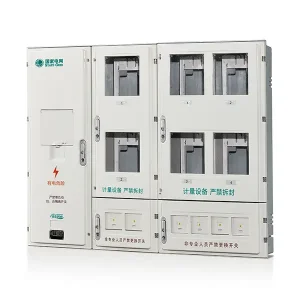
Wholesale TY Series Three-Phase Electric Energy Metering Box - Reliable China Suppliers & Factory
View Specifications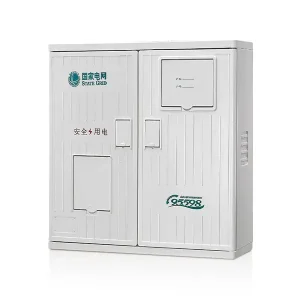
China A-Type Meter Box TY-SXS1: Durable Low & High Voltage Solutions from China Suppliers and Factory
View Specifications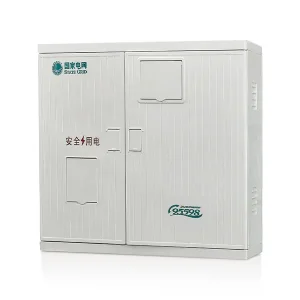
Wholesale TY-SXS3-BXJ Low Voltage B-Type Box for Transformers - Reliable Power Management Solutions
View Specifications
Wholesale China TY-SXD1-FX Single-Phase Distribution Box - Reliable Power Solution from Leading Suppliers
View Specifications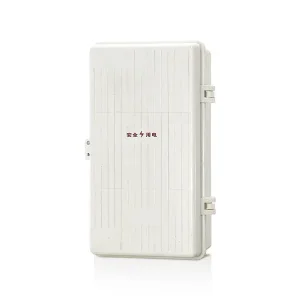
Wholesale TY-SXS1-CJ three-phase collector box Factories, Factory
View Specifications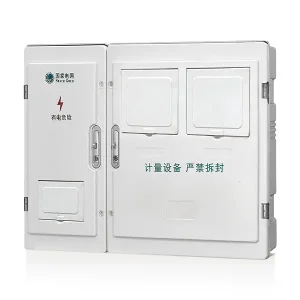
China China Suppliers Factory TY-SXS2-DXJ Low Voltage Three-Phase Two-Position Electric Energy Metering Box
View Specifications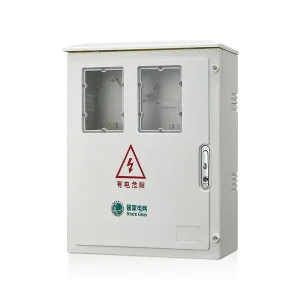
China Durable TY-SXS3-2B D-Type Box from China Suppliers | Reliable Electrical Meter Box Factory
View Specifications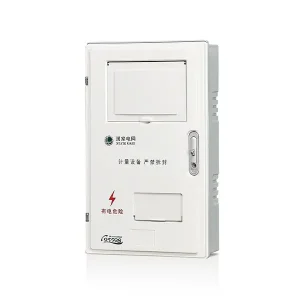
Wholesale China TY-SXS1 Three-Phase One-Position Electric Energy Metering Box - Reliable Suppliers and Factory
View Specifications
Technical & Commercial FAQ
Ring Network Cabinet & Enclosure Procurement Inquiries
Straightforward, engineering-backed explanations addressing the most frequent technical and supply chain challenges encountered by overseas procurement teams.
What is the standard functional difference between a Load Break Switch (LBS) bay and a Vacuum Circuit Breaker (VCB) bay in an RMU?
In a typical Ring Network Cabinet configuration (such as a standard C-C-V or C-C-F lineup), the 'C' bay denotes a Load Break Switch, specifically engineered to connect, carry, and interrupt normal load currents (typically 630A) along the incoming and outgoing ring feeder lines. The 'V' bay designates a Vacuum Circuit Breaker or fuse-switch combination ('F') designed to safely break dangerous short-circuit fault currents (e.g., 20kA or 25kA) protecting branch distribution transformers. Circuit breakers feature dedicated relay coordination (overcurrent, earth fault, short-time delay), ensuring that downstream transformer faults trip only the localized VCB bay without interrupting the closed-loop ring feeder.
How do China factories address the impending global bans on SF6 gas in medium-voltage switchgear?
Tier-1 Chinese switchgear factories have developed and commercially deployed two primary alternative paths: (1) Clean Air / Dry Air GIS: Replacing sulfur hexafluoride with pressurized synthetic air (80% N2, 20% O2) or technical dry air at zero greenhouse warming potential (GWP < 1), paired with high-performance vacuum interrupters; and (2) Solid-Insulated Switchgear (SIS): Where primary phase poles are individually cast in solid epoxy resin and silicone rubber shielding. Both product lines meet full IEC 62271 ratings while completely shielding infrastructure owners from carbon-tax liabilities and future regulatory disposal penalties.
Why is SMC (Sheet Molding Compound) fiberglass superior to galvanized steel for outdoor metering and RMU kiosks?
SMC composite is compression-molded under high heat and pressure (1200+ metric ton presses) from unsaturated polyester resins reinforced with random glass fibers. Unlike galvanized or painted sheet steel, SMC has zero electrical conductivity—completely eliminating the hazard of step-and-touch potential if an internal live busbar loosens. Furthermore, SMC is totally chemically inert: it does not rust, flake, or corrode when exposed to coastal salt fog, high sulfur dioxide atmospheres, or acidic soils, delivering an outdoor operating lifespan exceeding 30 to 40 years without ongoing sandblasting and repainting.
What documentation and factory testing reports are supplied before shipment to overseas projects?
Every production batch includes comprehensive Factory Acceptance Test (FAT) records: high-voltage power frequency dielectric withstand test certificates (typically 42kV or 72kV for 1 minute), helium mass spectrometry gas tightness reports (verifying annual leakage rate < 0.1%), main circuit loop resistance measurements (in micro-ohms), mechanical operating time and timing curve analysis, and secondary wiring point-to-point insulation checks. In addition, full accredited third-party type test reports (KEMA, ASTA, or CNAS certified laboratories) verifying temperature rise and internal arc ratings are provided alongside complete CAD foundation and single-line diagrams.