
Engineered Metering Cabinets & Distribution Units
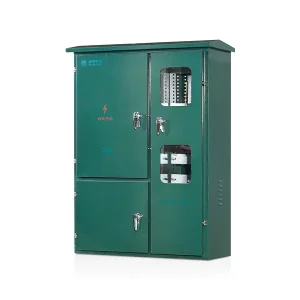
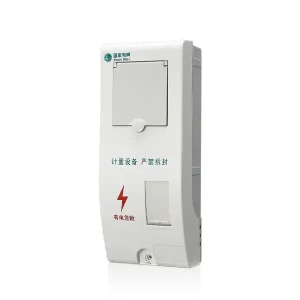
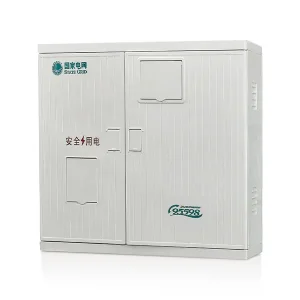
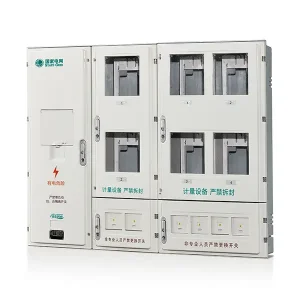
Explore our core single-phase, three-phase, and solar grid-tied meter enclosures certified for severe environmental deployments.
Macro-Industry Landscape: The Global Grid Modernization Mandate
Analyzing commercial dynamics, capital expenditure trends, and material transitions reshaping low-voltage distribution and utility revenue protection worldwide.
Grid Decentralization & Distributed PV
Global electrical distribution networks are encountering rapid decentralization. The surge in rooftop residential solar arrays, commercial microgrids, and electric vehicle (EV) charging stations demands bidirectional power metering enclosures capable of handling complex feed-in tariffs and thermal surges.
- ✔ Bidirectional metering integration architecture
- ✔ Inverter harmonic mitigation compatibility
- ✔ Dedicated disconnect switch integration
Non-Technical Loss (NTL) Mitigation
Utilities lose over $96 billion annually worldwide to electricity theft, unauthorized line tapping, and physical meter tampering. Advanced meter boxes from China utilize internal compartmentalization, anti-pry interlocking seals, and optical sensors to prevent illegal entry without disabling power flow.
- ✔ Dual-chamber split: utility lock vs. consumer access
- ✔ Ultrasonic welded poly-carbonate inspection windows
- ✔ Tamper-proof electronic seal integration points
Transition to SMC / GRP Composite Enclosures
Legacy metal meter boxes corrode under high-humidity, marine salinity, and chemical pollution, creating hazardous electrical short-circuits. Sheet Molding Compound (SMC) has emerged as the definitive material standard globally, offering 30 to 40+ years of maintenance-free service life.
- ✔ Class II dielectric protection (No earthing required)
- ✔ Zero surface oxidation in marine/saline regions
- ✔ High strength-to-weight ratio minimizes freight cost
Engineering Specification: SMC Composite vs. Metallic Enclosures
Detailed performance benchmarks informing tier-one utility procurement decisions, mechanical integrity, and electrical safety.
| Evaluation Parameter | Compression-Molded SMC (GRP) | Cold-Rolled Carbon Steel (Powder Coated) | Stainless Steel (304 / 316 Grade) | Standard Engineering Plastics (ABS/PC) |
|---|---|---|---|---|
| Dielectric Strength & Insulation | Superior (Intrinsic Class II insulation, >18 kV/mm; zero risk of touch-voltage leakage) | Conductive (Requires continuous grounding bond; failure presents shock hazard) | Conductive (Requires redundant equipotential grounding conductors) | Moderate Insulation (Susceptible to breakdown under surface tracking) |
| Atmospheric & Chemical Corrosion | Immune (Resists acids, alkalis, salts, marine spray, ammonia, and SO2) | Poor (Prone to cathodic failure, rust blistering, and base edge peeling) | High (Except in high-chloride stagnation without specialized passivation) | Variable (Sensitive to organic hydrocarbons, solvents, and industrial oils) |
| Mechanical Rigidity & Impact (IK Rating) | IK10 Rating (High-density randomized fiberglass roving distributes heavy mechanical impacts) | IK09 - IK10 (High yield strength, but prone to plastic denting and coating fracture) | IK10+ (Highest tensile resistance against ballistic vandalism) | IK07 - IK08 (Prone to brittle fracture under freezing temperatures) |
| Thermal Distortion & Flame Retardancy | UL94 V-0 Self-extinguishing; HDT > 200°C; Glow Wire Test: 960°C | Non-combustible (High thermal conduction causes internal overheating) | Non-combustible (Retains heat, risking internal electronic meter failure) | UL94 V-1 / V-2 (Deforms above 85°C; potential molten droplet risk) |
| Radio Frequency (RF) Transparency | 100% Permeable (Supports AMI/AMR, GPRS, LoRaWAN, Zigbee, NB-IoT antennas inside) | Total Shielding (Blocks RF; requires external vulnerable antenna penetration) | Total Shielding (Requires secondary drilled conduit and external antenna) | Permeable (Permits signal pass-through, but offers poor structural shielding) |
| Expected Service Life (Outdoor / Coastal) | 30 to 45 Years (UV stabilized with HALS additives; maintenance-free) | 5 to 8 Years (Demands regular repainting and rust treatment cycles) | 20 to 25 Years (Subject to weld joint integrity and alloy purity) | 3 to 7 Years (Suffers photo-oxidation, yellowing, and chalking) |
Global Grid Harmonization: Regional Configurations & Standards
Custom-engineered enclosure specifications designed to satisfy utility compliance across Africa, Latin America, Southeast Asia, the Middle East, and Europe.
CFE, SEC, & Enel Grid Codes
Tailored for high-humidity tropical zones and intense urban density. Anti-theft transparent viewing windows, tamper-evident padlock hasps, and split-architecture meter separation.
- Standard: CFE G0100-05, RETIE, NBR 15820
- Current: 100A - 200A Single/Two Phase
- Feature: DIN rail & socket meter interchangeable
DEWA, SEC, & Kahramaa Specs
Engineered to survive extreme surface heat exceeding 55°C ambient and sandstorm abrasion. Double-wall insulated venting and silicon sealing prevent ingress of microscopic dust.
- Standard: IEC 61439-1/5, IP65, IK10
- Busbar: Tinned E-Cu electrolytic rated to 400A
- UV Resistance: ASTM G154 > 5,000 Hours
Eskom, KPLC, & PHCN Tenders
Focus on revenue protection, rural electrification, and STS prepayment keypad integration. Includes pole-mount stainless steel strapping brackets and top-entry armored glands.
- Standard: SANS 1524, NRS 056, IEC 60529
- Mounting: Universal round/polygonal concrete pole
- Security: Triangle brass master utility lock
EN 61439 & RoHS/REACH Directives
Multi-meter collective modular distribution boards for residential complexes. Low smoke zero halogen (LSZH) materials with full electromagnetic compliance for smart AMI grids.
- Standard: EN 61439-3, DIN 43870, CE Marking
- Config: 4-position to 24-position multi-tenant
- Recycling: 100% RoHS & REACH compliant
Mission-Critical Installation Typologies
From grid edge to sub-station feeder lines, how our meter enclosures perform in diverse operational matrices.
High-Rise Residential Multi-Metering
Our TY-SXD2 modular multi-position metering enclosures streamline internal vertical risers in modern high-density urban residential towers. Compartmentalized isolation prevents a fault in one customer's breaker from triggering cascade tripping across adjacent apartments.
- ✔ Centralized neutral and protective earth (PE) busbars
- ✔ Individual lockable circuit breaker compartments
- ✔ Factory pre-wired copper harness reduces on-site labor by 65%
Solar Photovoltaic Grid-Tied Revenue Hubs
Custom SMC solar metering combiner boxes incorporate both primary inverter circuit breakers and bidirectional smart energy meters. Equipped with internal surge protection devices (Type II SPD) and thermal ventilation gills that bleed inverter heat without allowing dust ingress.
- ✔ High DC/AC voltage insulation boundary separation
- ✔ Rapid shutdown and external utility safety isolation knife
- ✔ Flame-retardant formulation tested against PV arc faults
Heavy Industrial CT/PT Metering Stations
Industrial processing facilities drawing high currents (>100A to 1600A) require current transformer (CT) metering. Our transformer-type metering cabinets feature heavy-gauge copper busway integration, isolated secondary terminal test blocks, and secure inspection viewing.
- ✔ Designed for 3-phase 4-wire CT-operated energy meters
- ✔ Built-in shorting blocks for safe in-service CT replacement
- ✔ Heavy-duty ground lugs rated for industrial earth faults
Technology Roadmap: Next-Generation Metering Infrastructure
How China's leading manufacturing ecosystems are driving the intersection of material chemistry, digital telemetry, and lifecycle sustainability.
Integrated IoT Sensors & Smart Sensing
Tomorrow's meter enclosures are edge-computing nodes. We are embedding infrared temperature monitoring sensors onto primary busbar joints, moisture transducers, and tilt/impact accelerometers to detect unauthorized enclosure movement in real time.
- ✔ Busbar terminal hotspot detection warning alerts
- ✔ Optical intrusion micro-switches for remote anti-tamper
- ✔ Zero battery footprint: energy-harvesting parasitic CTs
Cellular & Mesh Transceiver Optimization
As smart meters adopt 5G NB-IoT, PRIME, and Wi-SUN wireless mesh communications, our composite formulations are optimized for dielectric loss tangents (tan δ < 0.005), ensuring zero RF attenuation or directional signal scattering through the cabinet walls.
- ✔ Eliminate costly external pole-top antenna installations
- ✔ Low-loss dielectric window materials
- ✔ In-situ testing of 868MHz, 915MHz, and 2.4GHz transmission
Recyclable Bio-Resins & Carbon Neutrality
Aligning with EU circular economy mandates, our R&D center is commercializing recyclable thermoplastic composites and partially bio-derived unsaturated polyester resins that reduce lifecycle cradle-to-gate carbon emissions by up to 34%.
- ✔ Closed-loop post-industrial resin recycling stream
- ✔ Heavy-metal-free halogen-free pigment systems
- ✔ Full Environmental Product Declaration (EPD) verification
Frequently Asked Questions: Global Tender & OEM Specifications
Definitive answers addressing procurement compliance, production lead times, structural testing, and custom tool engineering.
Q1: What precise chemical formulation makes your SMC superior to standard polyester?
Our SMC utilizes unsaturated polyester resin reinforced with 28% to 32% chopped alkali-free E-glass fiber roving, compounded with aluminum trihydrate (ATH) flame retardant, low-profile shrinkage additives, and UV-stabilizers. This produces high flexural strength (>160 MPa) and UL94 V-0 flame rating with zero toxic halogen emissions.
Q2: Can your metering boxes be configured for split-architecture smart prepayment systems?
Yes. We engineer dual-chamber and triple-chamber configurations compliant with STS (Standard Transfer Specification) protocols. The utility compartment houses the secure meter and main service breaker behind utility seals, while a separate customer compartment gives access to miniature circuit breakers (MCBs) and Customer Interface Unit (CIU) keypads.
Q3: What third-party laboratory certifications validate your meter enclosures?
Our product portfolios have been subjected to rigorous testing at accredited laboratories (including KEMA, CEPREI, and national high-voltage testing centers). Certifications encompass IEC 61439-1/-5, IEC 60529 (IP ratings up to IP65), IEC 62262 (IK10 mechanical impact), ISO 4892-2 accelerated UV weathering, and glow-wire flammability tests up to 960°C.
Q4: What is your typical tooling and lead time for custom-engineered utility tenders?
For tender-specific enclosure geometries requiring new hydraulic press molds, our CAD/CAM and CNC die facility delivers rapid tooling within 35 to 45 days. Rapid 3D SLA/SLS functional prototypes for utility tender approvals are produced in just 5 business days, followed by pre-series sample batches.
Q5: How do you guarantee moisture and dust prevention in coastal or desert regions?
We apply continuous automated poured-in-place polyurethane (PU) foam gasket seals along all cabinet door grooves, providing elasticity across -40°C to +100°C. Combined with downward-angled labyrinth breathing vents and shielded IP54/IP65 cable glands, internal condensation is vented without dust intrusion.
Q6: Do you supply complete pre-wired assemblies with switchgear, busbars, and breakers?
Yes. Beyond bare enclosures, we deliver fully integrated turn-key factory solutions including electrolytic copper busbars (tin or nickel plated), pre-installed MCBs/MCCBs, current transformers, residual current devices (RCDs), neutral/earth disconnect bars, and color-coded flame-retardant wiring looms tested for dielectric continuity.
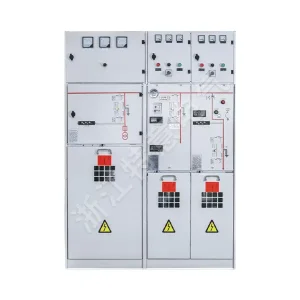
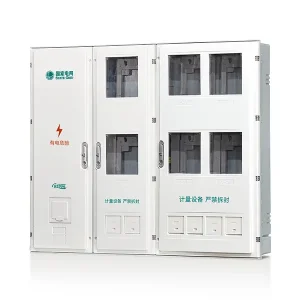
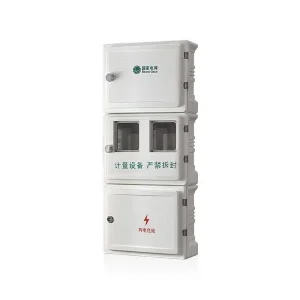
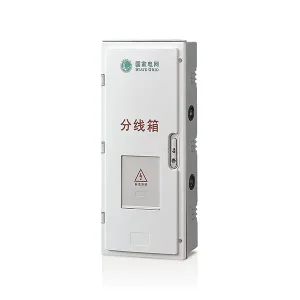
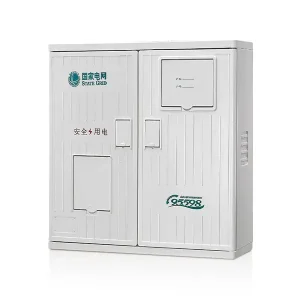
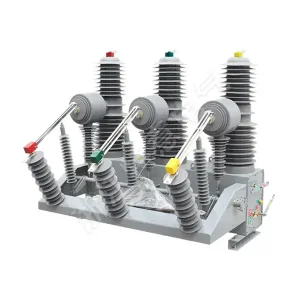
Distribution Enclosures, RMUs & Protection Hardware
Complementary low- and medium-voltage power distribution equipment engineered for utilities, EPC contractors, and global power distributors.
Factory-Direct Strategic Advantages from Yueqing, China
Harnessing the world's most specialized low-voltage electrical industrial cluster to deliver unmatched scale, speed, precision, and cost efficiency.
Heavy Hydraulic Press Infrastructure
Equipped with a fleet of high-tonnage hydraulic compression molding presses (ranging from 315 tons to 2,000 tons capacity). Our synchronized heated steel dies enforce uniform pressure distribution, ensuring high dimensional consistency, void-free core laminates, and pristine surface finishes across production runs of 100,000+ units.
- ✔ Precision mirror-polished tool steel dies (P20 & 718 grades)
- ✔ Multi-zone infrared electric thermal temperature balancing
- ✔ Automated robotic part-removal and edge deflashing stations
Total Traceability & Quality Control
Every single meter enclosure leaving our facility carries a laser-etched matrix QR code linking to its specific batch resin formulation, cure time, press operator, and dielectric high-potential test log. Our quality systems adhere to ISO 9001, ISO 14001, and ISO 45001 international standards.
- ✔ 100% dry dielectric insulation flash-test at 5,000V AC
- ✔ Incoming resin paste viscosity & fiber glass roving fraction audits
- ✔ Continuous torque-tension monitoring for all copper busway points
Yueqing Supply Chain Dominance
Situated in Yueqing, Zhejiang—the recognized Electrical Capital of China—our facility is flanked by tier-one providers of low-voltage miniature circuit breakers, bi-metallic lugs, molded case switches, and specialized sealings. This tight geographic integration slashes supply lead times by weeks compared to isolated regional competitors.
- ✔ Direct high-volume raw material procurement agreements
- ✔ Streamlined seaport access via Ningbo and Shanghai ports
- ✔ High-density container palletization reduces ocean freight overhead