
Choosing the right Waterproof Box is not a simple size comparison. It is a sourcing decision involving materials, testing, supplier capability, and long-term reliability. A box may look rugged on a warehouse shelf, yet fail after vibration, temperature changes, or repeated opening.
The global protective packaging market was valued at approximately USD 32.1 billion in 2023, according to Grand View Research. Its growth reflects rising demand for safer transport, reusable packaging, and stronger supply-chain protection. Smithers’ report, The Future of Protective Packaging to 2028, also highlights performance testing and material efficiency as major purchasing factors. These findings matter when comparing ABS, polypropylene, aluminum, gasket designs, and latch systems.
Marketing scholar Philip Kotler describes packaging as the “fifth P” of marketing. That idea applies strongly to a Waterproof Box. It protects the product, communicates quality, and influences customer confidence. A sourcing team should request IP-rating evidence, dimensional drawings, test reports, production samples, and replacement-part details. IEC 60529 defines IP protection levels, while ASTM D4169 can support distribution-performance testing. Certification alone is not enough.
A perfect box does not exist.
A supplier may provide an impressive sample but struggle with consistent production. I have seen small details matter: a twisted gasket, weak hinge, or poorly finished corner can compromise protection. This guide examines supplier audits, test methods, total cost, customization, and after-sales support. It also questions a common mistake: choosing the lowest unit price before understanding transport conditions. The strongest Waterproof Box is not always the heaviest. It is the one that performs reliably in the real supply chain.
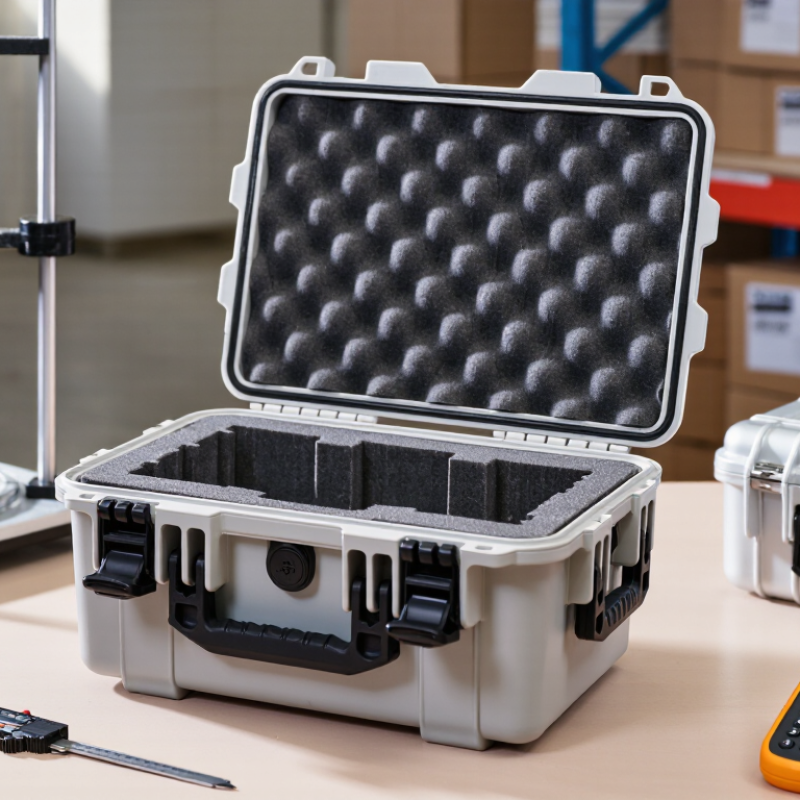
Choosing the best waterproof box starts with its job, not its appearance. Will it protect instruments, outdoor controls, documents, or small electrical parts? Define the contents, quantity, handling frequency, and expected service life before comparing suppliers. Start with risk. A box carried between warehouses needs different protection from one fixed beside a coastal pump. Record exposure to rain, dust, salt spray, ultraviolet light, vibration, and sudden temperature changes. For electronic equipment, estimate heat buildup and cable entry points. A sealed enclosure may trap condensation when warm air cools overnight. That detail is easy to miss. Use a simple inspection checklist, and request test evidence rather than trusting the word “waterproof.” Look for stated ingress protection, material data, gasket quality, and closure performance. A claimed IP rating should identify the test standard and scope.
Environment should guide construction more than color or price. Rigid plastic can suit wet storage, while reinforced materials may perform better under repeated impact. For outdoor sourcing, check hinge strength, fastener corrosion resistance, and sunlight resistance. If workers wear gloves, confirm that latches remain easy to operate. If the box travels by air or truck, consider stacking pressure and internal cushioning. Measure twice. I once saw buyers select a deep box, then discover unused space allowed equipment to move during transit. Foam, dividers, or adjustable mounts can reduce movement, but they also reduce usable volume. The trade-off deserves a real sample test. One weakness remains: laboratory ratings cannot reproduce every climate or handling mistake. No checklist catches everything. Request samples, inspect seals after opening, and test the loaded box in realistic conditions.
Define the purpose and environment before selecting a waterproof box. The chart maps common water-exposure conditions to the minimum water-protection level defined by IEC 60529.
How to read this chart: IPX4 protects against splashing water, IPX5 against water jets, IPX6 against powerful water jets, IPX7 against temporary immersion, and IPX8 against continuous immersion under manufacturer-specified conditions. The complete IP rating should also include a dust-protection digit, such as IP65 or IP67.
A waterproof rating is only useful when its test conditions match your shipment’s real environment. Under IEC 60529, IP65 protects against water jets, while IP67 covers temporary immersion up to 1 meter for 30 minutes. IP68 requires supplier-defined immersion conditions. Request the exact test depth and duration. A higher number is not automatically better.
Material selection affects service life. Polycarbonate offers strong impact resistance and stable performance across temperature changes. ABS is lighter and often more economical, but it may crack under severe impact or ultraviolet exposure. Stainless steel handles heat, abrasion, and corrosion well, although it adds weight and freight cost. NEMA 250 also evaluates enclosure protection, but NEMA and IP ratings are not direct equivalents. Check both standards carefully.
Construction details often reveal quality. Look for a continuous gasket, captive screws, reinforced hinges, and cable glands rated for the same environment. A box can pass an immersion test yet leak around a poorly fitted gland. In field inspections, I would check compression marks on the gasket and inspect corners for warping. Small gaps matter.
The Global E-waste Monitor 2024 reported 62 million tonnes of electronic waste in 2022, making durable protection increasingly important for equipment life.
Still, supplier test reports can be incomplete. Ask for laboratory conditions, sample identification, and retest dates. A realistic design may need dust protection, impact resistance, and corrosion testing together.
Choosing the best waterproof box for global sourcing starts with dimensions, not appearance. Measure the equipment, cables, connectors, and protective space separately. Then add room for gloves and labels. Measure twice. A box that barely closes often fails during real handling. I have seen foam compress around a sharp connector during long transport. That small oversight damaged an otherwise sound shipment. When movement is likely, allow roughly 20% extra internal space. Do not confuse external size with usable capacity. Hinges, walls, and seals consume valuable room. A clear packing drawing helps suppliers quote accurately and prevents production surprises. It is not perfect, but it is practical.
Internal protection should match the cargo’s weakest point. Closed-cell foam supports fragile surfaces and absorbs little moisture. Die-cut inserts hold repeated shapes firmly. Adjustable dividers suit mixed parts, although they may allow unwanted movement. For heavy equipment, use a rigid base and load-bearing supports, not foam alone. Check cable bends, latch clearance, and drainage risks before approving samples. Ask suppliers for compression, seal, and drop-test evidence. Test a packed sample yourself when possible. A short vibration trial can reveal loose fittings quickly. Select sealing performance according to expected rain, dust, and handling conditions. Water resistance is not absolute. Even a strong design needs inspection after rough transport. I would revise the insert after the first field shipment, because real routes often expose assumptions that drawings miss.
How to Choose the Best Waterproof Box for Global Sourcing?
Security should match the cargo, not just the product photograph. Check the gasket for continuous contact around the lid. A small gap can admit dust and moisture during ocean transport. Look for reinforced hinges, strong latches, and lock points that resist accidental opening. Tamper-evident features may help during warehouse handoffs. Ask the supplier for test records, material specifications, and sample units. Then inspect one yourself. Documents can look complete while the seal feels weak.
Portability affects handling costs and worker safety. Measure the box with its contents inside, not when empty. A deep box may protect equipment but become difficult to lift. Choose balanced handles, manageable weight, and wheels when frequent movement is expected. Stackable corners can save warehouse space. However, wheels and handles may break first in rough handling. That trade-off deserves a real transport trial.
Customization should improve protection, not create decoration. Request fitted foam, adjustable dividers, drainage details, or pressure valves when suitable. Confirm internal dimensions with actual product samples. Small changes can prevent movement and surface scratches. Ask whether replacement parts remain available across production batches. This is often overlooked. Custom colors and markings may support inventory control, but they can increase minimum order quantities. My practical preference is to approve a prototype, test it through repeated opening, lifting, and simulated rain, then revise the design before placing a larger order. The first version is rarely perfect.
| Waterproof Box Type | Typical Protection Level | Security Features | Portability Profile | Common Materials | Customization Options | Best-Suited Applications | Sourcing Considerations |
|---|---|---|---|---|---|---|---|
| Small Utility Dry Box | Usually IP67 when properly sealed; suitable for temporary immersion up to approximately 1 m for 30 minutes under test conditions. | Snap latches, silicone or EPDM gasket, optional padlock holes, and tamper-evident seals. | Lightweight; commonly carried by hand or stored inside a backpack. Typical empty weight: about 0.2–1.0 kg. | Impact-resistant polypropylene, ABS, or polycarbonate. | Color matching, molded logo, foam insert, divider set, label area, and customized internal layout. | Documents, electronic accessories, samples, first-aid supplies, and small tools. | Confirm gasket compression, hinge durability, latch cycle testing, and the actual test standard used for the IP rating. |
| Portable Equipment Case | Commonly IP65–IP67, depending on the design and closure system; protects against dust and water jets, with some models tested for temporary immersion. | Multiple latches, padlock points, pressure-equalization valve, reinforced hinges, and optional security hardware. | Medium portability; molded handles are common, while larger formats may include wheels. Typical empty weight: about 1.5–8 kg. | High-impact polypropylene or polycarbonate shell with stainless-steel or reinforced polymer hardware. | Pick-and-pluck foam, die-cut foam, custom dividers, printed graphics, RFID labels, and accessory panels. | Survey instruments, cameras, industrial electronics, communication equipment, and field-service kits. | Compare usable internal dimensions rather than external dimensions, and verify wheel, handle, and hinge load ratings. |
| Heavy-Duty Transport Case | Typically designed for IP65 or IP67 protection; suitable for demanding transport when correctly closed and maintained. | Reinforced corners, metal or heavy-duty polymer latches, tamper-resistant padlock points, and automatic pressure-release valve. | Lower portability per unit volume; often requires wheels and a telescopic handle. Typical empty weight: about 5–20 kg. | Thick-wall polypropylene, impact-modified polymer, stainless steel, or aluminum components. | Custom foam machining, pallet-compatible bases, reinforced mounting points, external identification plates, and bespoke hardware. | Industrial machinery parts, medical devices, testing systems, aerospace equipment, and export shipments. | Check stackability, drop-test results, corner protection, spare-part availability, and shipping dimensional weight. |
| Waterproof Storage Trunk | Often rated IP65 or equivalent for dust and water-jet resistance; performance varies significantly by lid and seal design. | Lockable latches, reinforced lid, gasketed perimeter seal, and optional cable-lock or padlock provisions. | High capacity but less convenient to carry; side handles or wheels are recommended for loaded units. Typical empty weight: about 4–15 kg. | Rotationally molded polyethylene or injection-molded polypropylene. | Color selection, internal trays, removable dividers, tie-down points, drainage fittings, and molded identification areas. | Camping gear, emergency supplies, tools, outdoor storage, and warehouse or vehicle organization. | Evaluate lid warping, UV resistance, nesting efficiency, pallet utilization, and replacement gasket availability. |
| Submersible Instrument Housing | May exceed IP67 and be specified for a defined water depth; depth and duration must be verified through the supplier’s test documentation. | Bolted or multi-latch closure, double gasket option, captive fasteners, pressure testing, and controlled cable-entry systems. | Usually compact to medium-sized; portability depends on wall thickness, battery load, and attached cables. | Glass-filled nylon, polycarbonate, aluminum alloy, stainless steel, or engineered elastomers. | Cable glands, connectors, mounting bosses, pressure ports, custom seals, sensor brackets, and corrosion-resistant finishes. | Marine sensors, environmental monitoring equipment, underwater data loggers, and remote inspection devices. | Request pressure-test reports, material compatibility data, sealing-life estimates, and clear limits for depth, temperature, and chemicals. |
| Modular Custom Enclosure | Protection level is project-specific; IP54–IP67 is commonly targeted according to cable entries, ventilation, access panels, and sealing requirements. | Lockable access panels, quarter-turn locks, tamper-evident fasteners, internal mounting rails, and controlled access points. | Portability ranges from handheld to vehicle-mounted; handles, wheels, lifting points, and mounting brackets can be engineered into the design. | Polycarbonate, ABS, fiberglass-reinforced polyester, aluminum, stainless steel, or powder-coated steel. | Full dimensional customization, CNC machining, molded or printed markings, cable glands, ventilation membranes, hinges, inserts, and mounting interfaces. | OEM equipment, control systems, telecommunications, energy systems, and specialized export projects. | Define drawings, tolerances, regulatory requirements, sample approval steps, minimum order quantities, tooling ownership, and after-sales support before ordering. |
Supplier verification should begin before price negotiation. Request business registration, factory address, production photos, and recent quality records. A video call can reveal useful details, such as molding equipment, storage conditions, and final inspection methods. Ask for samples from normal production, not specially prepared pieces. Check hinge alignment, gasket compression, latch strength, and drainage around the lid. A low price means little if replacement rates become high.
Testing standards must match the box’s actual use. Confirm the claimed IP rating through a laboratory report that identifies the exact model. IP67 testing may support temporary water immersion, but it does not prove resistance to every shipping condition. Request drop, vibration, compression, and temperature-cycle testing when cargo may face rough handling. Check whether reports are current and issued by a competent, independent laboratory. Paperwork can look convincing and still miss a critical test.
Calculate more than the unit cost. Include tooling, sample charges, inspection, export packaging, freight, insurance, duties, and possible storage fees. Confirm carton dimensions and stack limits before booking transport. A box that protects products may also increase volumetric weight. Ask the supplier for packing diagrams and pallet measurements. Shipping terms, delivery ports, documents, and lead times should be written clearly in the purchase agreement. The perfect checklist does not exist. I would still retest after a material change, even when the supplier promises identical performance. Small gasket changes can create large leakage problems.
Start with its purpose, contents, handling frequency, and service life. Appearance should come later.
Check rain, dust, salt spray, ultraviolet light, vibration, and temperature changes. Coastal locations need extra corrosion protection.
Yes. Warm air may cool overnight and create moisture inside. Consider ventilation, drying methods, or condensation controls.
Request the stated ingress protection level, test standard, material data, gasket details, and closure test evidence. Do not trust one word.
Measure equipment, cables, connectors, labels, and protective materials separately. Leave practical clearance for closing and handling.
Usually, yes. About 20% extra space can reduce pressure and movement. However, too much empty space needs better cushioning.
Closed-cell foam suits fragile surfaces. Die-cut inserts hold repeated shapes, while dividers fit mixed parts. Heavy equipment needs a rigid base.
Inspect a loaded sample. Check latch operation, cable bends, seal contact, stacking pressure, vibration, and drop resistance.
Not completely. Testing may miss climate changes, rough handling, and careless packing. Real routes can expose weak assumptions.
Choosing a deep box without controlling empty space. Equipment may slide during transport, even when the box itself remains intact.
Choosing the right Waterproof Box for global sourcing begins with understanding its intended purpose and operating environment. Consider whether it will be used for outdoor transport, industrial storage, marine conditions, travel, or sensitive equipment protection. Compare waterproof ratings, sealing systems, wall materials, hinges, latches, and overall construction quality to ensure the box can withstand moisture, dust, impact, temperature changes, and frequent handling. Size and capacity should match the items being stored, while foam inserts, dividers, or adjustable compartments can provide additional internal protection.
A reliable selection also balances security, portability, and customization. Features such as lockable closures, reinforced corners, comfortable handles, wheels, mounting options, and custom colors or labels may improve practical value. Before placing an order, verify the supplier’s production capabilities, quality-control procedures, test reports, and applicable testing standards. Buyers should also calculate tooling, packaging, shipping, taxes, minimum order quantities, and delivery schedules to understand the total cost and avoid sourcing surprises.
