
2026 Top Cable Branch Box Manufacturers and Suppliers

Time:2026-10-27 Author:Madeline
0%

The 2026 market for Cable Branch Box solutions is becoming more specialized. Manufacturers now serve power distribution, industrial automation, renewable energy, transportation, and commercial construction. Buyers need more than a product catalog. They need verified performance, consistent production, and responsive technical support.

This guide examines leading Cable Branch Box manufacturers and suppliers through practical purchasing criteria. These include enclosure materials, ingress protection, terminal quality, current ratings, thermal management, and installation methods. A reliable supplier should provide clear drawings, test records, traceable materials, and suitable certification documents. Field experience also matters. A box installed beside a dusty production line faces different demands from one placed inside a clean electrical room.

Details matter.

We will compare design capability, customization, quality control, delivery performance, and after-sales service. Attention will also be given to sealing gaskets, cable entry systems, corrosion resistance, and maintenance access. These features can influence safety and service life more than attractive marketing language. Supplier information may change, and some claims remain difficult to verify without independent testing or customer references. That limitation deserves honest consideration.

The strongest companies usually combine engineering knowledge with stable manufacturing processes. They listen to installation problems and improve designs accordingly. However, no manufacturer fits every project. A low-cost option may work for a protected indoor installation but fail under vibration or moisture. This overview aims to support careful evaluation, practical comparison, and more confident sourcing decisions in 2026.
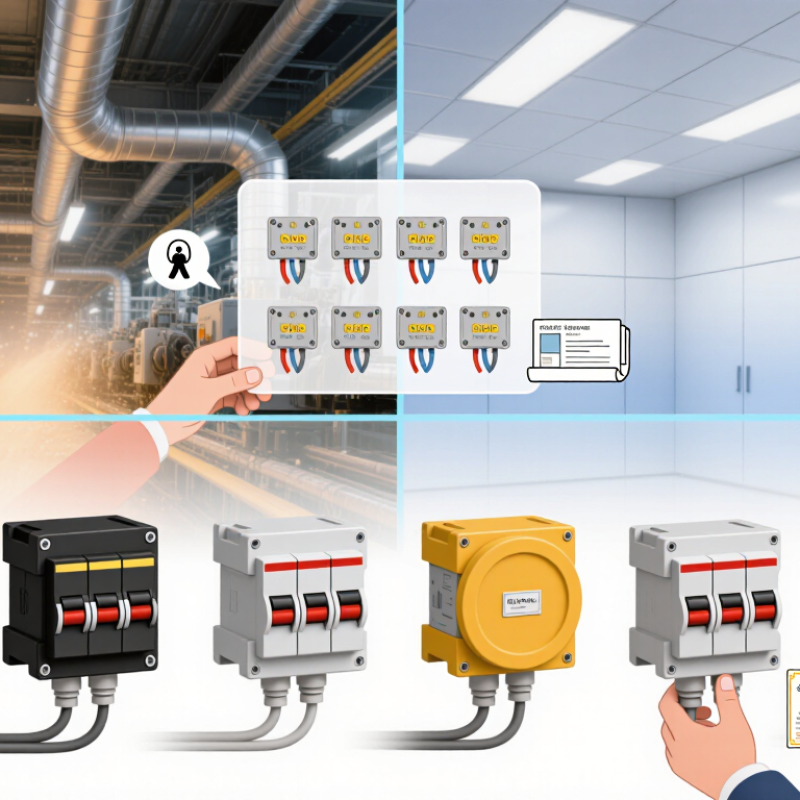
2026 Top Cable Branch Box Manufacturers and Suppliers

What Is a Cable Branch Box and How Does It Work?

A cable branch box is an enclosed connection point that divides one incoming cable into several outgoing circuits. It is commonly used in power distribution, construction sites, industrial facilities, and utility networks. The enclosure protects cable joints, connectors, and insulation from moisture, dust, impact, and accidental contact.

The working process is straightforward. The incoming cable enters through a sealed gland and connects to a busbar or specialized branching connector. Power then travels through separate terminals to downstream cables. Each connection must match the cable size, voltage rating, insulation system, and expected load. The box also needs reliable grounding and suitable sealing.

The enclosure matters.

In practical installations, technicians check torque, phase identification, bend radius, and insulation condition before energizing the circuit. They also inspect clearance between live parts and the enclosure. A small installation error can create heat, loosen a terminal, or allow water inside. That risk is easy to underestimate.

Suppliers should provide clear drawings, tested components, traceable materials, and instructions aligned with applicable electrical standards. However, no branch box is automatically safe because it carries a certification label. Site conditions, cable movement, temperature, and maintenance quality can change performance.

Engineers should verify the design with local requirements and the actual installation environment.

Mistakes happen. Careful inspection still prevents many of them.

Key Types and Applications of Cable Branch Boxes

Cable branch boxes divide, protect, and redirect electrical circuits without exposing connection points. Common types include resin-sealed, modular, metal-enclosed, and weatherproof boxes. Resin-sealed models suit damp locations, such as outdoor lighting and irrigation controls. Modular boxes support quick circuit changes in factories and commercial buildings. Metal-enclosed designs offer stronger mechanical protection near machinery, cable trays, and transport systems.

Applications vary with cable size, environment, and maintenance access. Solar arrays may use compact outdoor boxes with ultraviolet-resistant seals. Industrial control panels often need organized terminals and clear identification labels. Construction sites usually require rugged housings that tolerate dust, vibration, and repeated inspection. A box with a high protection rating still needs correct cable glands. That detail is easy to overlook. It happens more often than expected.

Tips: Check conductor capacity, temperature limits, grounding methods, and ingress protection before choosing a supplier. Leave enough internal space for bending and future testing. Confirm material compatibility with oil, moisture, chemicals, and sunlight. Ask for test records, installation instructions, and traceable quality documents. Do not select only by price. A cheaper enclosure may create crowded terminals, slower repairs, and uncertain heat performance. Field conditions often differ from drawings, so inspect the installation area before final selection.

2026 Top Cable Branch Box Manufacturers and Suppliers - Key Types and Applications of Cable Branch Boxes

Key Type Typical Enclosure Material Common Cable Entry Method Typical Protection Rating Typical Electrical Use Common Installation Environment Typical Applications Key Selection Considerations
General-Purpose Junction Branch Box ABS, polycarbonate, or powder-coated steel Cable glands, knockouts, or conduit hubs IP54–IP65 Low-voltage power, control, and signal distribution Indoor commercial, residential, and light industrial areas Lighting circuits, building services, control wiring, and equipment interconnections Number of branches, conductor size, internal space, terminal arrangement, and enclosure durability
Weatherproof Outdoor Branch Box UV-stabilized polycarbonate, fiberglass-reinforced polyester, or coated metal Compression cable glands with sealing washers IP65–IP66 Low-voltage distribution exposed to rain and dust Outdoor walls, rooftops, utility areas, and agricultural facilities Outdoor lighting, irrigation controls, security systems, photovoltaic auxiliary wiring, and signage UV resistance, gasket quality, drainage prevention, corrosion resistance, and temperature range
Industrial Heavy-Duty Branch Box Aluminum alloy, stainless steel, or reinforced polyester Armored or unarmored cable glands and conduit fittings IP66–IP67 Industrial power and control circuits Factories, process plants, workshops, and machinery areas Motor feeders, production lines, automation panels, pumps, conveyors, and plant distribution Impact strength, heat dissipation, vibration resistance, grounding provisions, and cable bending space
Explosion-Protected Branch Box Cast aluminum, stainless steel, or flameproof metal alloy Certified barrier or flameproof cable glands IP65–IP66 Power and control circuits in hazardous locations Gas, vapor, dust, or fiber hazard areas classified under applicable regulations Oil and gas facilities, chemical processing, grain handling, paint facilities, and pharmaceutical plants Hazardous-area classification, gas or dust group, temperature class, certification, and installation method
Underground or Buried Branch Box Glass-reinforced polyester, polycarbonate, or sealed polymer compound Resin-sealed entries, compression glands, or waterproof connectors IP67–IP68 Low-voltage underground distribution and cable splicing Buried service routes, landscaped areas, external infrastructure, and damp locations Garden lighting, underground feeders, irrigation networks, and service connections Water immersion resistance, soil compatibility, mechanical loading, condensation control, and service access
Resin-Filled Waterproof Branch Box Polycarbonate or impact-resistant polymer with sealing resin Waterproof cable connectors or sealed cable glands IP68 Low-voltage cable joints and branch connections Wet, submerged, marine, and highly humid locations Landscape lighting, fountains, pumps, marine equipment, tunnels, and drainage systems Resin compatibility, curing time, operating temperature, cable insulation type, and future serviceability
Photovoltaic DC Branch Box UV-resistant polycarbonate or reinforced thermoplastic Solar cable glands and sealed DC connectors IP65–IP68 DC string combining, branching, and protection Rooftop, ground-mounted, and utility-scale solar installations PV string connections, array extensions, monitoring circuits, and inverter-side cable routing DC voltage and current rating, polarity identification, UV resistance, creepage distance, and connector compatibility
Rail and Transportation Branch Box Flame-retardant polyamide, aluminum, or stainless steel Vibration-resistant glands, conduit fittings, or sealed connectors IP65–IP67 Power, communication, and control wiring Rail vehicles, stations, tunnels, roadway systems, and transit equipment Passenger information systems, signaling equipment, lighting, door controls, and onboard auxiliaries Vibration and shock resistance, fire behavior, smoke performance, weight, EMC control, and temperature cycling
Marine and Offshore Branch Box Marine-grade stainless steel, nickel-plated brass, or reinforced composite Marine cable glands and corrosion-resistant fittings IP66–IP68 AC or DC power, instrumentation, and communication circuits Ships, ports, offshore platforms, coastal infrastructure, and seawater-exposed areas Navigation systems, deck lighting, pumps, instrumentation, and offshore electrical distribution Salt-spray resistance, galvanic corrosion control, grounding, water pressure, and enclosure material compatibility
Fire-Resistant or Emergency-Circuit Branch Box Metal enclosure with heat-resistant terminals and certified internal components Fire-resistant glands, conduit, or approved cable entry systems IP54–IP66 Emergency power, fire alarm, evacuation, and life-safety circuits Commercial buildings, infrastructure, industrial plants, and public facilities Emergency lighting, fire pumps, alarm systems, smoke control, and evacuation equipment Required circuit survival time, fire test classification, cable system compatibility, segregation, and maintenance access
Data and Communication Branch Box ABS, polycarbonate, aluminum, or shielded metal enclosure Data cable glands, conduit, or modular cable entries IP54–IP66 Ethernet, fiber-optic, instrumentation, and low-energy signal distribution Data centers, factories, buildings, outdoor networks, and telecom infrastructure Industrial Ethernet, security cameras, access control, sensors, and building automation EMC shielding, bend radius, fiber management, heat dissipation, connector type, and network category
Modular Terminal Branch Box Polycarbonate, ABS, or powder-coated steel DIN-rail terminals, cable glands, and conduit entries IP54–IP66 Organized power, control, and instrumentation termination Control cabinets, machine skids, HVAC systems, and process equipment Sensor distribution, actuator wiring, motor control, HVAC controls, and equipment service points Terminal current rating, DIN-rail capacity, labeling, test points, spare capacity, and wiring access

Note: Protection ratings, voltage ratings, current capacity, temperature limits, and certifications vary by product design and installation method. Final selection should be verified against the applicable electrical codes, enclosure standards, cable specifications, and site conditions.

Technical Standards and Selection Criteria

2026 Top Cable Branch Box Manufacturers and Suppliers: Technical Standards and Selection Criteria

Selecting a cable branch box requires more than checking rated current. IEC 61439 requires design verification for low-voltage assemblies, including temperature rise, dielectric performance, and short-circuit withstand. Ask suppliers for test evidence, not only declarations. IEC 60947 also supports evaluation of switching and protective equipment. A practical weakness remains: many specifications omit prospective fault current. That omission can invalidate an otherwise suitable selection.

Check the box’s rated voltage, continuous current, Icw, Ipk, conductor size, and terminal torque. Match the enclosure rating with IEC 60529 requirements. An IP65 enclosure may resist dust and water jets, but cable glands can reduce real protection.

Consider UV exposure, condensation, corrosion, vibration, and installation temperature. Fit matters. Copper and aluminum conductors also require compatible terminals and controlled joint preparation.

Energy demand is increasing the pressure on distribution equipment. The International Energy Agency’s Electricity 2024 report projected global electricity demand growth of about 4% in 2024 and 2025. This reinforces the need for documented thermal margins and maintainable connections. Select suppliers with traceable material certificates, routine inspection records, and clear installation instructions. Independent certification can improve confidence, but it does not replace project-specific verification. Some catalog data still appear overly optimistic. Recheck derating calculations on site, especially where several branch circuits share one enclosure.

Leading Cable Branch Box Manufacturers and Suppliers in 2026

Leading cable branch box manufacturers and suppliers in 2026 are improving protection, installation speed, and long-term serviceability. Their products commonly use flame-resistant enclosures, sealed cable entries, and corrosion-resistant terminals. A well-designed box should keep connections organized inside a compact housing. It should also allow technicians to inspect terminals without disturbing nearby cables.

Experienced manufacturers provide clear drawings, torque guidance, and material specifications. They may offer molded, stainless steel, or reinforced polymer enclosures for different environments. Buyers should examine ingress protection results, temperature ratings, conductor capacity, and resistance to vibration. Independent test reports add credibility, especially when projects involve outdoor cabinets, transport systems, or industrial equipment.

Details matter.

Reliable suppliers also maintain traceable production records and consistent quality checks. Sample inspection can reveal loose covers, uneven seals, or poorly marked terminals before installation begins. Technical support is valuable when cable sizes, branch directions, or mounting spaces change during a project. However, no supplier gets every detail right. Some catalogs lack practical installation images, while certain products look strong but provide limited replacement parts. This is where careful comparison becomes necessary. Procurement teams should request samples, review warranty terms, and confirm delivery capacity before placing large orders. A dependable partnership grows through evidence, not attractive claims.

2026 Top Cable Branch Box Manufacturers and Suppliers

Common rated-current classes used in low-voltage cable branch box specifications

The chart presents widely used rated-current classes for low-voltage cable branch boxes and tap-off distribution assemblies. These values are representative technical specification classes—not company, brand, sales, or market-share data. Final selection depends on voltage, conductor size, fault-current rating, enclosure protection, installation method, and applicable IEC requirements.

Market Trends and Buyer Considerations for 2026

In 2026, cable branch box markets are moving toward safer, smaller, and more adaptable designs. Many projects now require compact enclosures for crowded utility rooms and outdoor equipment areas. Buyers are also requesting clearer cable identification, tool-friendly terminals, and stronger protection against moisture. In field inspections, poorly sealed entries remain a common failure point. Small details matter.

Manufacturers are responding with modular layouts, improved heat management, and materials designed for longer service life. Digital production records are becoming more valuable, especially when buyers need batch numbers, test results, and installation instructions. Recyclable housing materials are gaining attention, although environmental claims still require careful verification. Some suppliers mention sustainability too broadly. That deserves scrutiny.

Purchasers should compare ingress protection, temperature resistance, voltage ratings, conductor capacity, and terminal accessibility. A box rated for indoor use may not suit a dusty outdoor site. Ask for thermal cycling data and evidence of routine quality checks. Confirm whether the enclosure supports future cable additions without unsafe crowding. Delivery reliability also matters when projects follow strict schedules. I would inspect sample units before approving a large order. Product photographs can hide thin walls, awkward screw access, or weak gaskets. Local technical support is useful, but written procedures are more dependable. Requirements differ by region, so buyers should verify applicable testing and installation standards before purchase.

FAQS

What is a cable branch box?

It is an enclosed connection point. It divides one incoming cable into several outgoing circuits. The enclosure protects joints, terminals, and insulation.

How does a cable branch box work?

The incoming cable enters through a sealed gland. It connects to a busbar or branching connector. Power then moves through separate terminals.

Where are cable branch boxes commonly used?

They are used in power distribution, construction, and industrial facilities. Utility networks and outdoor lighting may also need them. Applications vary.

What protection does the enclosure provide?

It helps block moisture, dust, impact, and accidental contact. A suitable enclosure also protects cable connections near machinery. Sealing quality matters.

What should technicians check before energizing a circuit?

They should check torque, phase identification, bend radius, and insulation condition. They should also inspect grounding and clearance from live parts. Small errors can create heat.

How should I choose the correct box type?

Match the box with cable size, voltage, load, and installation conditions. Resin-sealed boxes suit damp areas. Metal enclosures offer stronger mechanical protection.

Is a high protection rating enough?

No. Correct cable glands are still necessary. Cable movement, temperature, and maintenance can change performance. A label is not magic.

What documents should a supplier provide?

Ask for clear drawings, test records, installation instructions, and traceable material information. Confirm alignment with applicable electrical requirements. Documents alone cannot fix poor installation.

Why is internal space important?

Enough space allows proper cable bending and easier testing. Crowded terminals may increase heat and slow repairs. This detail is often missed.

Should price decide the selection?

No. A cheaper box may have uncertain heat performance or weaker sealing. Inspect the actual site before choosing. Drawings can be incomplete.

Conclusion

A Cable Branch Box is an essential component for safely distributing electrical power from one main cable to multiple branch circuits. This article explains how these boxes organize cable connections, protect conductors, and support reliable power distribution in residential, commercial, industrial, renewable energy, transportation, and infrastructure projects. It also reviews key product types, including indoor, outdoor, waterproof, explosion-protected where legally permitted, low-voltage, and medium-voltage solutions, along with their typical applications.

The guide outlines important technical standards and selection criteria, such as voltage and current ratings, enclosure protection, insulation performance, temperature resistance, installation environment, cable compatibility, maintenance requirements, and certification needs. It also presents the leading categories of Cable Branch Box manufacturers and suppliers in 2026 without focusing on specific brands. Finally, it discusses market trends, including modular design, improved safety, compact structures, sustainable materials, digital monitoring, supply-chain reliability, customization, lifecycle cost, and after-sales support, helping buyers make practical and informed purchasing decisions.

Madeline

Madeline

Madeline is a dedicated marketing professional with a wealth of expertise in our company's core offerings. With a keen understanding of the industry, she brings a unique perspective to her role, consistently delivering high-quality content that highlights the superior aspects of our products. As......